Note that all photos before 2000, were taken with a film camera and were scanned from slides or printed photos.
I have been to Thailand five times. After Peter returned from a business trip to Bangkok, we visited Thailand together in 1986. On our first trip, we started out in Bangkok and then flew to the island of Phuket for a week. We also took a boat trip along the Chao Phraya River to Ayutthaya — the ancient Thai capital of Siam.
On our next trip to Thailand, three years later, we flew to Hong Kong for five days before arriving in Bangkok. After several days in Bangkok, we then flew to the northern Thai city of Chiang Mai for a week. In 1998, during the Asian financial crisis and devaluation of the Thai baht, we returned again to Bangkok and visited Ayuthaya and Chiang Mai again.
In 2006, we combined another visit to Bangkok with a visit to Siem Reap, Cambodia where we visited the Angkor Wat ruins. Our most recent visit to Thailand was in 2015 during our trip to Myanmar. We spent several days in Bangkok before departing for Yangon, and a week afterward in Bangkok. We then flew to Oahu, Hawaii for several days to mitigate our jet lag before returning to the U.S. from a month in Asia.
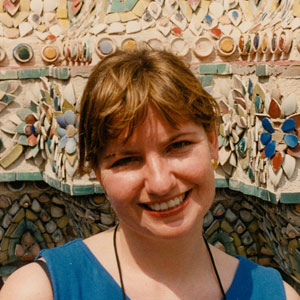
Colorful mosaics at the Grand Palace
Allure of Bangkok
Built along the Chao Phraya River, modern-day Bangkok, Thailand’s capital, is known for being an amalgamation of culture, ethnicities, architecture, and time periods. While navigating this bustling city, it is possible to pass a 400-year-old temple or an antique teak house on one corner and a tech-forward, 21st-century skyscraper or shopping mall on the next. We particularly love Thai cuisine with a mix of unique textures, flavors, and cultural influences as authentic street food mingles with Michelin-starred restaurants.
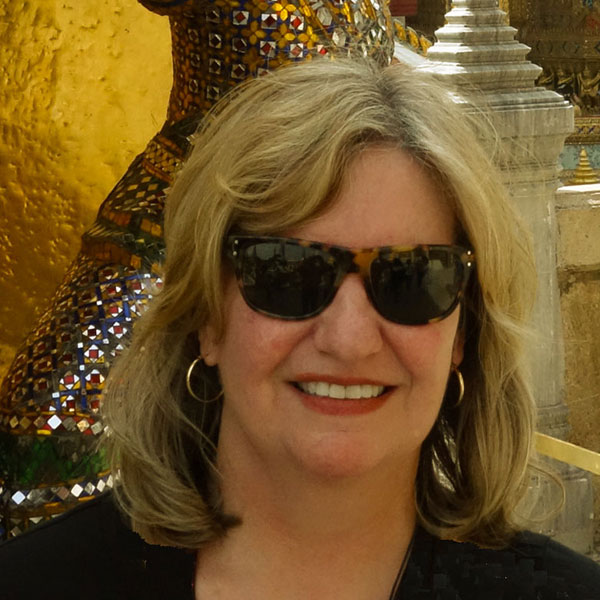
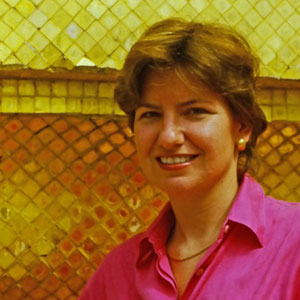
Photo of me at the Grand Palace in 2015
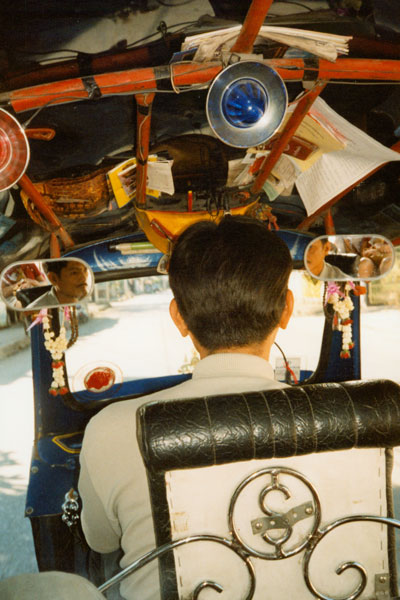
Bangkok has changed dramatically over the years. Its population has doubled from when we first visited over 30 years ago. With over 11 million people today, spanning 50 districts, it impossible to absorb it all in a single trip. We have explored new areas on each visit including Bangkok Soi's (hidden streets and alleys). And, getting anywhere fast makes it even more difficult. Traffic can be deadlocked, especially at peak times of the day. In the early days, we needed to rely on a Tuk-Tuk or taxi to navigate the heart of Bangkok. However, in 2006, transportation options improved significantly with the advent of the BTS Skytrain and the MRT rail lines.
Over 90 percent of the Thai people are Buddhist and the Thai people generally pride themselves on being respectful and polite. We are always greeted with the Wai — palms together at your chest accompanied with a subtle bow of the head.
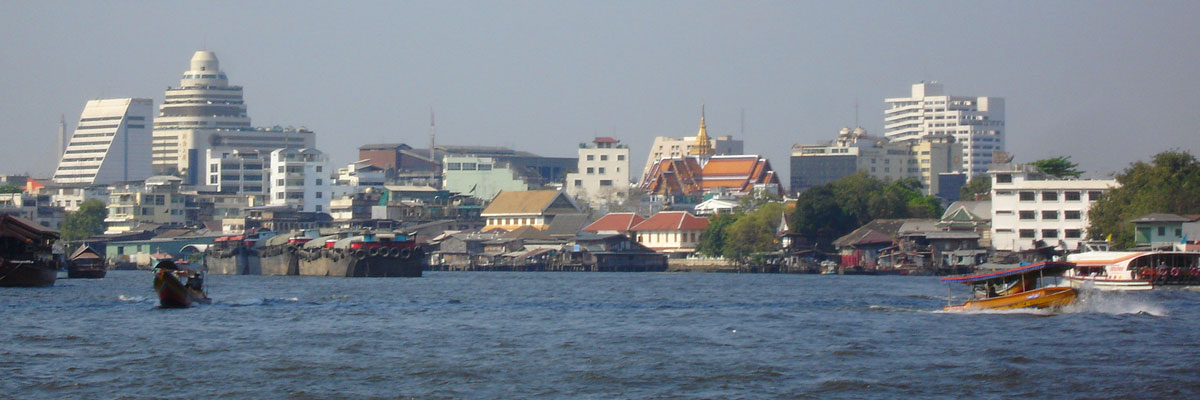
Riverfront along the Chao Phraya River (2006)
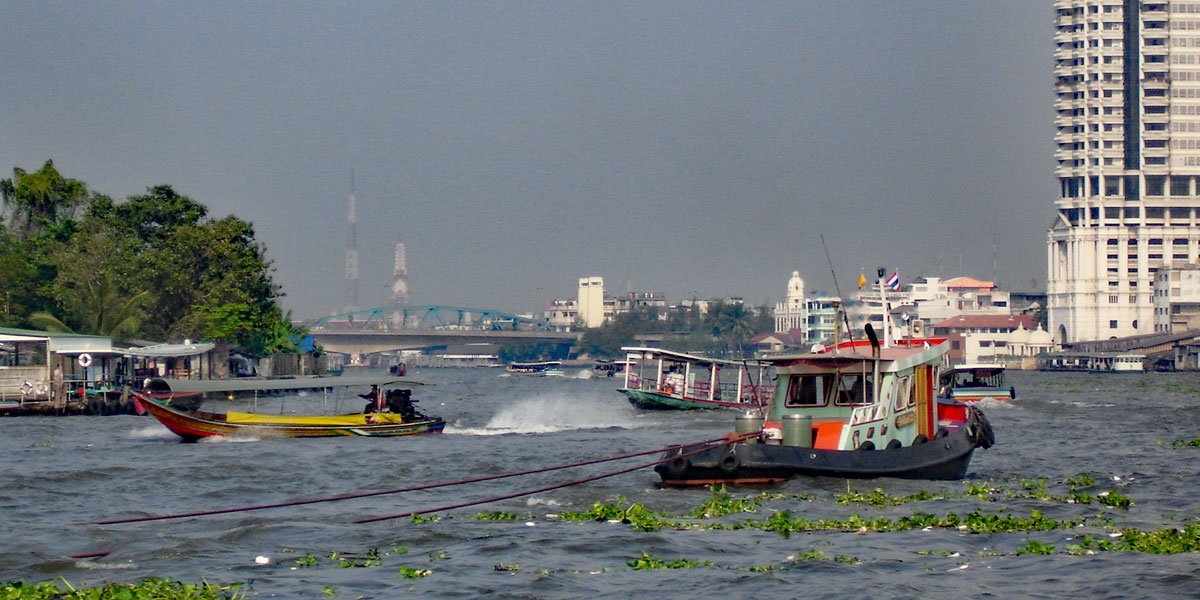
Looking south on the Chao Phraya River toward the Saphon Taksin Bridge (2006)
Navigating Bangkok Via the Chao Phraya River
Bangkok's main lifeline is the serpentine Chao Phraya River otherwise known as the "Lifeblood of the City" or "The River of Kings". We always stay at a hotel on the river — usually the Mandarin Oriental Hotel — where we can access Thailand’s oldest neighborhoods and biggest tourist attractions by boat. The boat-filled Chao Phraya River feeds a network of canals, flowing past the Rattanakosin royal district, home to opulent Grand Palace and its sacred Wat Phra Kaew Temple. Nearby is Wat Pho Temple with an enormous reclining Buddha and, on the opposite shore, Wat Arun Temple with its steep steps and Khmer-style spire. The hidden neighborhood of Thonburi on the west shore is also accessible by boat.
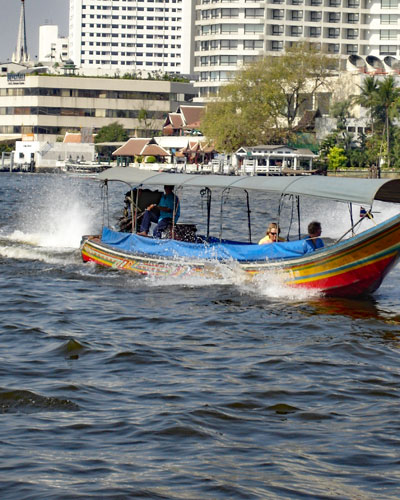
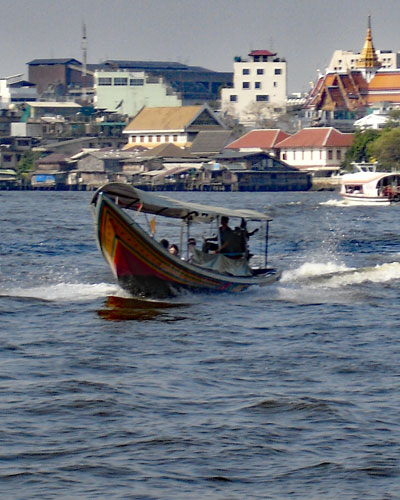
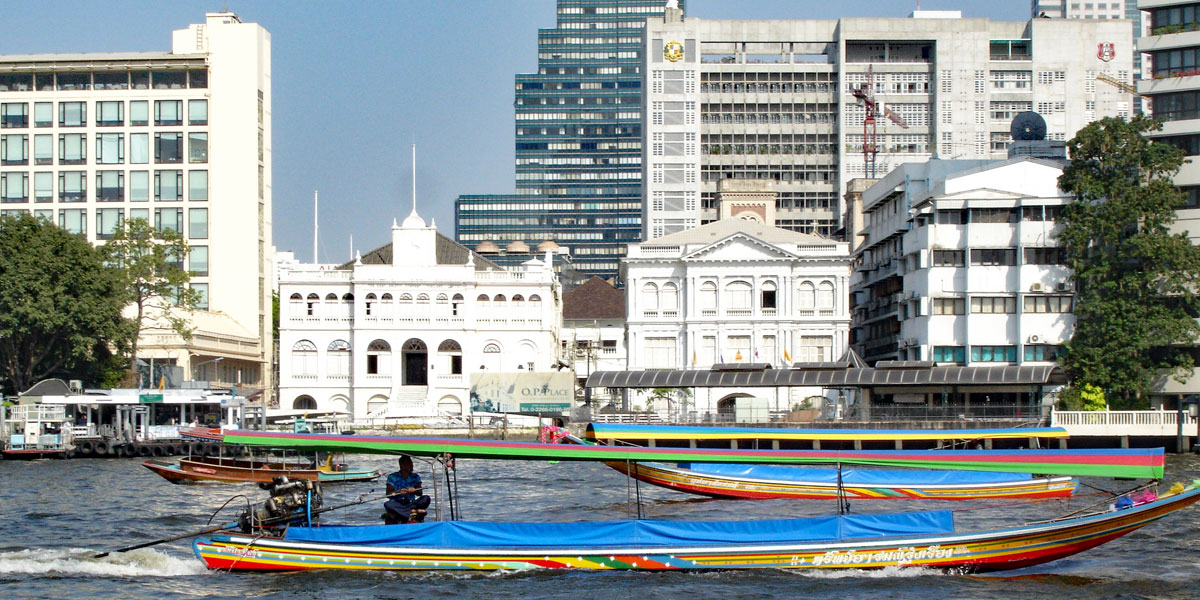
Many different types of boats on the Chao Phraya River
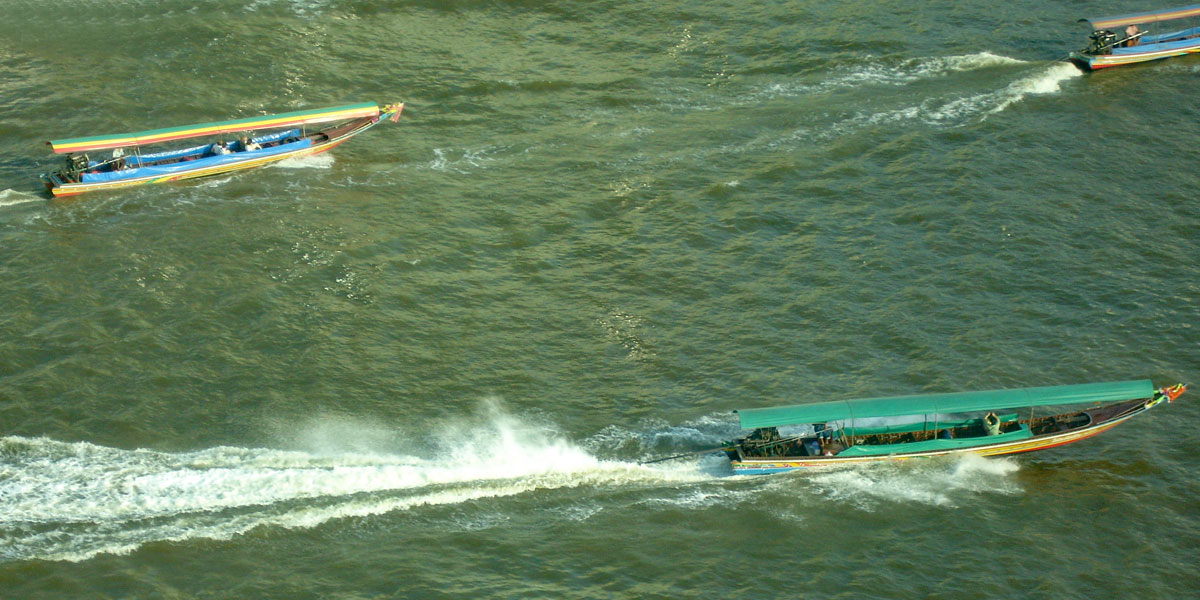
Colorful water taxi
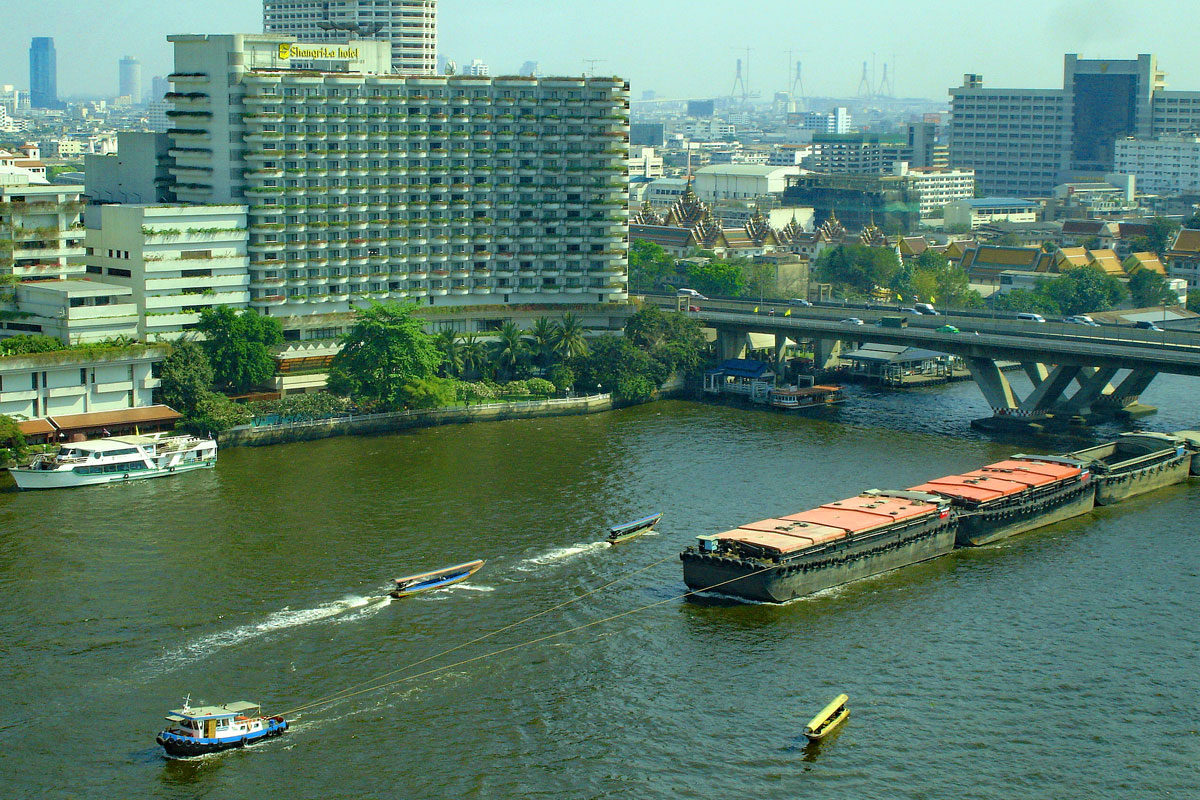
Lots of boat traffic
Another fast-moving water taxi
There are several kinds of boats — express boats, river taxis and longtail boats — that run up and down the Chao Phraya River, connecting with the local suburbs on the Thonburi side while traveling all the way up to the neighboring province of Nonthaburi; ferries can be used to cross the river at various points. We use either the complimentary hotel boat shuttle, a longtail boat water taxi, or take a public boat which stops at busy docks along the river. You can see both the iconic Bangkok skyline as well as catch a glimpse of daily local life when traveling by water.
More colorful water taxis (looking east)
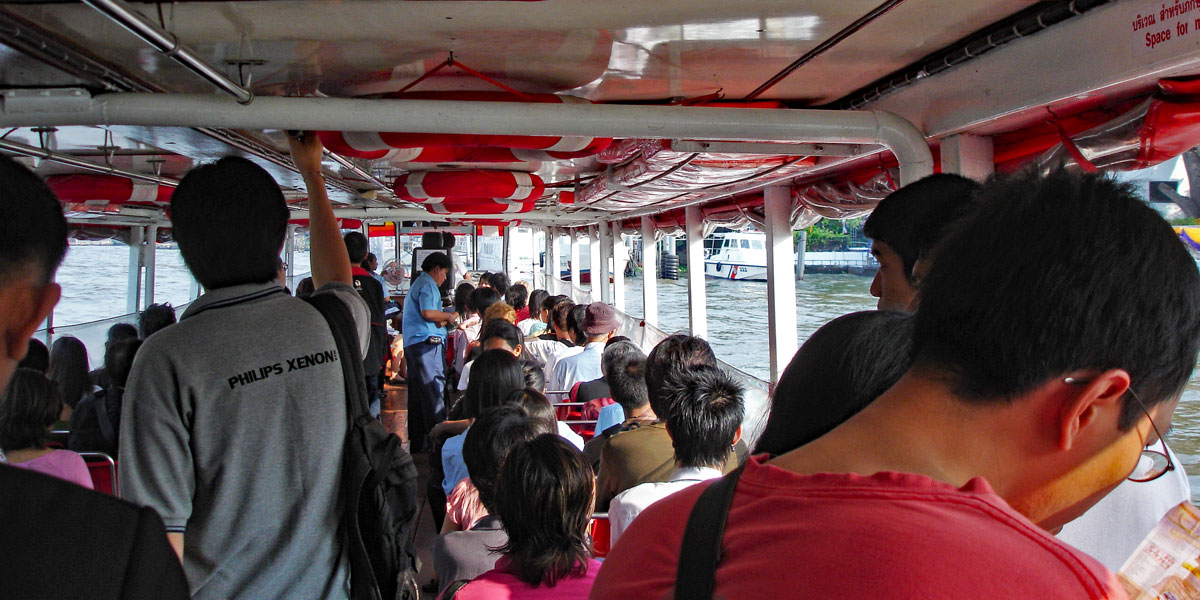
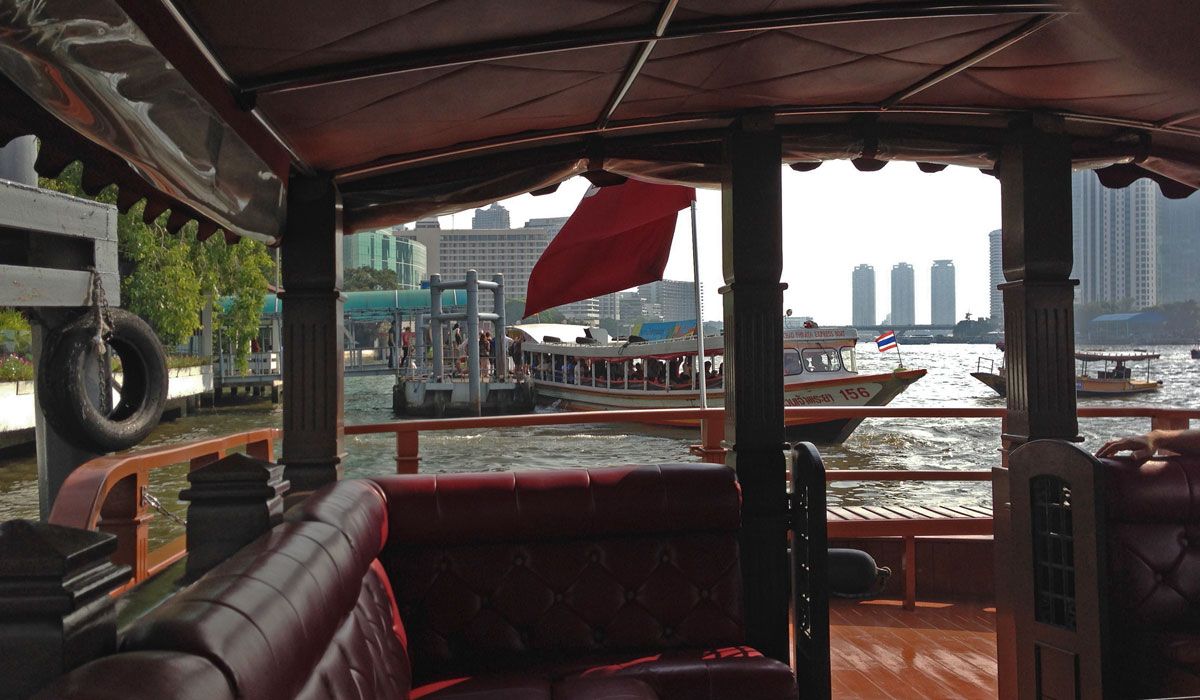
View from the inside the public ferry
Grand Palace
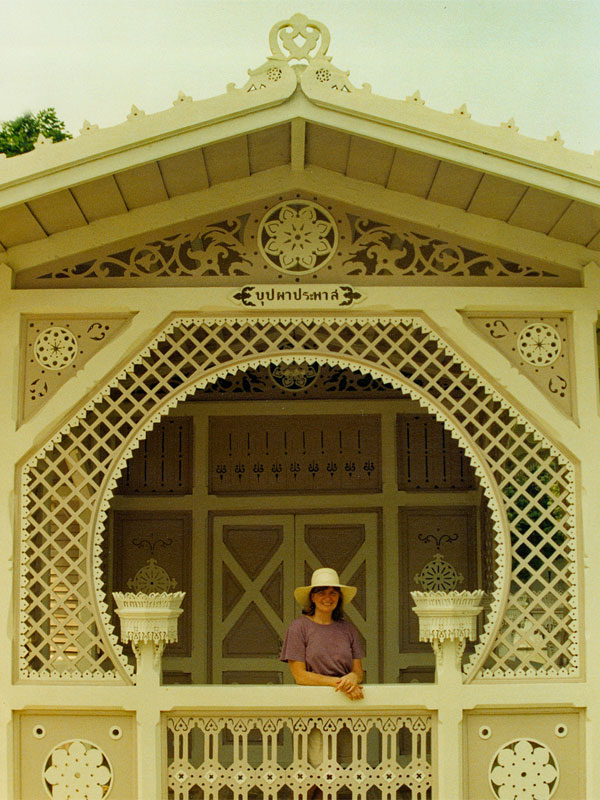
Photo of me at the Grand Palace in 1986
The Grand Palace is a complex of buildings at the heart of Bangkok. It is situated on the banks of the Chao Phraya River at the heart of the Rattanakosin Island, today in the Phra Nakhon District. The land for the Grand Palace was designated in 1782 — the same year the capital of Thailand moved from Ayutthaya to Bangkok — and the palace has been the official residence of the Kings of Siam (and later Thailand) since 1782.
Throughout successive reigns, many new buildings and structures were added. By 1925, the king, the Royal Family and the government were no longer permanently settled at the palace and had moved to other residences. After the abolition of absolute monarchy in 1932, all government agencies moved out of the palace but this sprawling complex remains an important structure for Thais. Today it is home to several temples, shrines, the royal throne, and ceremonial halls. It is still used for official events and several royal ceremonies and state functions each year.
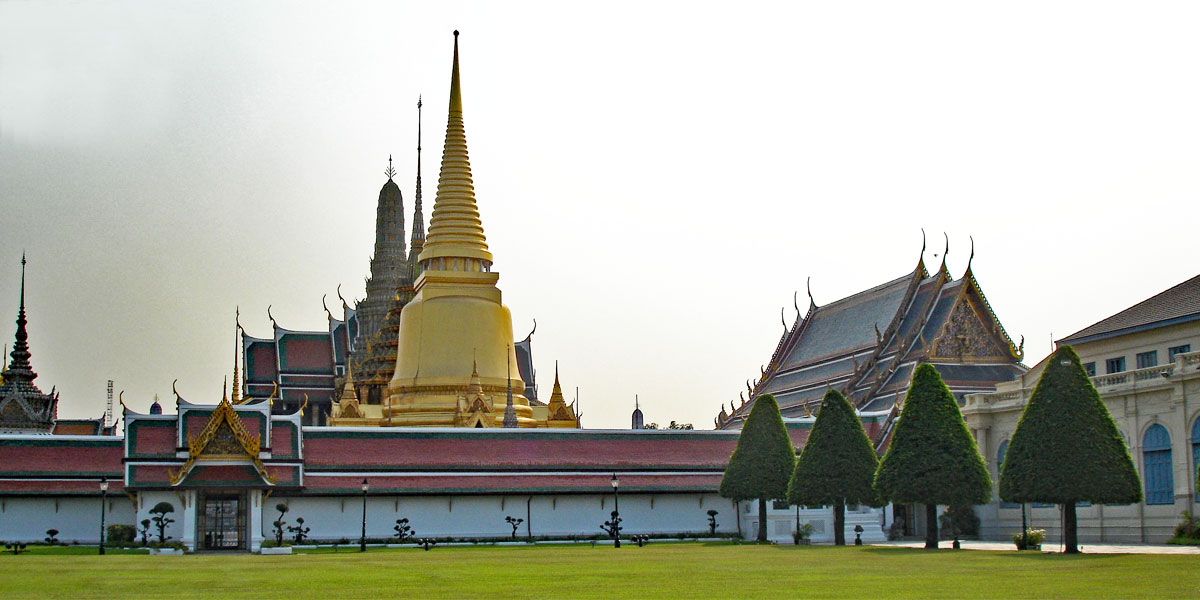
Approaching the Grand Palace (2006)
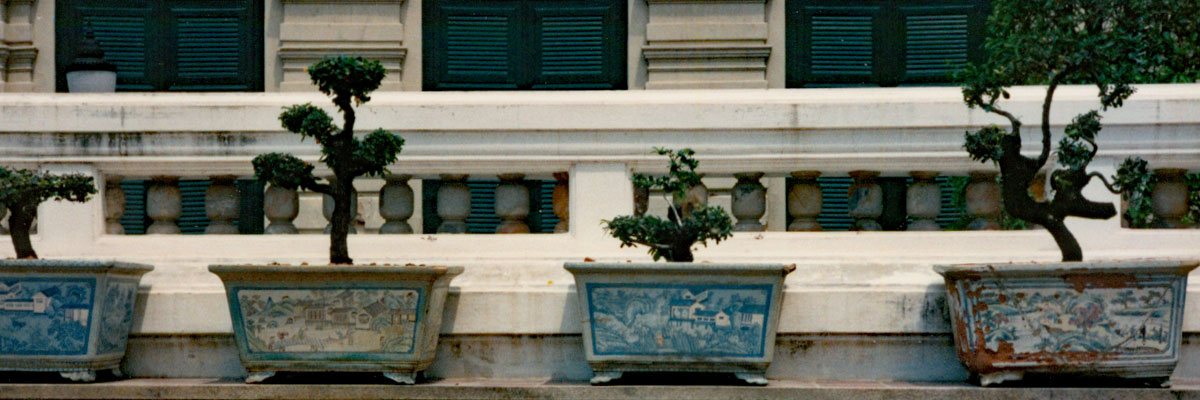
Some of the bonsai displayed at the Grand Palace (1989)
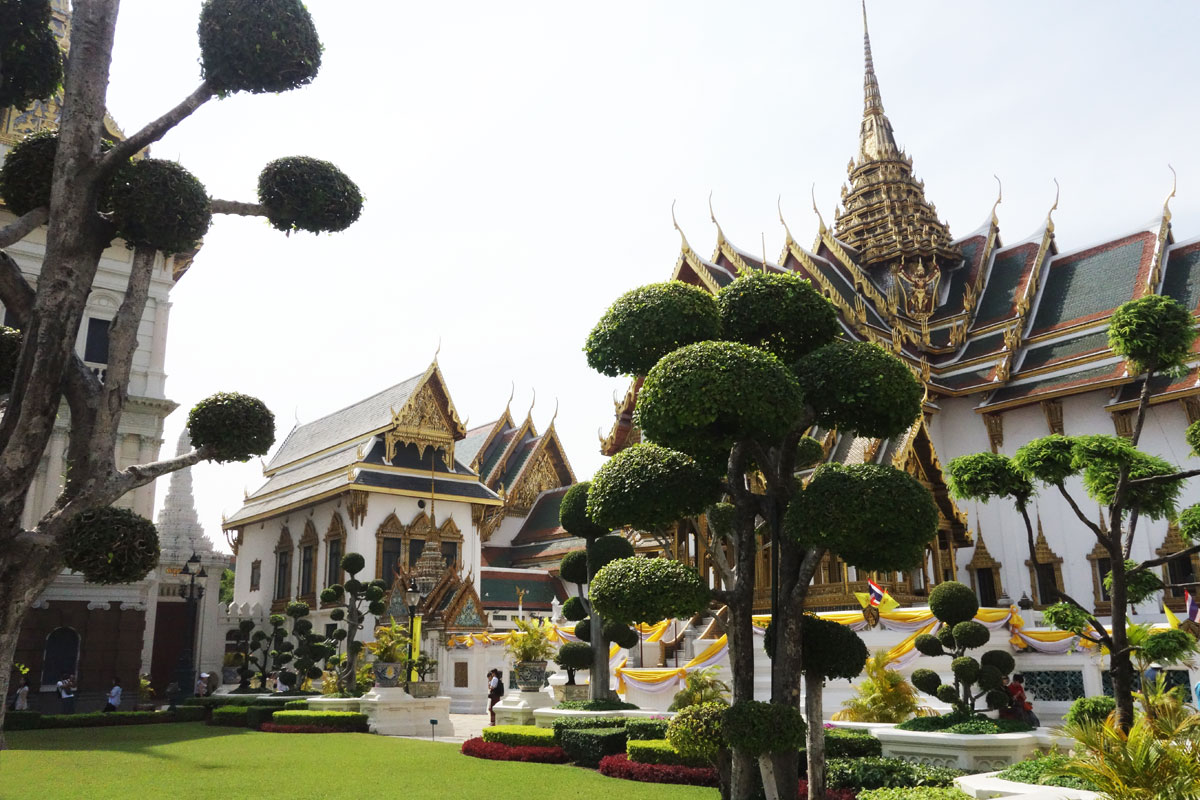
Fanciful topiaries at the Grand Palace (2015)
Rather than being a single structure, the Grand Palace is made up of numerous buildings, and pavilions set around open lawns, gardens, and courtyards. Its asymmetry and eclectic styles are due to its organic development, with additions and rebuilding being made by successive reigning kings over 200 years of history.
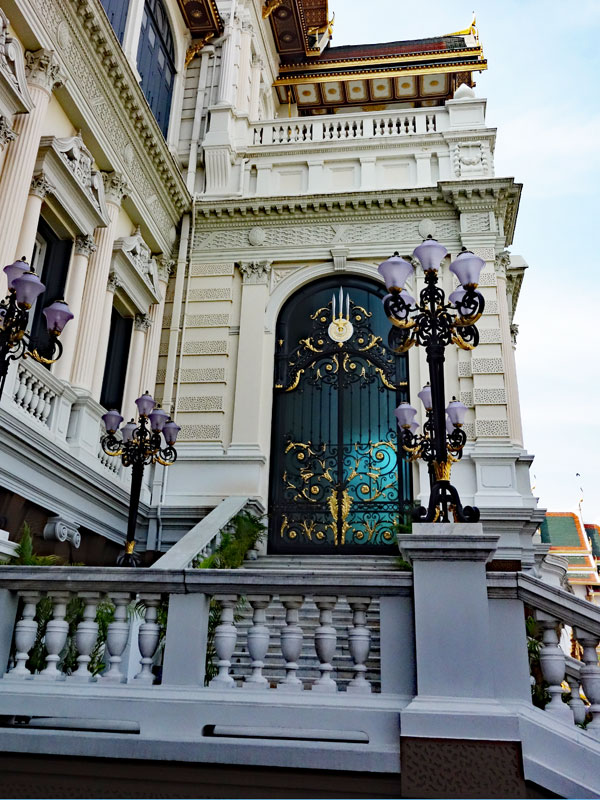
Royal Palace entry door (2015)
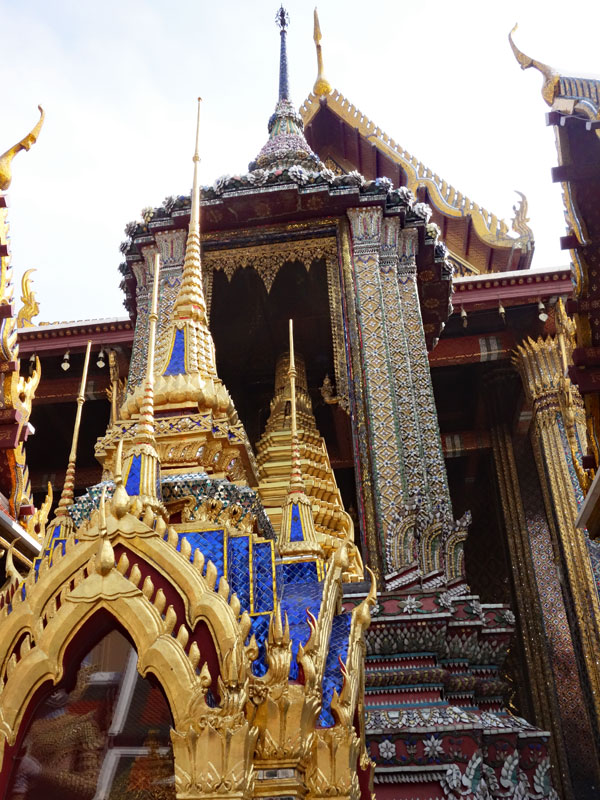
Fanciful spires and arcades (2015)
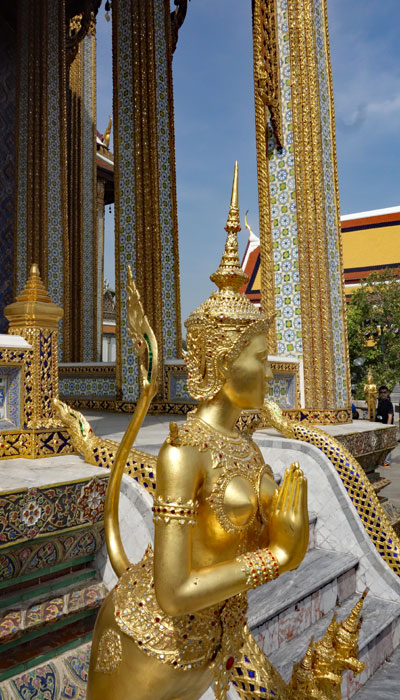
Mythical figure called a kinnari — part human and part swan (2015)
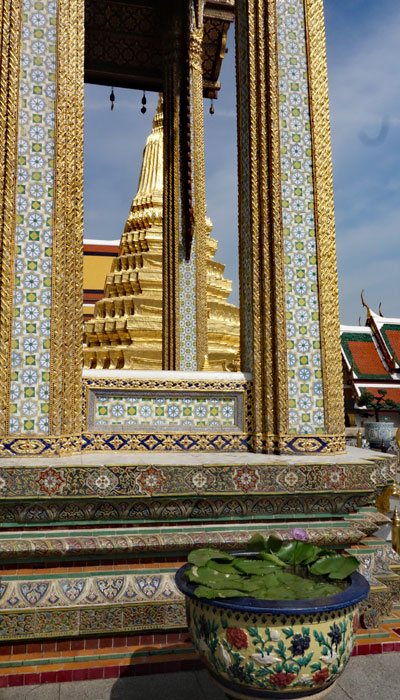
Ornate tile mosaics at the Royal Palace (2015)
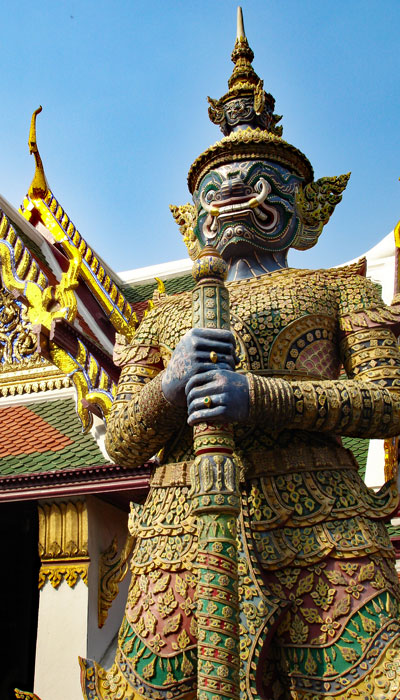
Yaksha, another Thai mythical figure (2015)
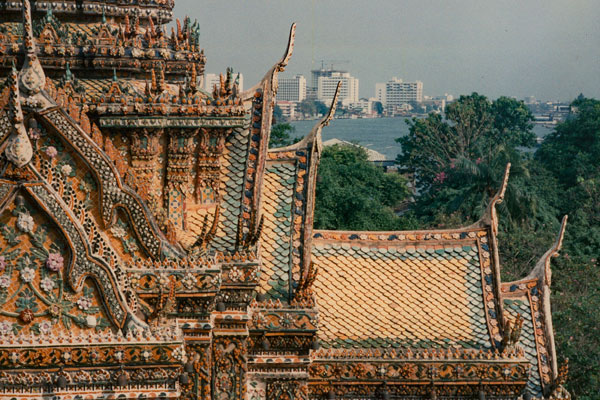
Royal Palace roof tops (1989)
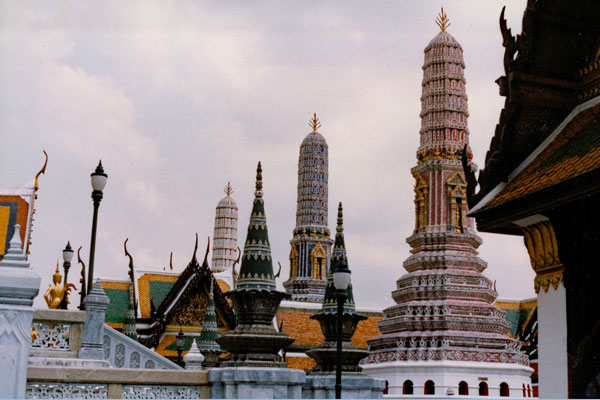
Variety of different spires (1989)
Temple of the Emerald Buddha
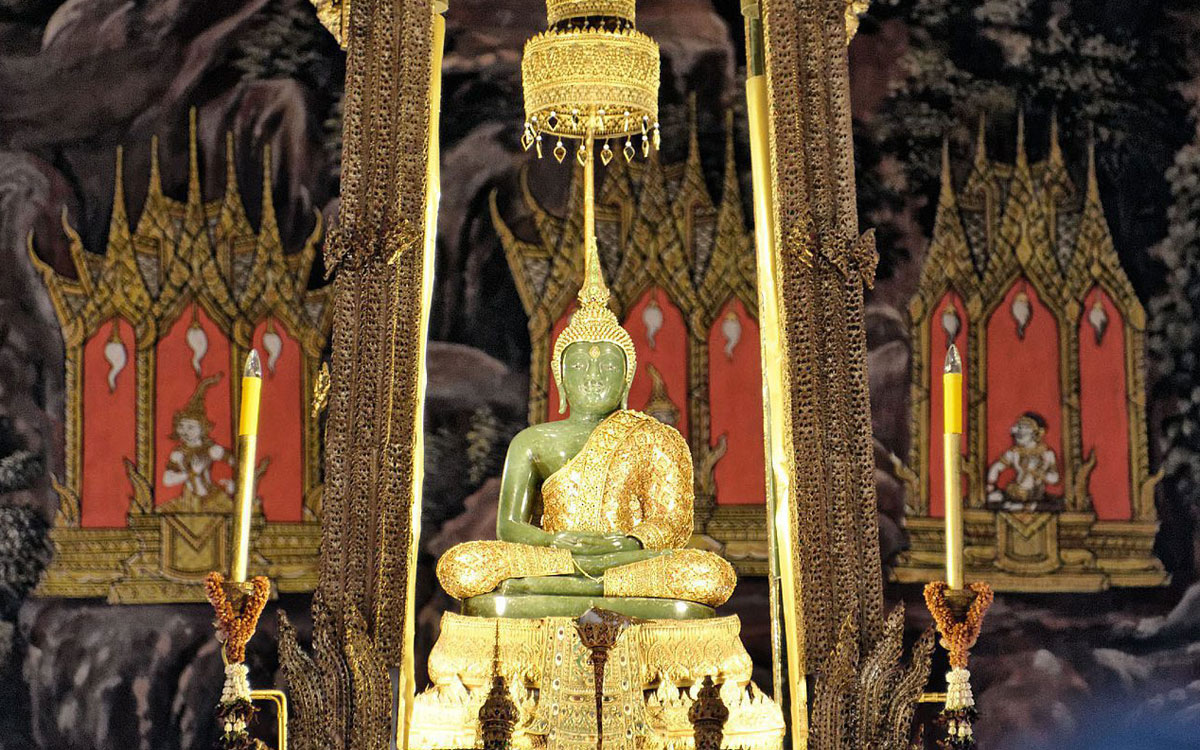
The Temple of the Emerald Buddha (Wat Phra Kaew), which is regarded as the holiest Buddhist temple in Thailand, is also within the elaborate Grand Palace complex. The Emerald Buddha, made from one solid piece of green jade and clothed in gold and diamonds, sits majestically in the ordination hall, elevated above the heads of everyone. The statue is dressed in seasonal attire, which is changed three times a year by the King. The ritual is believed to bring good fortune to the country.
The Emerald Buddha in rainy season vestments
Wat Arun
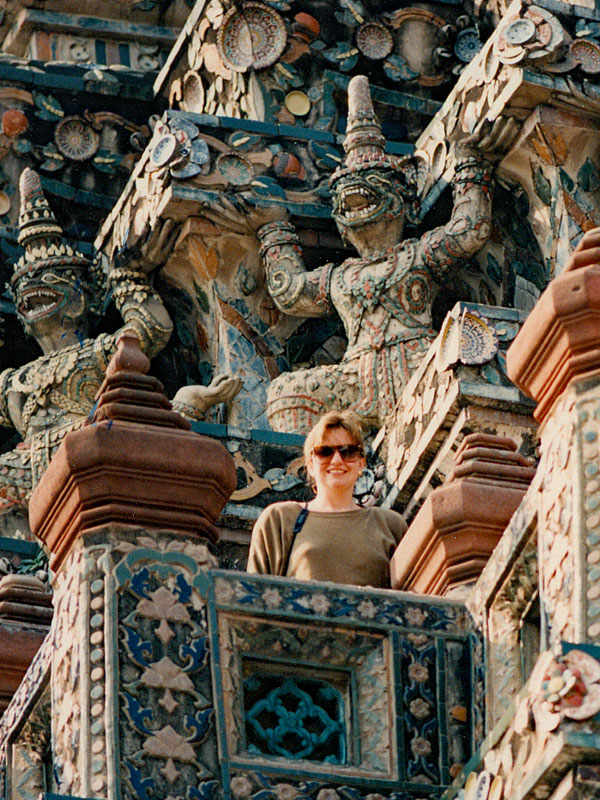
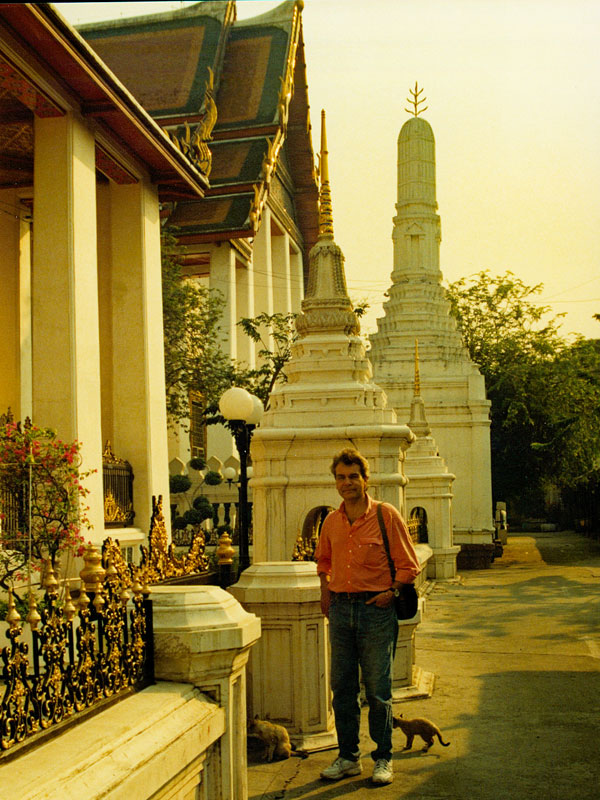
Photo of me at the Wat Arun in 1989
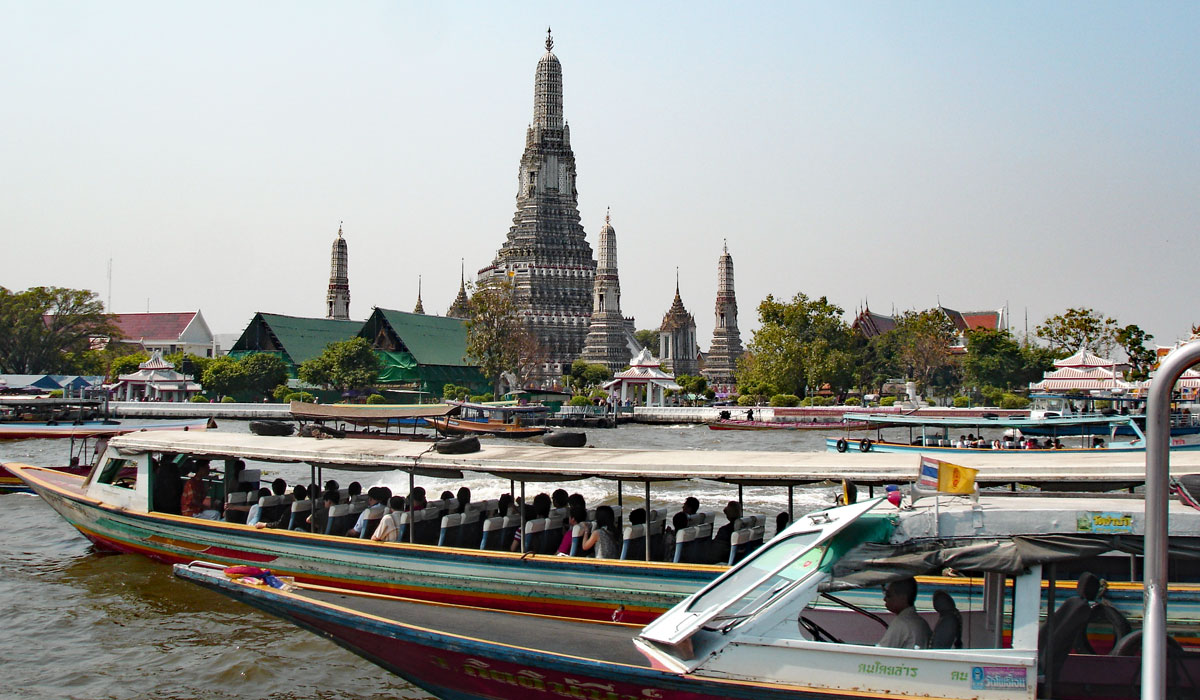
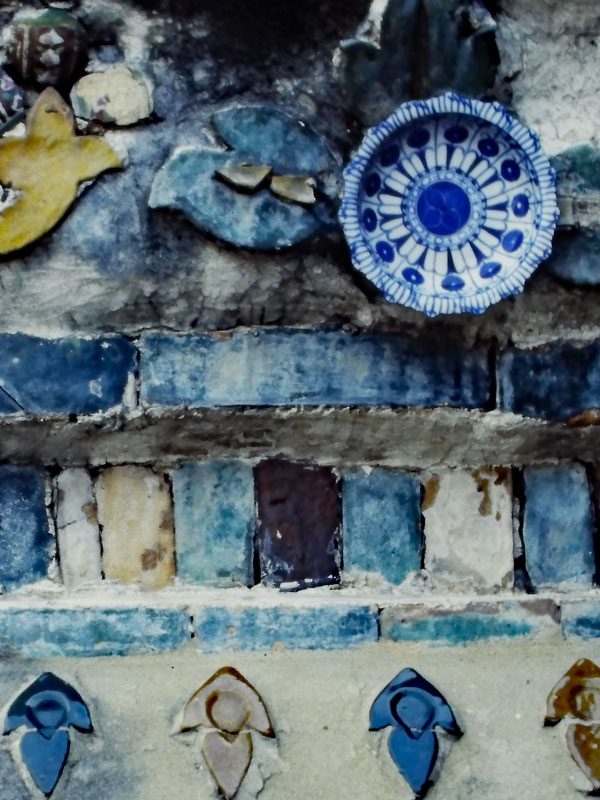
The uniquely shaped Wat Arun, also known as the Temple of the Dawn, rises above the banks of the Chao Phraya River and is one of the most recognizable landmarks in Bangkok. It is known for its 270-foot-high tower, which has stairs that lead all the way to the top, where you can find gorgeous views of the river and Bangkok. Although it appears gleaming white from a distance, the structure is actually made of painted floral mosaics that have been constructed from broken Chinese porcelain discarded by Chinese traders who worked at the nearby port.
Approaching Wat Arun from the water
Climbing up stairs to the top of Wat Arun (1989)
Mosaic pottery detail at Wat Arun (19866)
Wat Pho
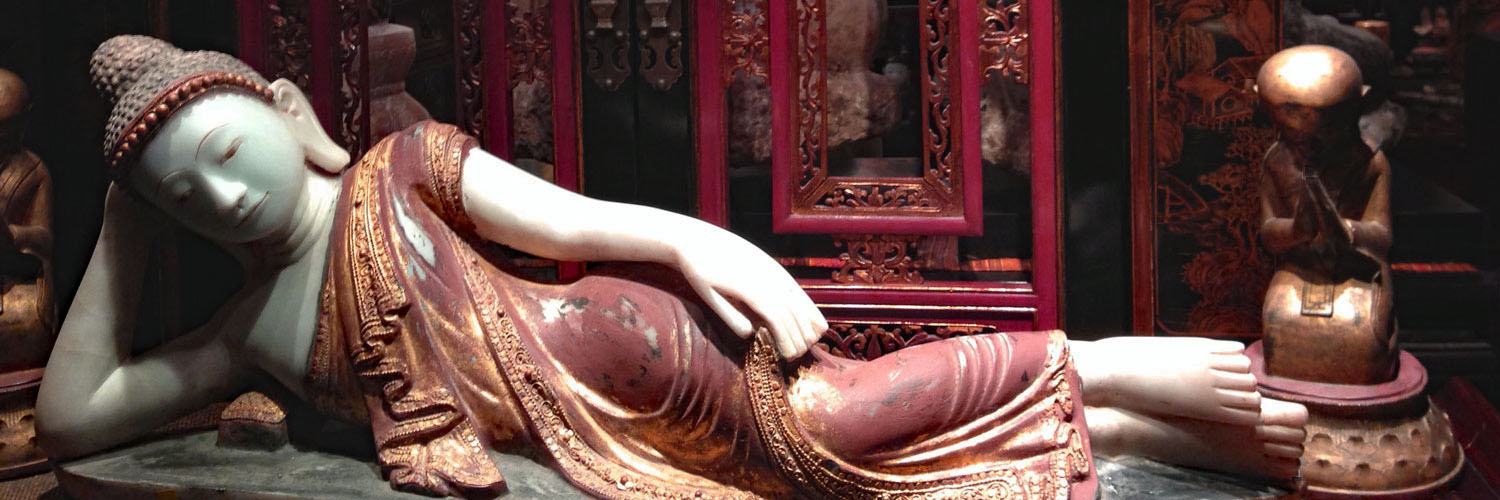
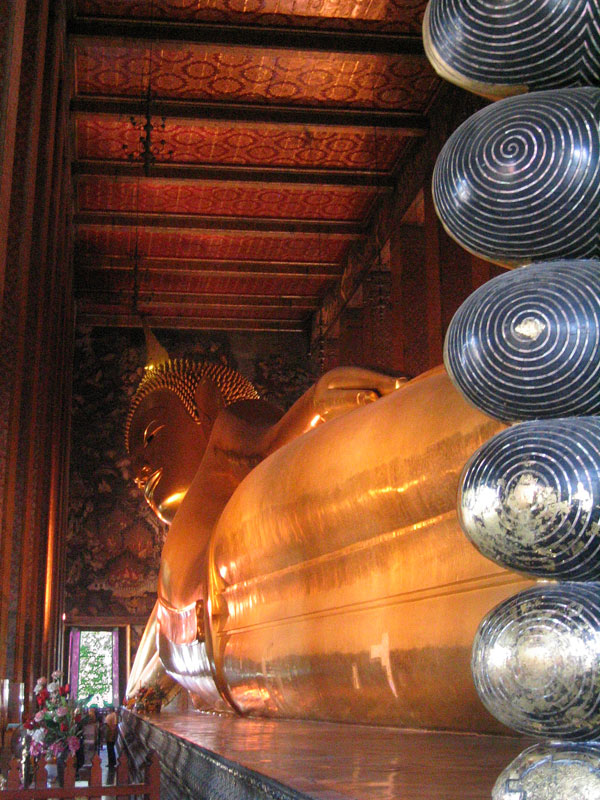
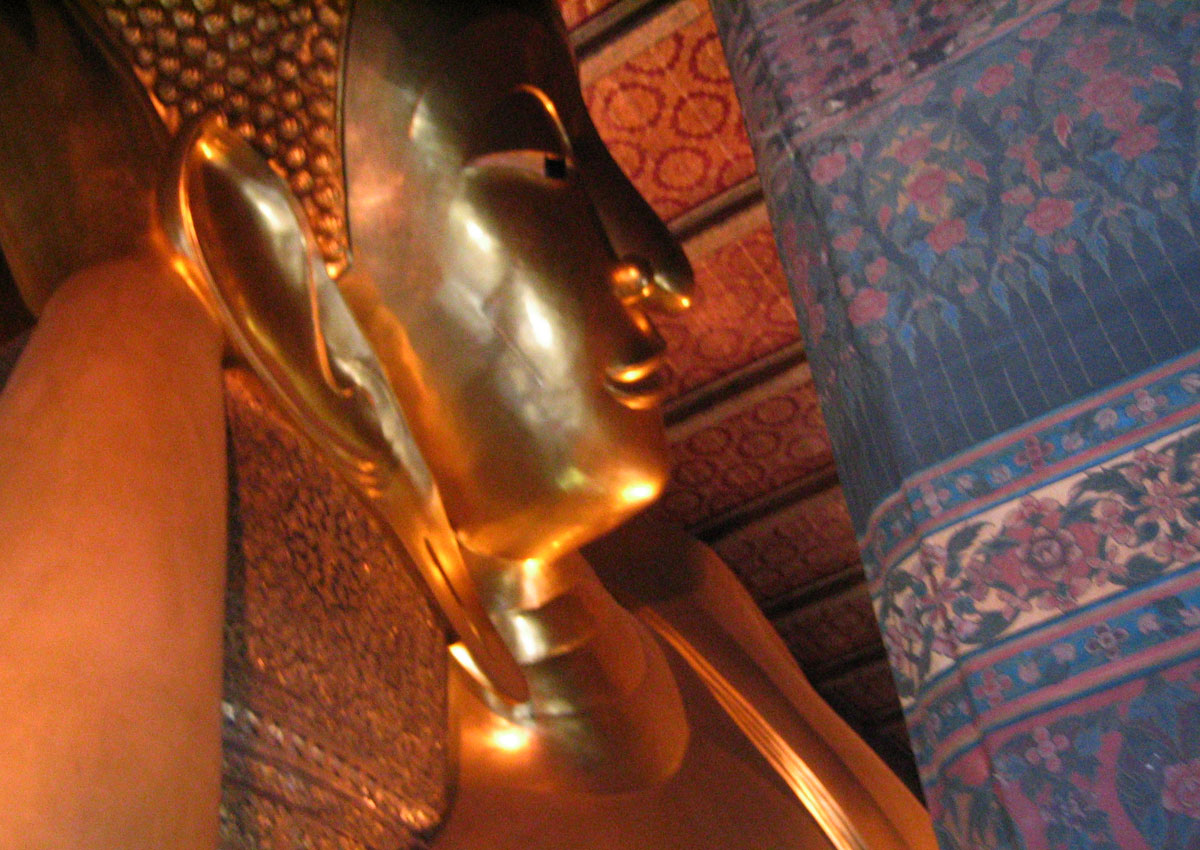
Wat Pho is also know as the Temple of the Reclining Buddha. The massive Buddha is covered from head to toe (all 150 feet) in gold leaf and is one of the largest Buddha statues in the world. Wat Pho also boasts one of the largest collections of Buddha images; there are more than 1,000 of them throughout the sprawling temple complex.
Reclining Buddha at Wat Pho (2006)
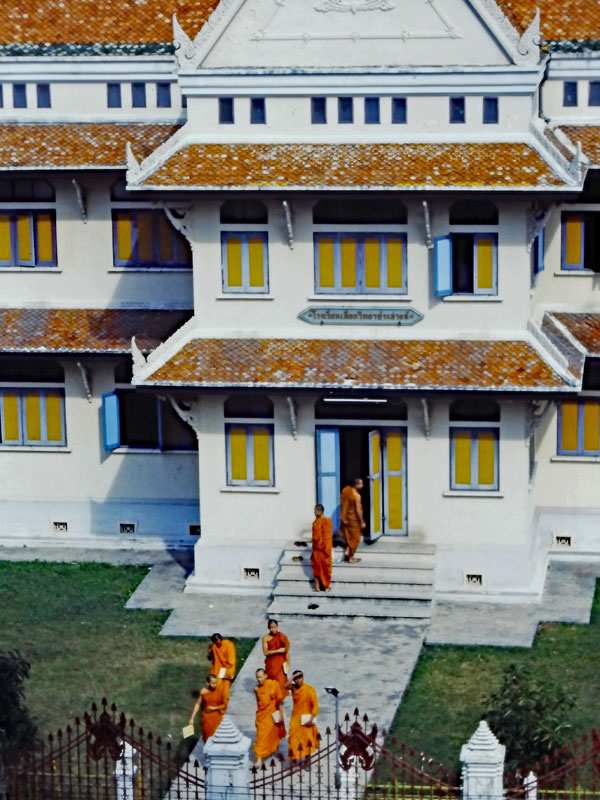
Monks leaving residence near Wat Pho (1986)
Giant head of the famous Reclining Buddha at Wat Arun
Chinatown
Bangkok's Chinatown is among the largest Chinatowns in the world and walking through this sprawling neighborhood made us feel like we had stepped onto the streets of Beijing. There are street food vendors everywhere along with neon lights, dangling lanterns, and dozens of gold stores on the iconic Yaowarat Road.
Scene along Yaowarat Road towards Chinatown (2015)
Venturing into the hectic inner city (2015)
Oriental Hotel Bangkok
The Oriental Hotel now named the Mandarin Oriental Bangkok, has been in operation for almost 140 years — even before the Kingdom of Siam was renamed Thailand. The original structure was the first hotel built in Thailand when it opened in 1876.
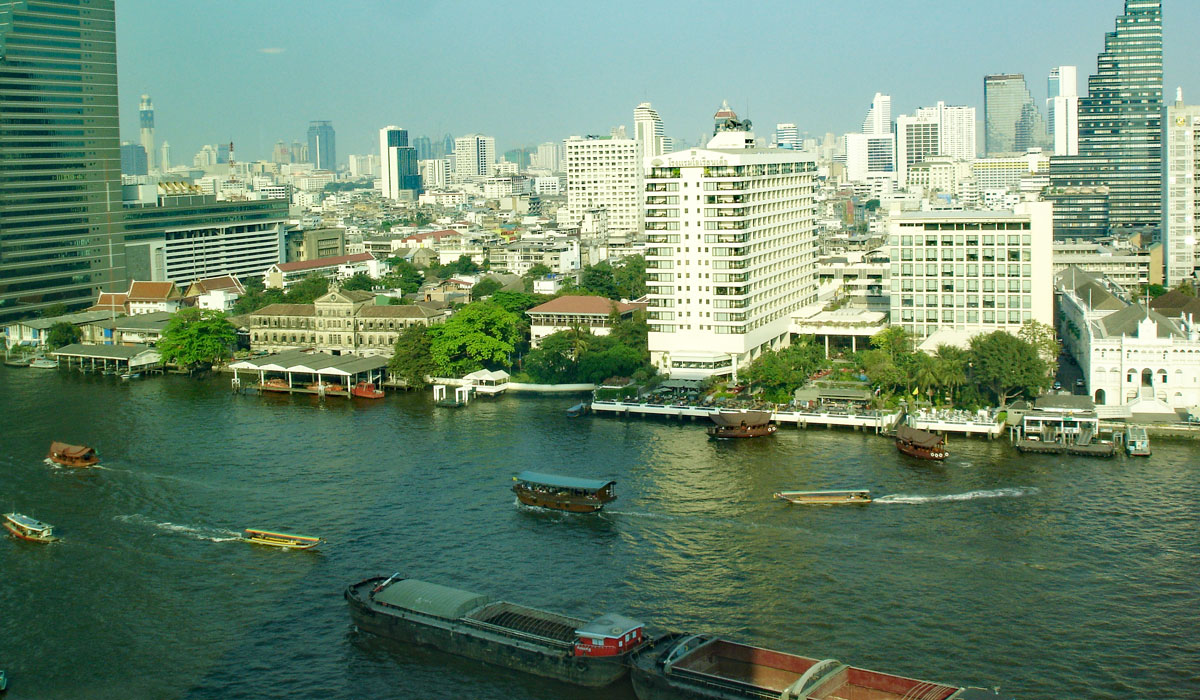
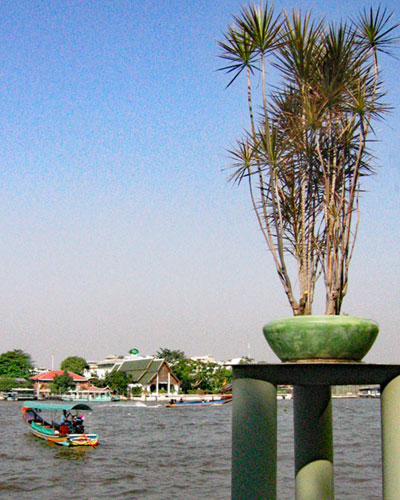
Looking toward the Oriental Hotel from across of the river (2006)
Today, the two-story Authors' Wing is the only remaining structure of the original 19th-century hotel; it houses suites named after some of the famous authors who resided there including Joseph Conrad, Somerset Maugham, Noël Coward and James Michener. The Garden Wing and the River Wing were constructed in the 1950s and the 1970s, respectively. Now the hotel occupies land on both sides of the Chao Phraya River with a shuttle boat service.
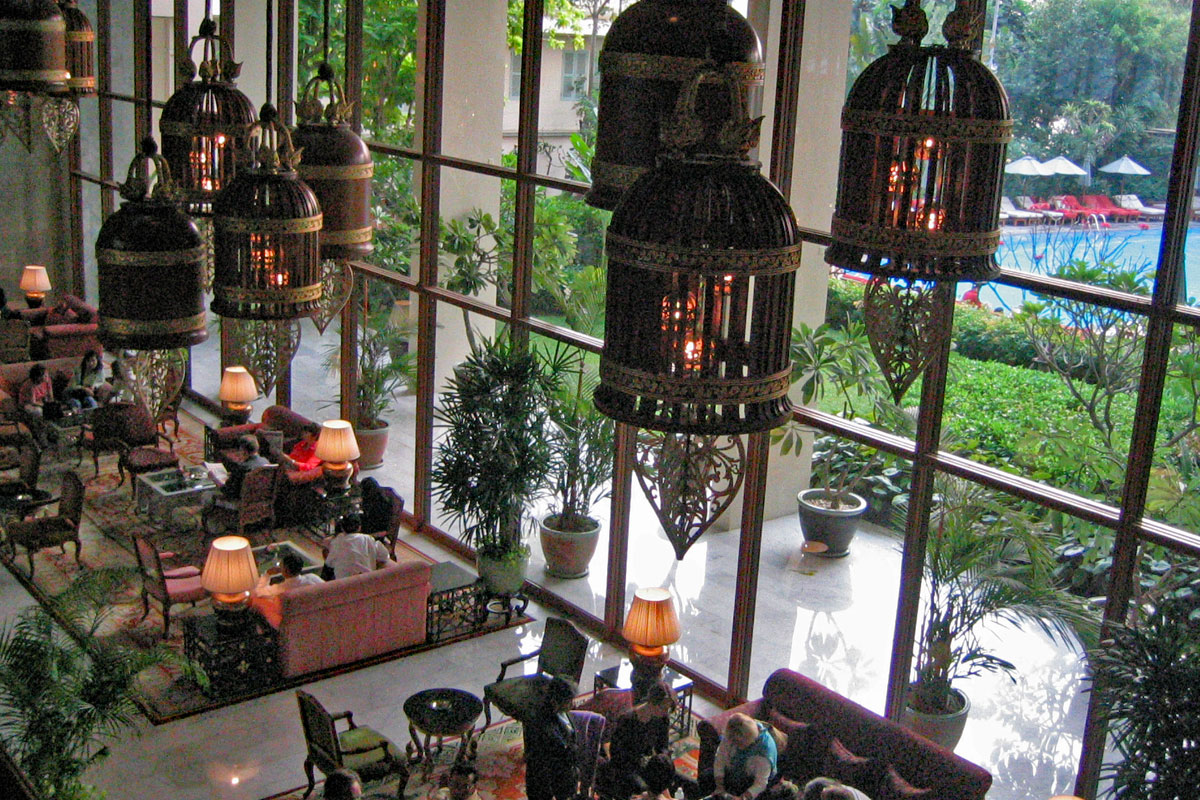
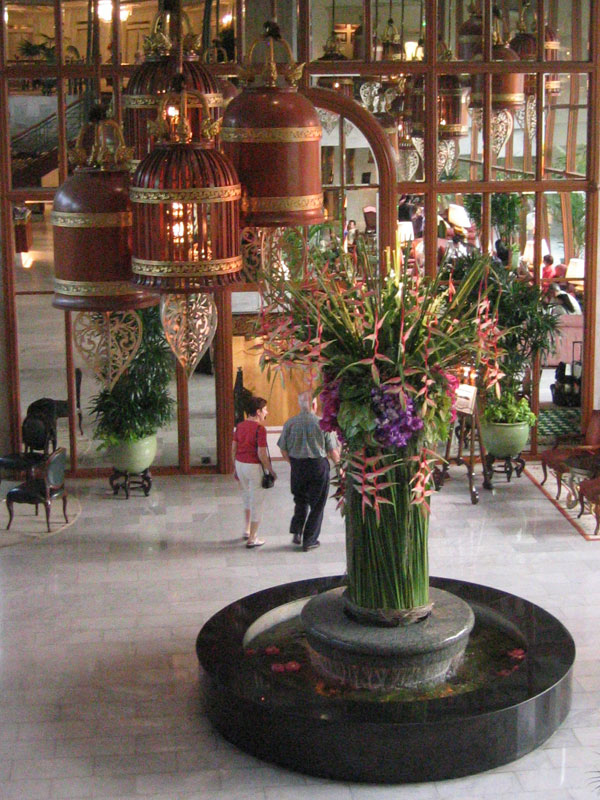
Looking down at the Oriental Hotel lobby (2006)
Floral arrangement in the Oriental Hotel lobby (2006)
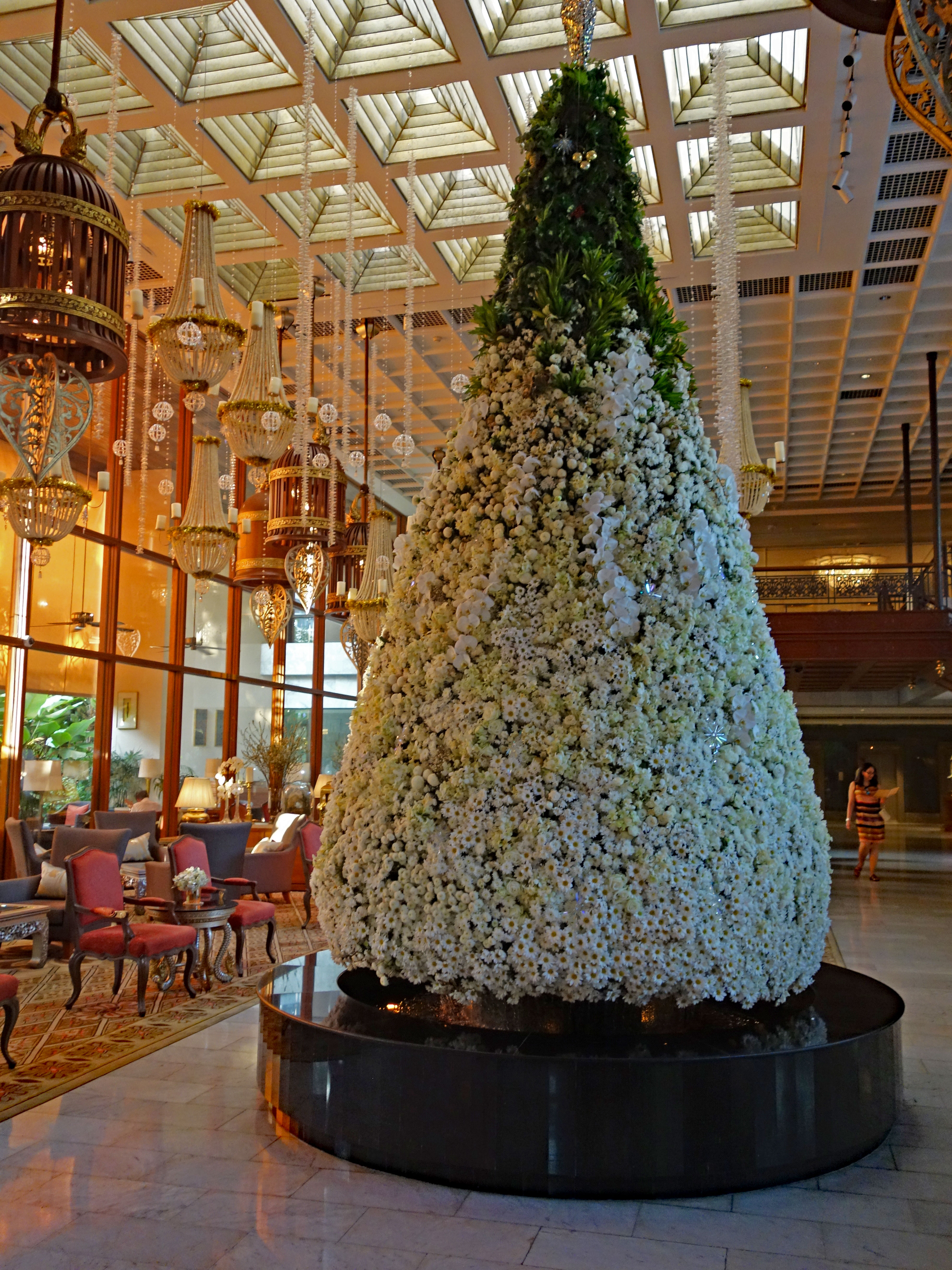
Holiday tree in the Oriental Hotel lobby (2015)
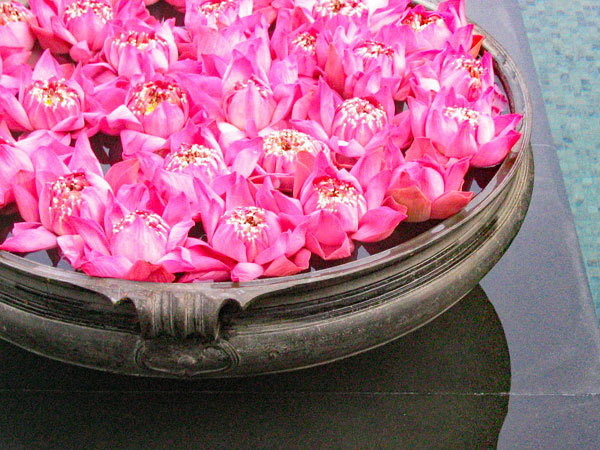
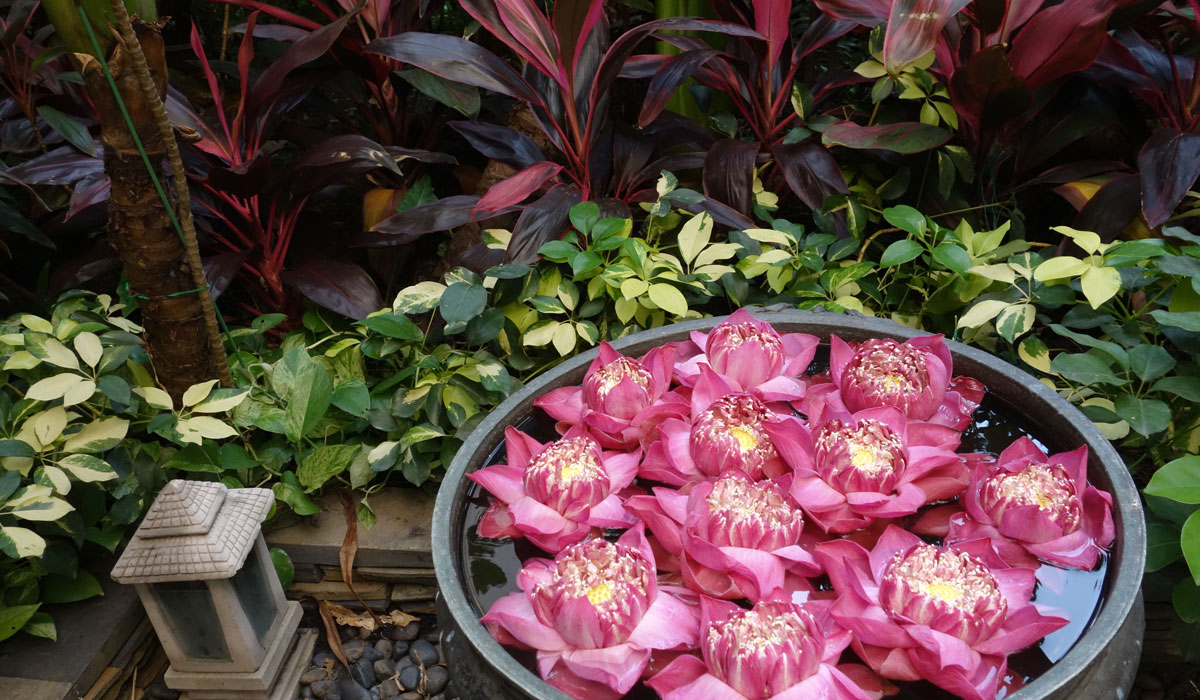
Display of lotus blossoms in one of the courtyards at the Oriental Hotel (2015)
1 / 8
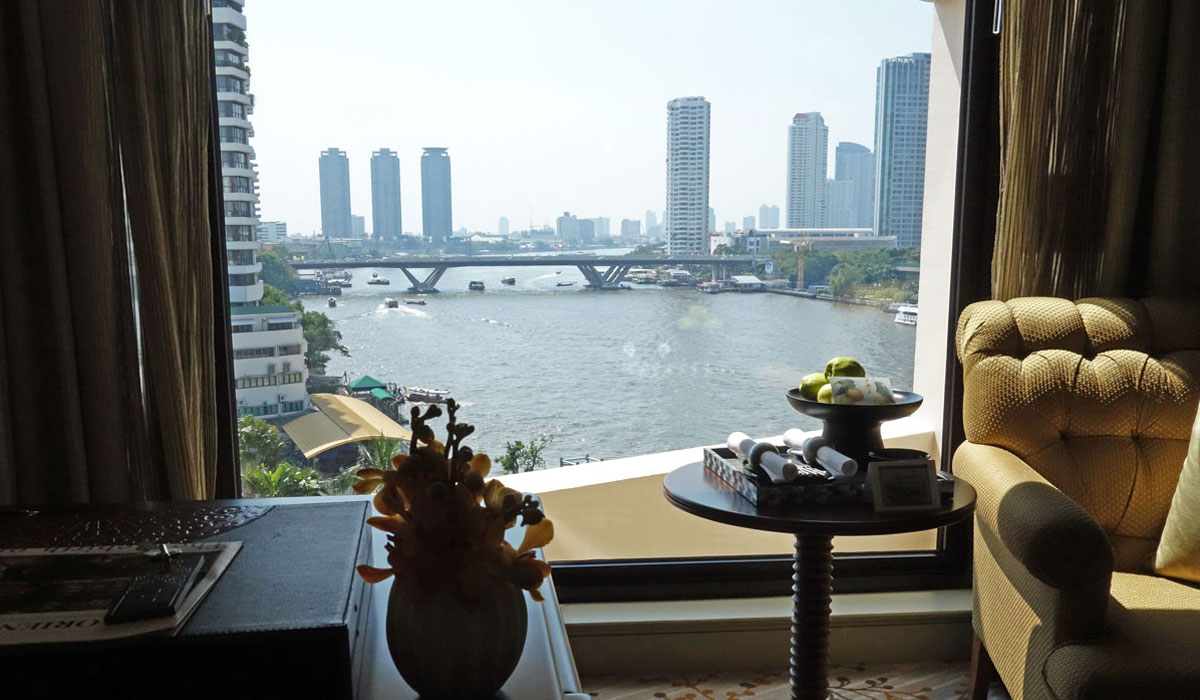
View out the window of our hotel room (2015)
2 / 8
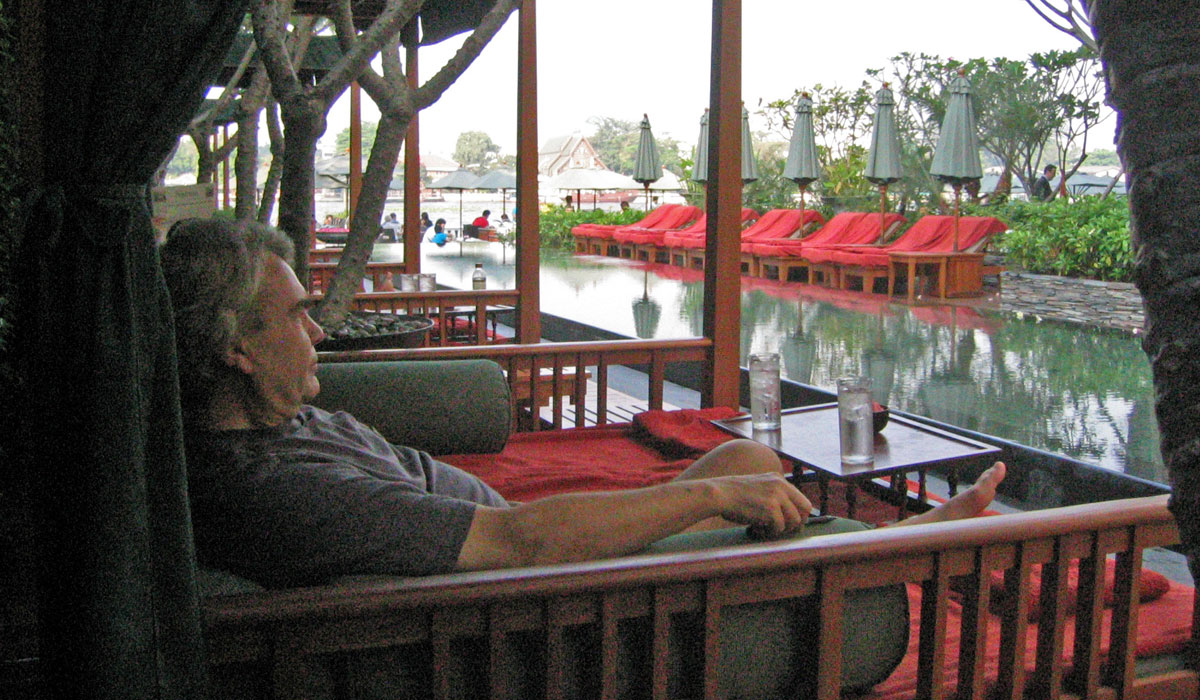
Peter relaxing by pool side (2006)
3 / 8
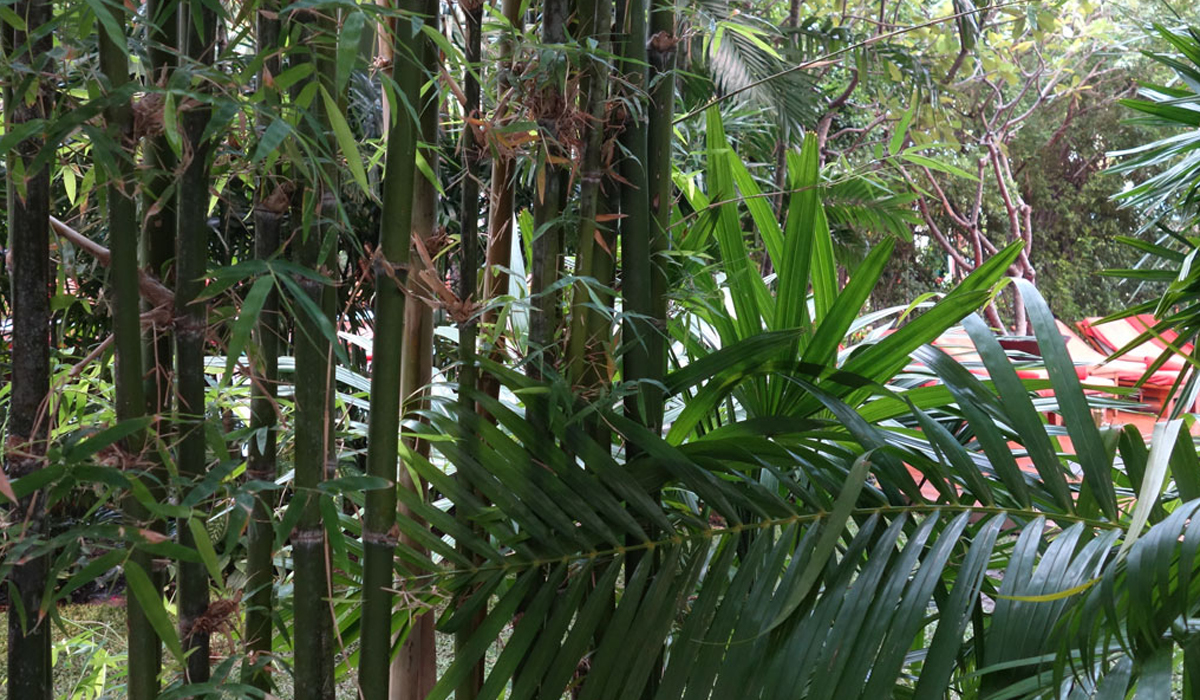
Looking through bamboo to the pool (2015)
4 / 8
A note left on our bed (2015)
5 / 8
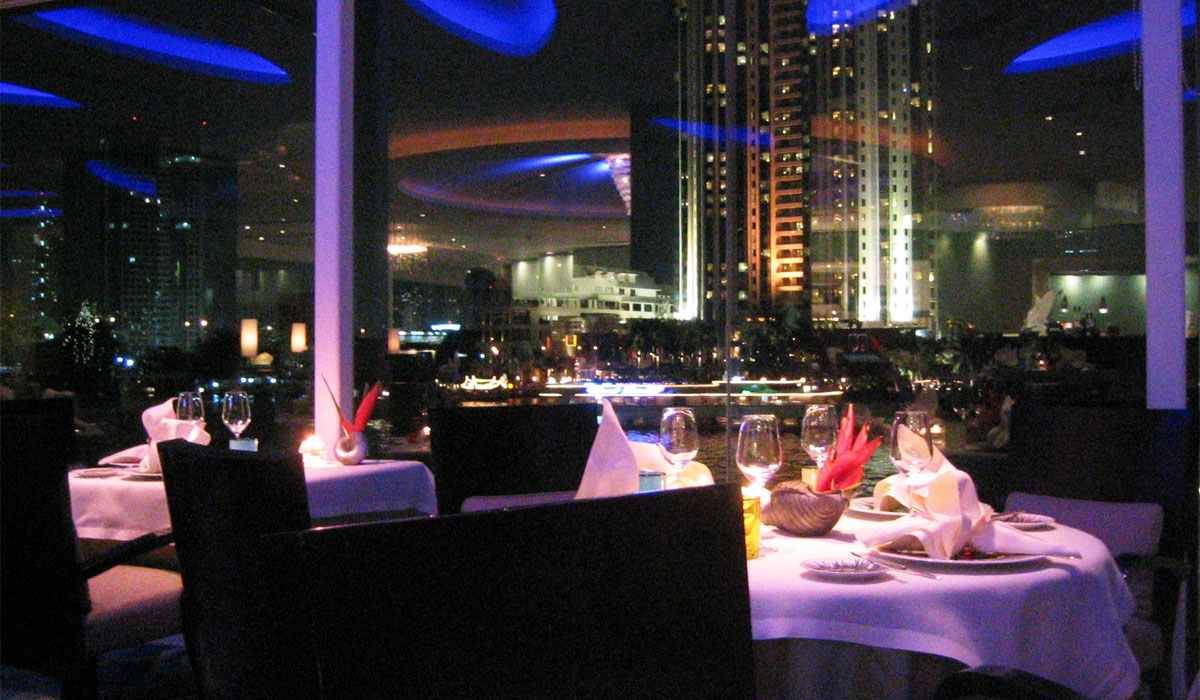
Overlooking the river from one of the restaurants at the Oriental Hotel (2015)
6 / 8
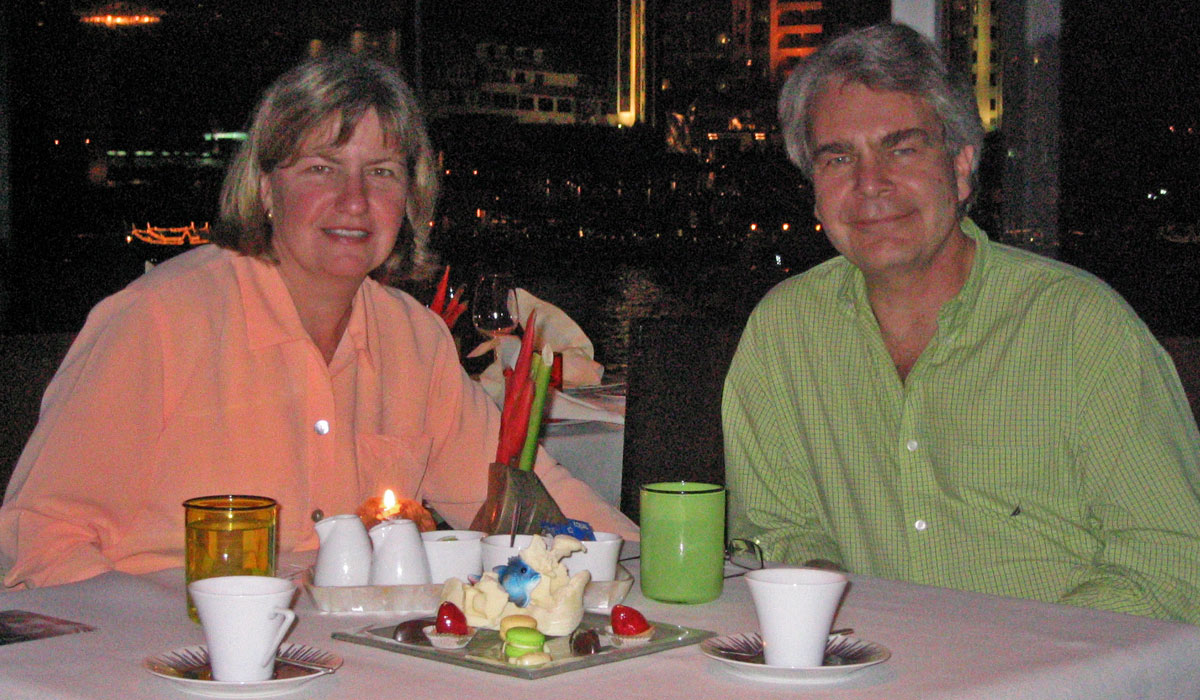
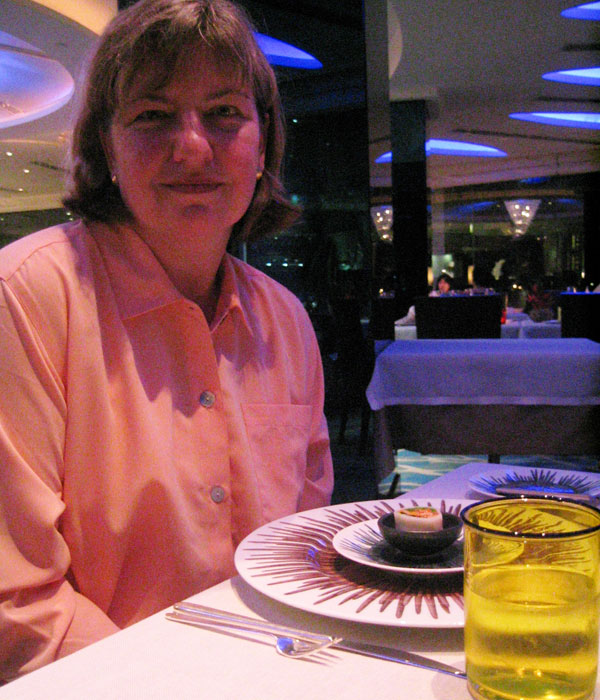
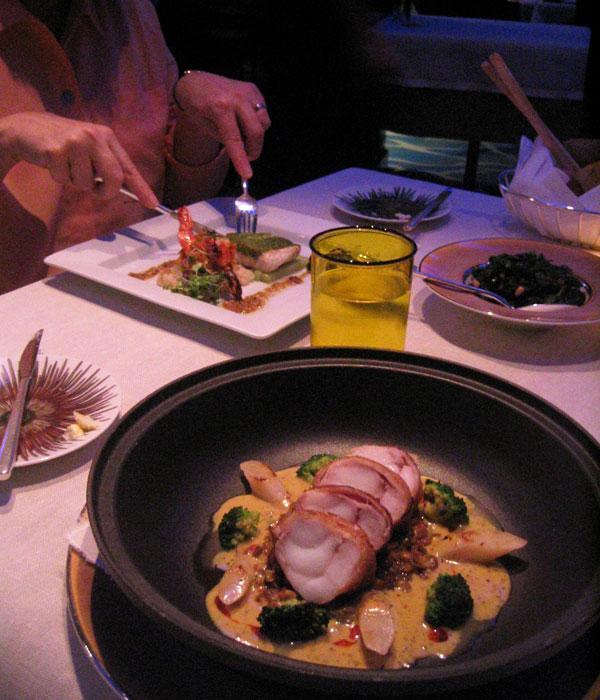
Finishing dinner with dessert (2006)
7 / 8
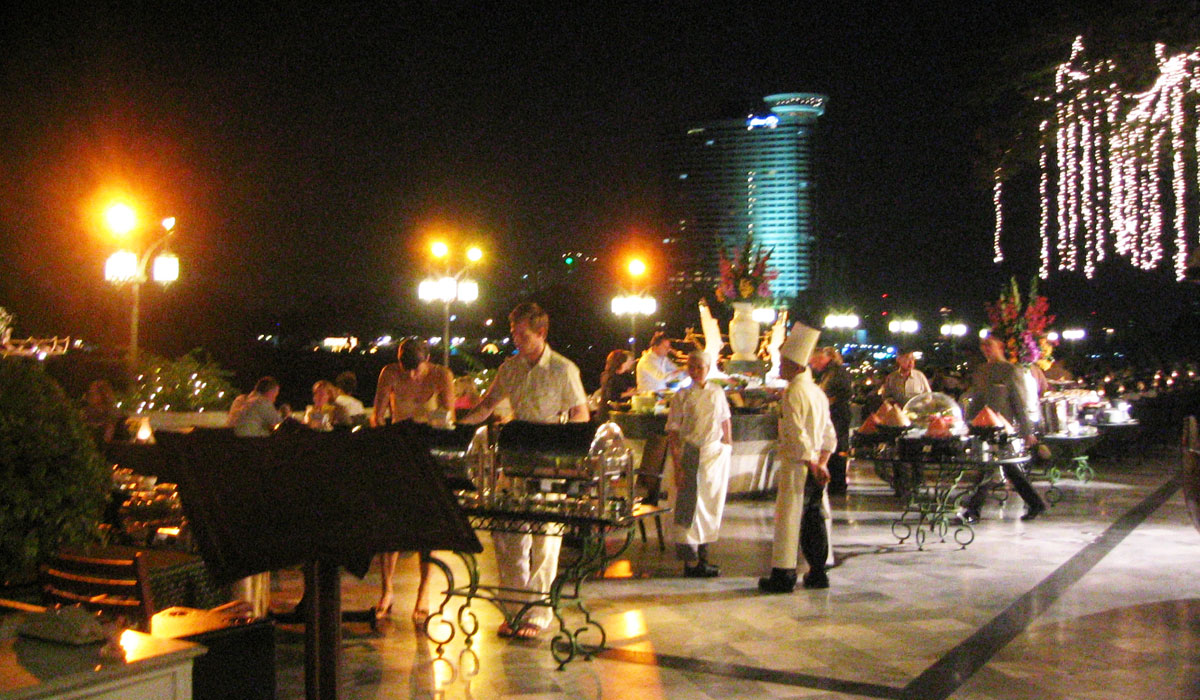
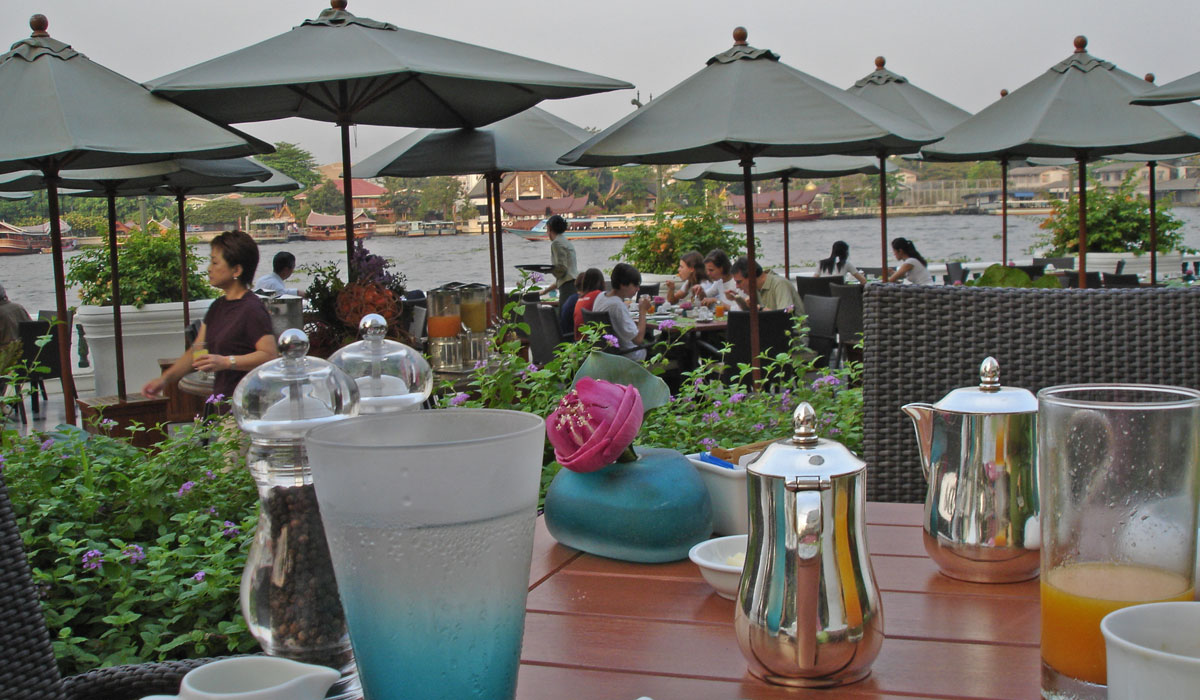
Dining on the terrace of the Oriental Hotel (2006)
8 / 8
View of the Chao Phraya river from the Oriental Hotel shuttle boat (2015)
View of the river from the Oriental Hotel boat dock (2006)
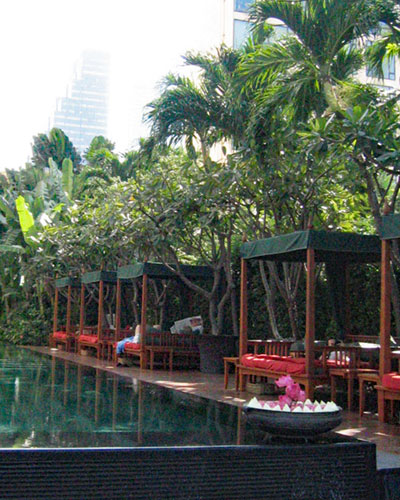
Cabanas by the pool (2006)
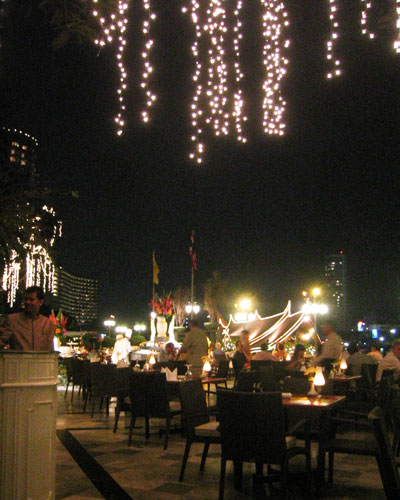
Dinner on the terrace by the river (2006)
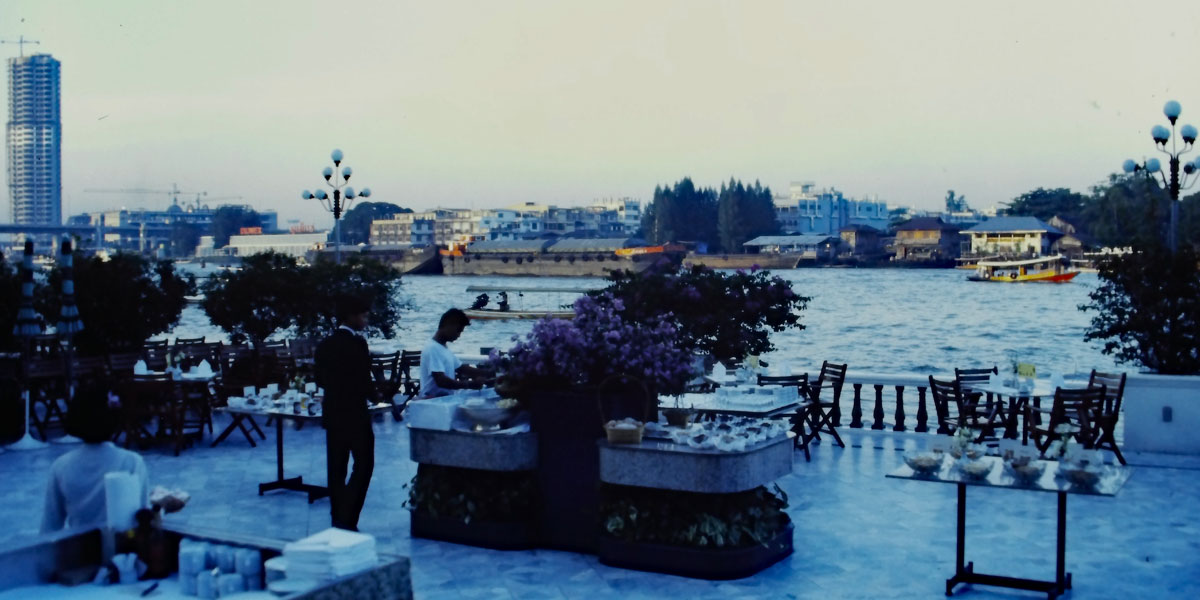
Looking toward the riverside terrace at the Oriental Hotel in 1986
A similar view from the terrace in 2006
Historical City of Ayutthaya
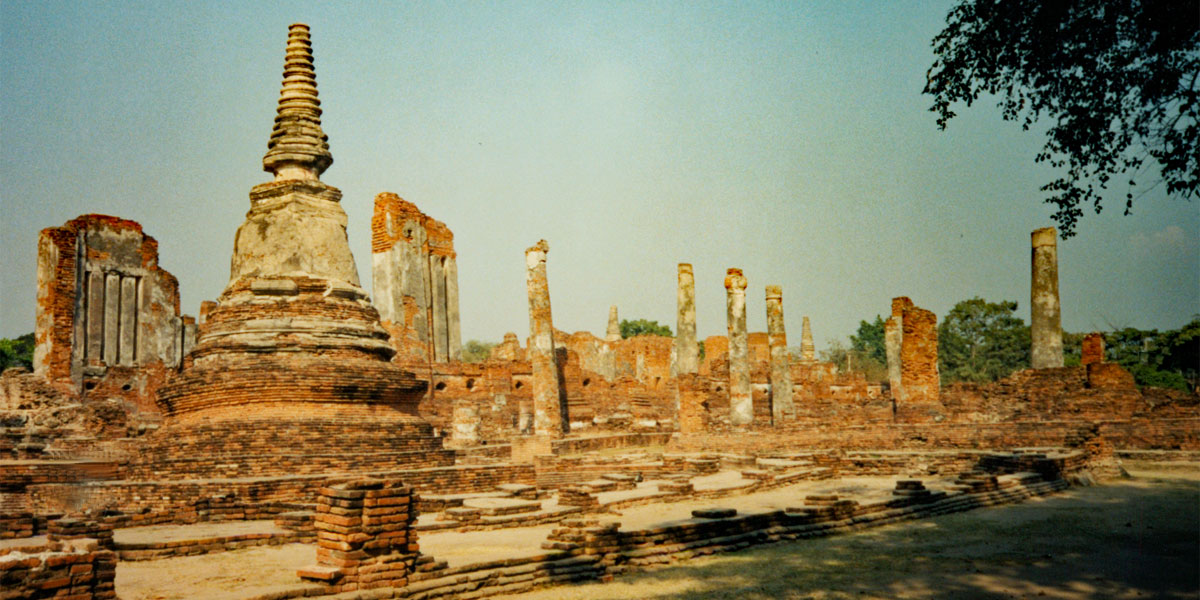
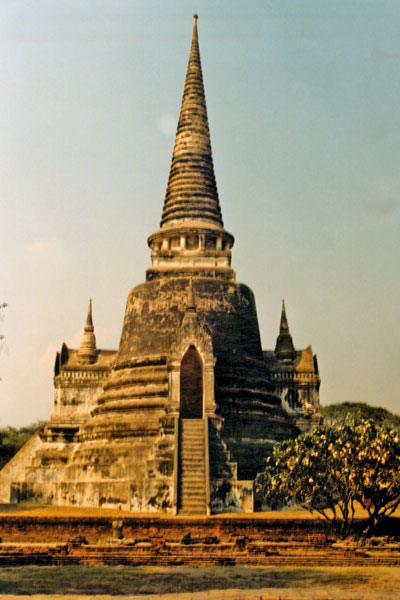
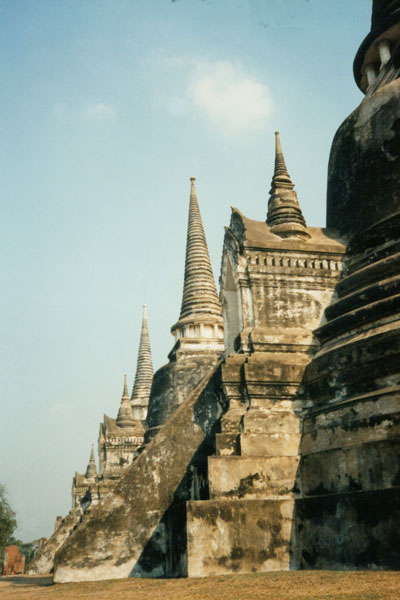
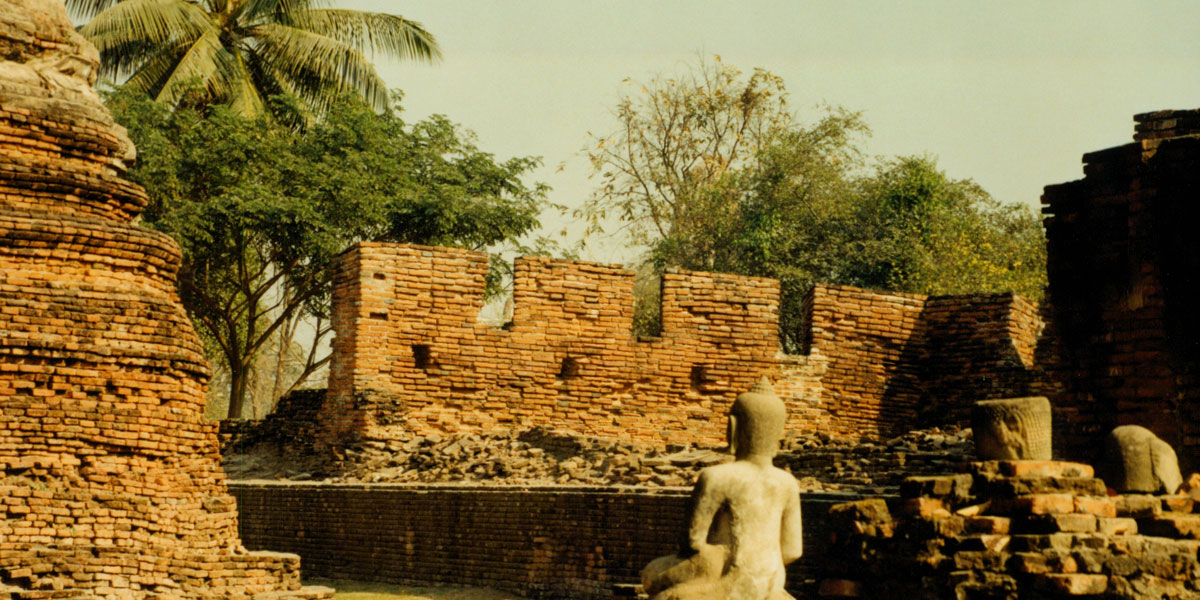
The historical city of Ayutthaya, once the ancient capital of Kingdom of Siam, is now a UNESCO World Heritage Site. It is a full-day boat trip from Bangkok — 80 miles north of Bangkok — and we visited this site in 1986 and 1998. The preserved kingdom capital is home to the ornate Bang Pa In Palace, also known as the Summer Palace, and five different temples that date back as far as the 14th century.
View of some of the ruins at the ancient Thai capital of Ayutthaya (1998)
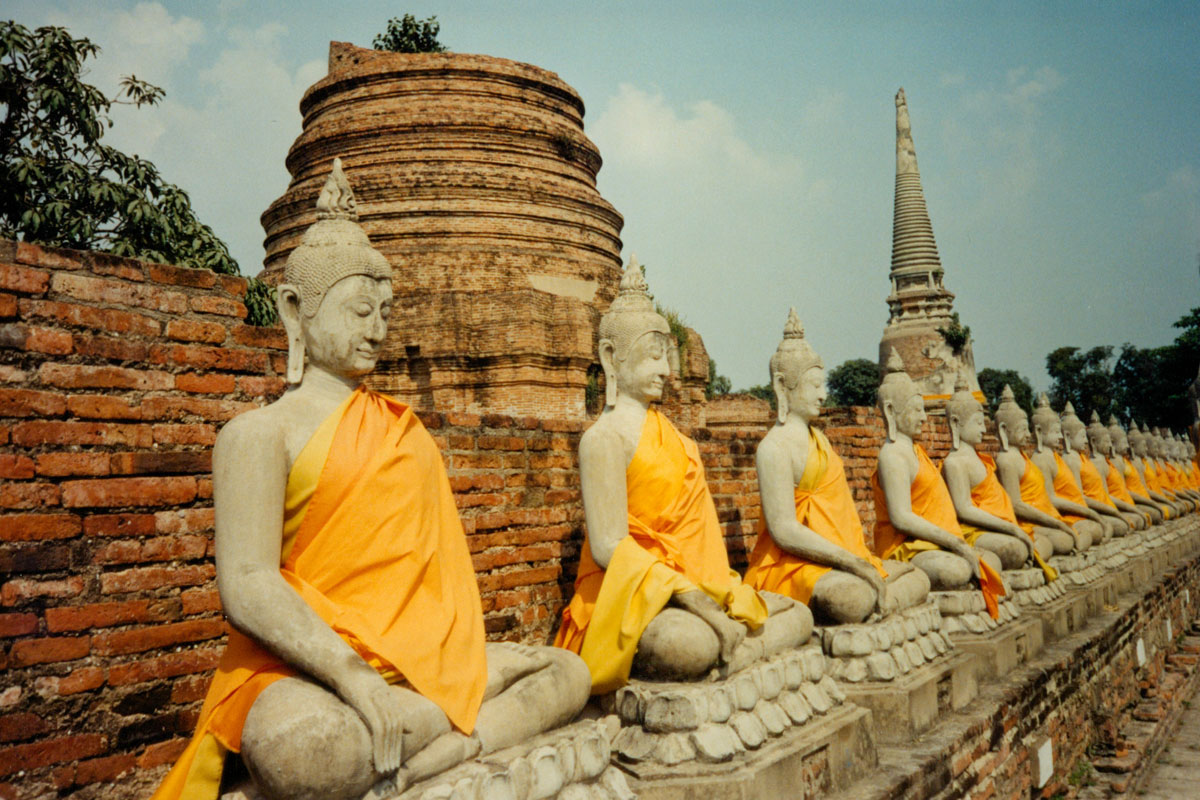
Buddhas lined up by one of the temples at Ayutthaya (1998)
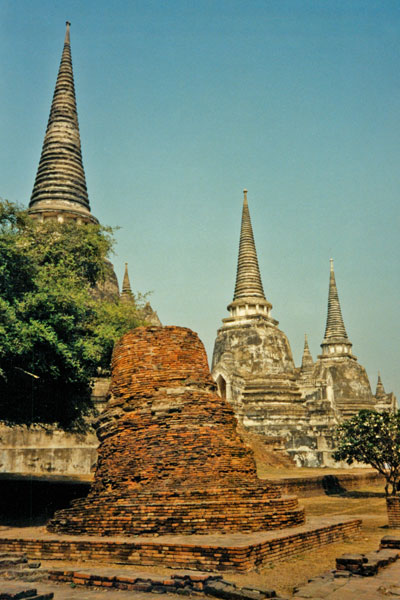
Variety of stupas (1998)
Stairway leading to one of the temples (1998)
Another group of temples and stupas (1998)
Part of the ancient wall at Ayutthaya (1998)
Bang Pa-In Summer Palace
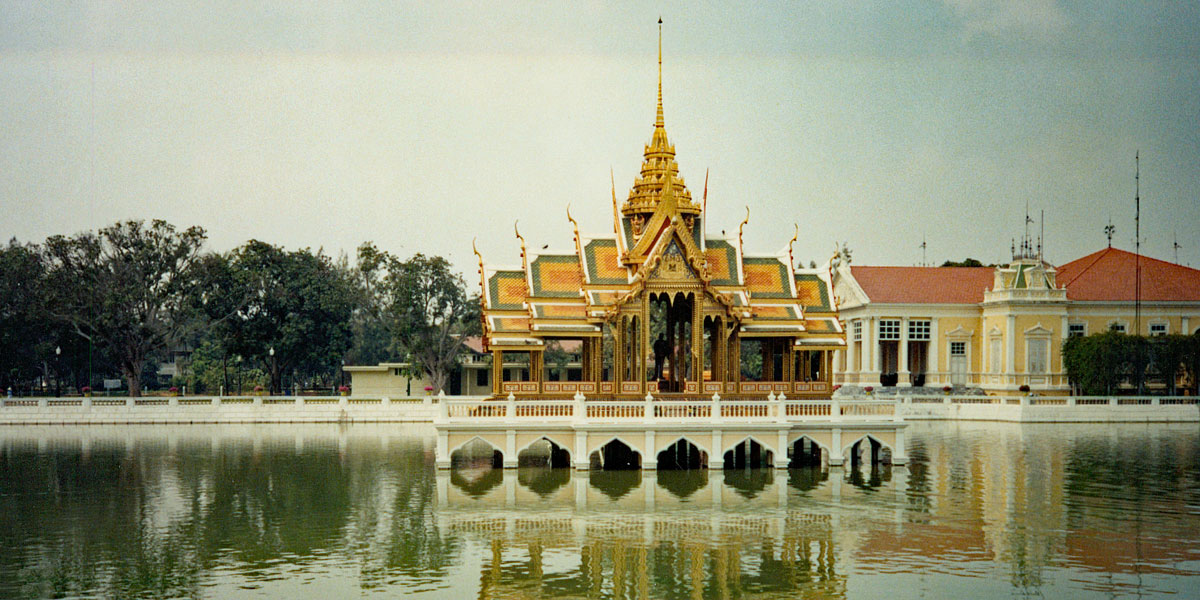
A few miles down the Chao Phraya River from Ayutthaya is the Bang Pa-In Summer Palace. The site was first used by the royal court as a summer retreat in the 17th century. However, the Palace was destroyed with the fall of Kingdom of Ayutthaya and was restored in the mid-19th century. The structures represent a variety of architectural styles, set in a large park around ponds and waterways.
Peaceful view of the Bang Pa-In Summer Palace
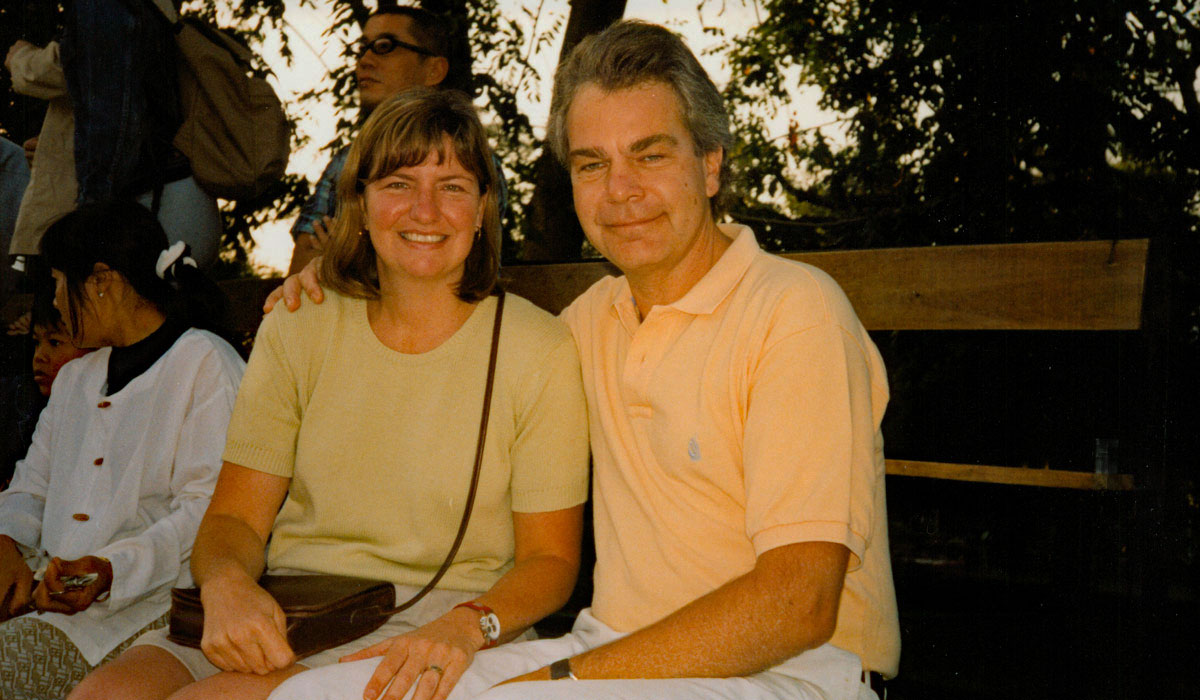
Posing at the Summer Palace (1998)
Posing at the Summer Palace (1998)
Jim Thompson House
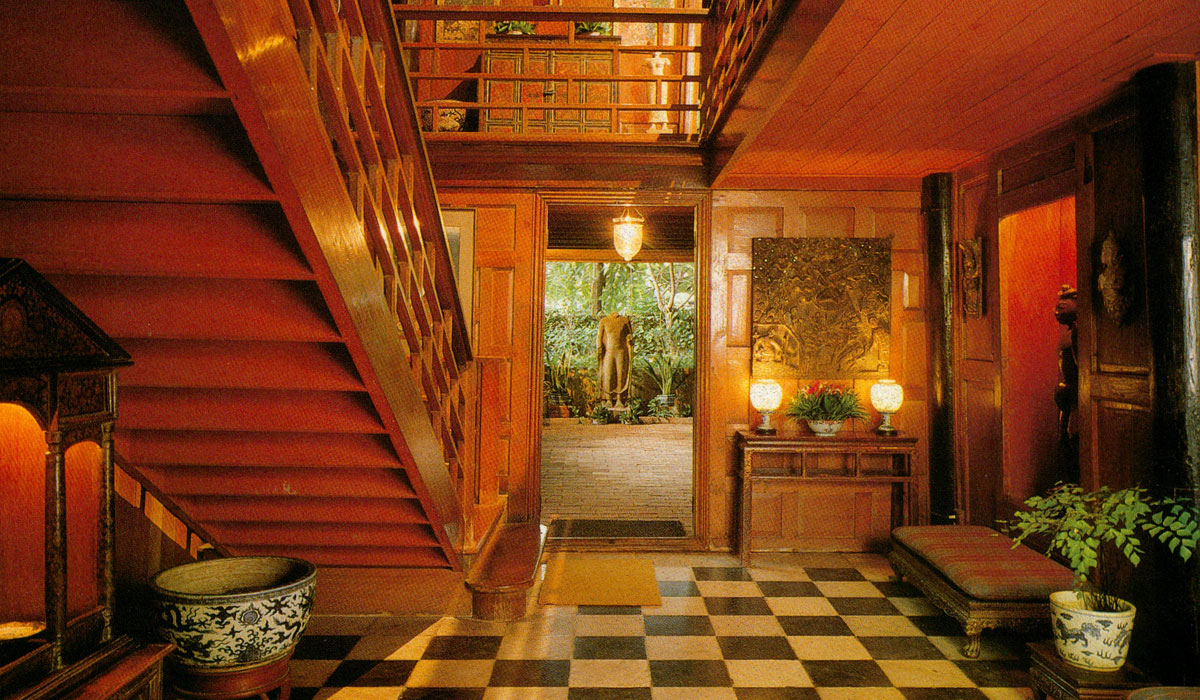
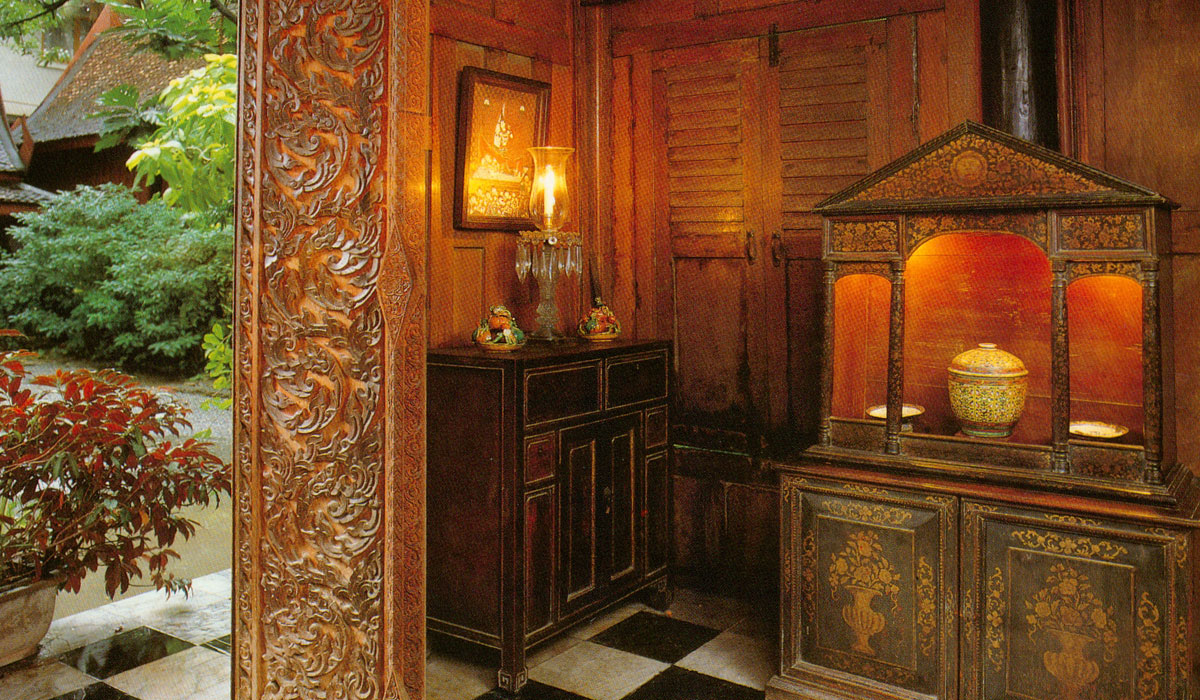
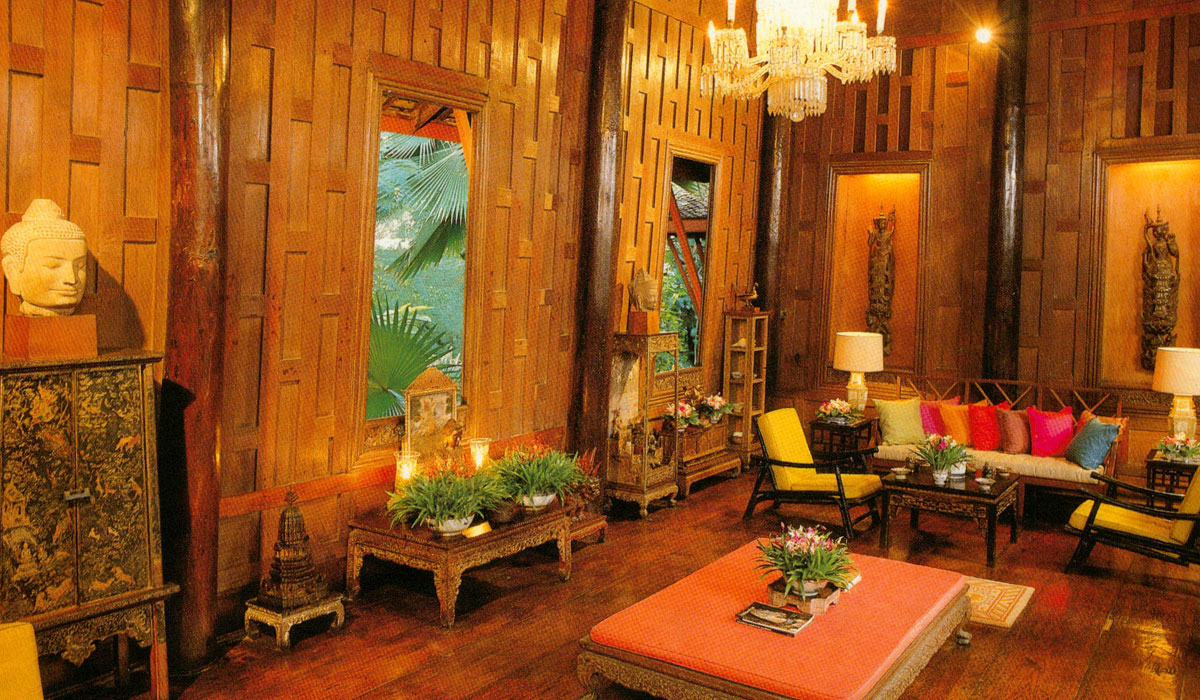
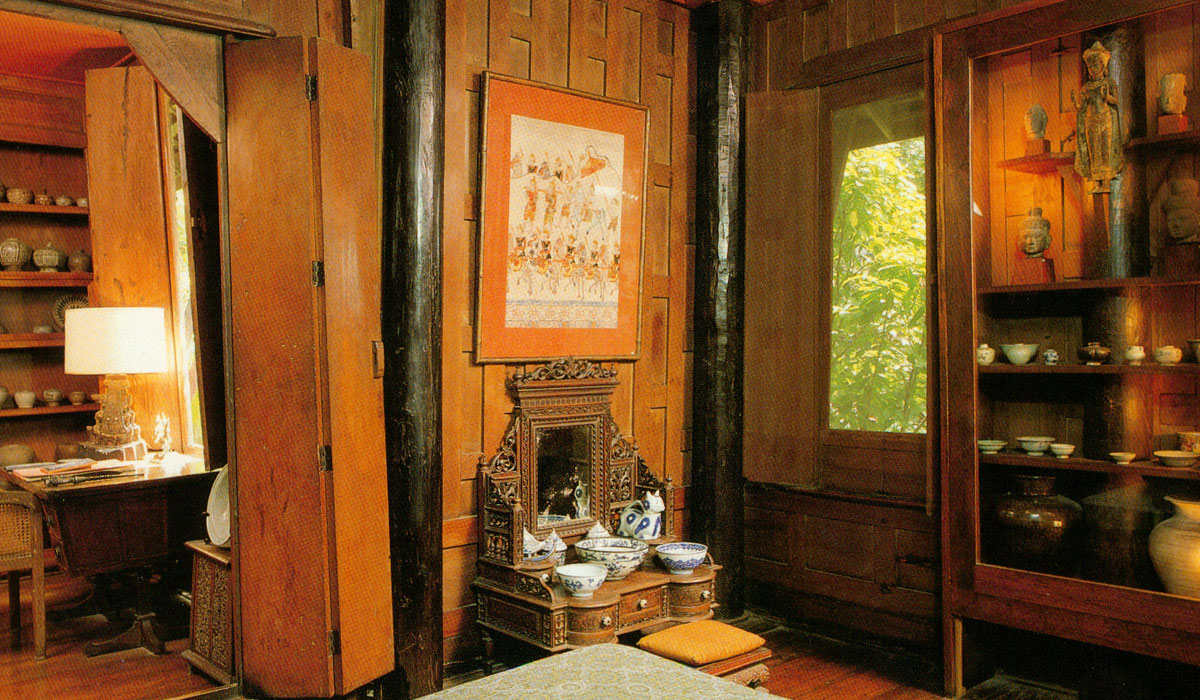
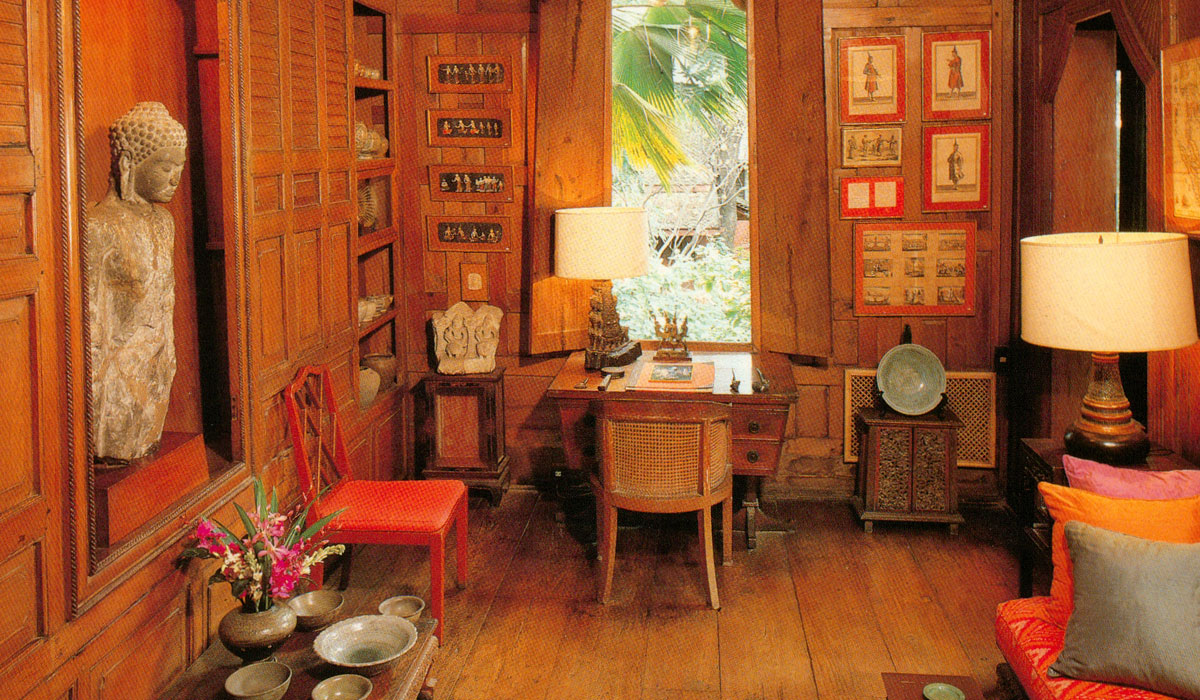
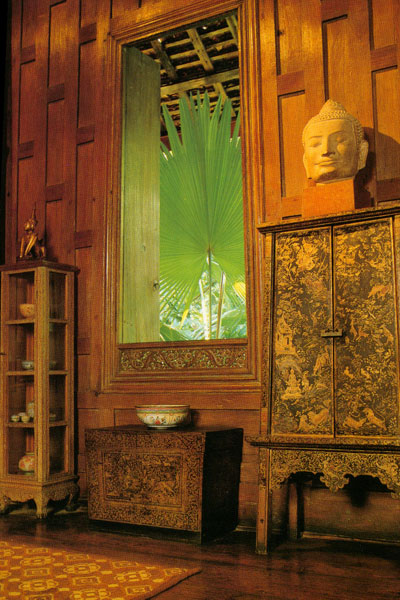
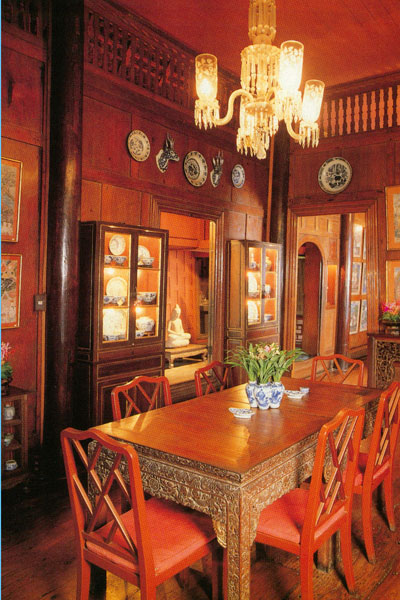
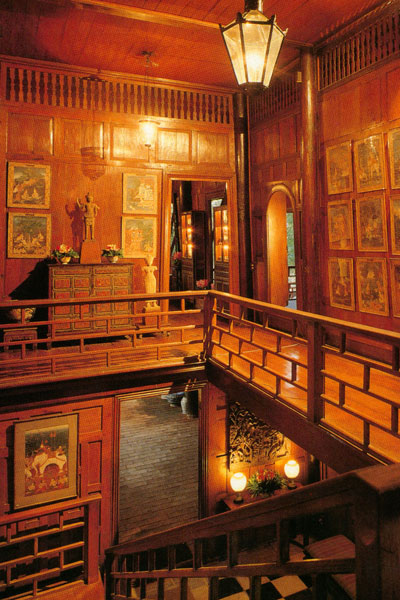
Jim Thompson was the American businessman who brought Thai silks to the rest of the world in the mid-20th century. His canal-side home has been transformed into a museum showcasing his vast collection of antiques, artwork, and religious artifacts. The canal-side property is an architectural marvel, made of an amalgamation of six traditional teak houses from Ayutthaya, surrounded by lush gardens. Inside the house is a small but well-curated collection of objects, like temple wall hangings that depict the life of Buddha, repurposed mahjong tables in the dining room, an elegant standing Buddha, and a fine display of porcelain.
The following photos were scanned from a postcard collection (photographer unidentified).
Exterior view of Jim Thompson's House on the Klong
1 / 6
Entering the main hallway with view to the back garden
2 / 6
Another view to the outside garden
3 / 6
The main sitting area
4 / 6
The primary bedroom
5 / 6
Another view on the main floor
6 / 6
Writing desk with lots of Thai antiques on display
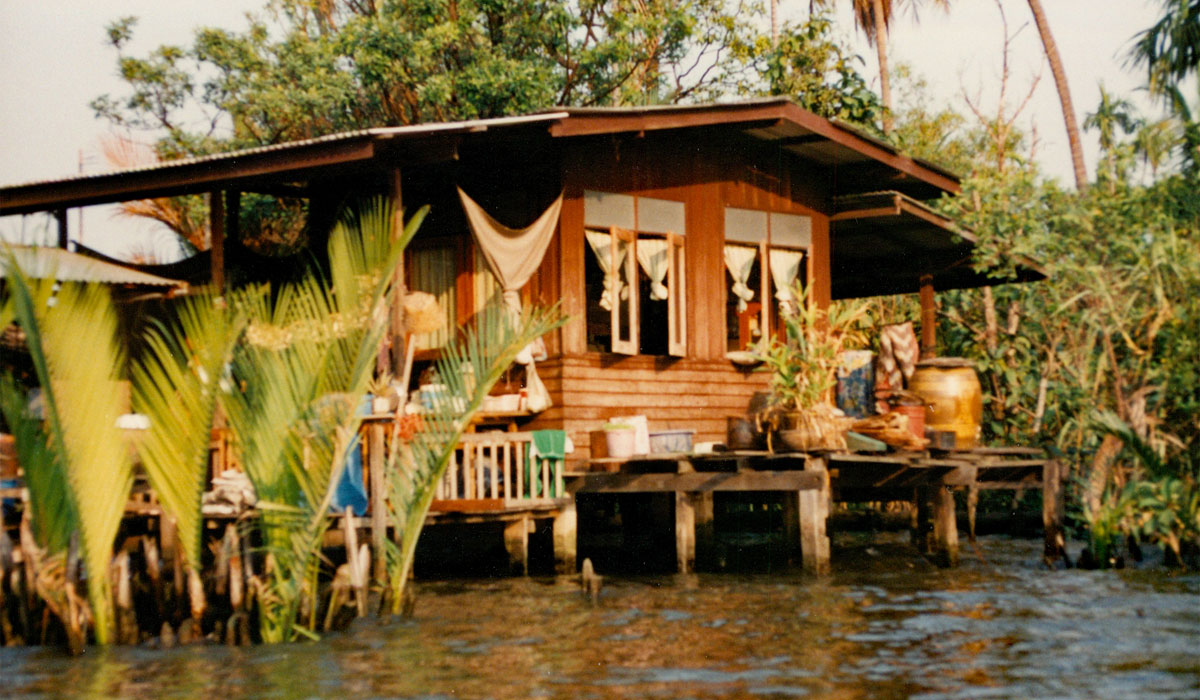
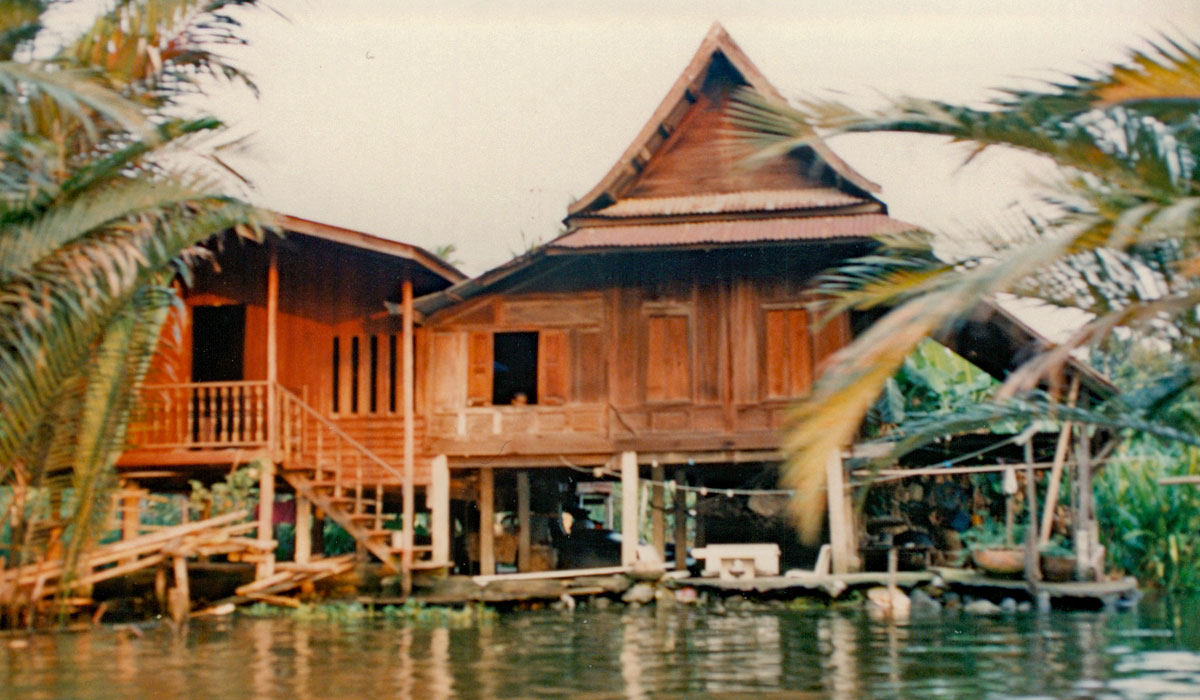
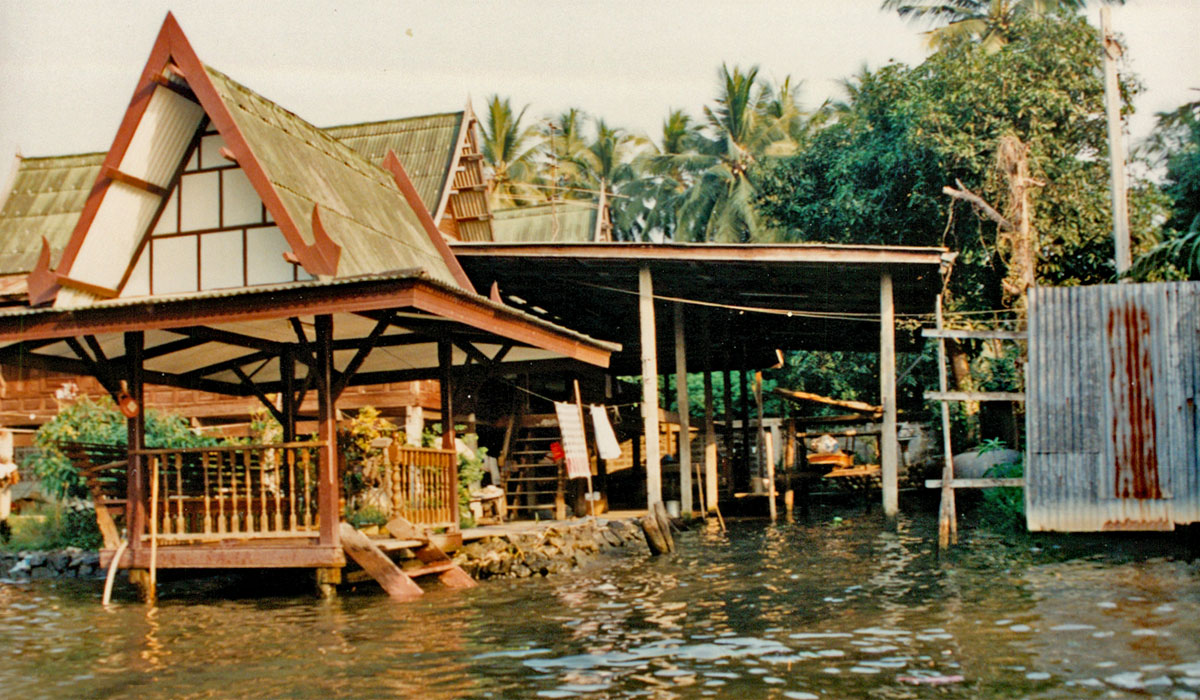
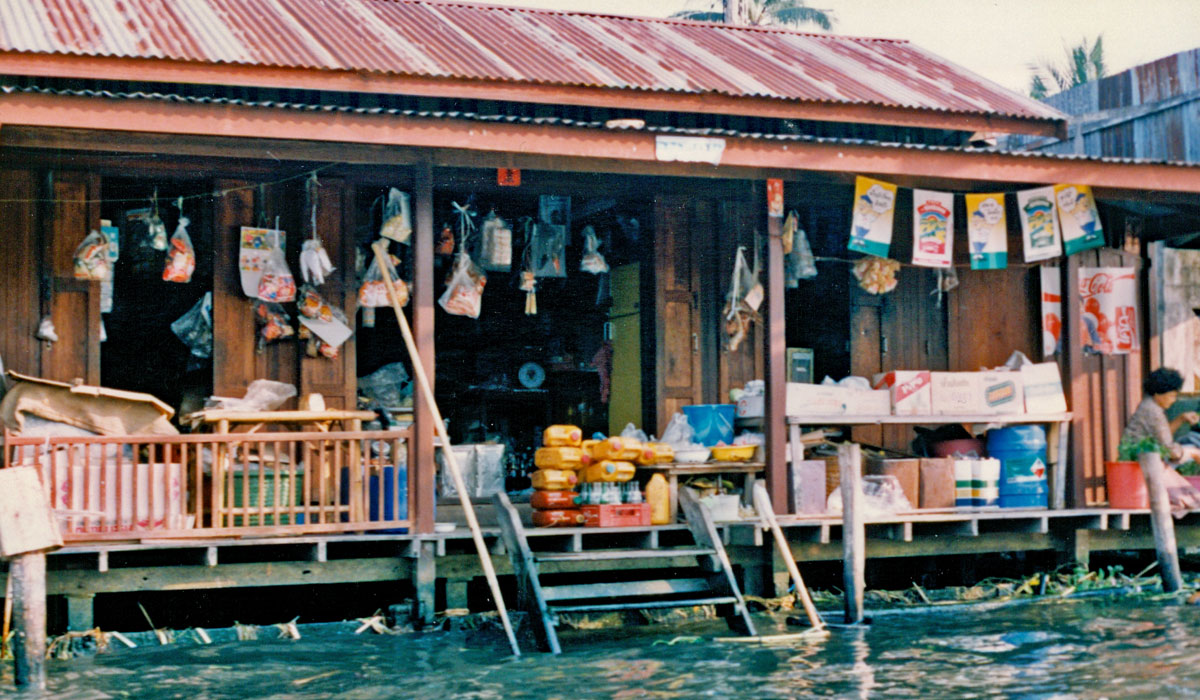
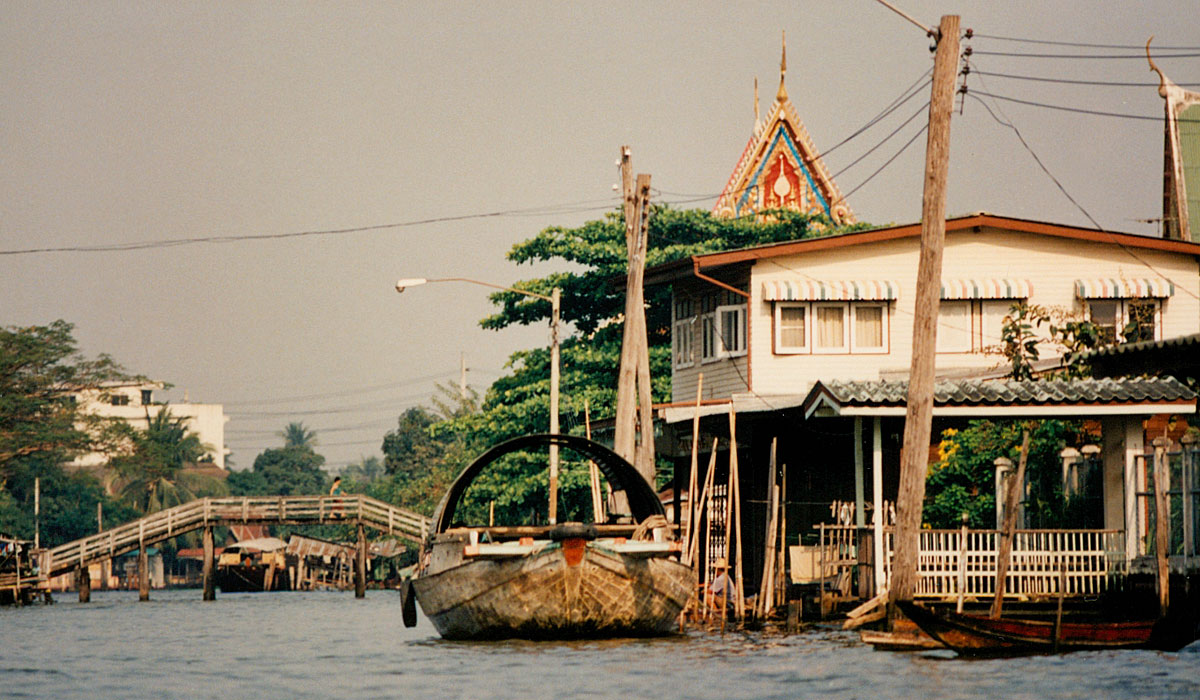
Bangkok is also known as the “Venice of the East” — the city is quite literally webbed with miles of canals, or klongs. On several trips, we hired a longtail boat to take us through the klongs to visit some of the oldest sections of the city west of the Chao Phraya River, which is like a trip back in time. There are wooden houses on stilts, plus lush greenery, small, colorful temples, and far more locals than tourists.
Colorful longtail boats used as river taxis
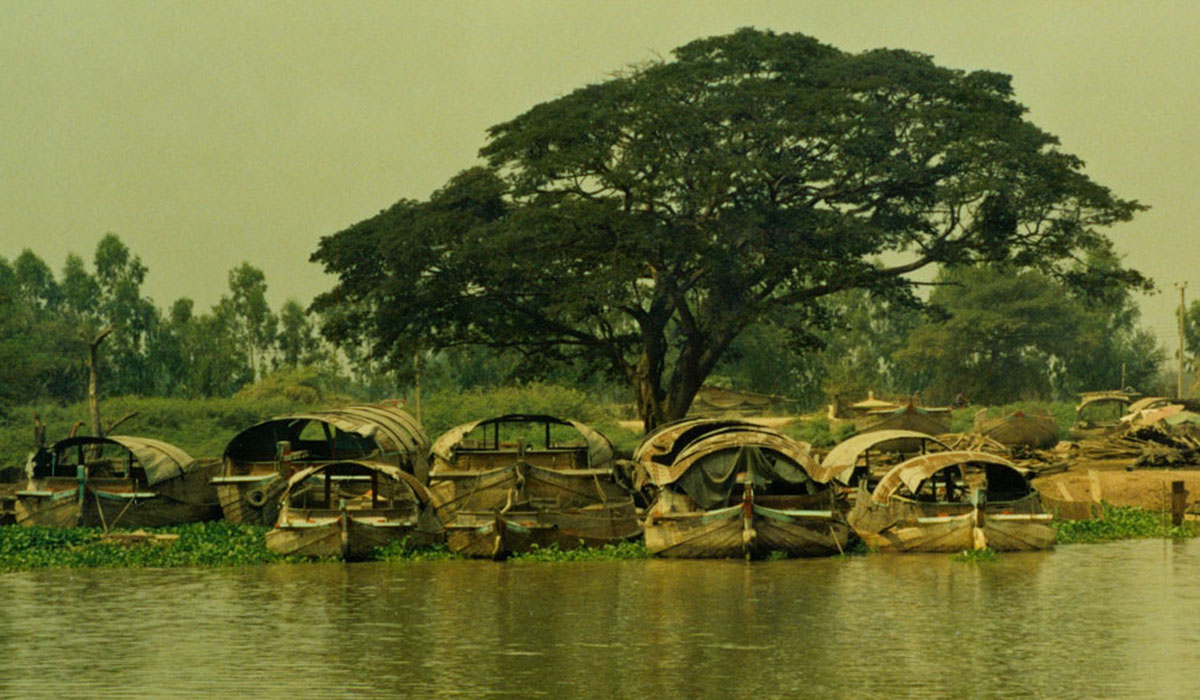
Barges lined up on the shore (1989)
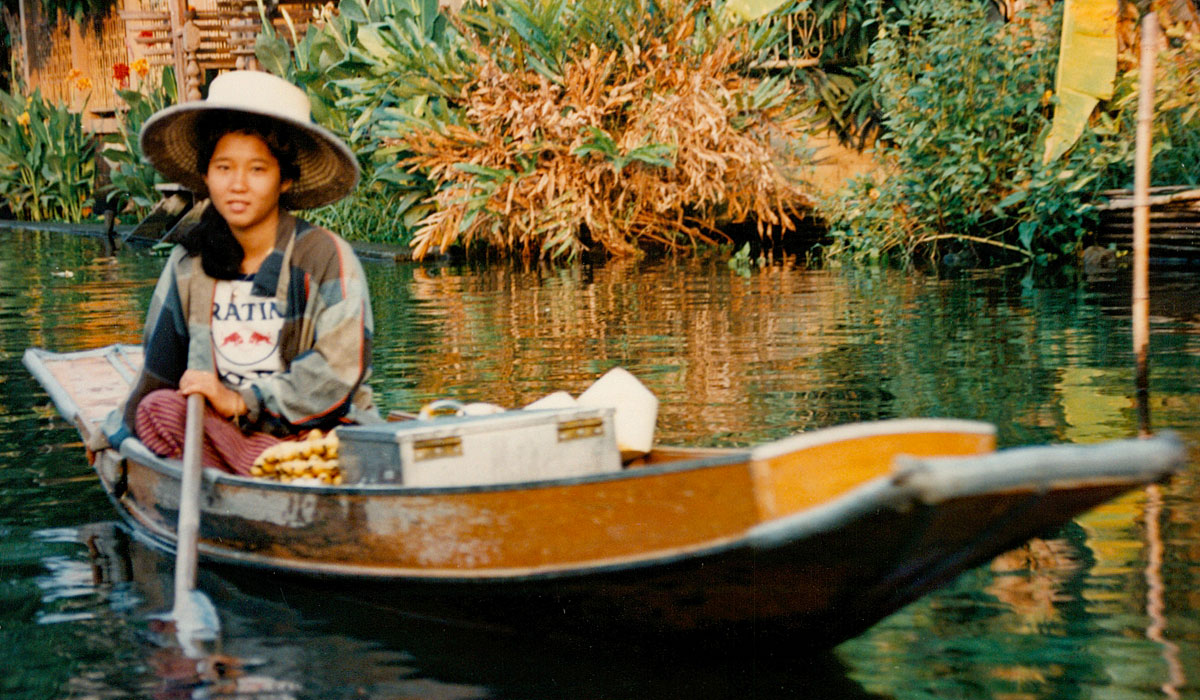
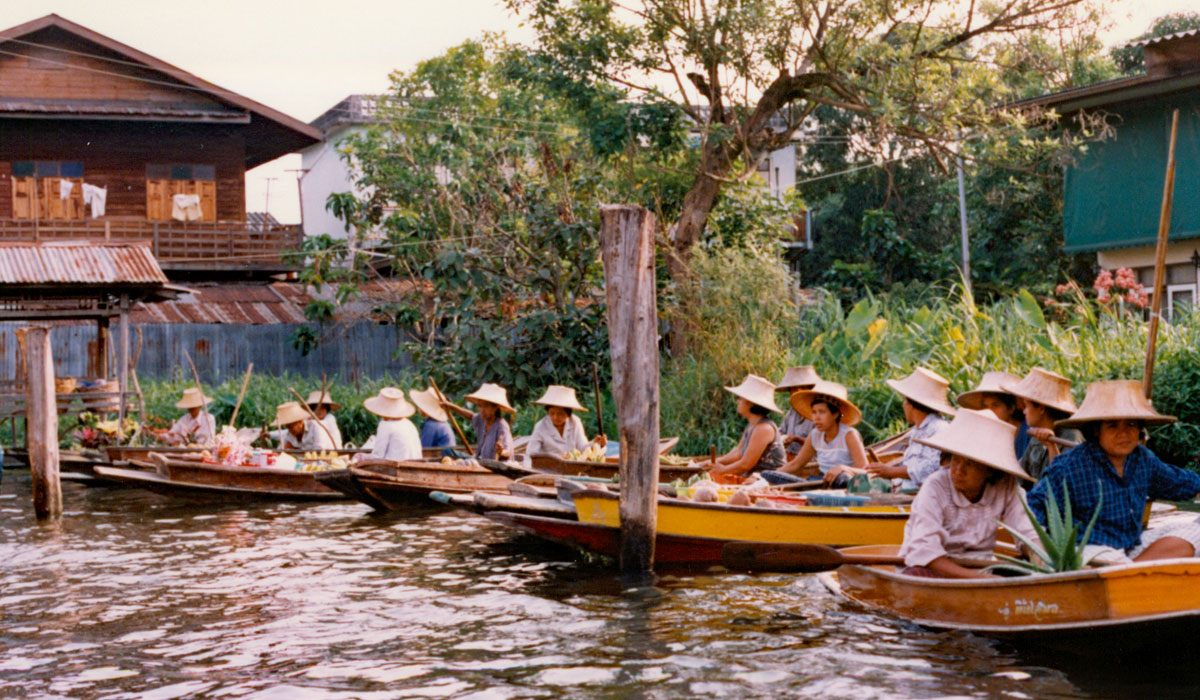
Women going to the floating market
1 / 7
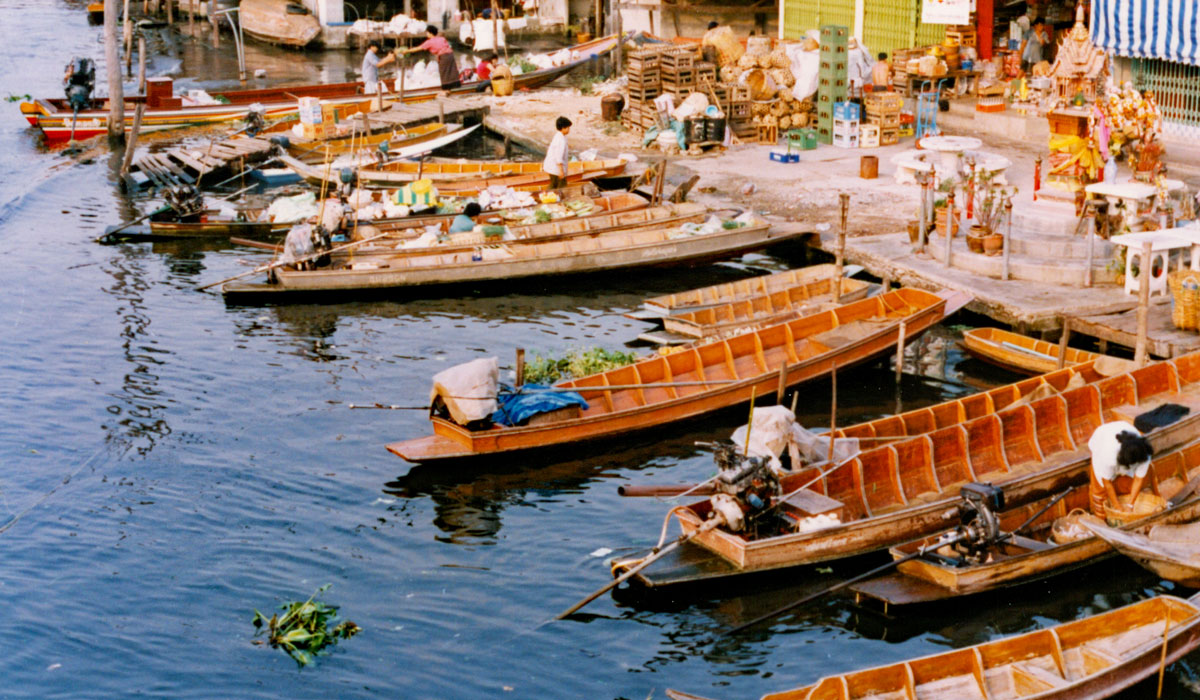
Boats parked at the dock (1989)
2 / 7
A house on the klong (1989)
3 / 7
Another house on our trip through the klongs (1989)
4 / 7
Another view along the klong (1989)
5 / 7
A local store accessible via the river (1989)
6 / 7
Women at the floating market (1989)
7 / 7
Another scene along a klong leading to the Chao Phraya River (1989)
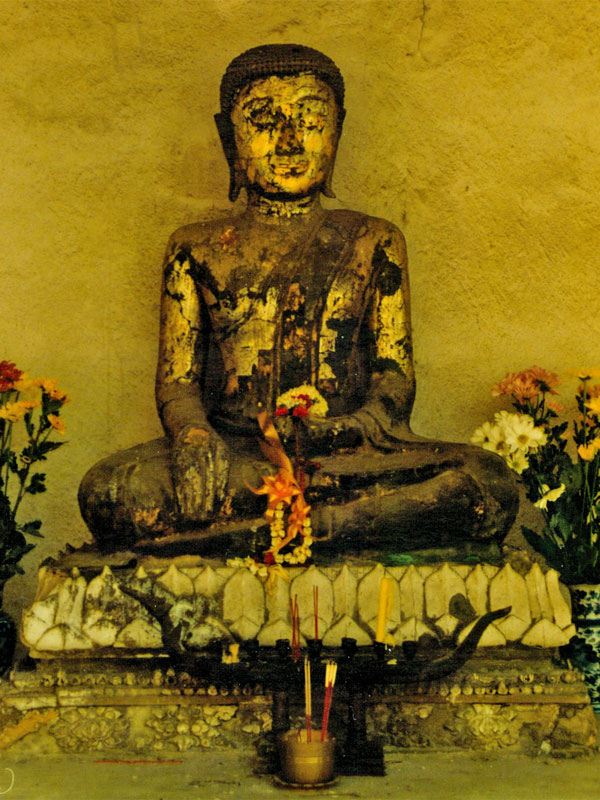
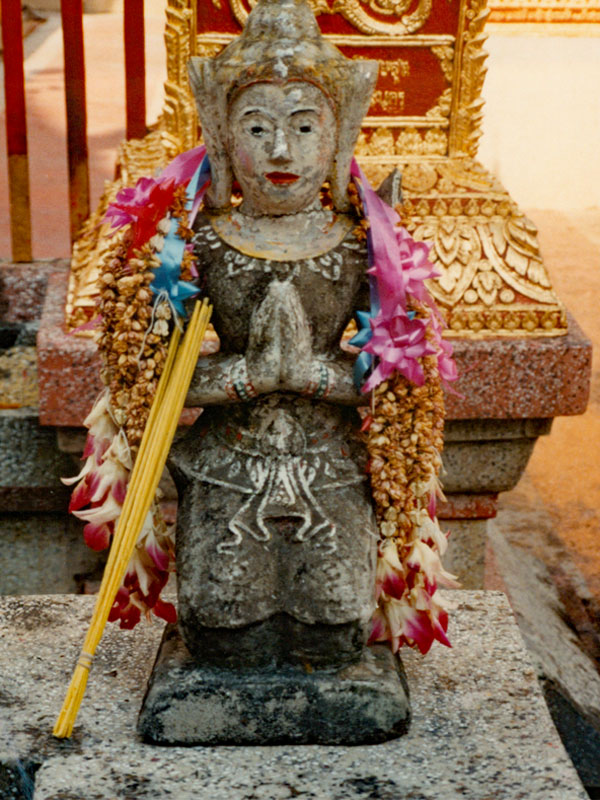
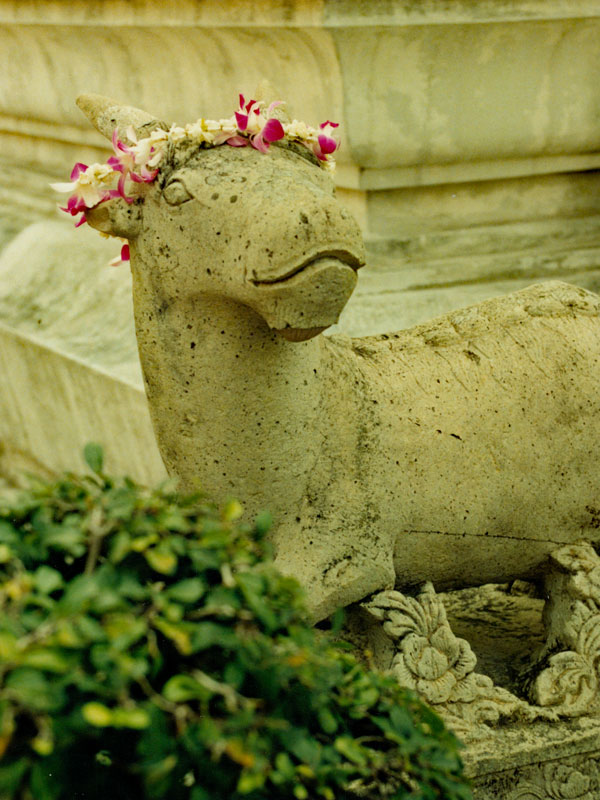
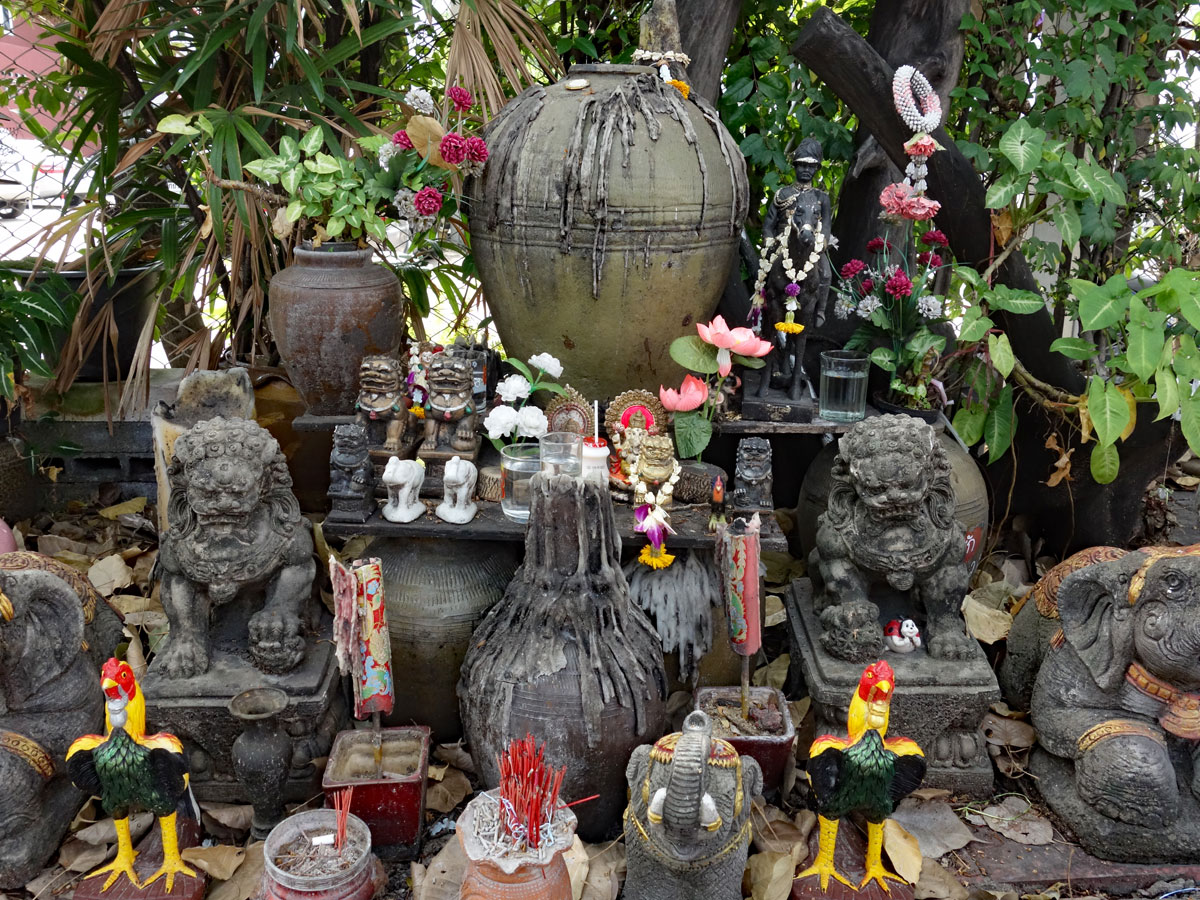
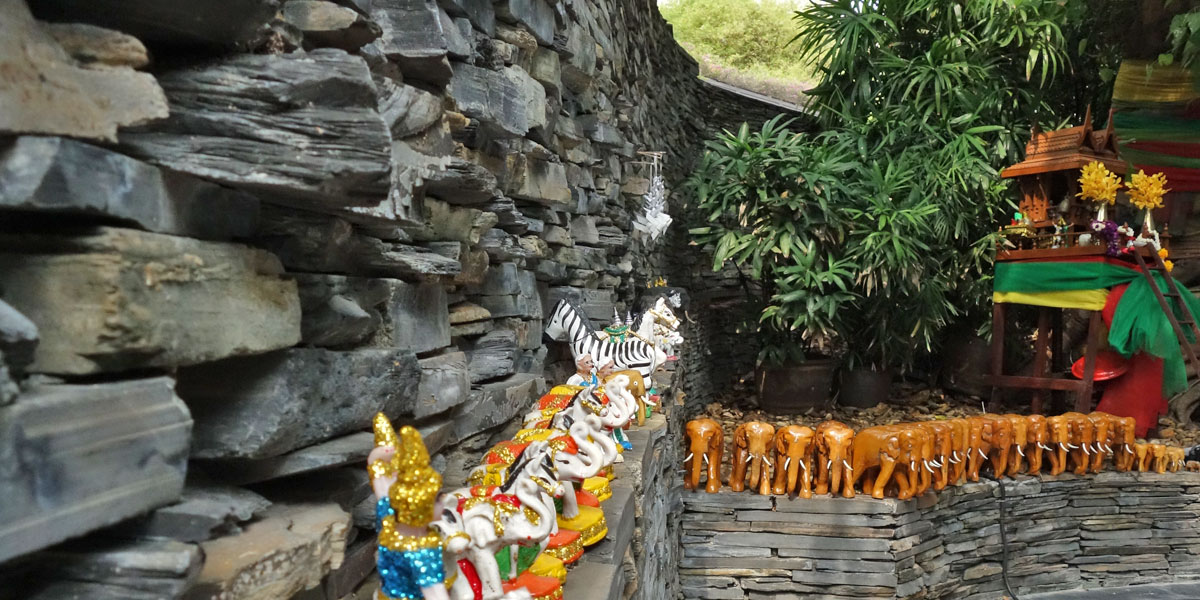
Statues and offerings are everywhere in Thailand. They are used in many ways, including in temples and spirit houses, and as a way to show gratitude. Offerings at temples can include flowers, candles, incense, and rice. Rice is considered a purified offering that represents the Buddha's wisdom, compassion, and purity.
Buddha with offerings
Another figure with offerings
Decorated sculpture
Various offerings at an unexpected site
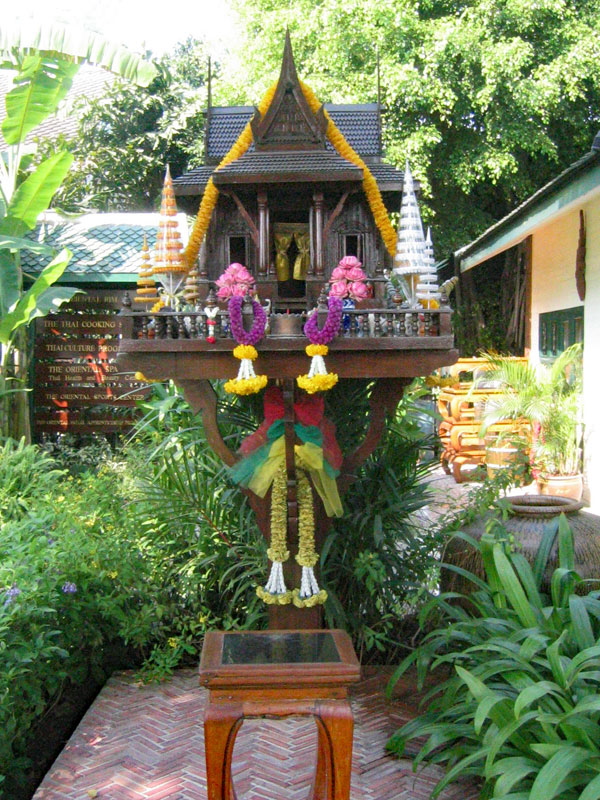
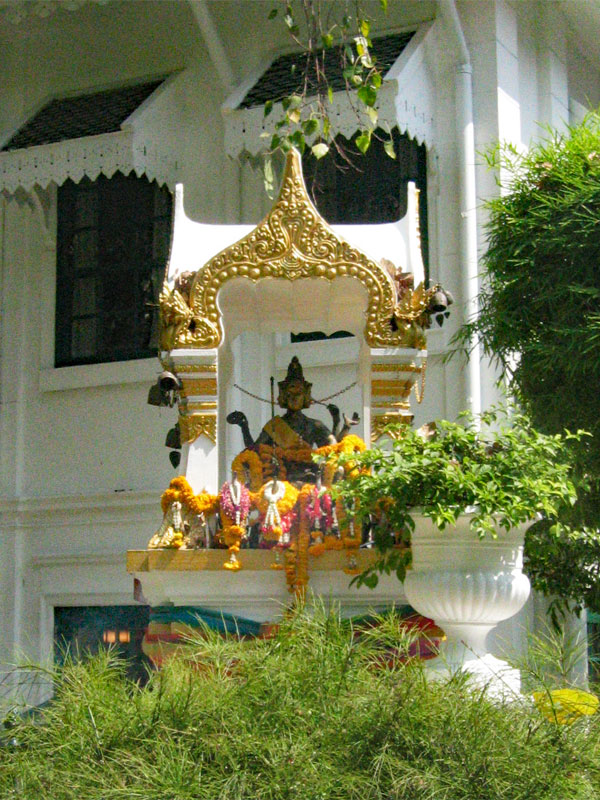
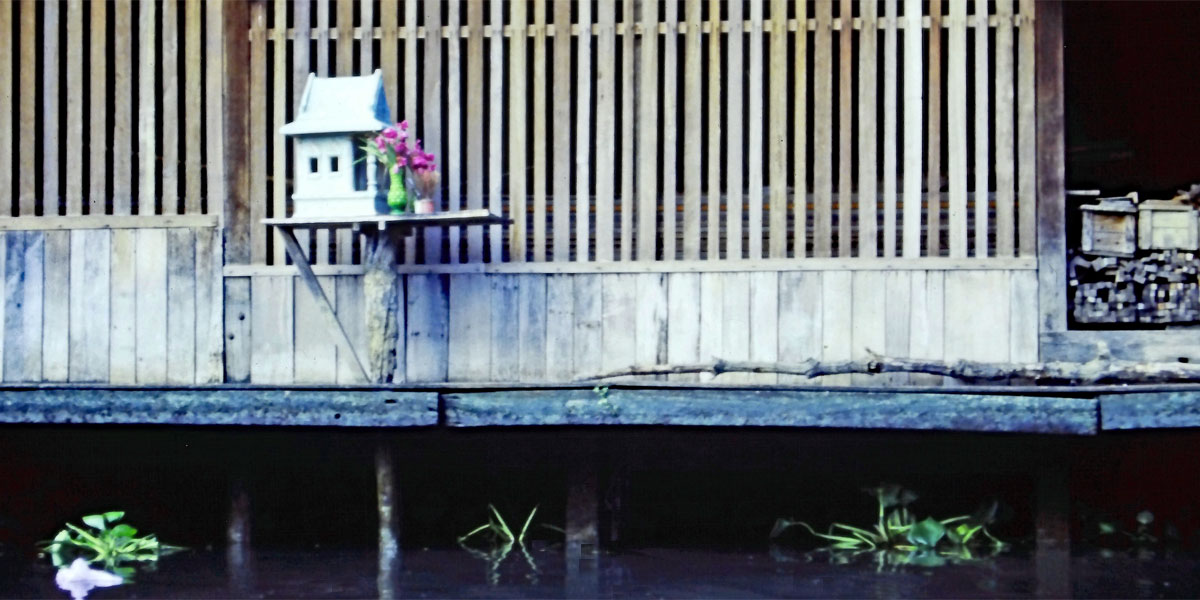
A Thai spirit house is a shrine to the protective spirit of a place and most houses and businesses have a spirit house placed in an auspicious spot, most often in a corner of the property. They are normally in the form of a small roofed structure mounted on a pillar or a dais, and can range in size from small platforms to larger structures. Spirit houses are intended to provide a shelter for spirits that could cause problems for the people if not appeased. They often include images or carved statues of people and animals, food, and votive offerings which are left to appease the spirits.
Spirit house with offerings
Another more elegant spirit house
More offerings for the spirit house (right)
A rustic spirit house seen along a klong
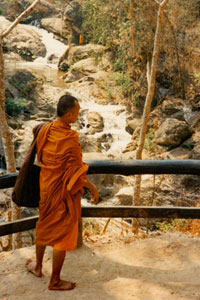
A Buddhist monk walking in Chiang Mai
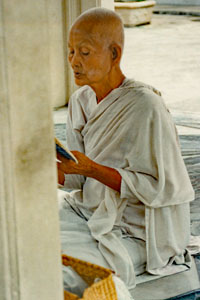
A Buddhist nun praying
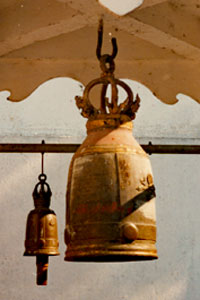
Large temple gongs
Chiang Mai
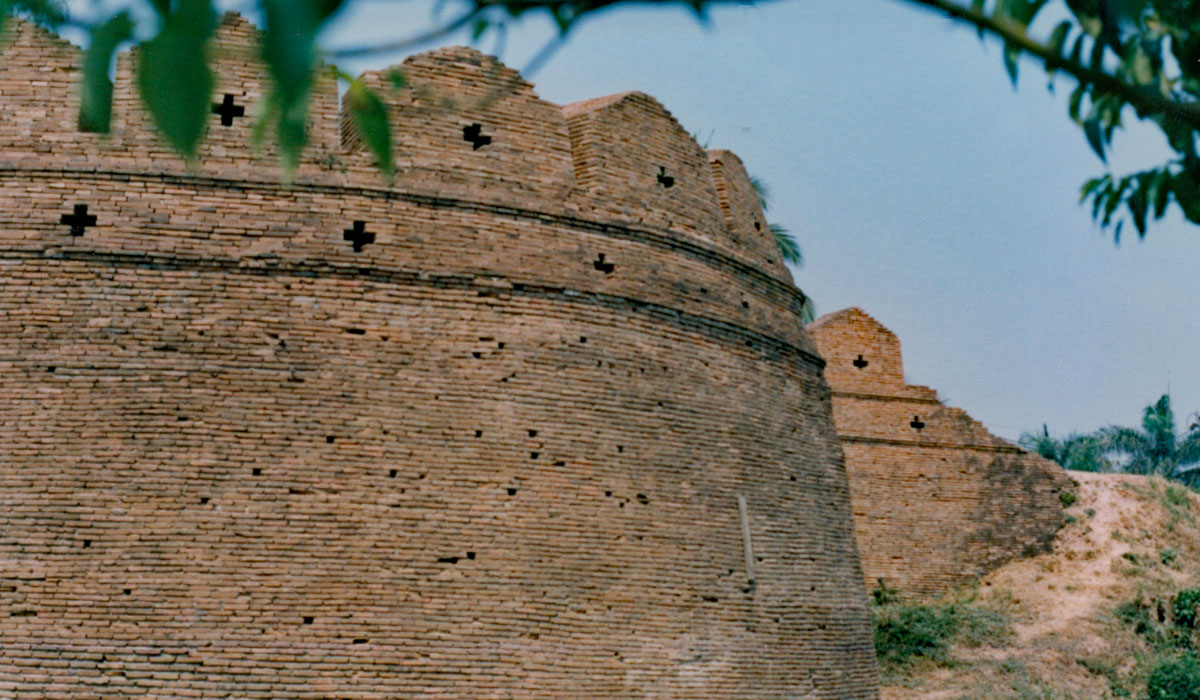
We visited Chiang Mai in 1989 and then again in 1998. About an hour flight from Bangkok, this city in mountainous northern Thailand is sort of the smaller laid-back sister to the chaotic madness of Bangkok. It has a population of 200,000 today and centers around the old city, which is lined by a moat and the crumbling remains of the wall from its 13th century heyday as the capital of the Lanna Kingdom.
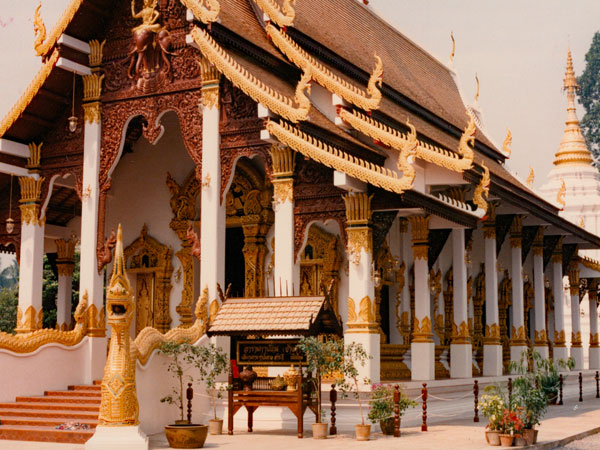
Chiang Mai was founded in 1296 and was capital of the independent Lanna Kingdom until 1558. Its Old City area still retains vestiges of walls and moats from its history as a cultural and religious center. It’s also home to hundreds of elaborate Buddhist temples, including 14th-century Wat Phra Singh and 15th-century Wat Chedi Luang adorned with carved serpents.
The northern province of Chiang Mai blends nature with Lanna culture. Wat Phra That Doi Suthep is the most important temple in Chiang Mai and an important landmark for the Chiang Mai people. Located on top of a mountain just outside of town, Wat Phra That Doi Suthep is a beautiful example of northern Thai architecture, reached via a 306-step staircase flanked by naga (mythical sea serpents). The climb is intended to help devotees accrue Buddhist merit.
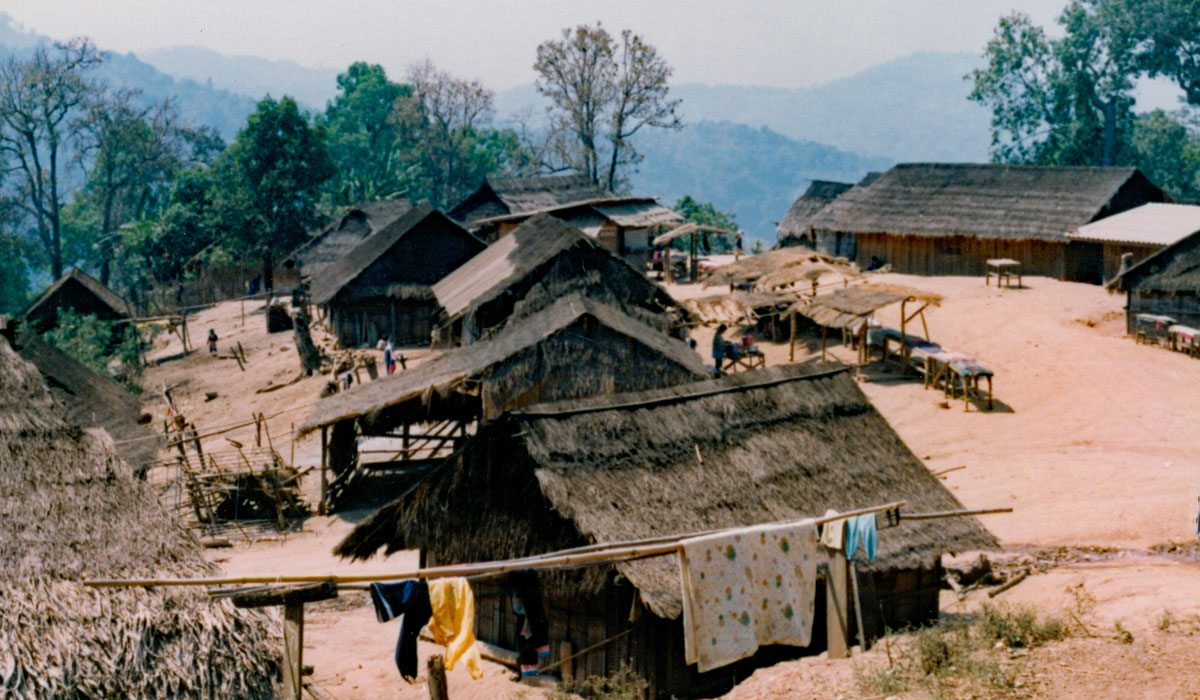
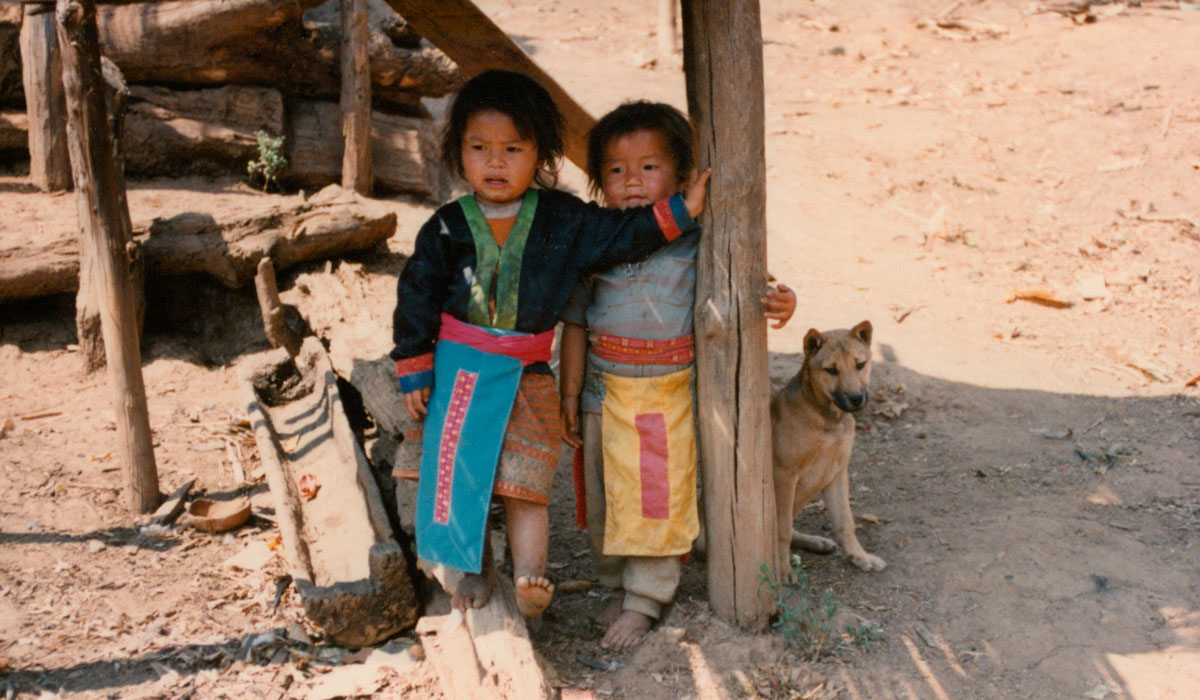
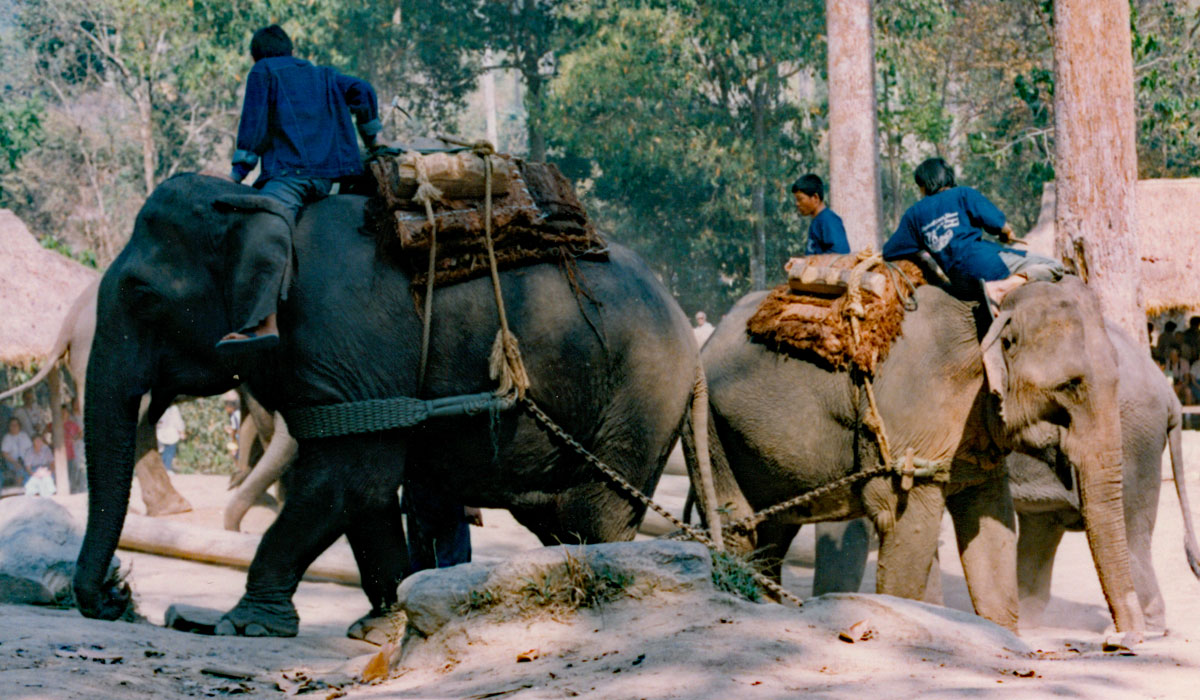
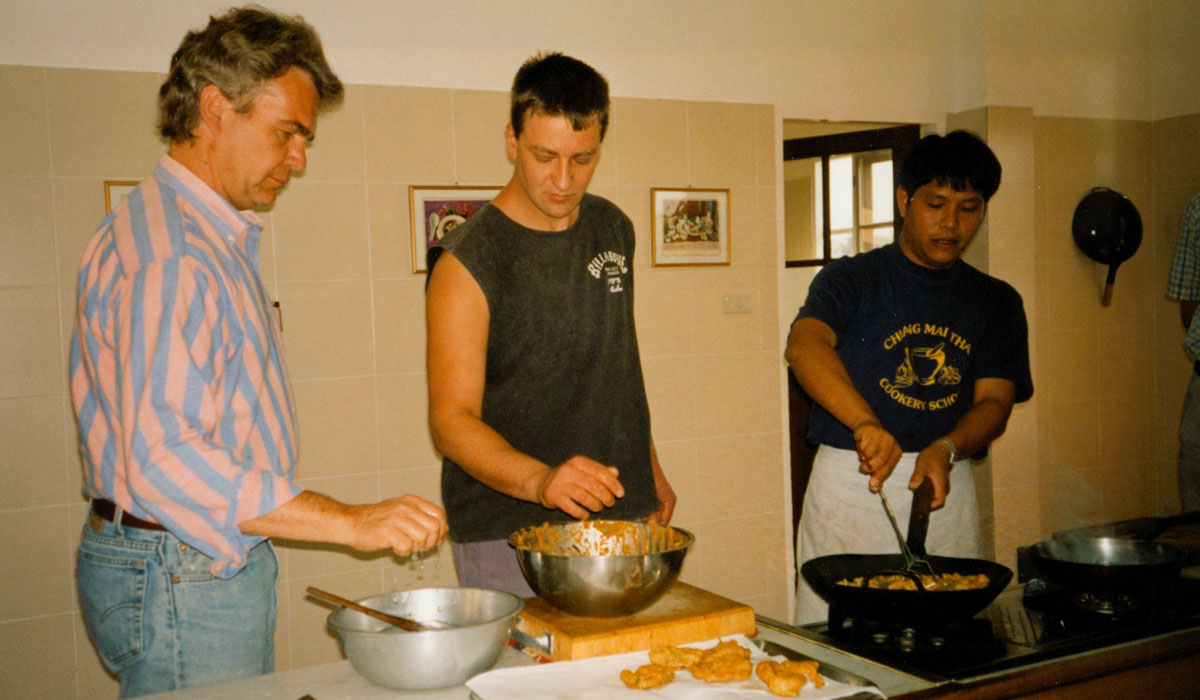
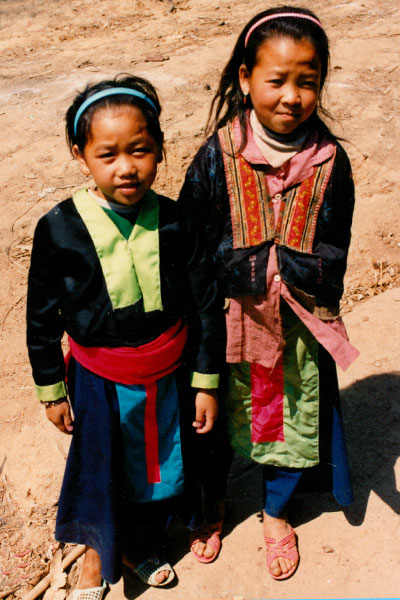
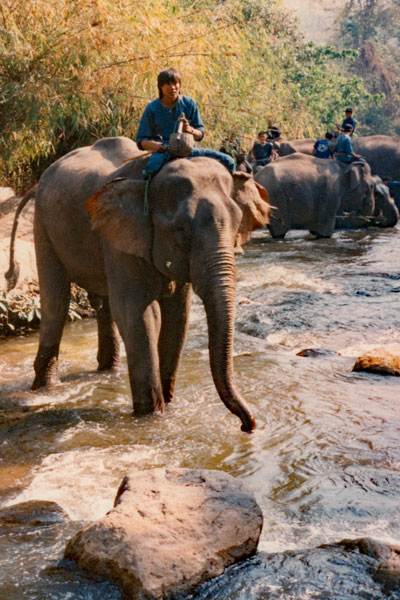
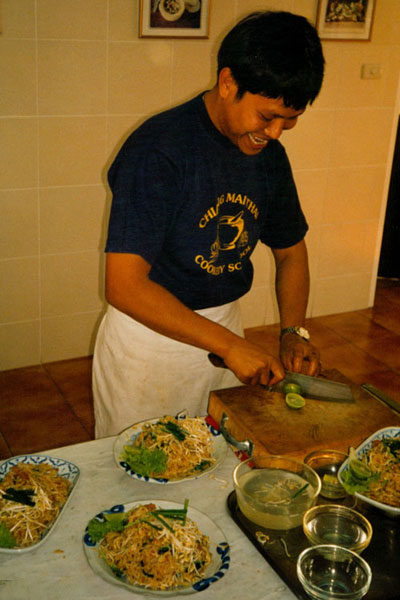
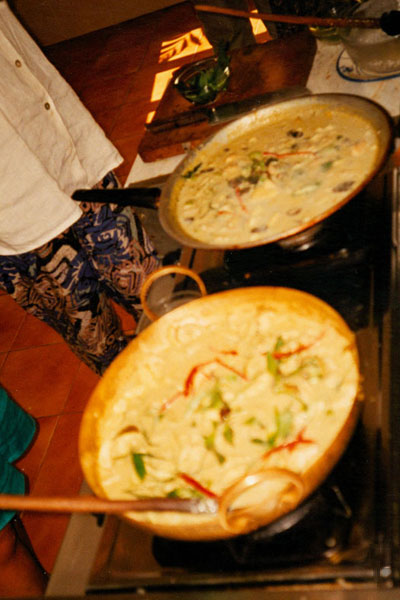
Compared to busy Bangkok, in Chiang Mai we were able to experience the beauty of the rice fields and feel the cool mountain breezes. We also visited a Hmong village in Doi Pui and the Mae Kampong village east of Chiang Mai as well as an elephant sanctuary. On our second trip, we attended an all-day Thai cooking school run by a former Buddhist monk and his English wife.
Wat Phra That Doi Suthep (1989)
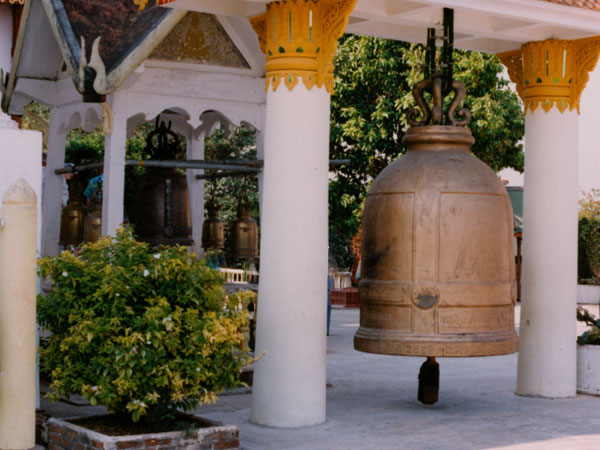
One of the giant bells at the temple (1989)
Me posing at Wat Phra That Doi Suthep (1989)
Around the temple grounds (1989)
Mae Kampong village (1989)
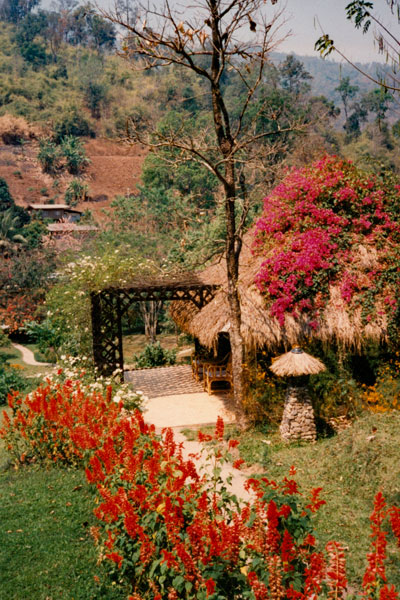
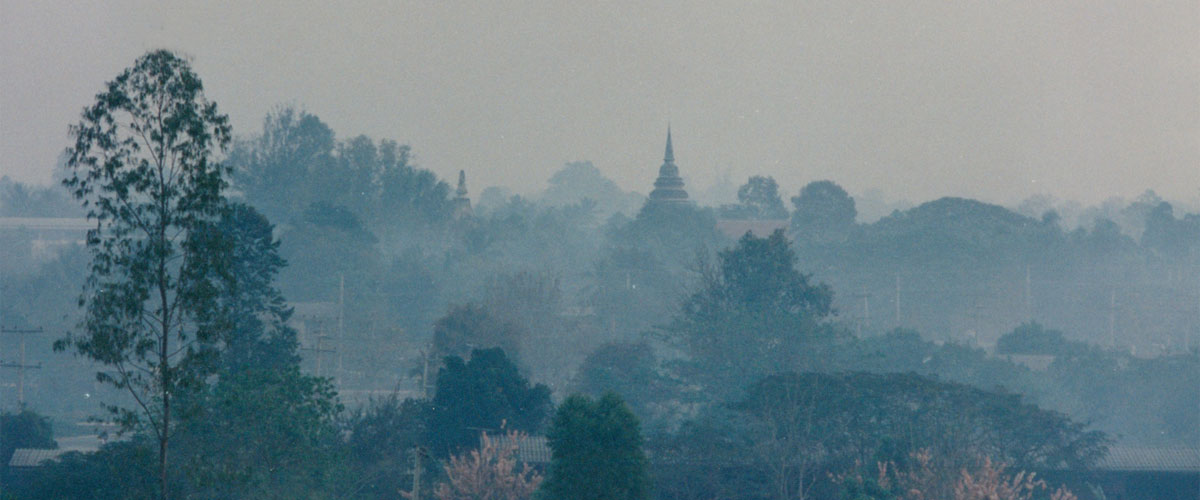
Looking over the countryside in Chiang Mai (1989)
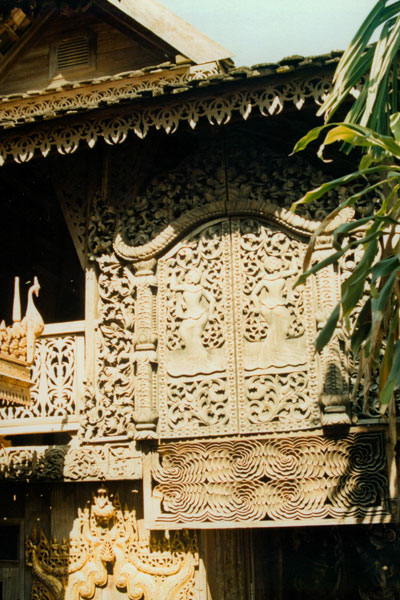
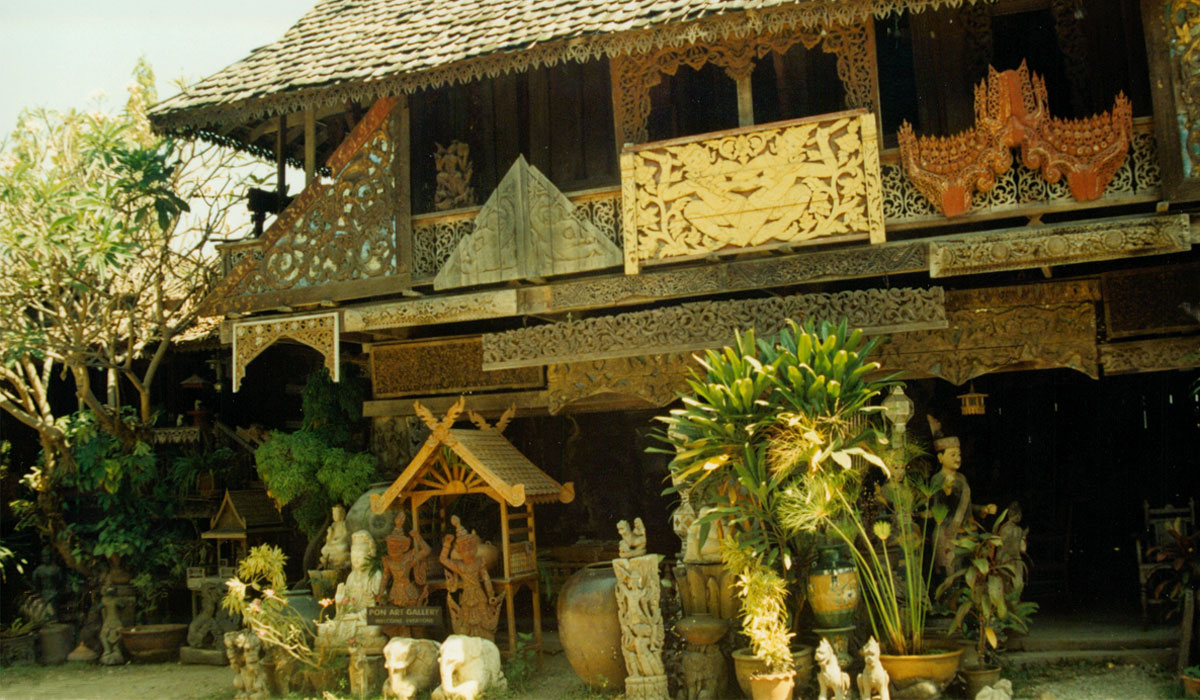
Facade at our traditional guest house (1998)
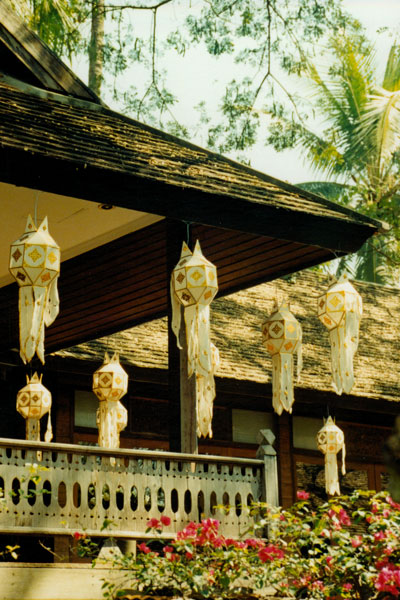
Lanterns decorating the balcony (1998)
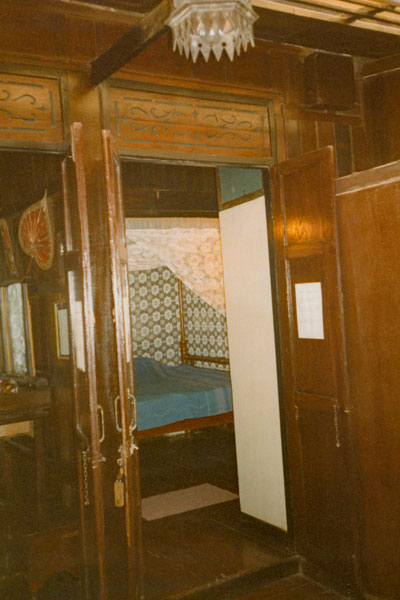
Room at our guest house on the Ping River (1998)
1 / 9
Part of the original wall around Chiang Mai (1989)
Our instructor at the cooking school — a former Buddhist monk (1998)
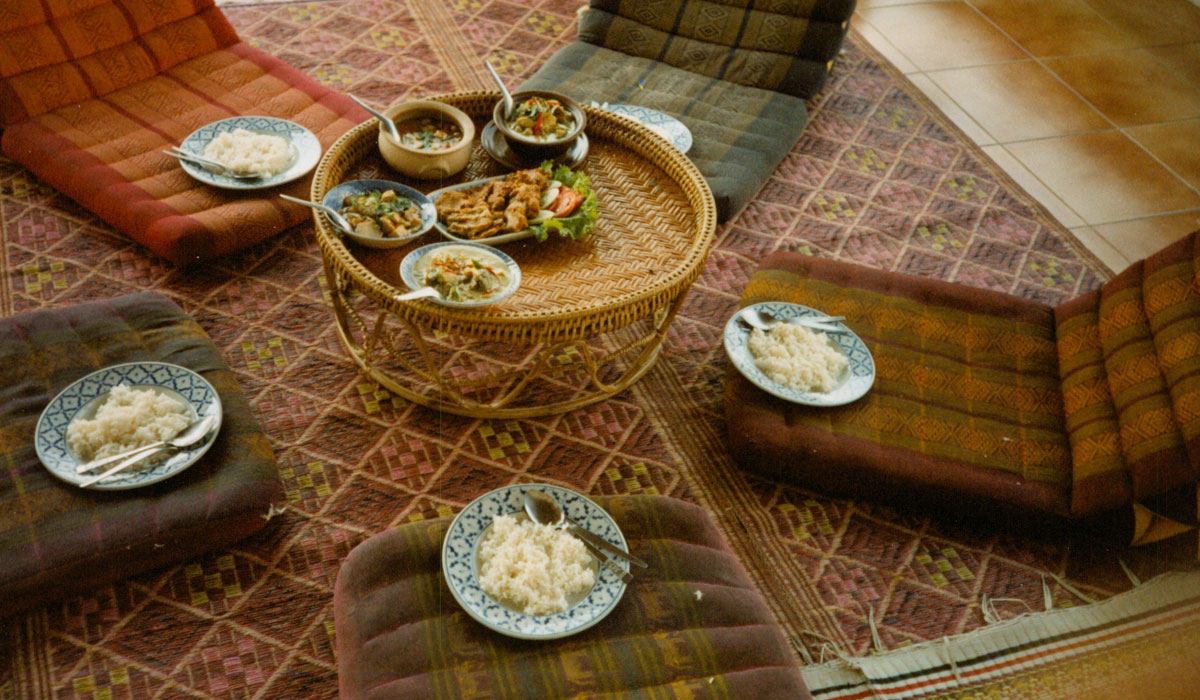
Two of the curries that we made (1998)
Chiang Mai Flower Festival
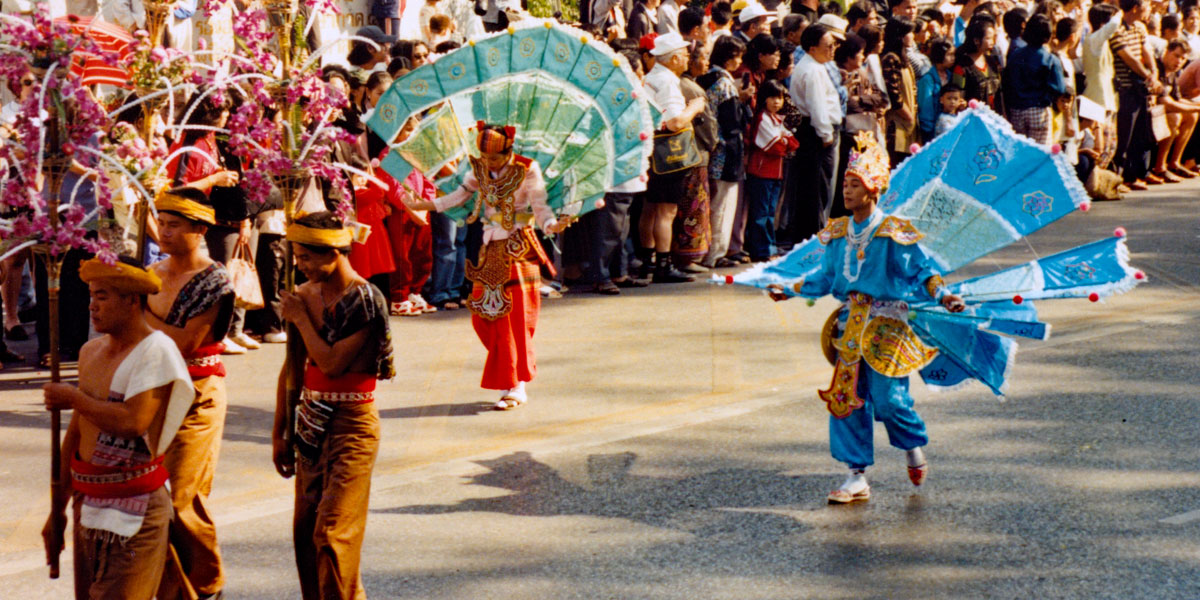
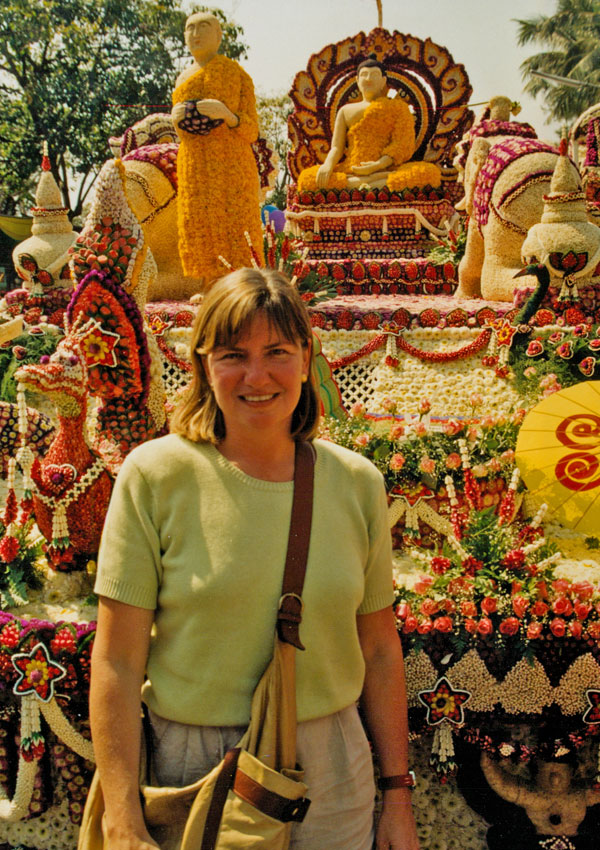
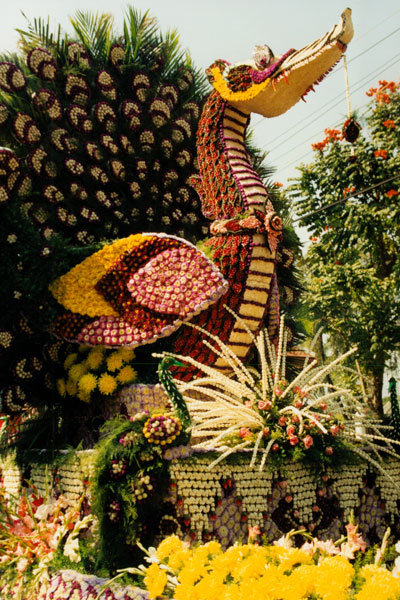
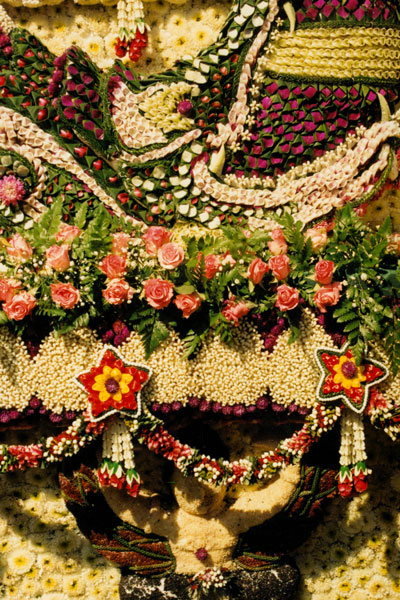
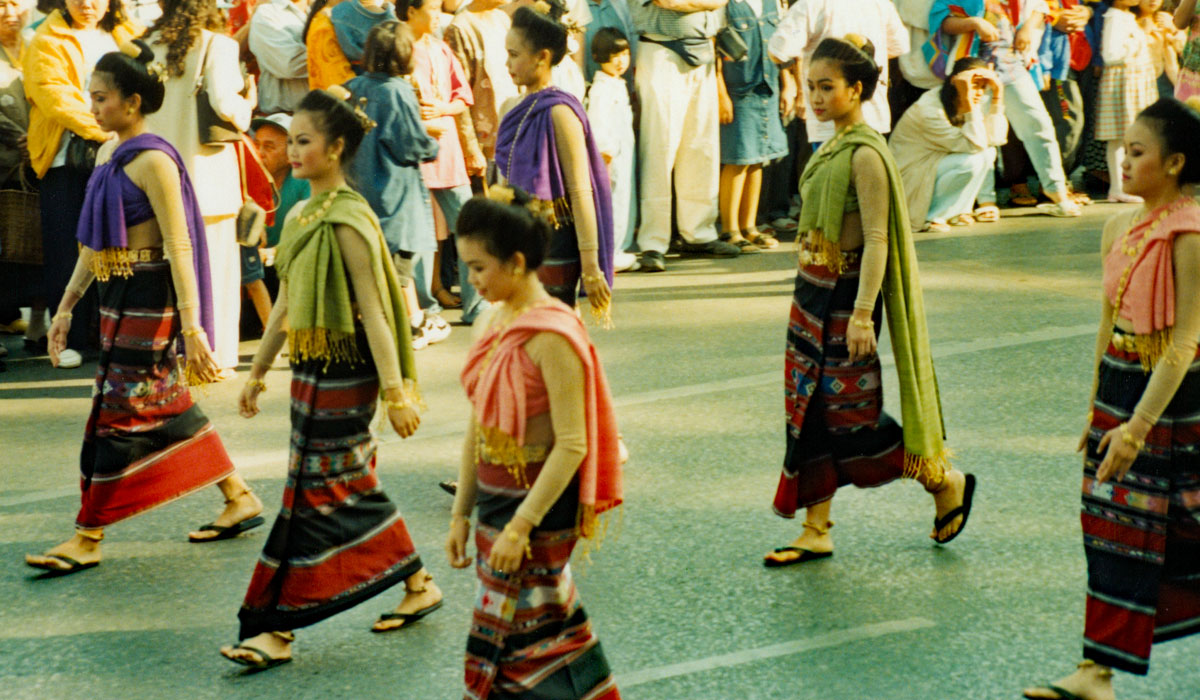
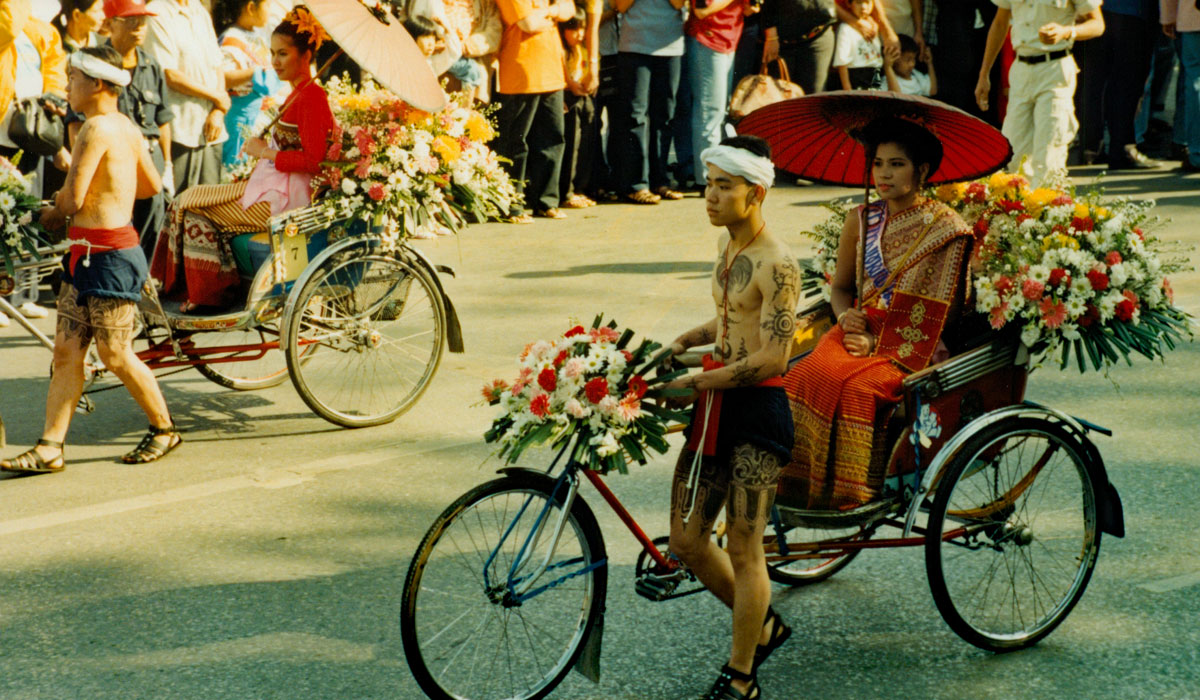
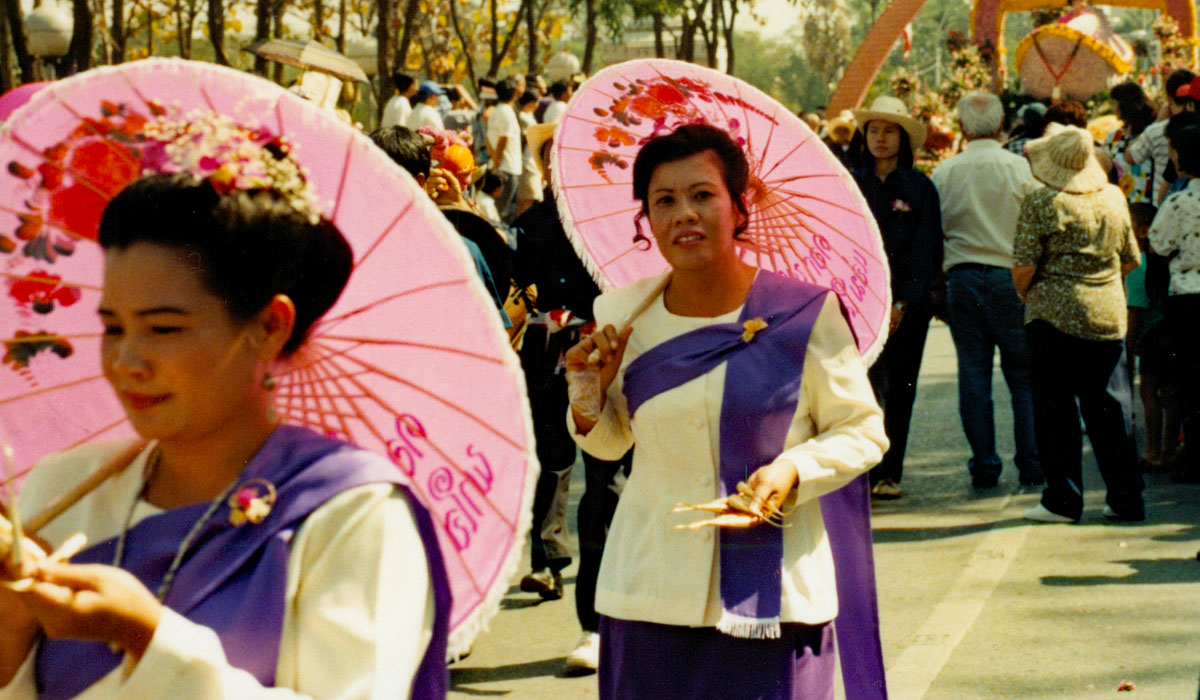
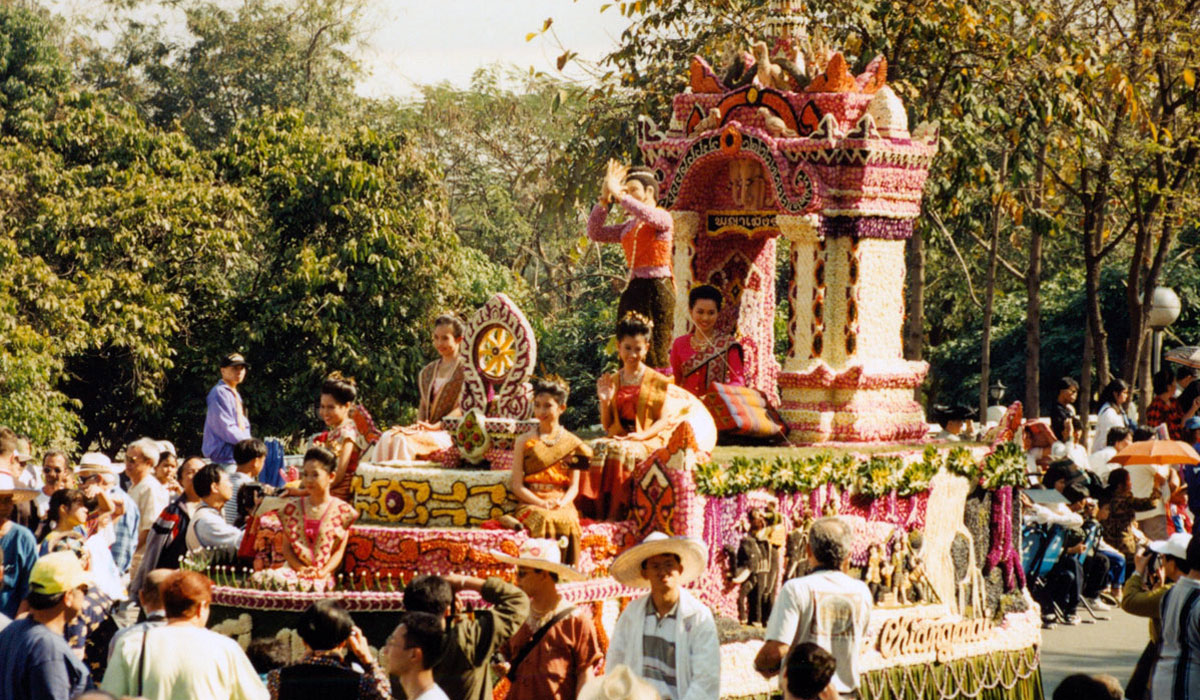
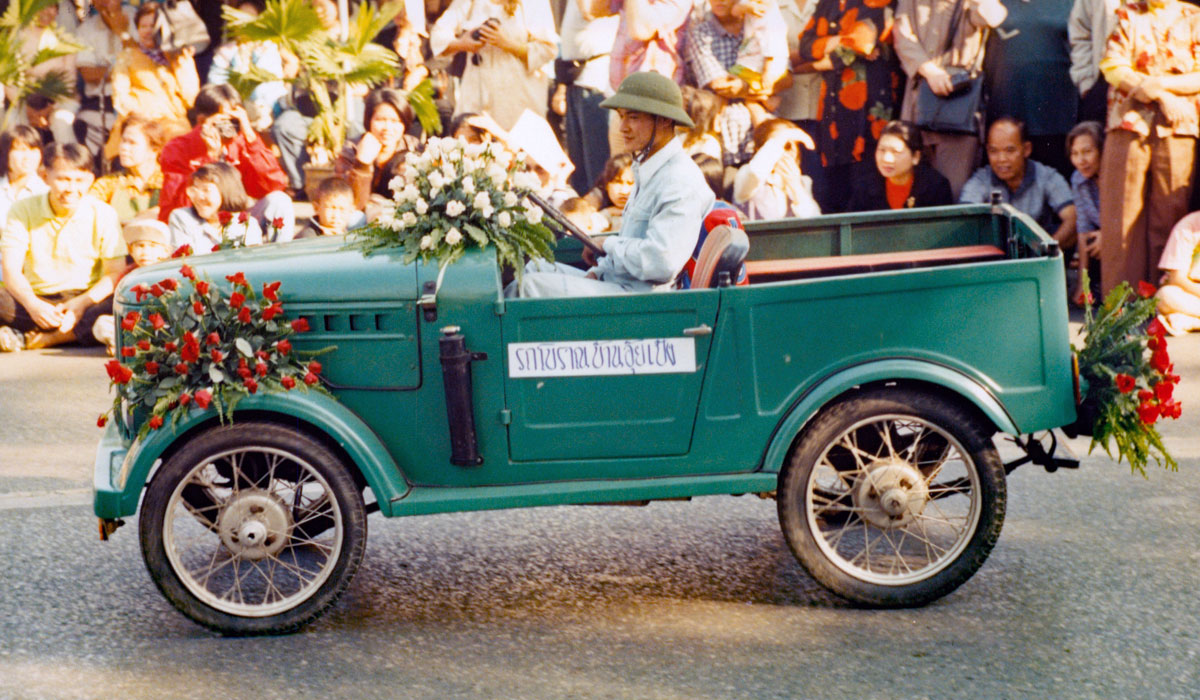
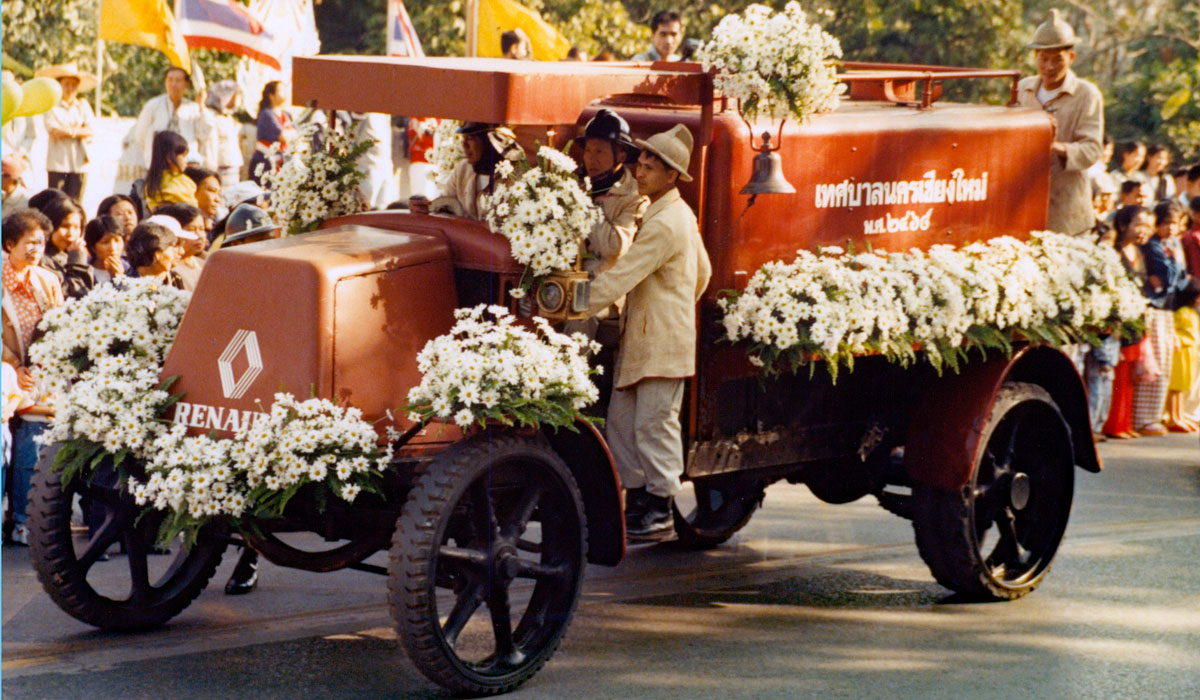
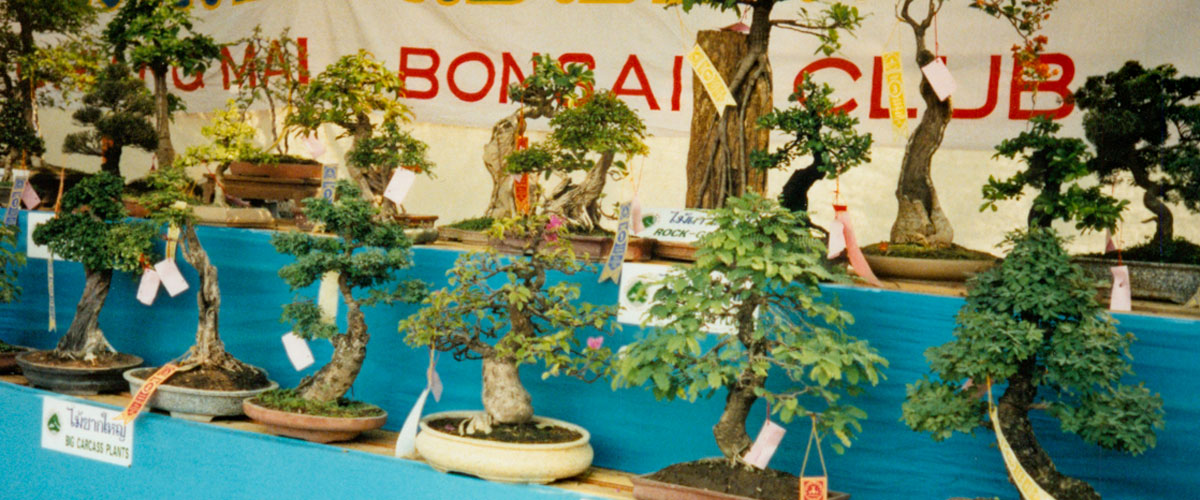
In 1998, we visited Chiang Mai during the Chiang Mai Flower Festival which is an annual celebration that marks the transition from the cool season. It is held over three days on the first weekend of February and includes a vibrant display of ancient and modern floral art, showcasing the traditions of the ancient Lanna Kingdom.
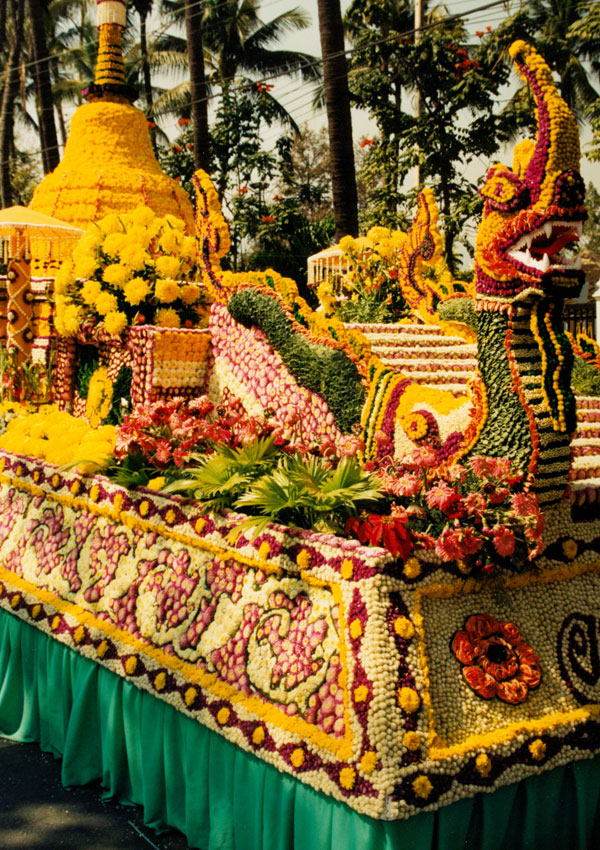
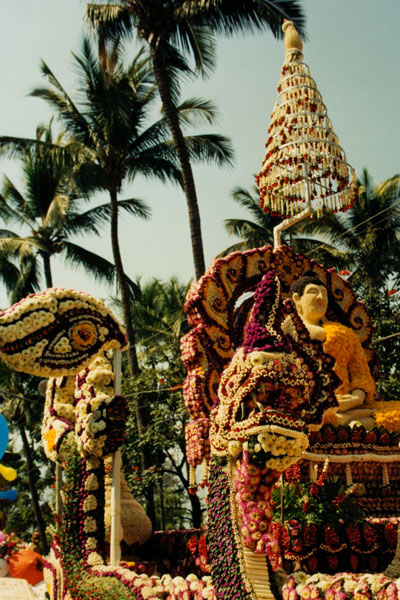
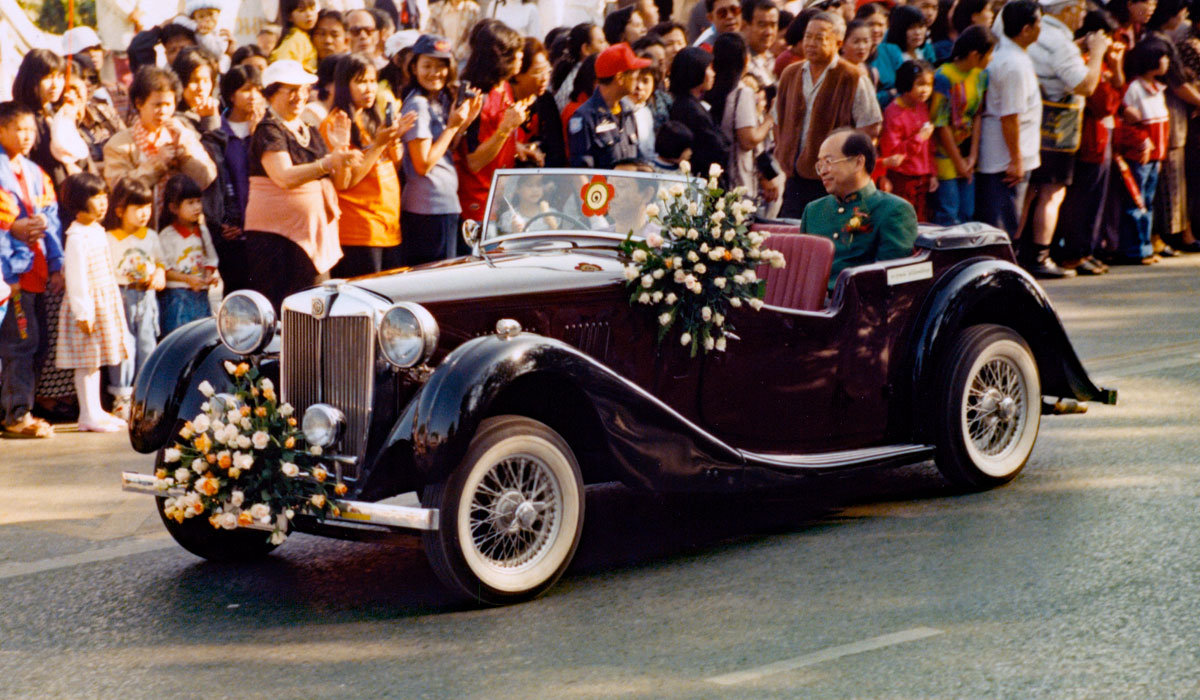
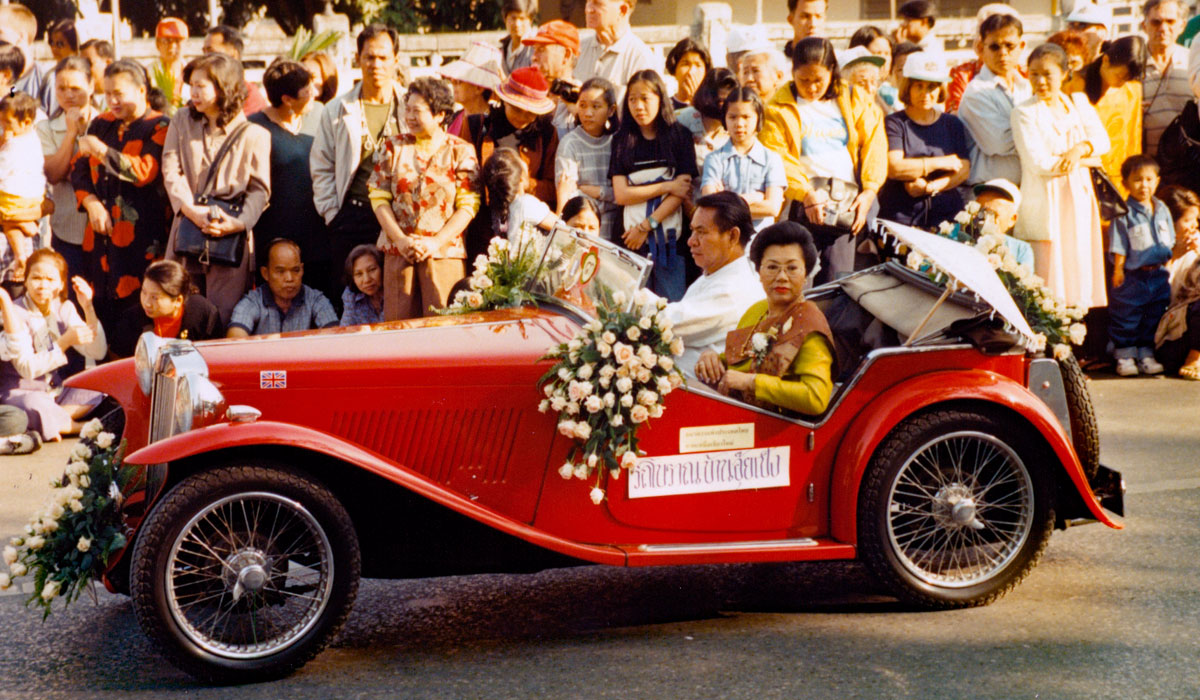
In addition to visiting the exhibits of flowers and ornamental plants, we had bleacher seats for the annual Flower Festival Parade on Saturday. The parade, at a leisurely pace with regular pauses, features floats adorned with flowers which were accompanied by marching bands from local schools, as well as local drumming ensembles and dancers in traditional Thai attire. There are competitions for the most beautiful and creative displays and the best floats. One of the most popular parts of the festival is choosing the Chiang Mai Flower Festival Queen.
One of the extravagant floats in the parade (1998)
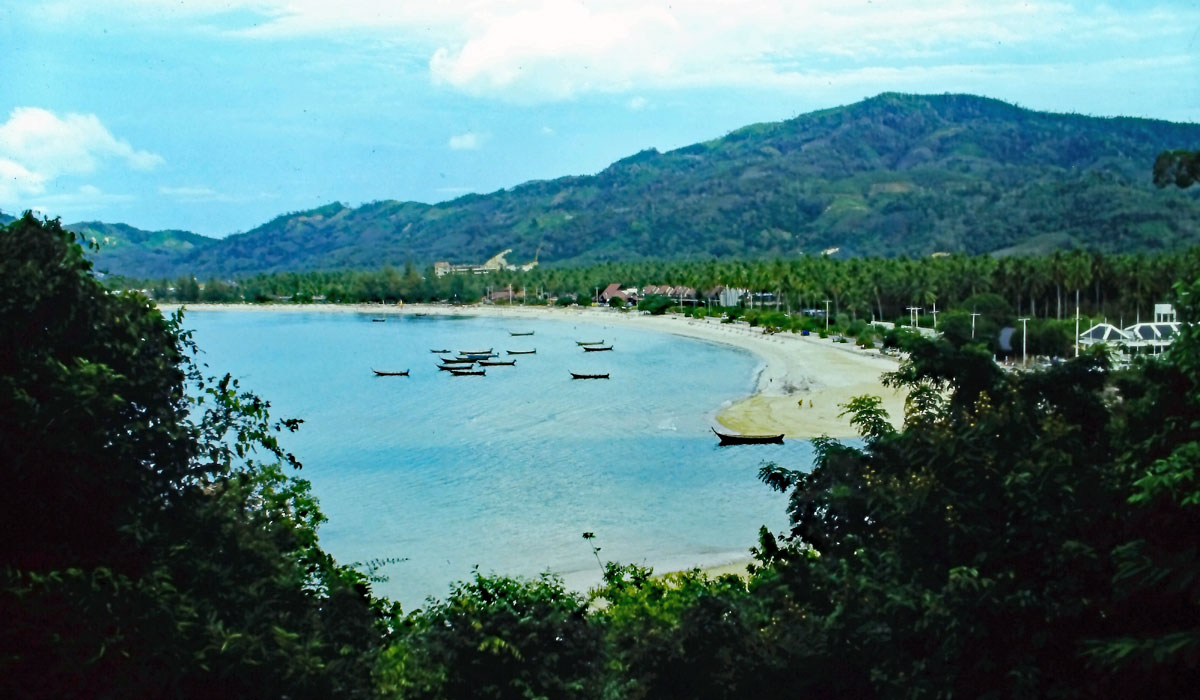
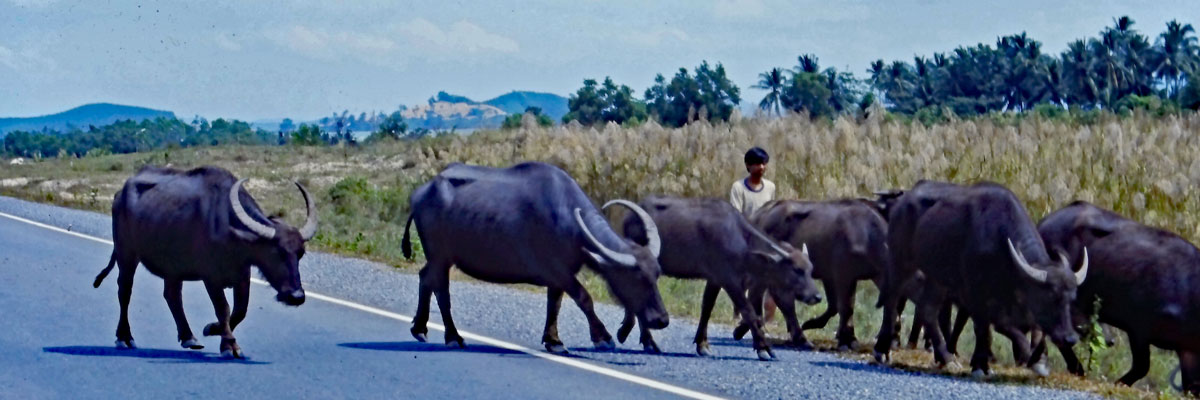
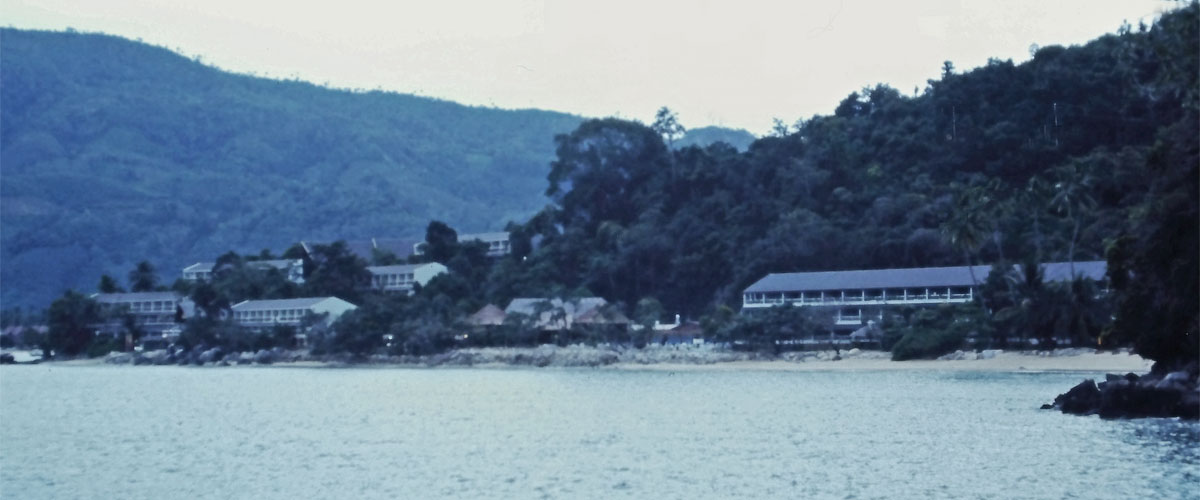
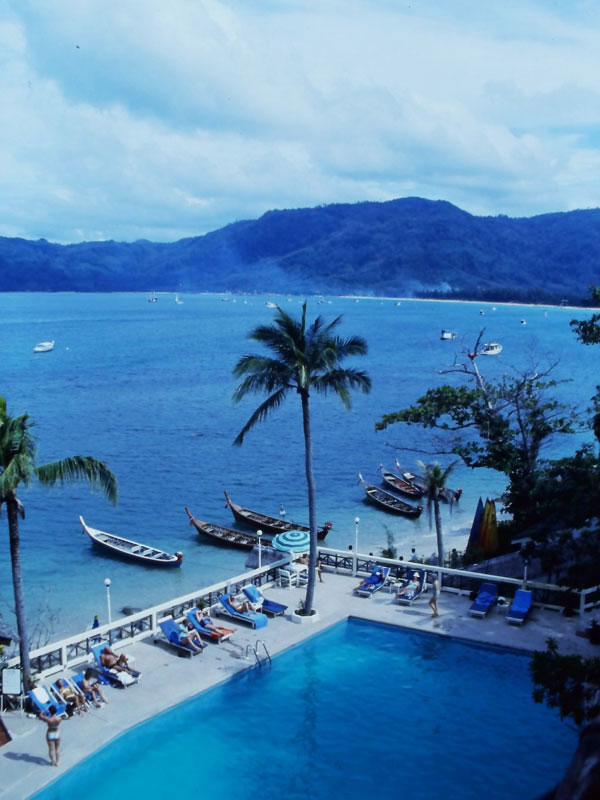
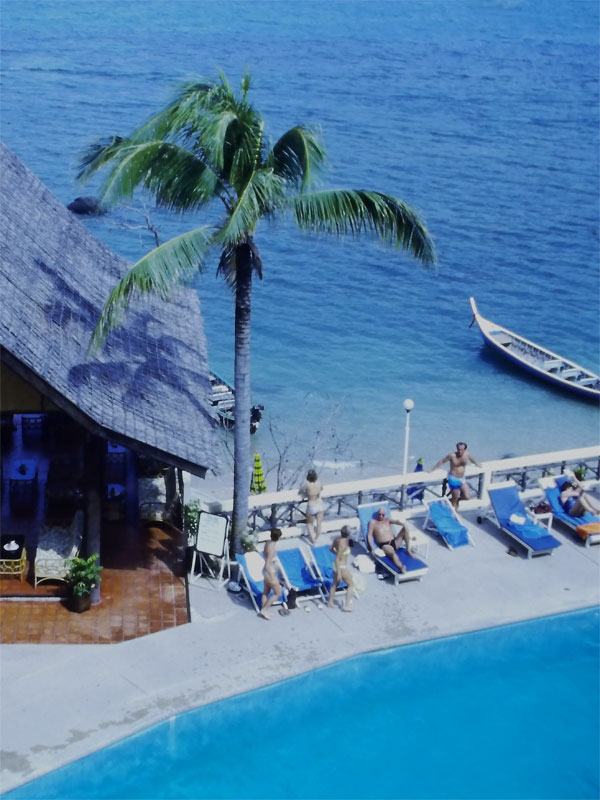
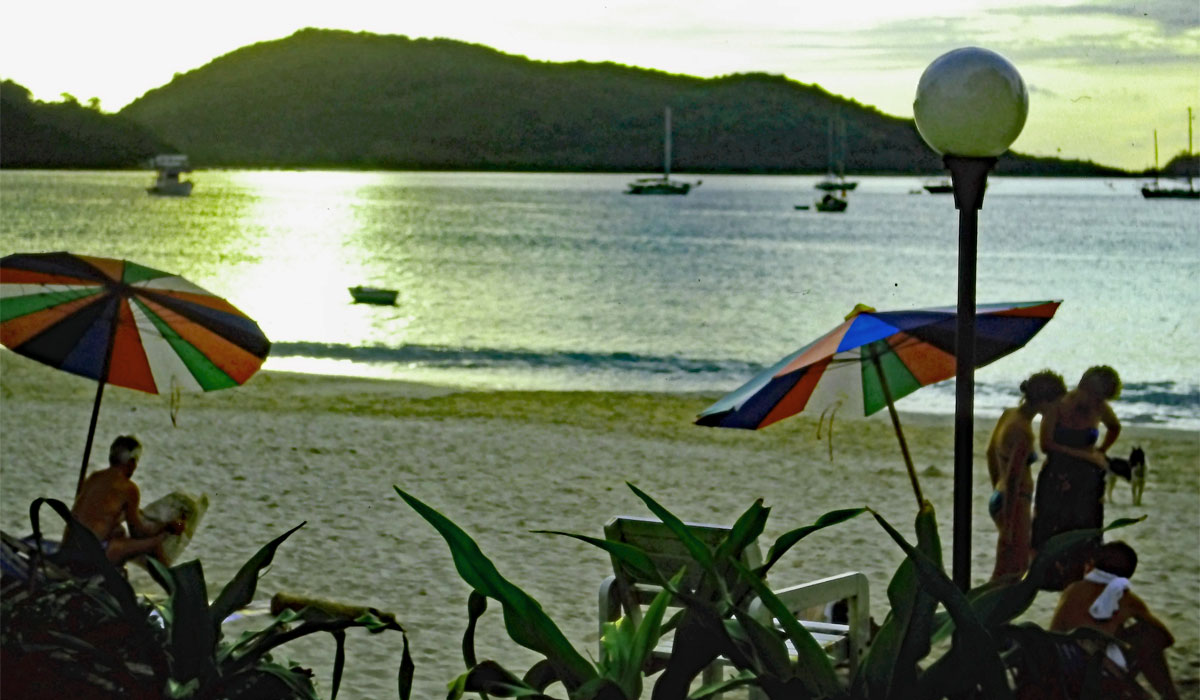
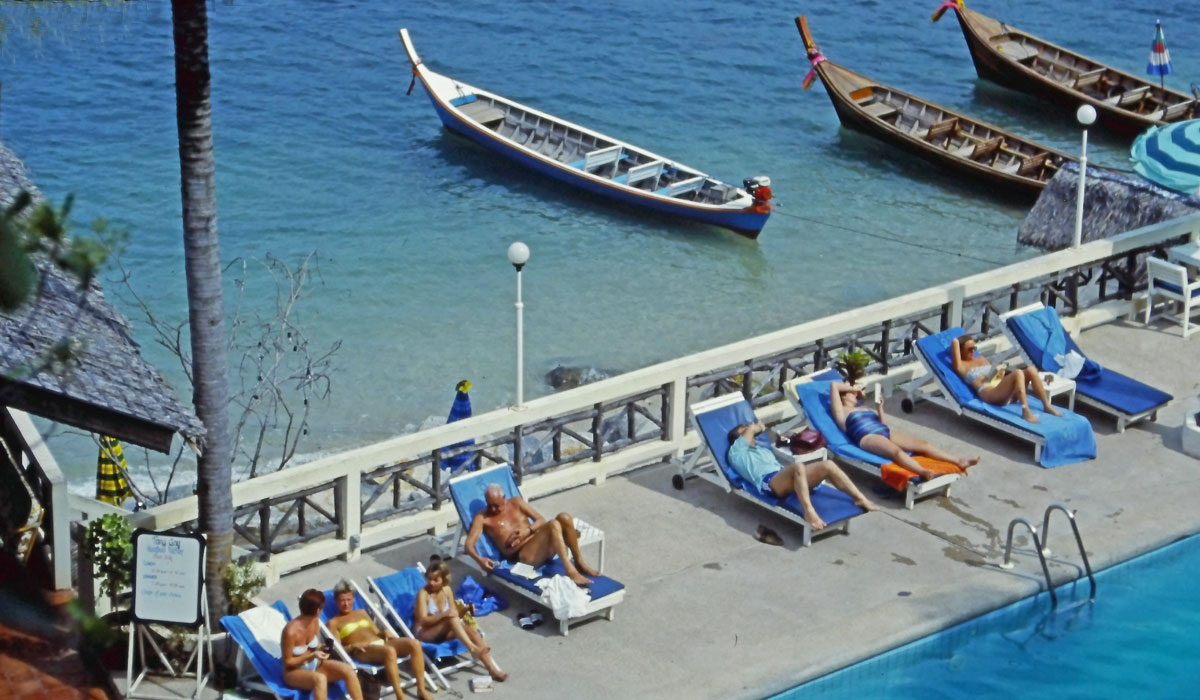
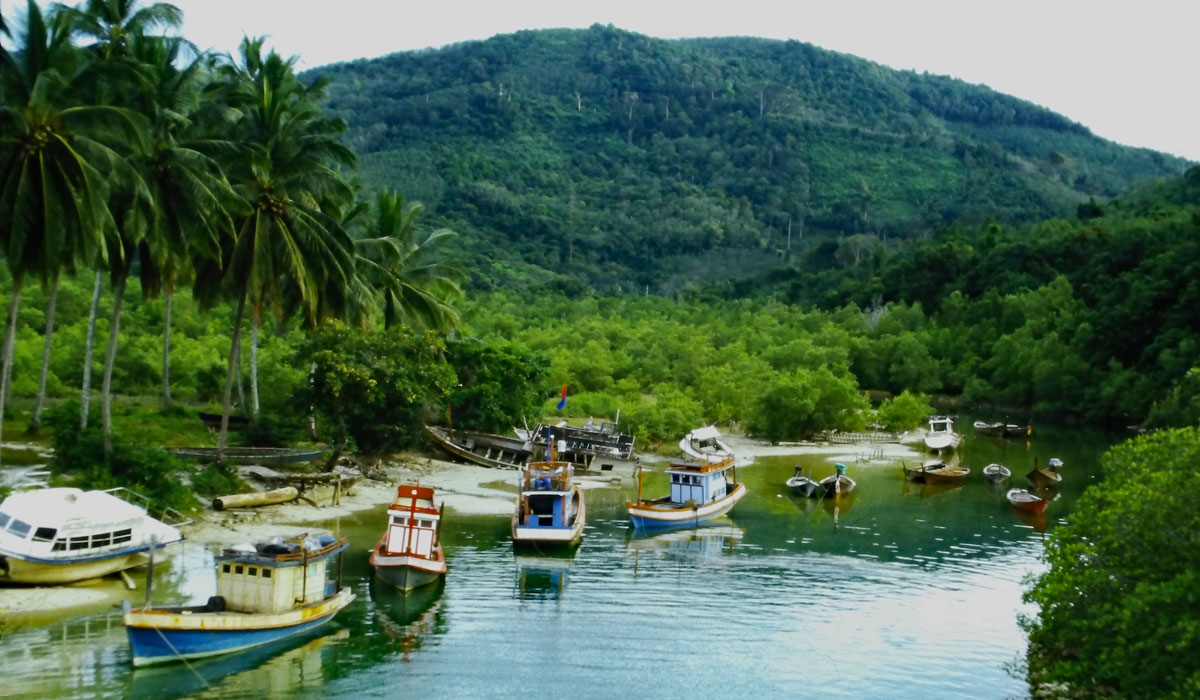
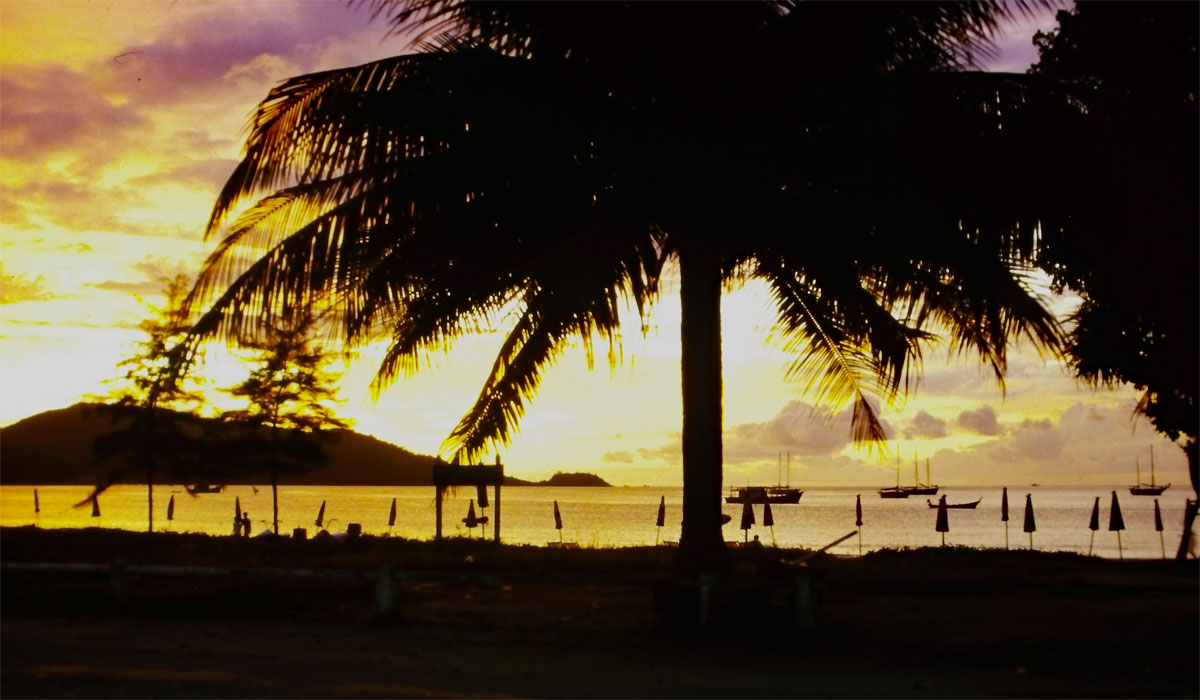
We visited the island of Phuket, on Thailand’s west coast and its largest island, in 1986 just after the airport opened and the inauguration of flights from Bangkok. This was during its early days as a tourist destination. There were only a handful of hotels on Patong Beach on the Andaman Sea where we stayed. We could walk along this idyllic scarcely-populated tropical beach and dine on freshly-caught seafood grilled at a quaint beachside café. The other tourists we met were mostly Australians and Europeans backpackers. We would not recognize Phuket today as it has become an over-developed tourist hotspot, with over 3 million tourists visiting the island annually.
View of Patong Bay and the Andaman Sea (1986)
Water buffalo on Phuket Island's main road (1986)
View of Patong Beach with only a few hotels — ours was on the right (1986)
The pool at our hotel(1986)
Another view of the pool (1986)
1 / 5
The uncrowded beach on Patong Bay (1986)
2 / 5
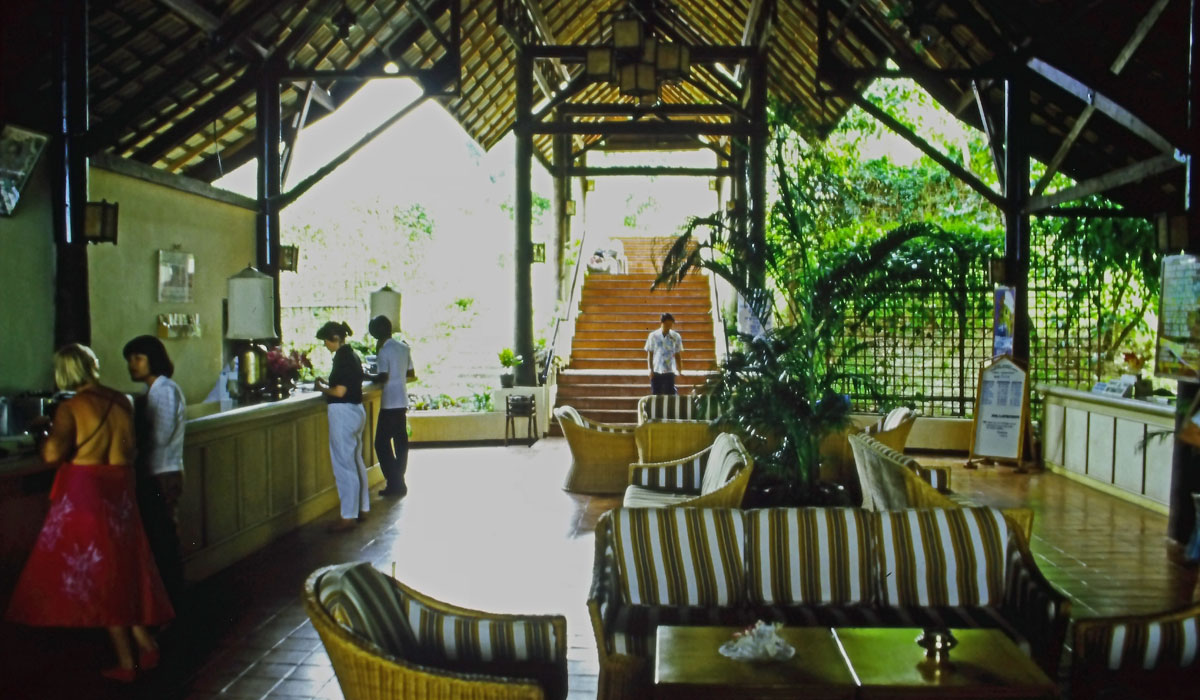
The lobby at our hotel on Patong Beach (1986)
3 / 5
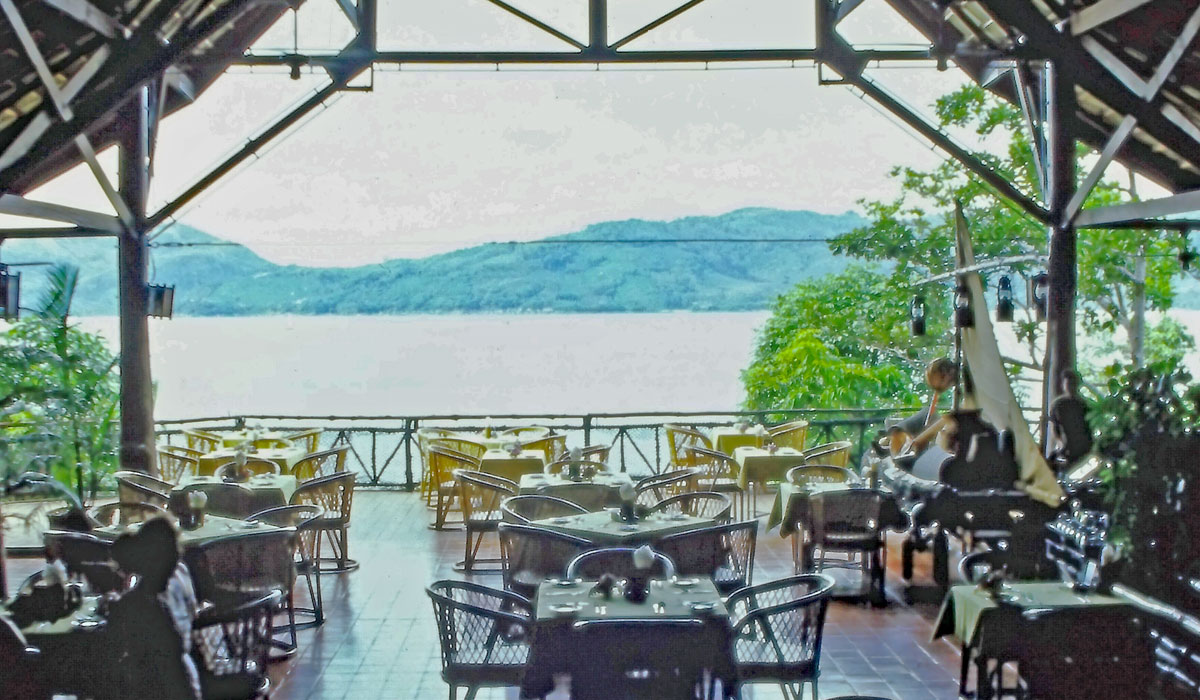
The dining area at our hotel on Patong Beach (1986)
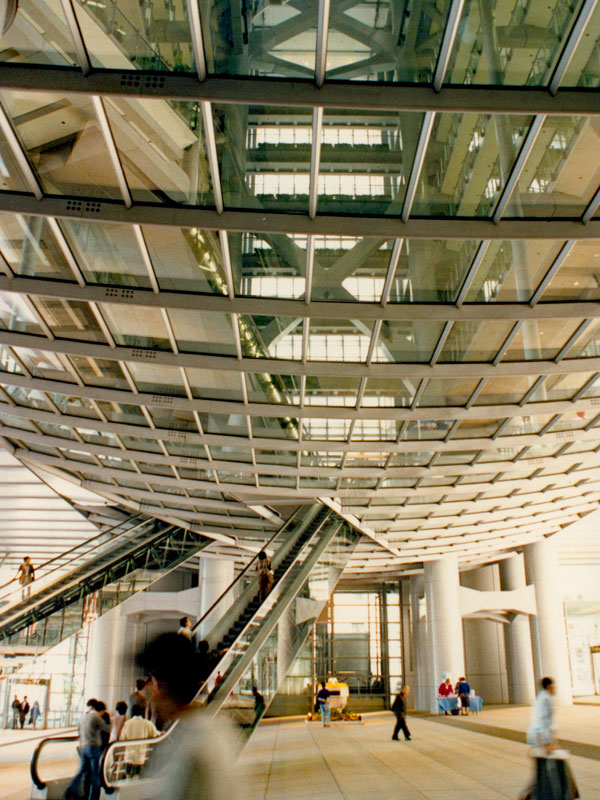
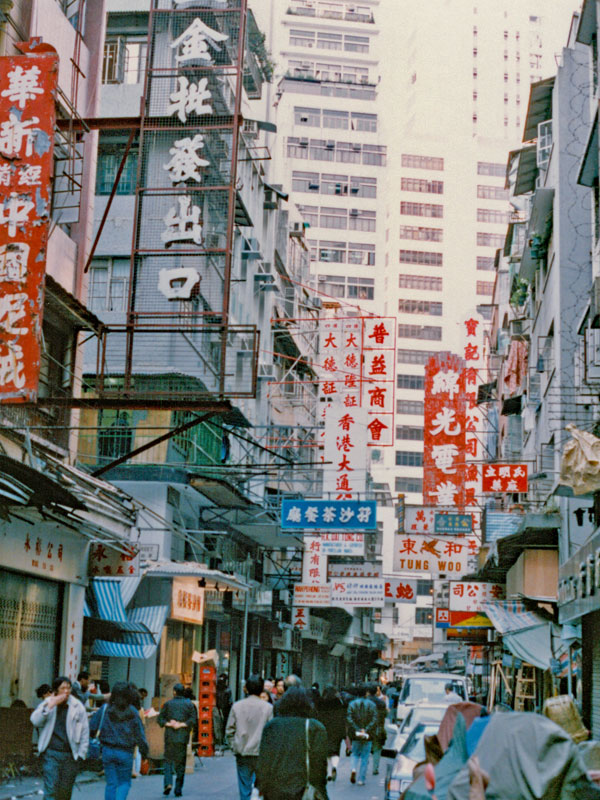
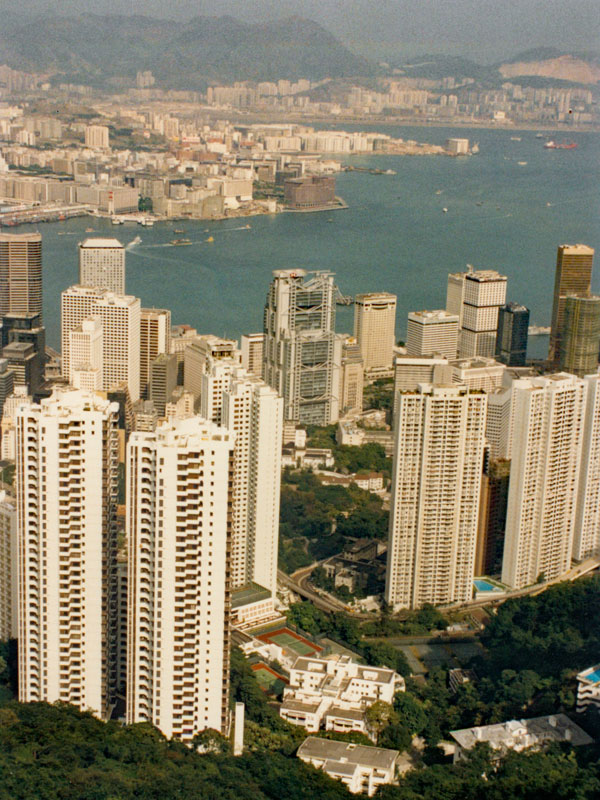
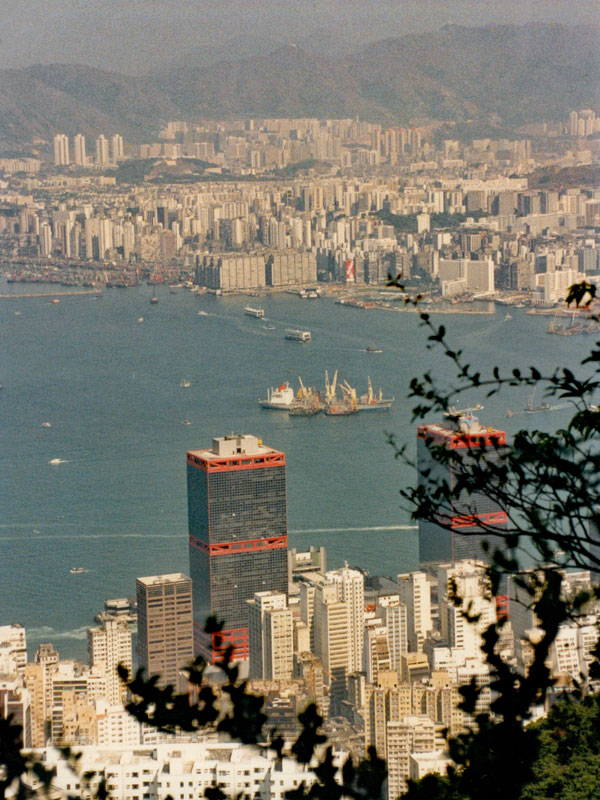
On our trip to Thailand in 1989, we flew to Hong Kong for five days before arriving in Bangkok. This was my first visit although Peter had been there previously on a business trip. It was memorable riding the Star Ferry — which transports visitors between the Kowloon Peninsula and Hong Kong Island — with stunning views of the city. We also took the tram up to Victoria Peak which is the highest point on Hong Kong Island. This provided a view of the city's amazing skyscrapers and beautiful blue waterways; we were also able to make out the green hills of the distant New Territories. We took the 2-mile-long Peak Circle Walk, which takes you along cliffside paths to the scenic Lugard Road lookout point.
Modern architecture (1989)
Chaotic city streets (1989)
View of Hong Kong Harbor from Victoria Peak (1989)
Another view from Victoria Peak (1989)
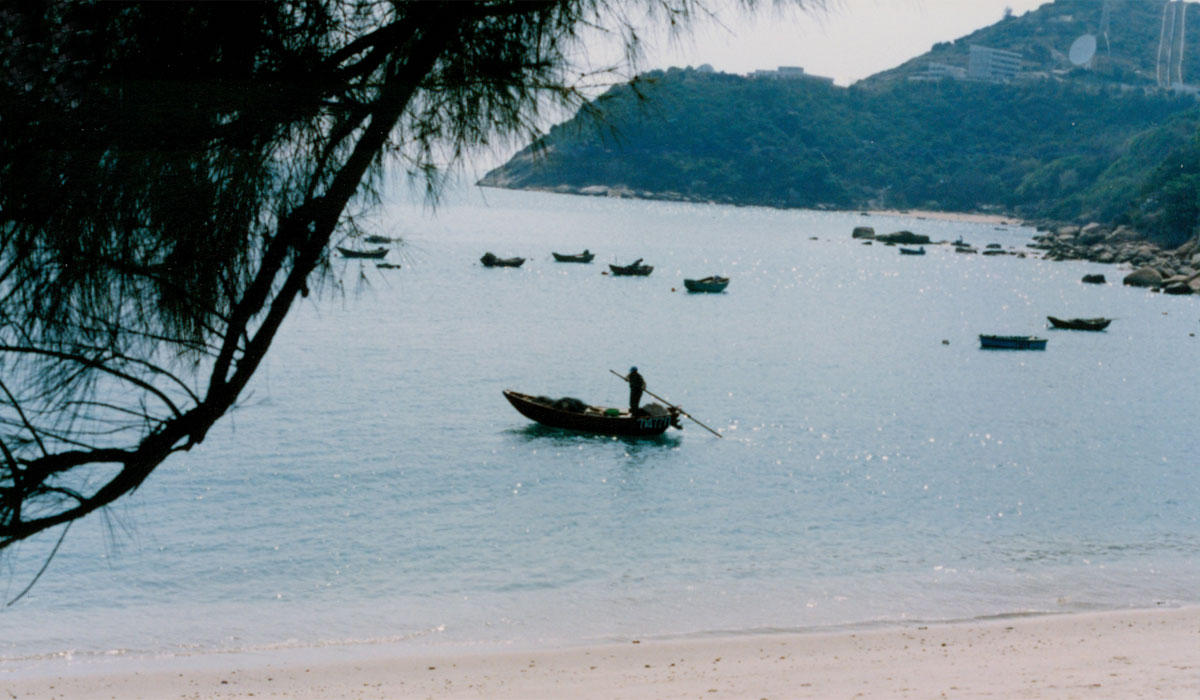
Although we spent most of our time exploring the city, we took a day trip to the coastal town of Stanley which is very different to other parts of Hong Kong. Located at the southern of Hong Kong island, this small Chinese town is much more relaxed with beaches, hills, and coves.
View of the beach at the town of Stanley (1989)
Postscript. We were glad to have experienced some of the flavor of authentic Thailand over 30 years. In the early days we encountered very few Americans and the major tourist attractions were uncrowded. By 2015, we started to see the selfie crowd who were primarily young Asians. Today, even fairly remote areas of Thailand are crowded with the explosion of social media and the travel bloggers.
We were also able to visit Hong Kong before the British transferred authority back to China in 1997. Today, the U.S. State Department cautions Americans against visiting Hong Kong due to the arbitrary enforcement of local laws. We have fond memories of Thailand and Hong Kong but have no desire to return.
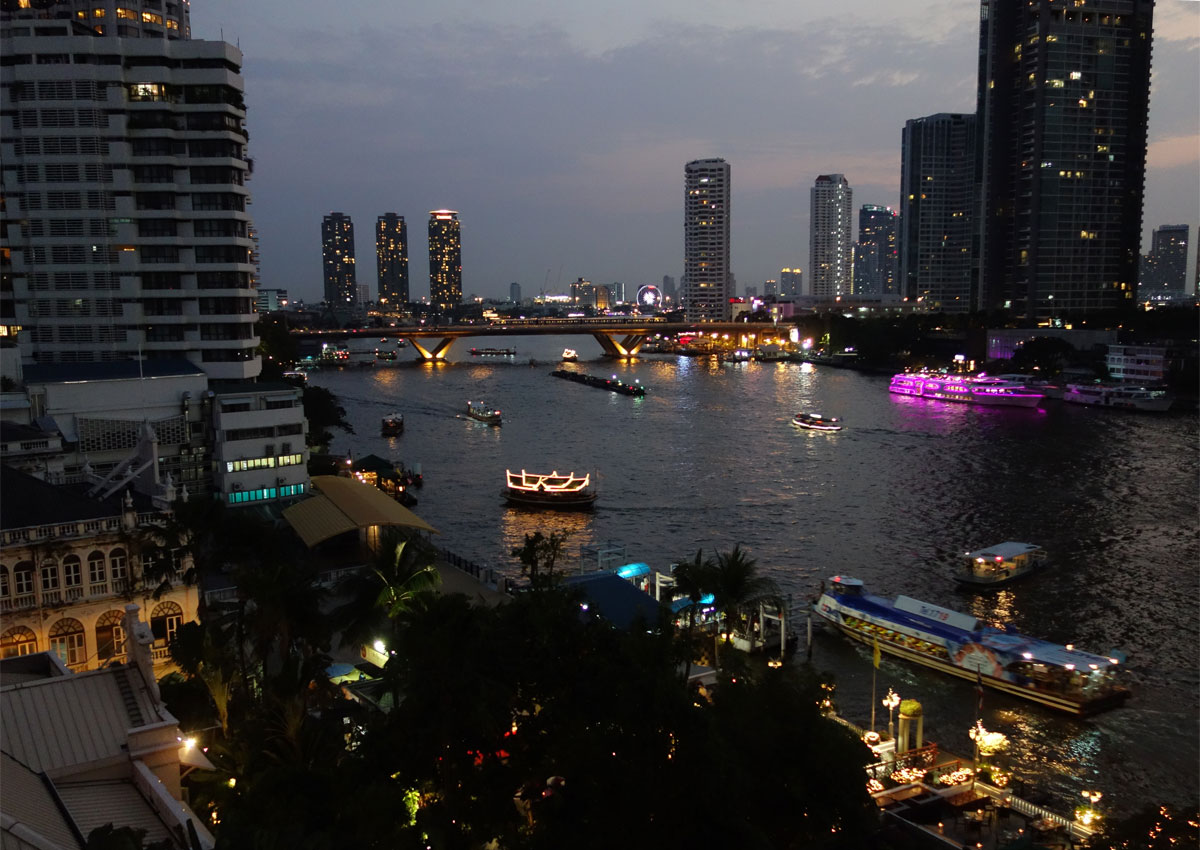
Looking over the Chao Phraya River at night (2015)
 I have been to Thailand five times. After Peter returned from a business trip to Bangkok, we visited Thailand together in 1986. On our first trip, we started out in Bangkok and then flew to the island of Phuket for a week. We also took a boat trip along the Chao Phraya River to Ayutthaya — the ancient Thai capital of Siam.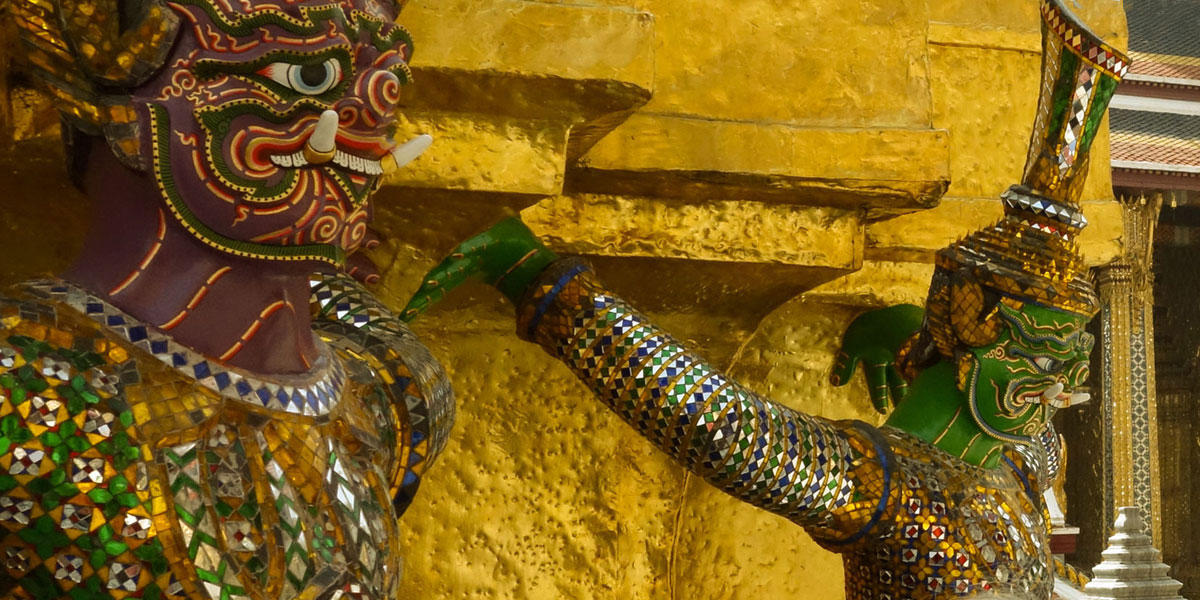


 Jim Thompson was the American businessman who brought Thai silks to the rest of the world in the mid-20th century. His canal-side home has been transformed into a museum showcasing his vast collection of antiques, artwork, and religious artifacts. The canal-side property is an architectural marvel, made of an amalgamation of six traditional teak houses from Ayutthaya, surrounded by lush gardens. Inside the house is a small but well-curated collection of objects, like temple wall hangings that depict the life of Buddha, repurposed mahjong tables in the dining room, an elegant standing Buddha, and a fine display of porcelain.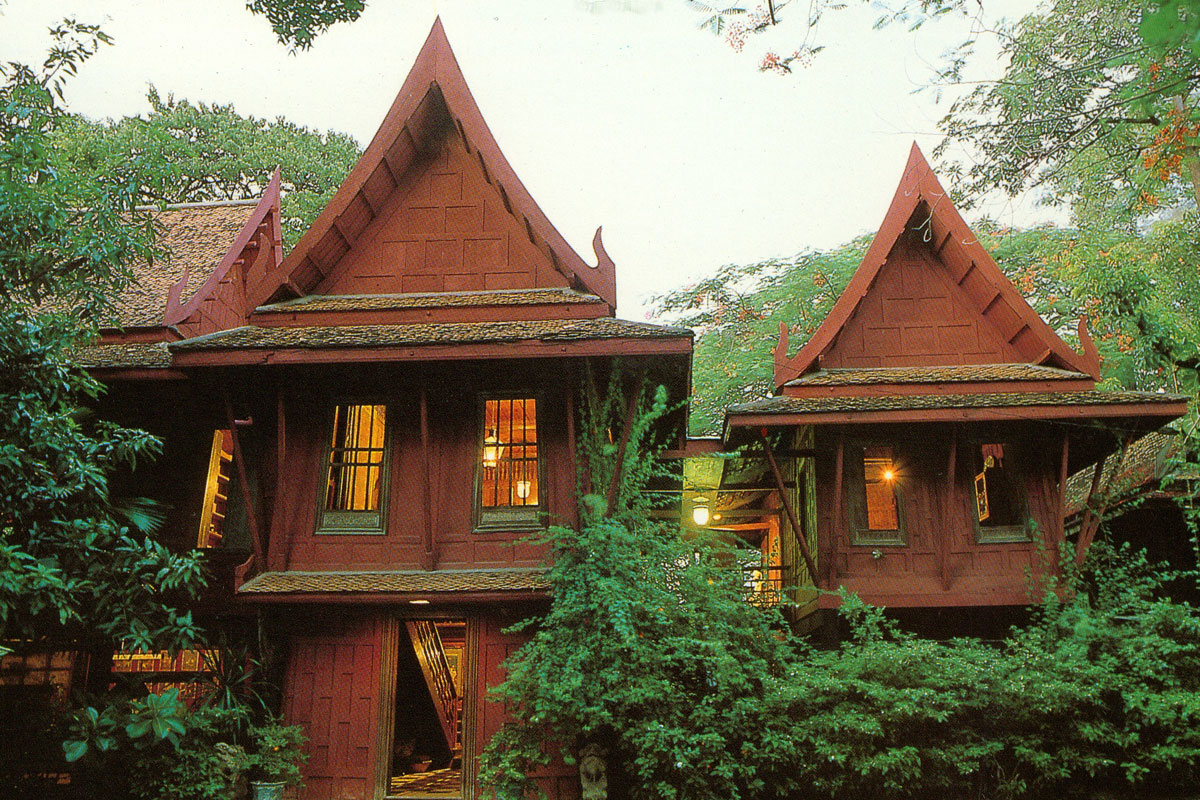


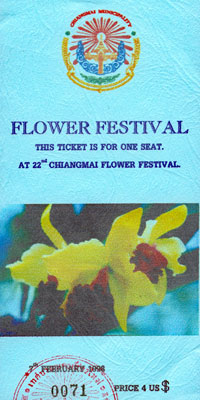 In 1998, we visited Chiang Mai during the Chiang Mai Flower Festival which is an annual celebration that marks the transition from the cool season. It is held over three days on the first weekend of February and includes a vibrant display of ancient and modern floral art, showcasing the traditions of the ancient Lanna Kingdom.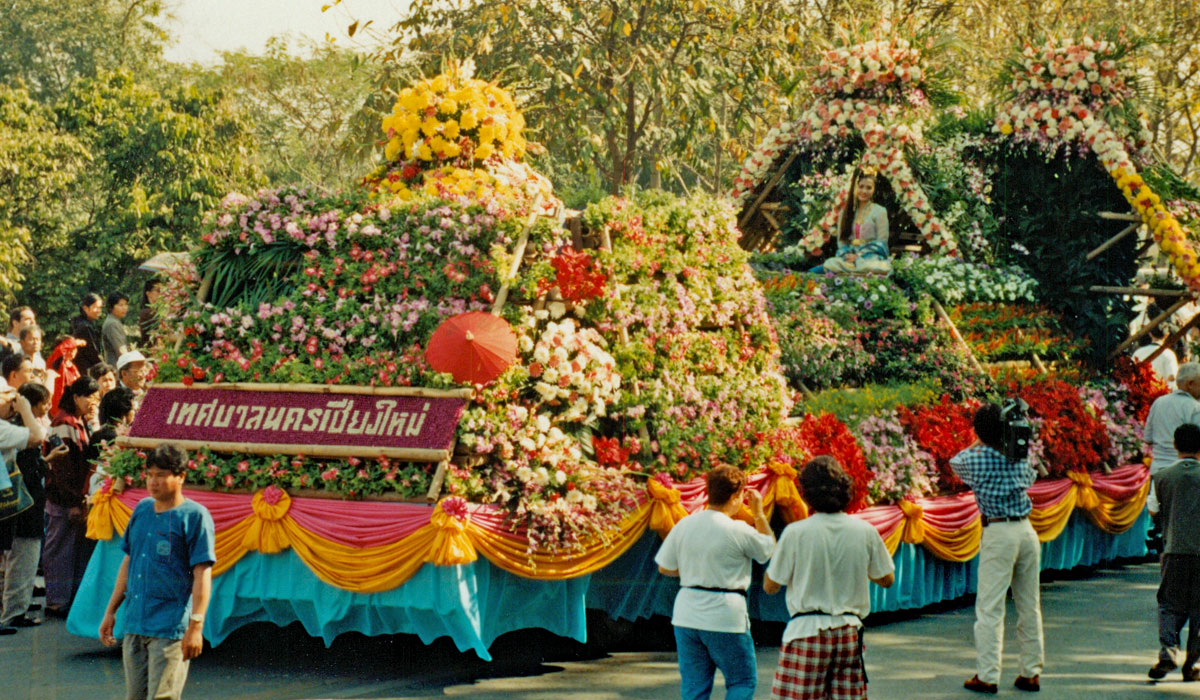

 We visited the island of Phuket, on Thailand’s west coast and its largest island, in 1986 just after the airport opened and the inauguration of flights from Bangkok. This was during its early days as a tourist destination. There were only a handful of hotels on Patong Beach on the Andaman Sea where we stayed. We could walk along this idyllic scarcely-populated tropical beach and dine on freshly-caught seafood grilled at a quaint beachside café. The other tourists we met were mostly Australians and Europeans backpackers. We would not recognize Phuket today as it has become an over-developed tourist hotspot, with over 3 million tourists visiting the island annually.