We had planned to spend some time in Japan but other trips always took precedence. Peter visited Tokyo on business several decades ago and we had both connected through Narita Airport many times on other trips to Asia. Finally, we decided that 2025 was time since the long flight and 11-hour time difference would never change.
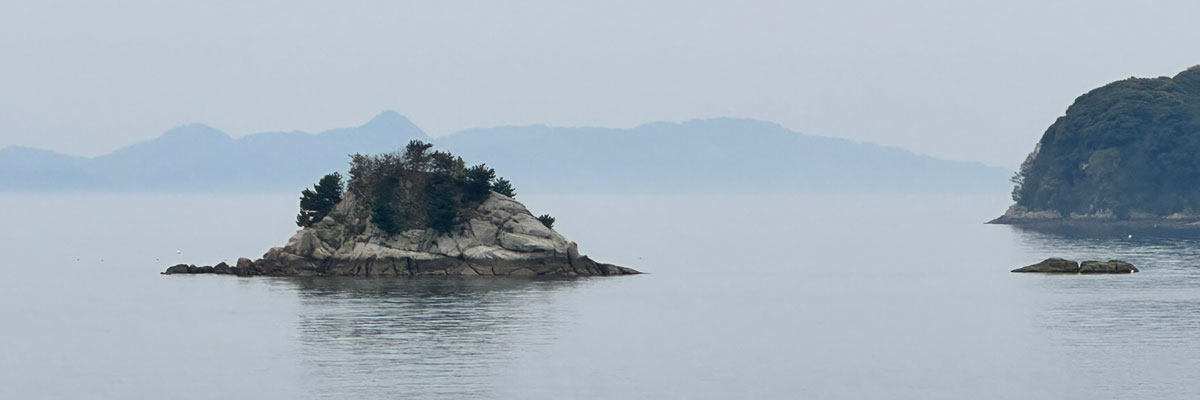
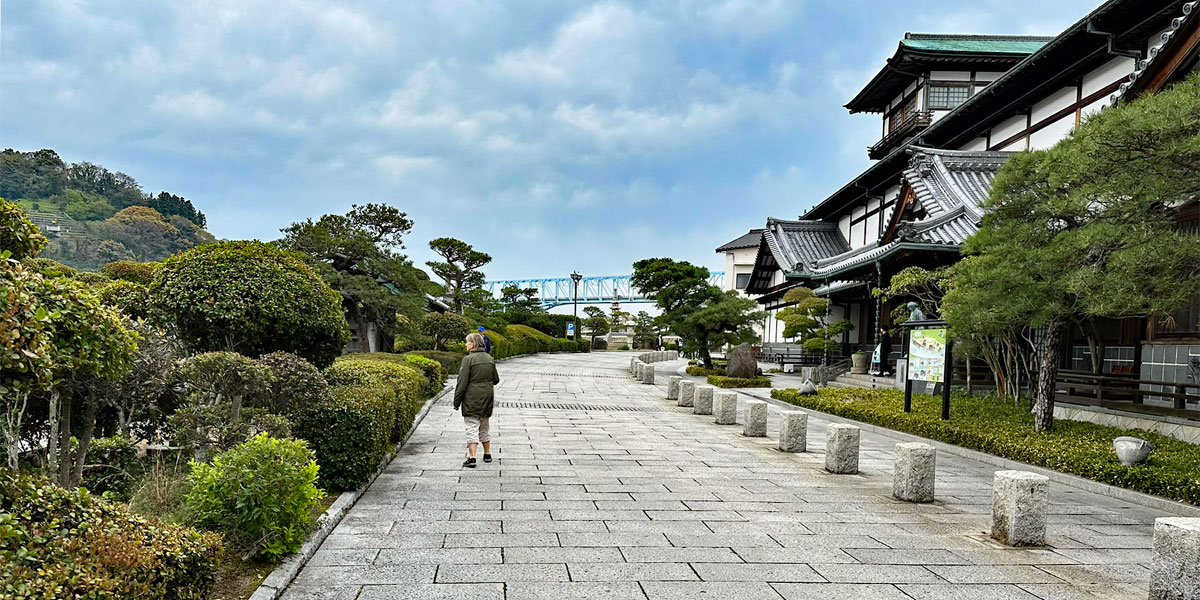
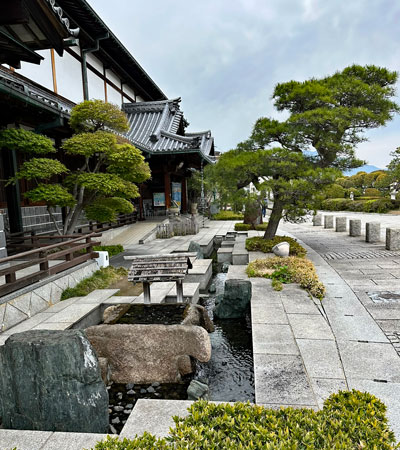
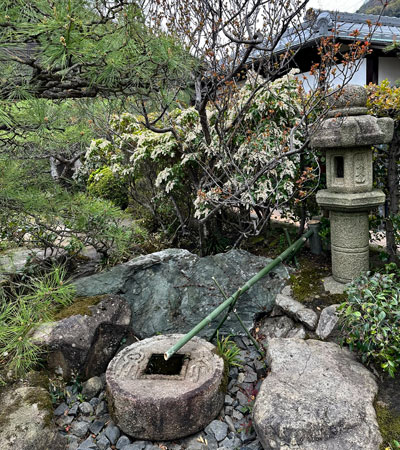
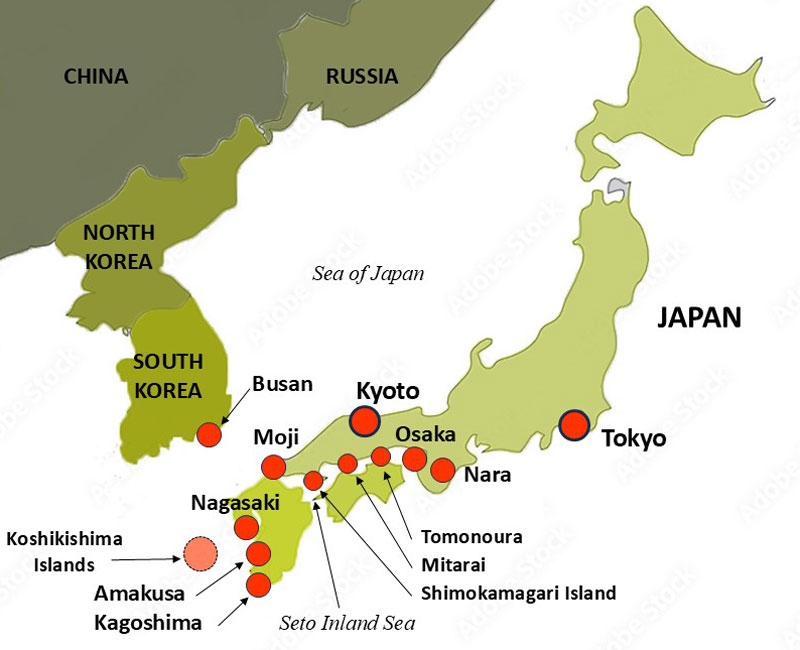
Our trip began with five days in Kyoto and a day in Nara. We then headed to Osaka where we boarded a small French ship, Le Jacques Cartier, which took us westward through the Seto Inland Sea to Moji on the tip of Honshu Island — visiting small villages along the way. From there we traveled across the Sea of Japan to Busan, South Korea and then to Nagasaki. We then sailed around the Amakusa Region and the Koshikishima Islands. We disembarked in the city of Kagoshima and visited the area before flying to Tokyo for a short stay stay before departing back to the U.S.
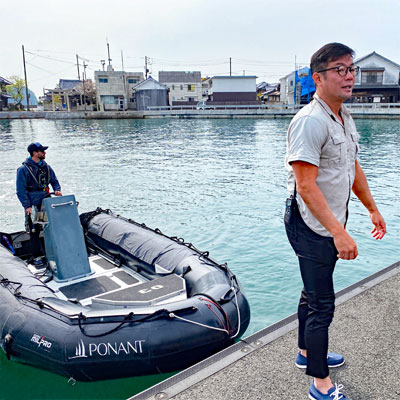
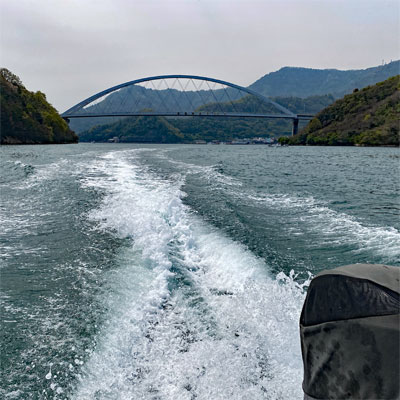
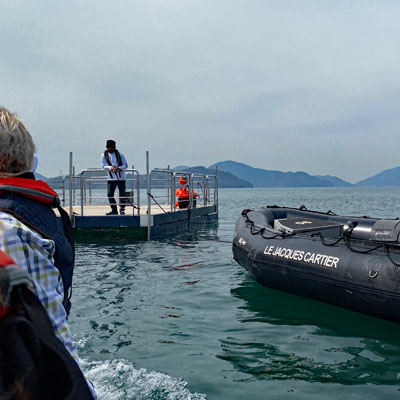
Because the small villages that we visited along the Seto Inland Sea, Amakusa Region, and Koshikishima Islands were only accessible by Zodiac craft, we encountered virtually no tourists.
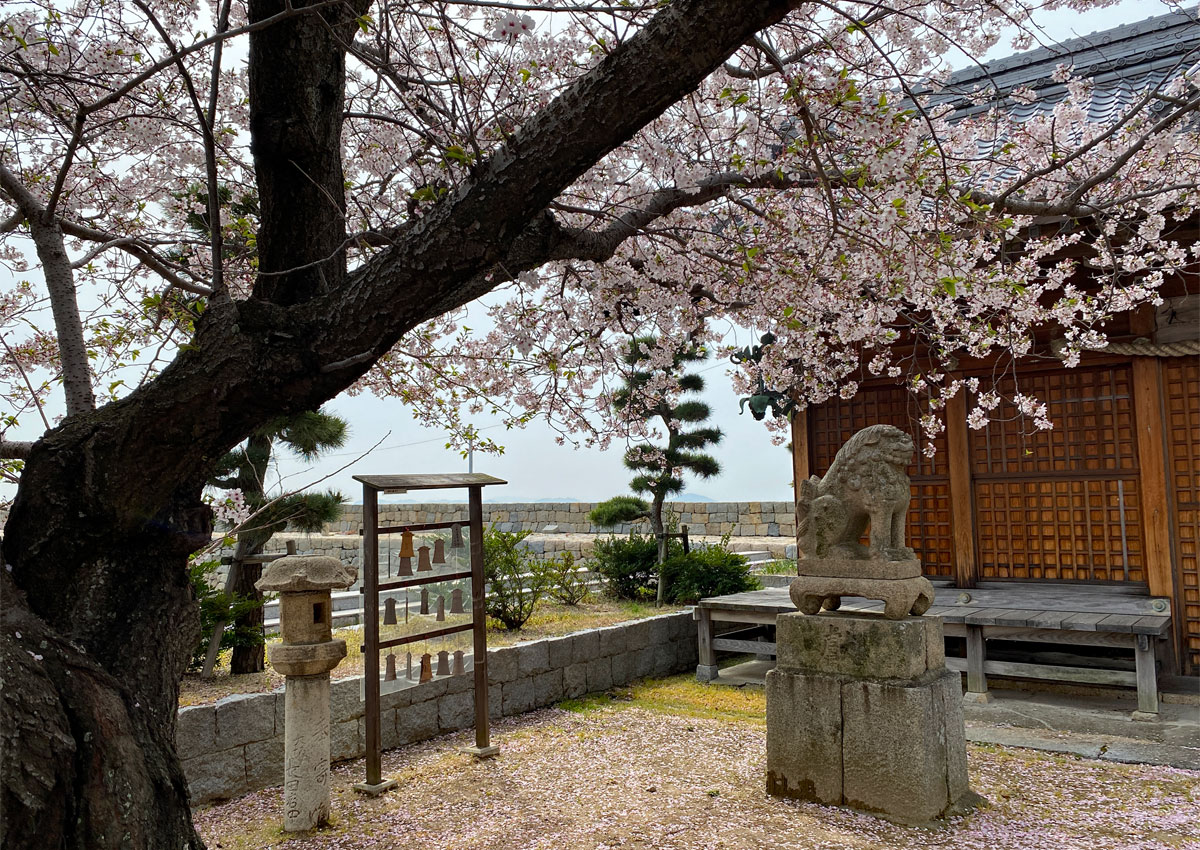
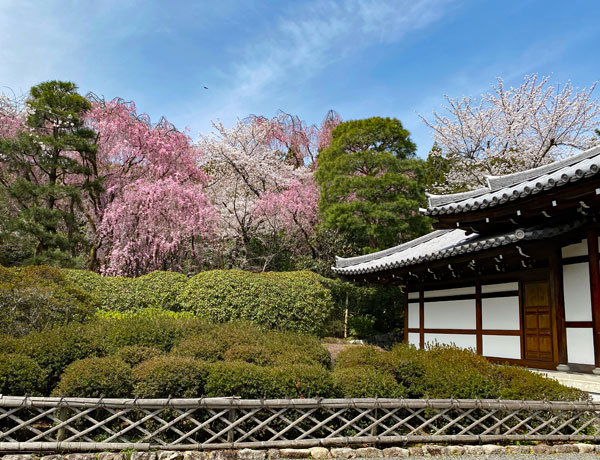
With our trip in mid-April, we had assumed that we would be too late to see the cherry blossoms — Japan’s unofficial national flower — still in bloom. Fortunately, Japan had experienced two very cold weeks during the end of March which delayed their bloom. They were in full blossom during our stay and we had wonderful weather.
Kyoto
While in Kyoto, we stayed at the Good Nature Hotel in Kyoto's central business district and ate at a variety of local restaurants. We were also within walking distance to Kyoto's historic Gion district — home to the Geisha — with its stone streets, traditional merchant houses, willow trees, and lanterns. The temples that we visited — all of which had beautiful gardens — included the Tenryuji, Kiyomizu, Kinkakuji, and
Temples.
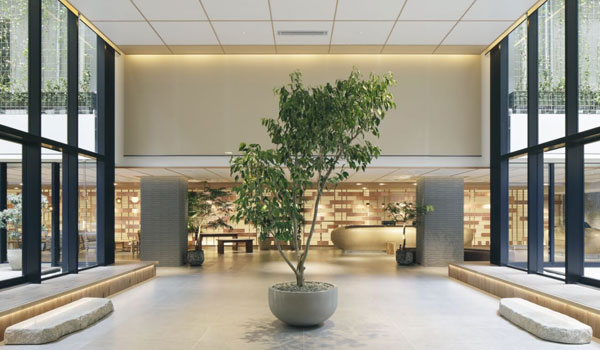
Entering the the lobby of the Good Nature Hotel
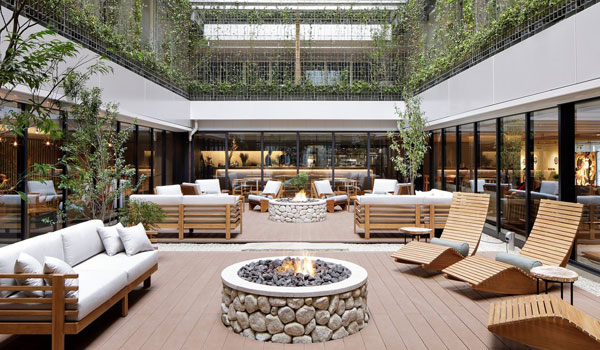
Interior courtyard at the hotel
Gion Historic District
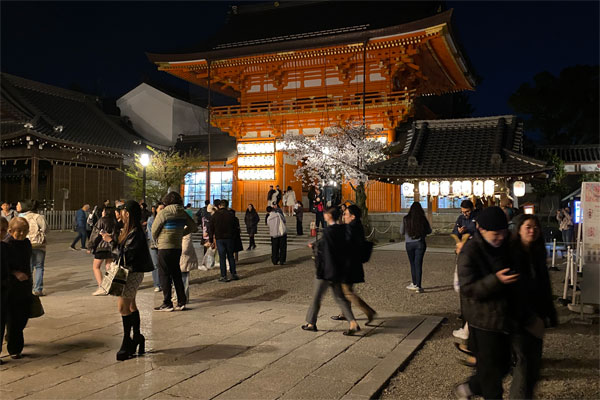
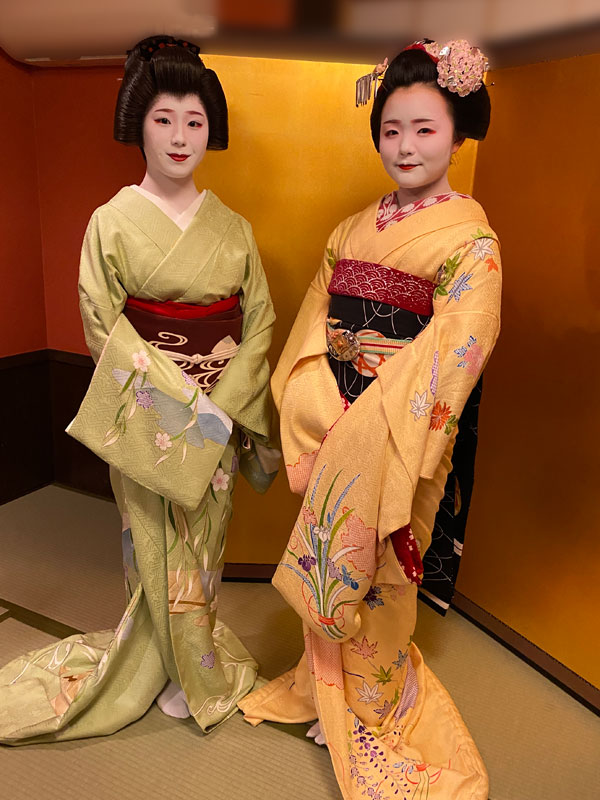
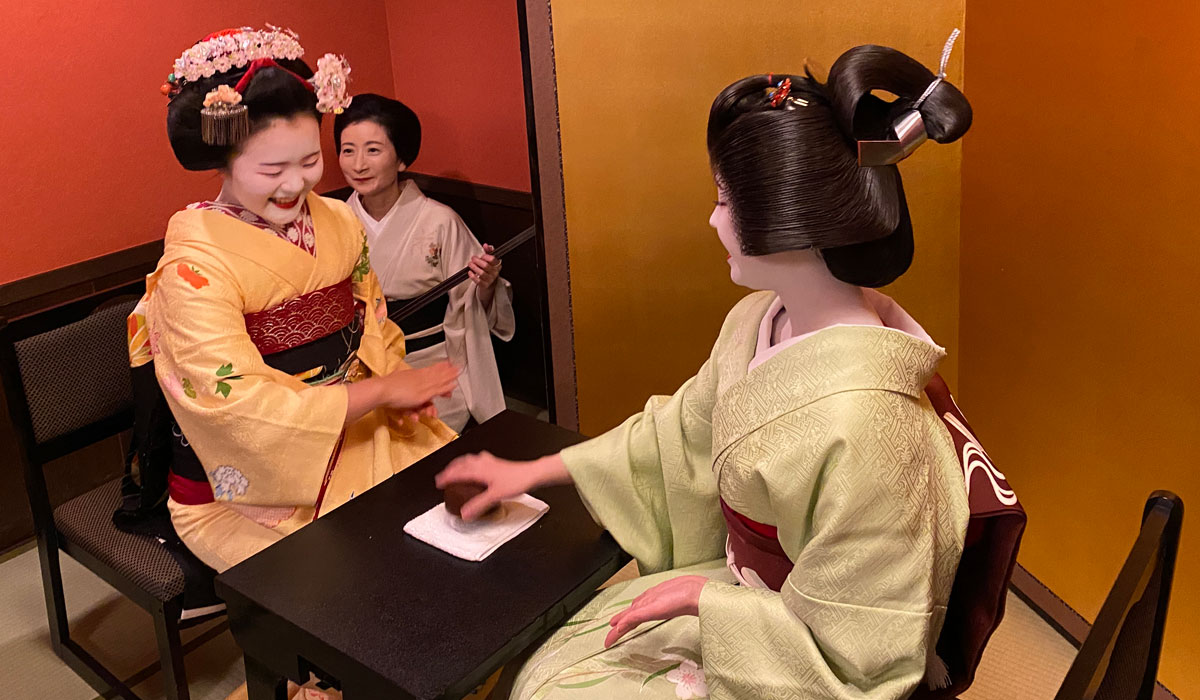
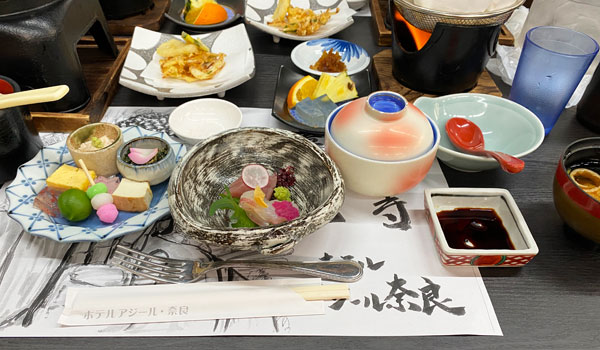
On our first evening we visited the Gion Historic District under the glow of traditional lanterns. With a small group, we had a traditional Japanese kaiseki dinner of many small courses. After dinner, we enjoyed a performance by a Maiko, an apprentice Geisha in Kyoto, and a Geiko, a full-fledged artist know as a Geisha outside Kyoto. They also illustrated the hand game of Janken, the Japanese version of Rock Paper Scissors, and we took turns trying to outsmart them.
Evening in the Gion district with a view of the Main Hall of the Yasaki Shrine
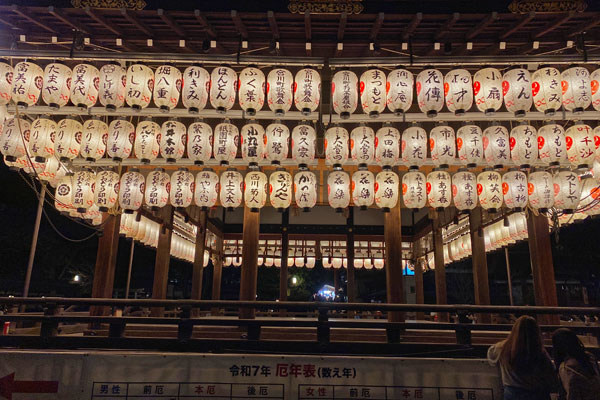
The many lanterns over the Dance Stage of the Yasaki Shrine
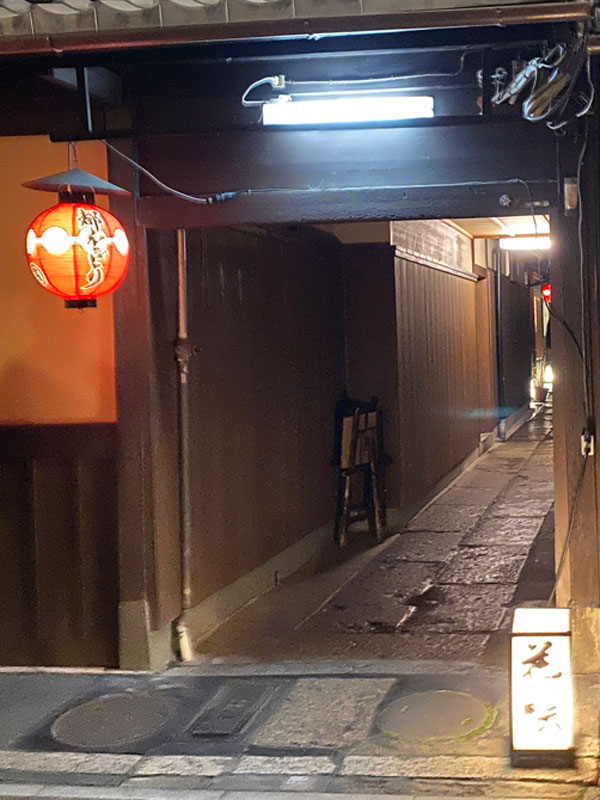
Entering a restaurant in the Gion district
The Geisha and Maiko who entertained us after dinner
The Maiko and Geisha playing Janken
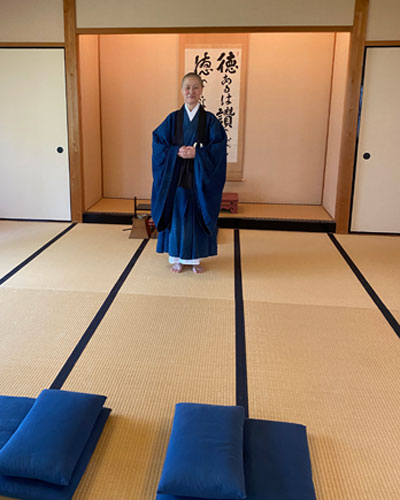
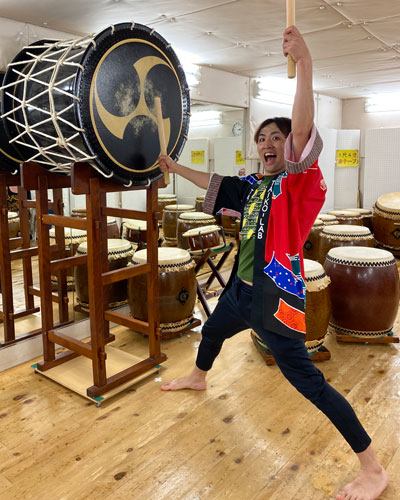
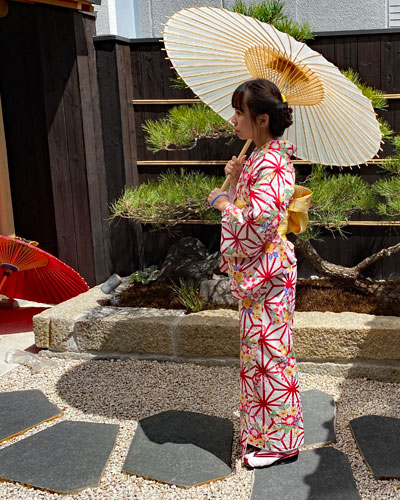
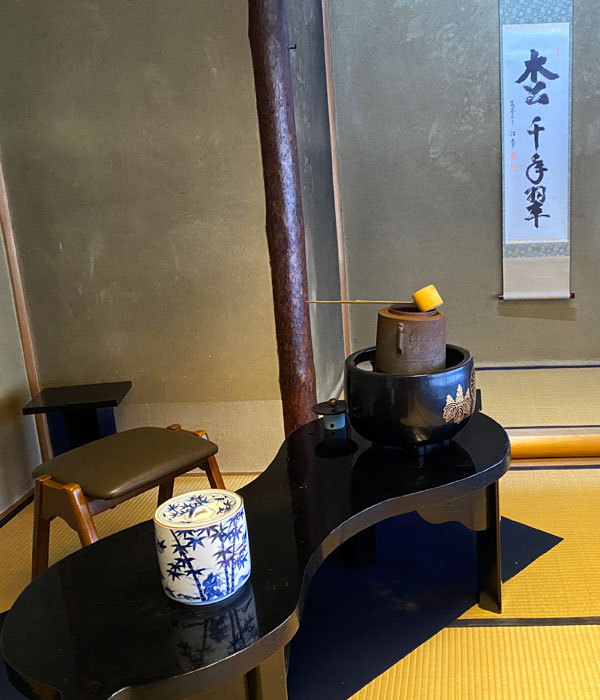
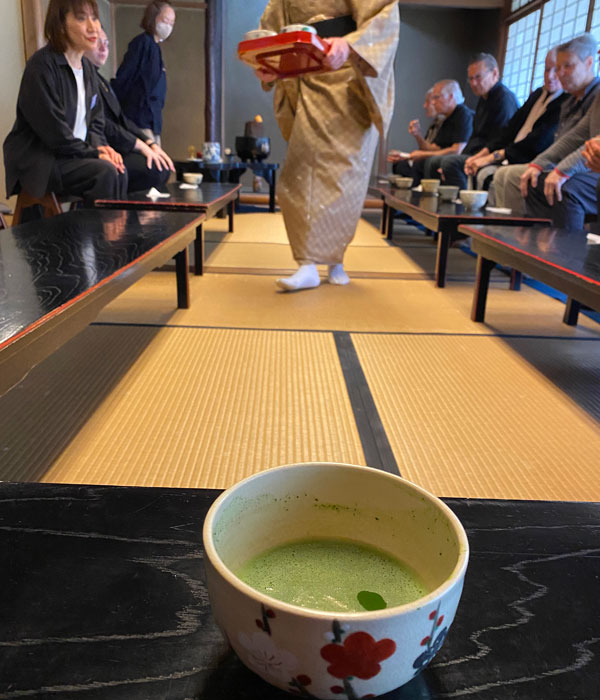
In Kyoto, we tried to sample some Japanese culture and traditions including eating lots of interesting food, experiencing a tea ceremony and the art of wearing a kimono, and attending classes in Zen meditation, taiko drumming, and calligraphy.
Traditional obento box lunch
Traditional kaiseki dinner of many small plates.
Our Zen meditation teacher
The taiko drumming instructor
Japanese woman in a beautiful kimono
Setting up for the tea ceremony
Being served matcha green tea
Kodaiji Temple
Kodaiji is a prominent Zen Buddhist temple founded in 1606 by Nene, the wife of Toyotomi Hideyoshi, one of Japan's most significant historical figures, in his memory. The temple complex includes various buildings, a landscaped gardens, and tea houses. A natural bamboo forest with several paths for visitors is located a short walk from the temple.
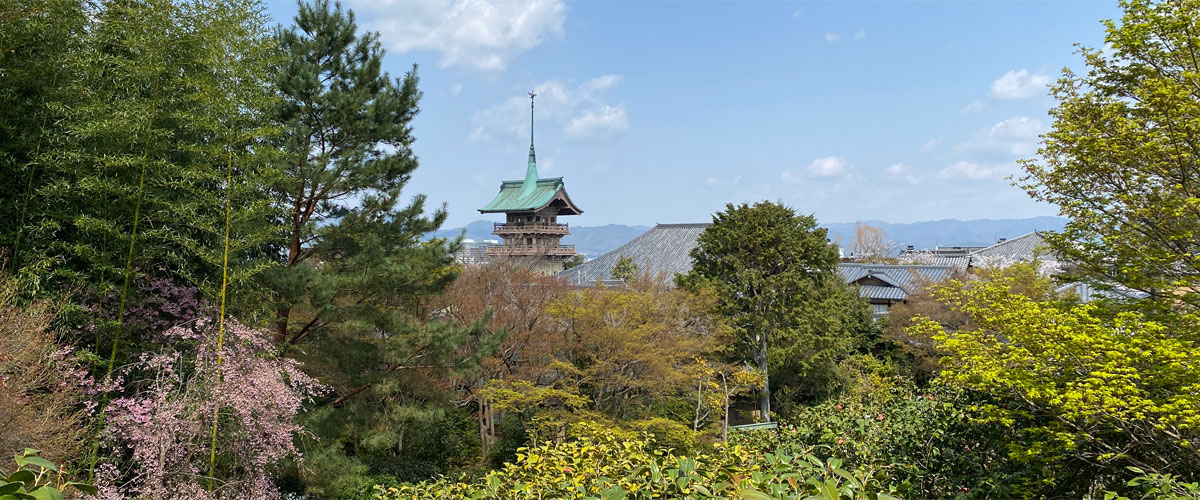
View of the Kodaiji Temple on the horizon
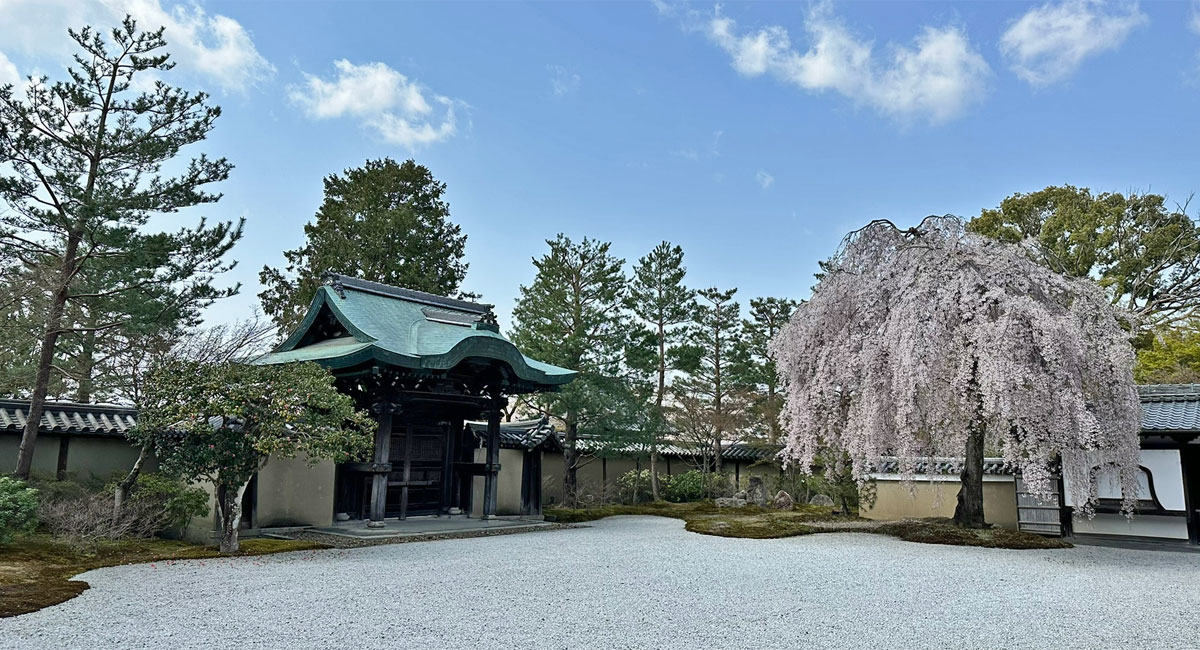
Entering Kodaiji Temple with a cherry tree in bloom
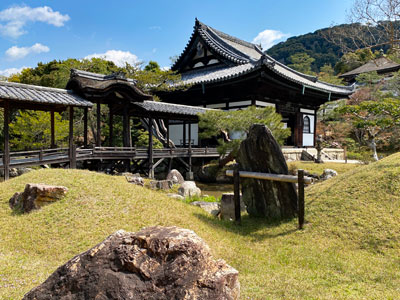
Wood structure at the Kodaiji Temple complex
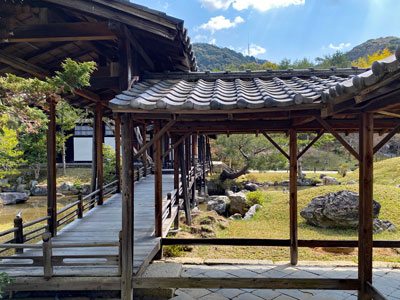
Wooden walkway at Kodaiji Temple
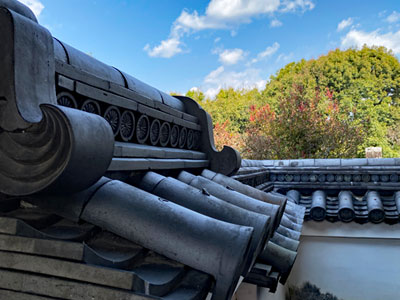
Decorative roof tiles
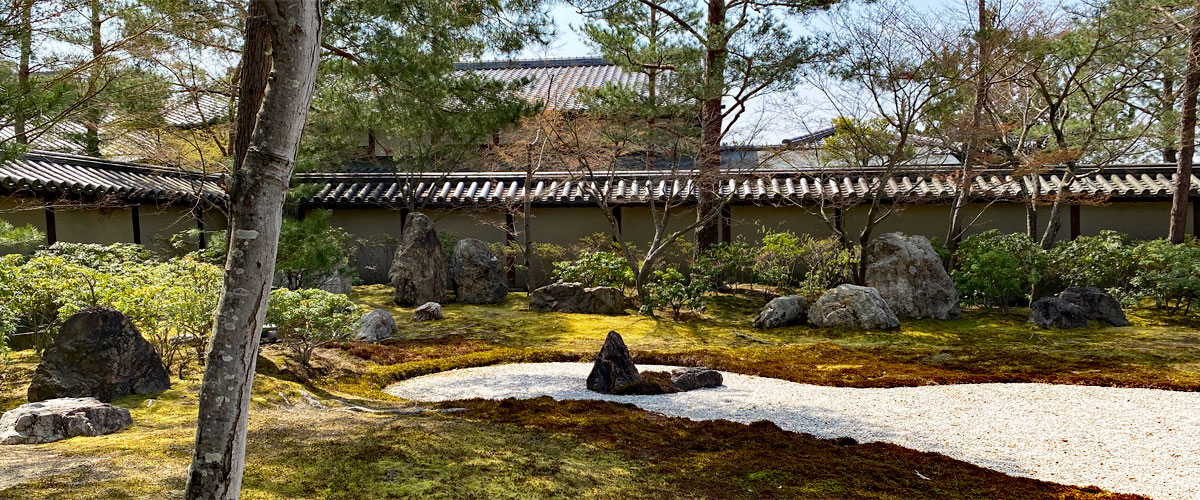
View of one of the gardens at the Kodaiji Temple
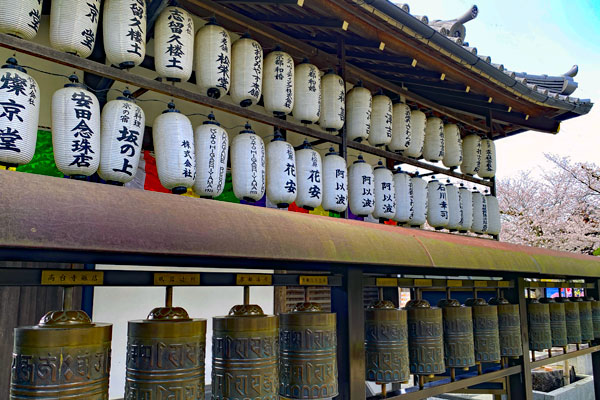
Prayer wheels at Kodaiji Temple
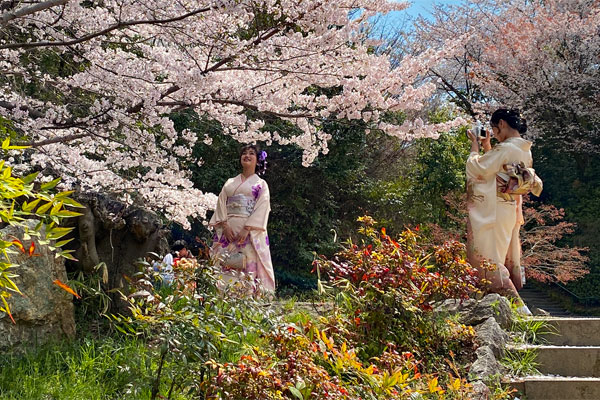
Women in kimonos taking photos of each other
Kiyomizu Temple
Kiyo mizu means pure water and it was founded in 780 on the site of the Otowa Waterfall in the wooded hills east of Kyoto. This temple is noted for its cliff top Main Hall with a broad wooden veranda offering a view of its many cherry and maple trees as well as a panoramic view of Kyoto and environs. The veranda is supported on a towering scaffold of wood and both the Main Hall and veranda were built without the use of nails.
Entering Kiyomizu Temple
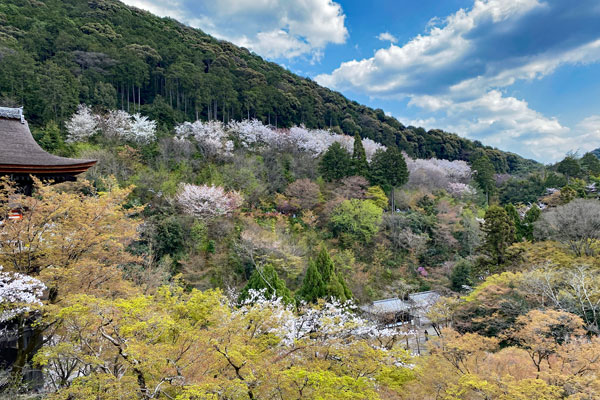
View from the veranda at Kiyomizu Temple
Cherry and maple trees in early spring
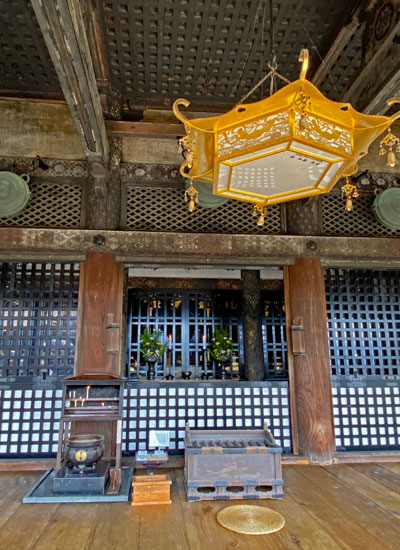
Interior of the Main Hall at Kiyomizu Temple
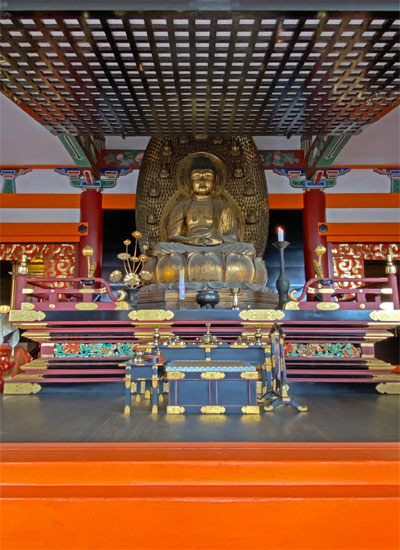
A Buddha inside the temple
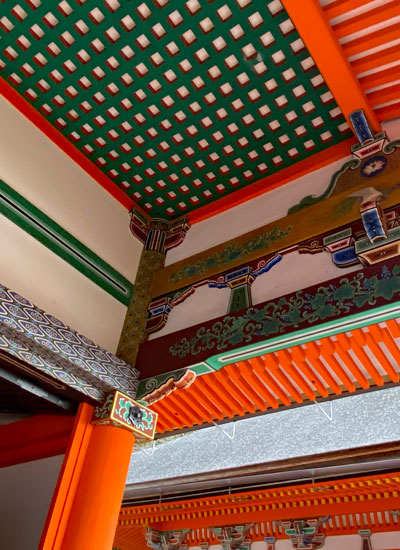
Colorful ceiling details
Kinkakuji Temple
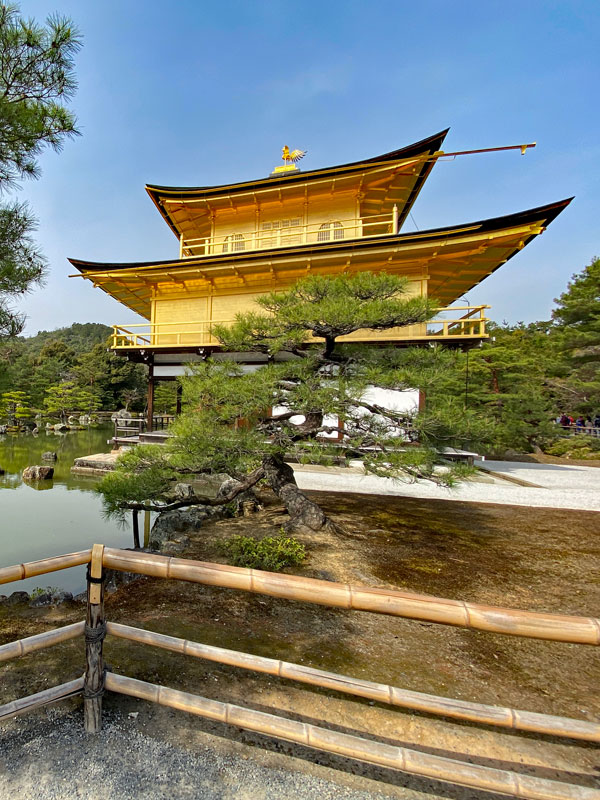
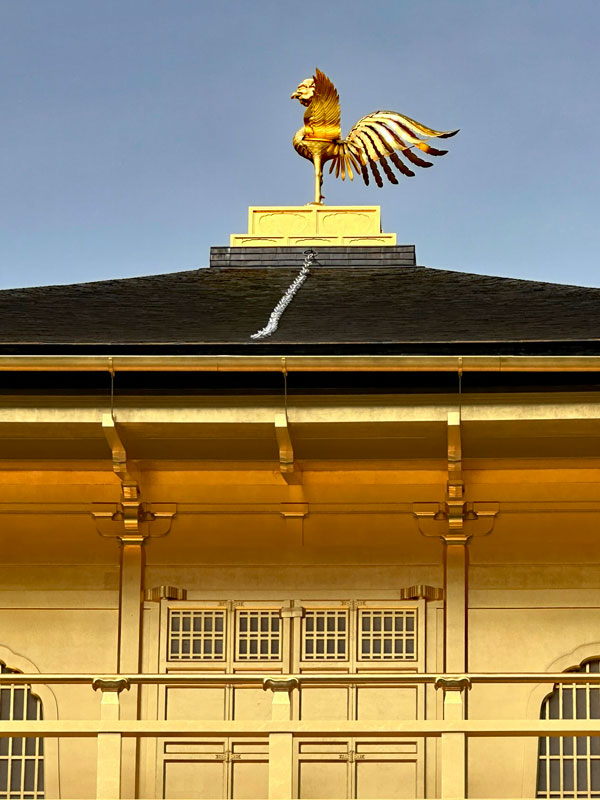
Kinkakuji, known as the Golden Pavilion, is a temple dedicated to the Buddhist Goddess of Mercy. It was built in 1398 by the Shogun Ashikaga Yoshimitsu as his retirement home. After his death, the grounds were turned into a Buddhist temple for the Rinzai sect. The Golden Pavilion is the only remaining building of the original estate. Its upper floors are completely covered in gold leaf and the roof is topped by a bronze phoenix.
Approaching Kinkakuji Temple
The Golden Pavilion at Kinkakuji Temple
Detail of the phoenix on the rooftop
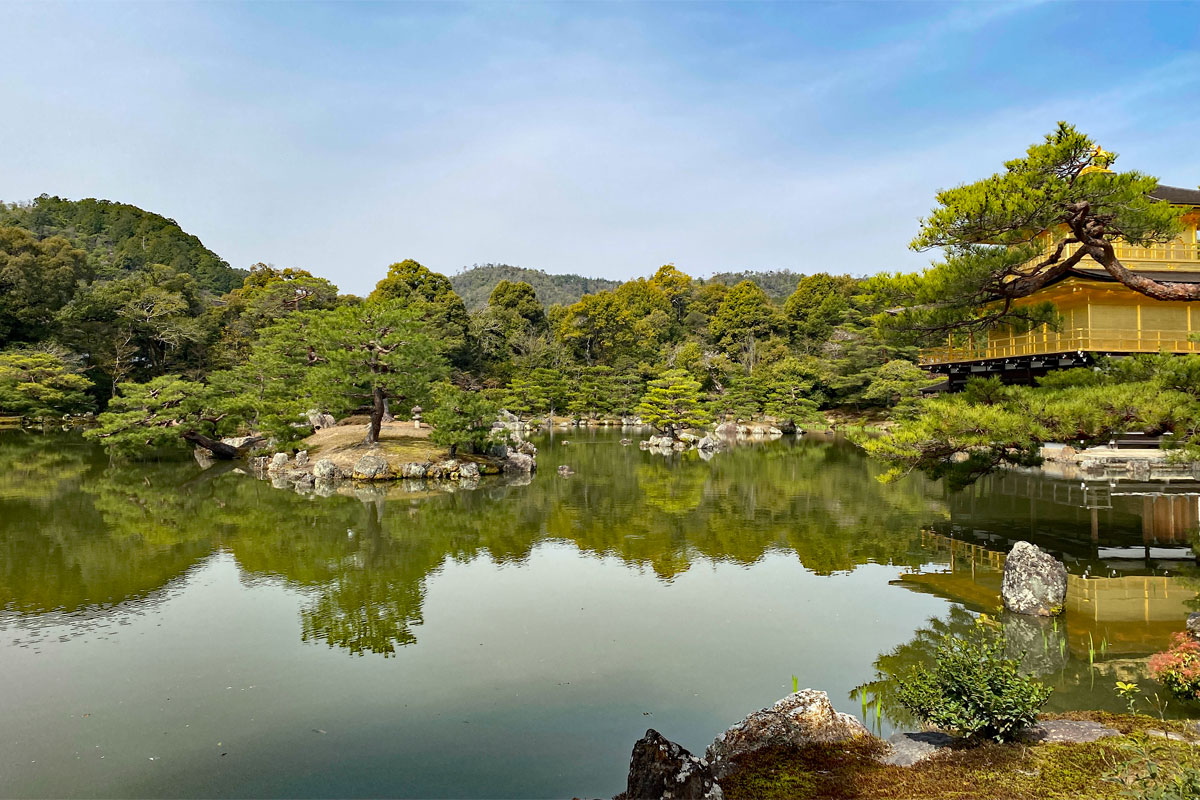
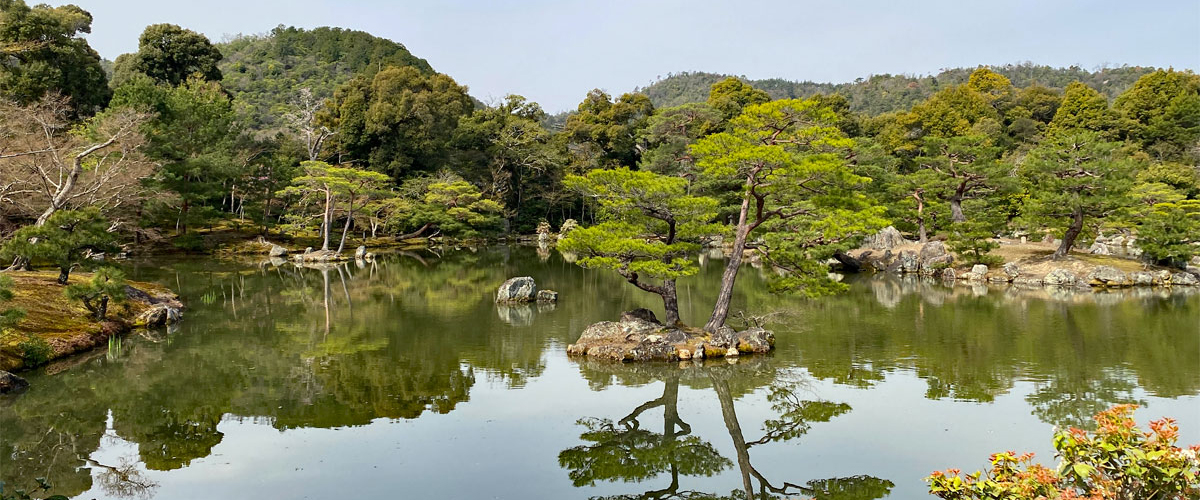
The landscaped pond surrounding Kinkakuji Temple
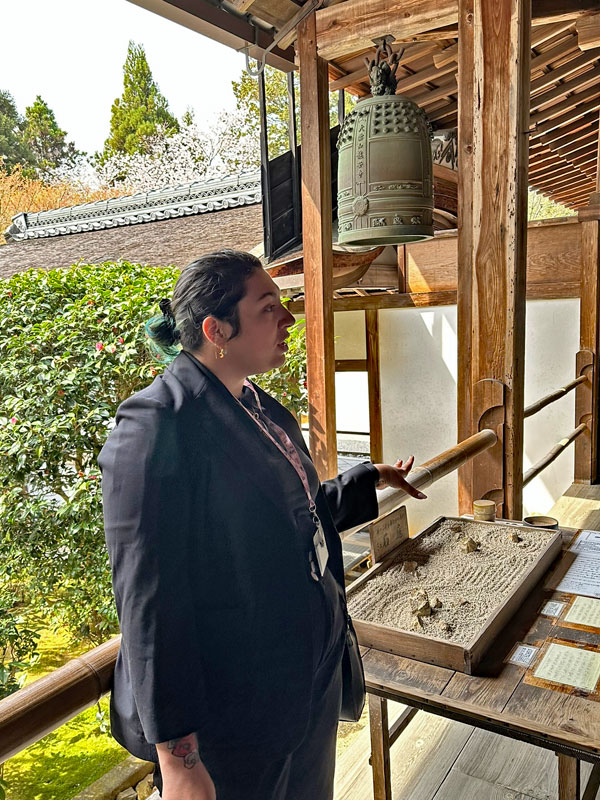
Our guide Giulia Greco explaining the temple history
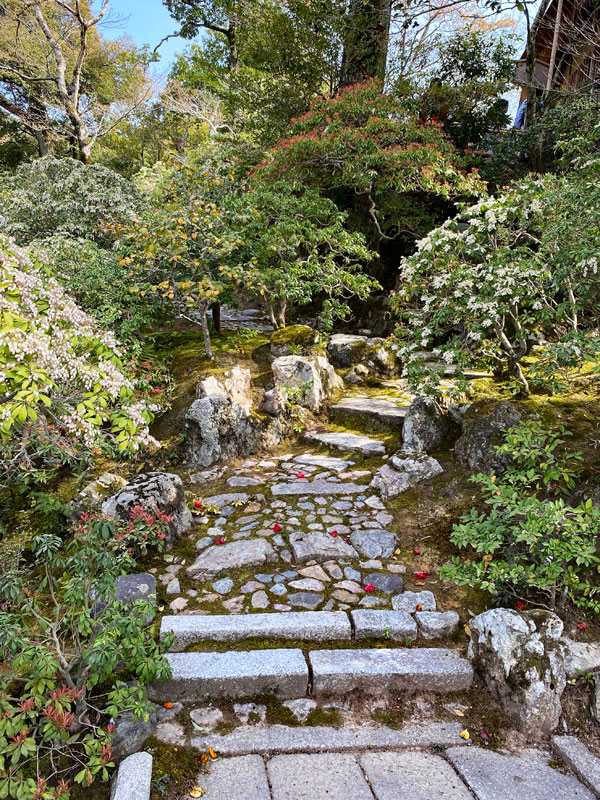
A stairway on the temple grounds
Ryoanji Temple
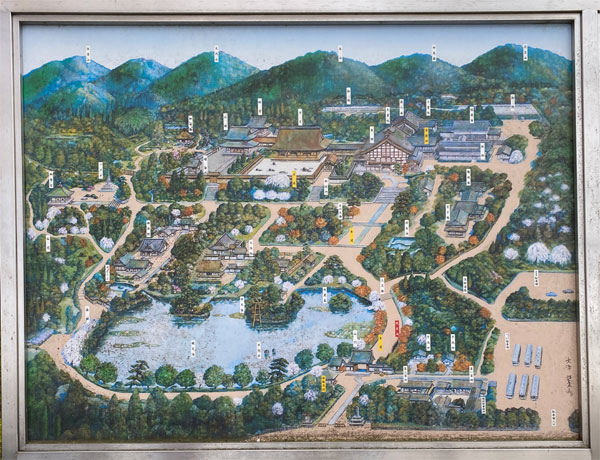
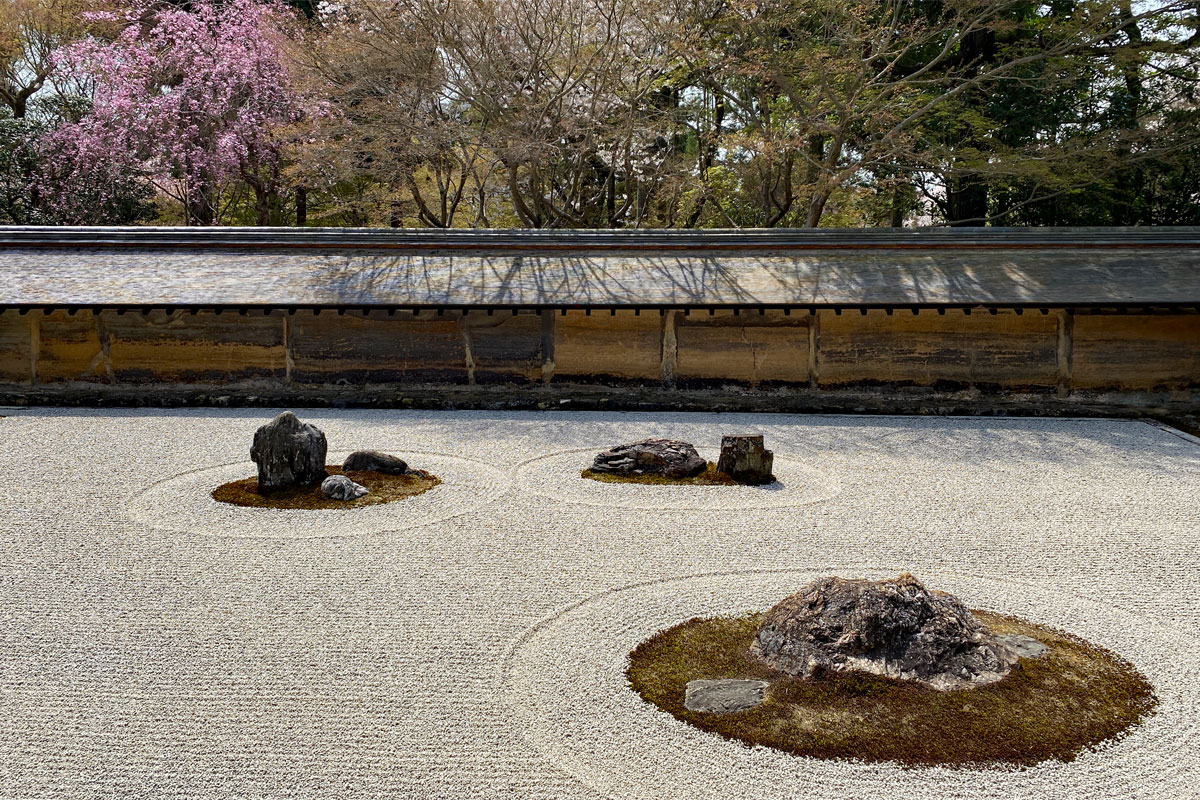
Ryoanji Temple, translated as the Temple of the Dragon at Peace, belongs to the Myoshinji school of the Rinzai sect of Zen Buddhism. It is the site of Japan’s most famous rock garden. Constructed in the 15th century, the garden consists of a rectangular plot of pebbles surrounded by low earthen walls with 15 rocks laid out in small groups on patches of moss. The garden is designed so that at least one of the rocks is hidden from the viewer from any vantage point.
Map with overview of Ryoanji Temple grounds
Beginning our walk through Ryoanji Temple grounds
Portion of the famous rock garden at Ryoanji Temple
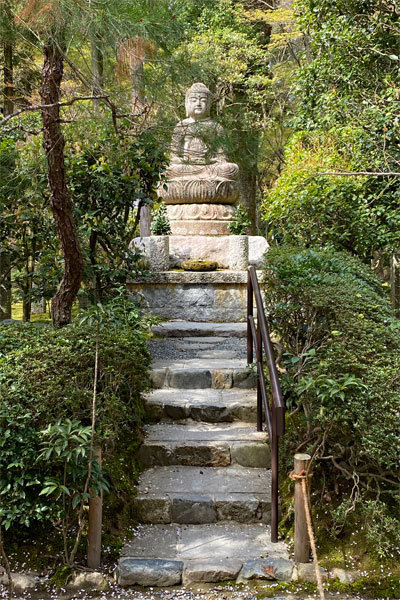
A stairways to a Buddha
A detail of a water feature
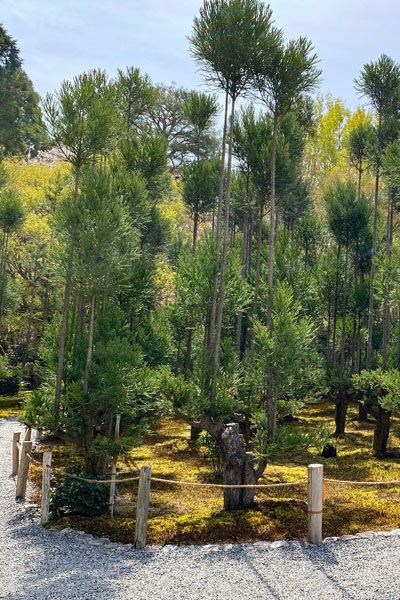
Cedar trees with daisugi pruning technique
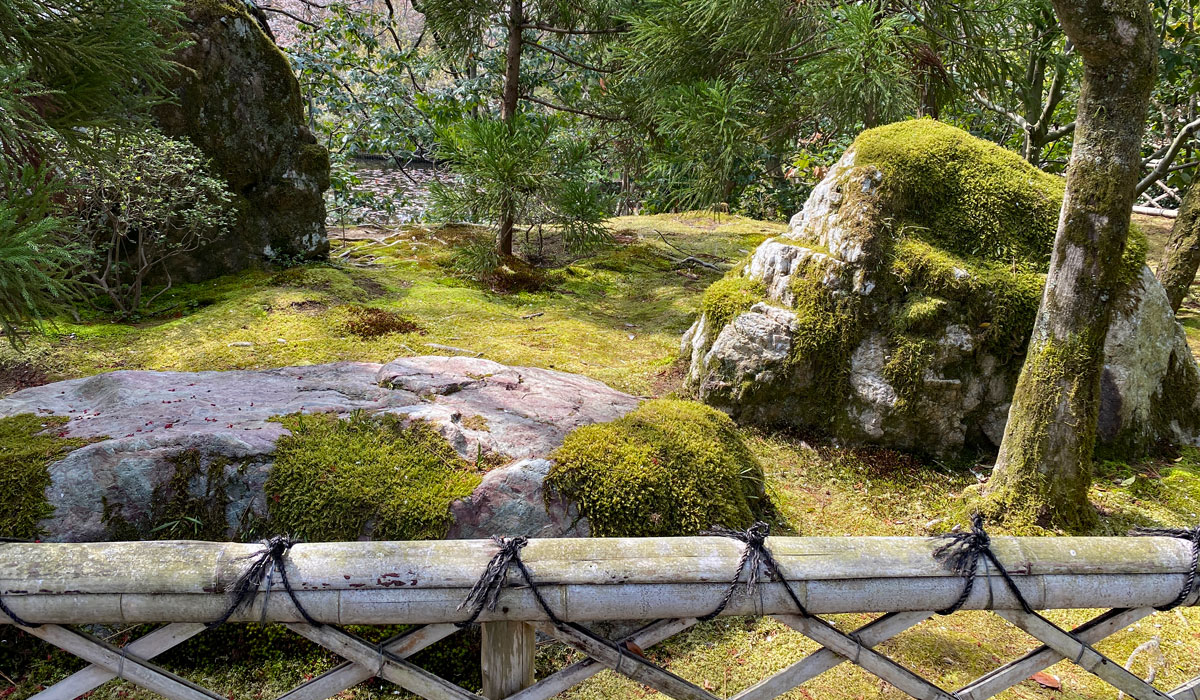
Another beautiful landscape with moss
Tenryuji Temple
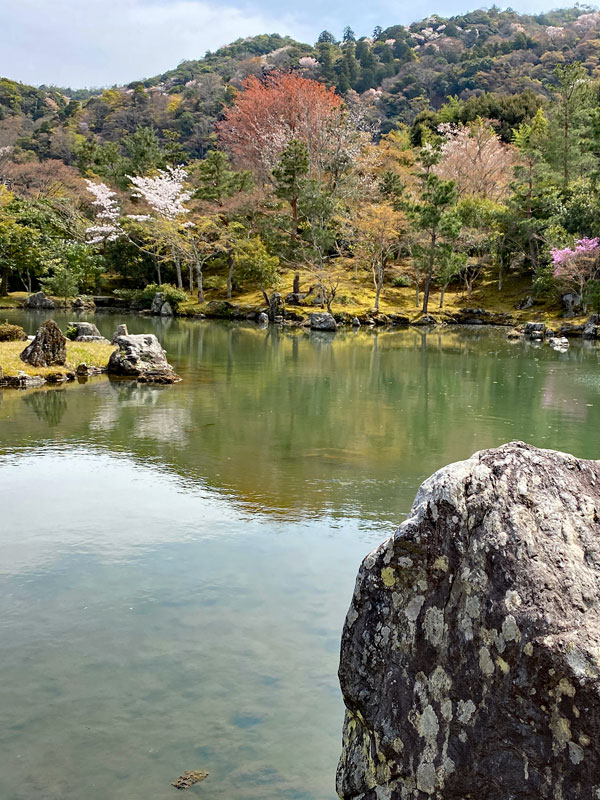
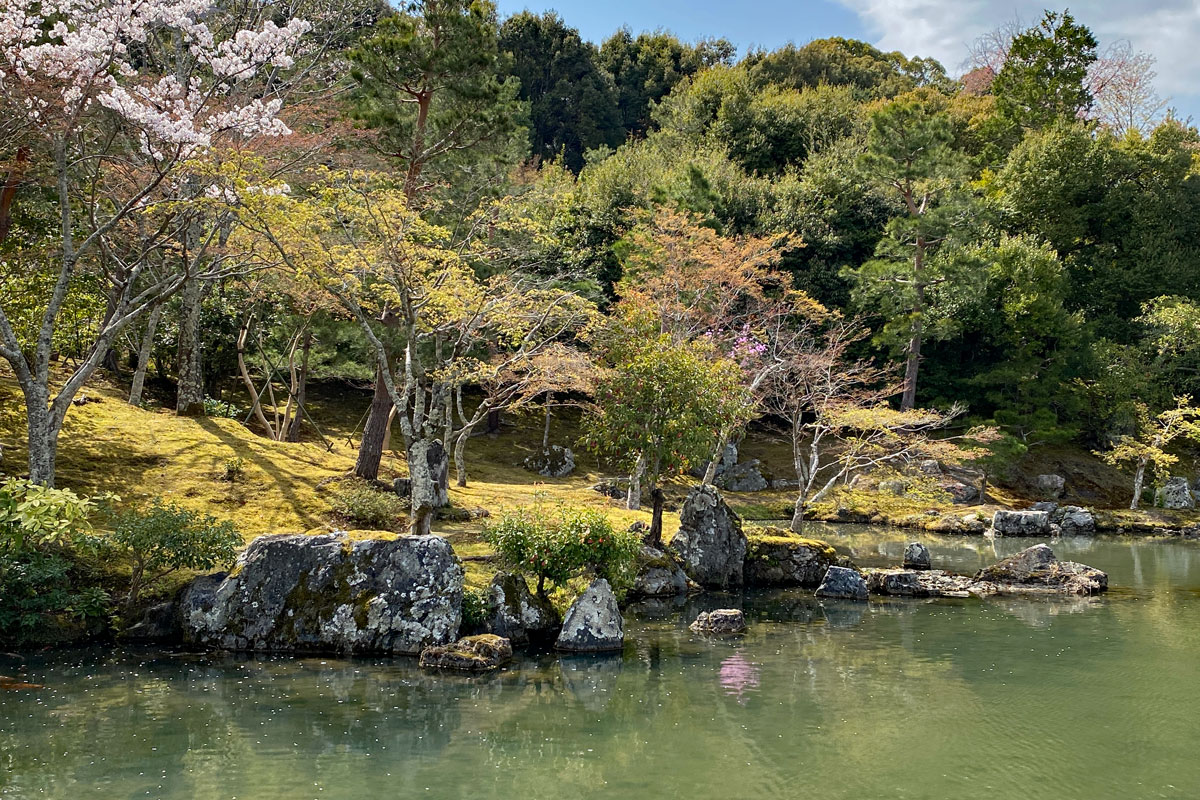
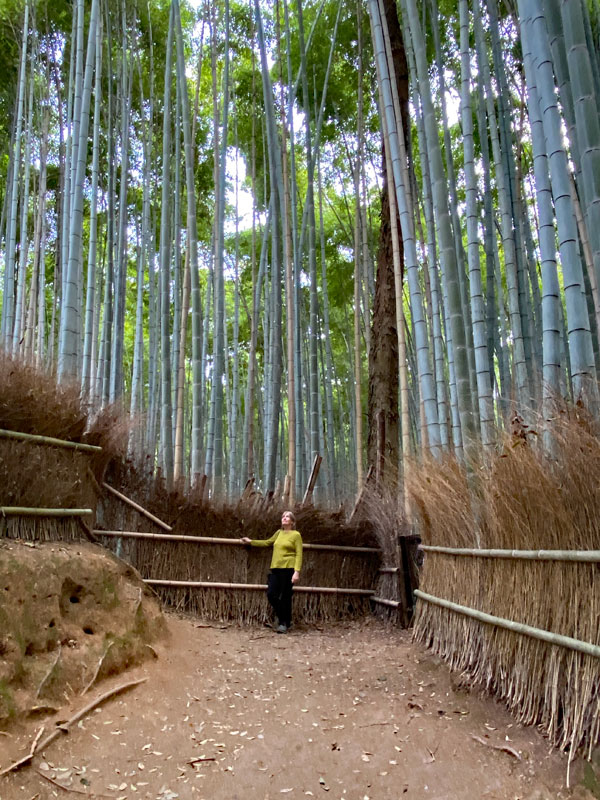
Tenryuji Temple is a major Rinzai Zen temple complex located on the western outskirts of Kyoto in the Arashiyama region. The temple was founded in 1339 by Ashikaga Takauji, the ruling shogun, to venerate Gautama Buddha. It has a beautifully landscaped 14th century garden as well as a dramatic bamboo grove.
Approaching Tenryuji Temple
View of the pond at Tenryuji Temple
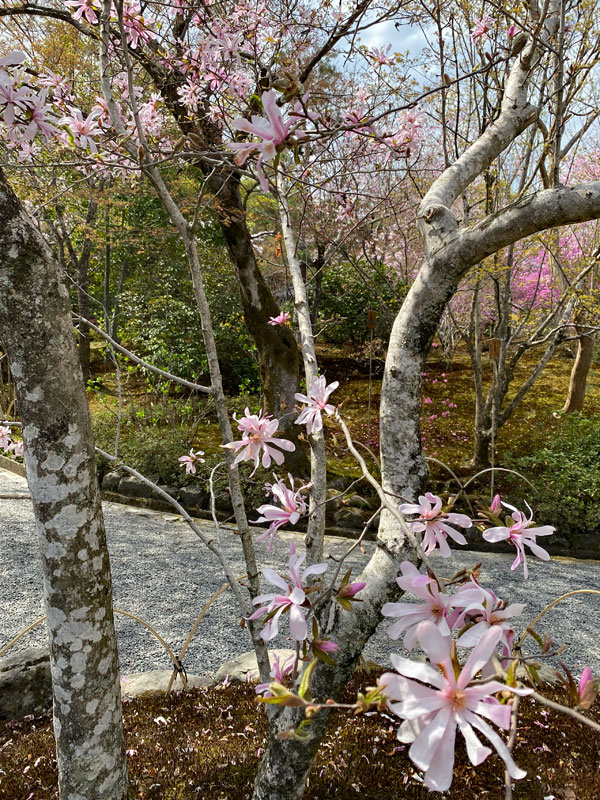
Detail of an usual cherry blossom
Another view looking across the pond at Tenryuji Temple
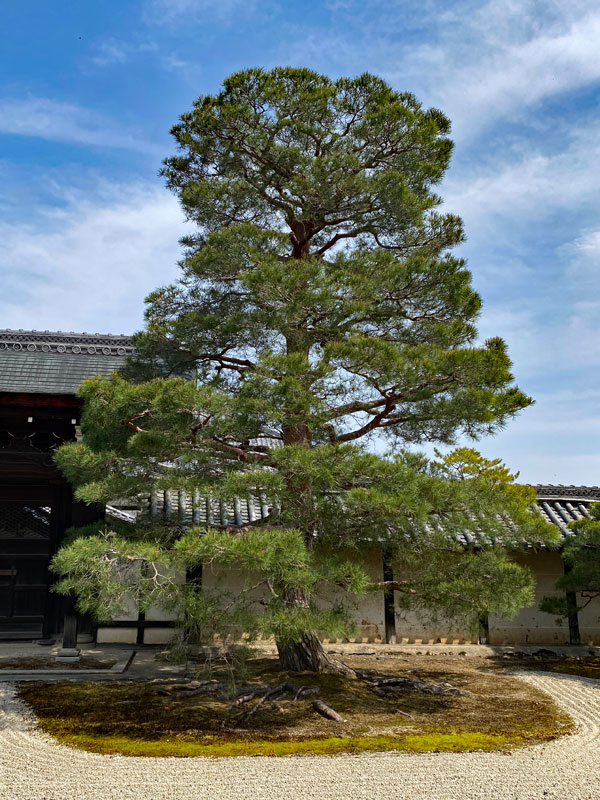
A monumental pine tree at the temple entrance
Walking through the bamboo grove
Nara Park and Todaiji Temple
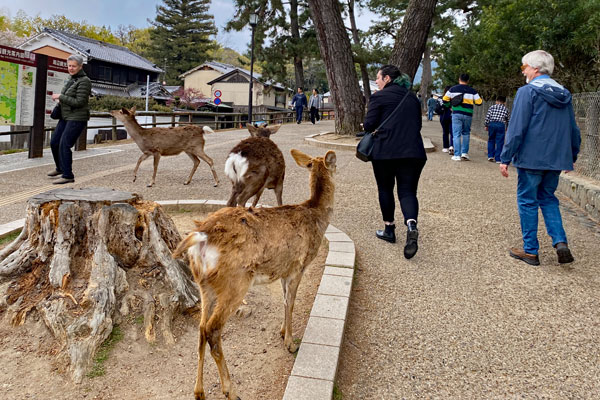
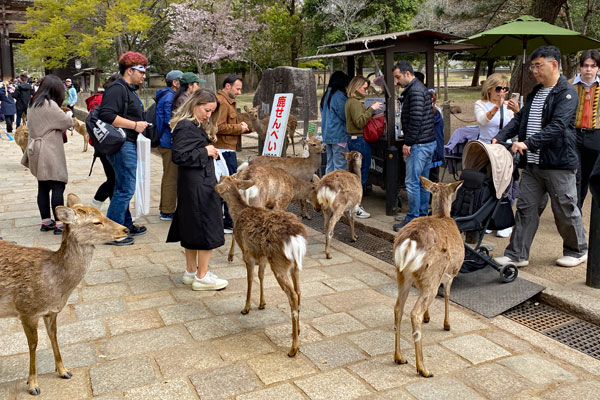
Nara Park, established in 1880, is a public park located at the foot of Mount Wakakusa. It is one of the oldest parks in Japan and covers a vast area of over 1,600 acres. Nara's over 1,000 free-roaming deer — who are considered the messengers of the gods — have become a symbol of the city. Deer crackers are for sale around the park and some deer have learned to bow to visitors to ask to be fed.
Peter and our guide approaching the deer
Lots of tourists feeding the deer
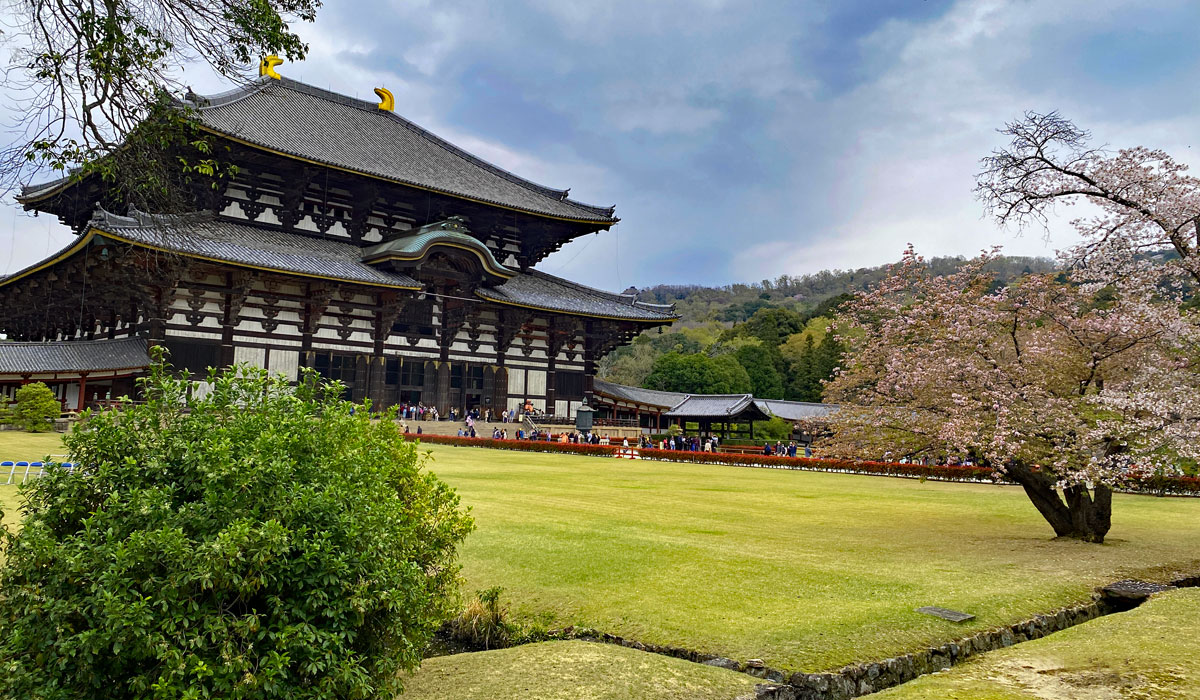
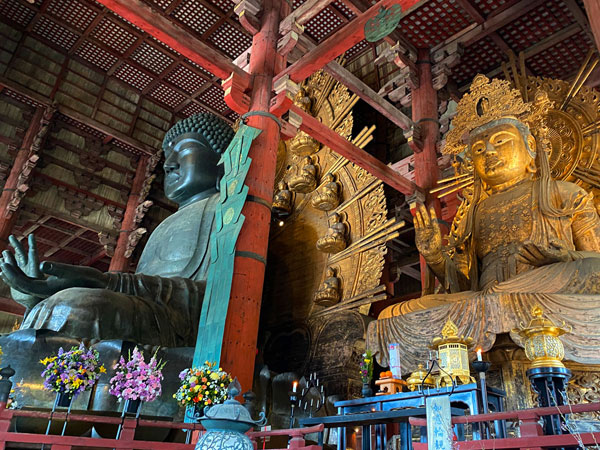
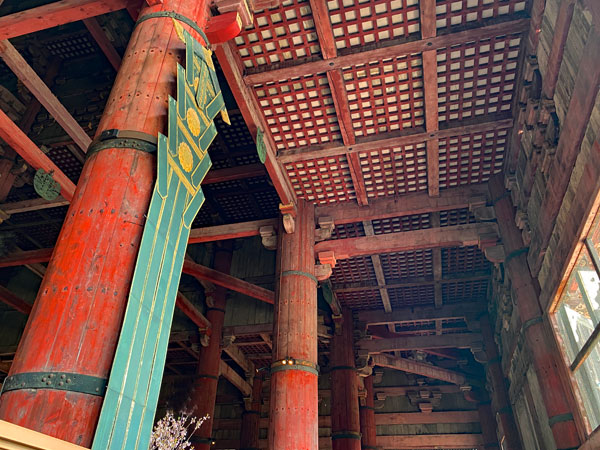
The Todaiji Temple is located in the northern part of Nara Park. It was commissioned in 743 by Emperor Shomu when Nara was the imperial capital of Japan. It took eight years to build and was restored during the Edo Period. The great Buddha Hall, standing 150 feet high with enormous wooden pillars, is one of the world’s largest wooden buildings and is a UNESCO World Heritage Site.
View of the Todaiji Temple at Nara Park
View of the large Buddha statues
Intricate wood details on the ceiling
Isuien Garden
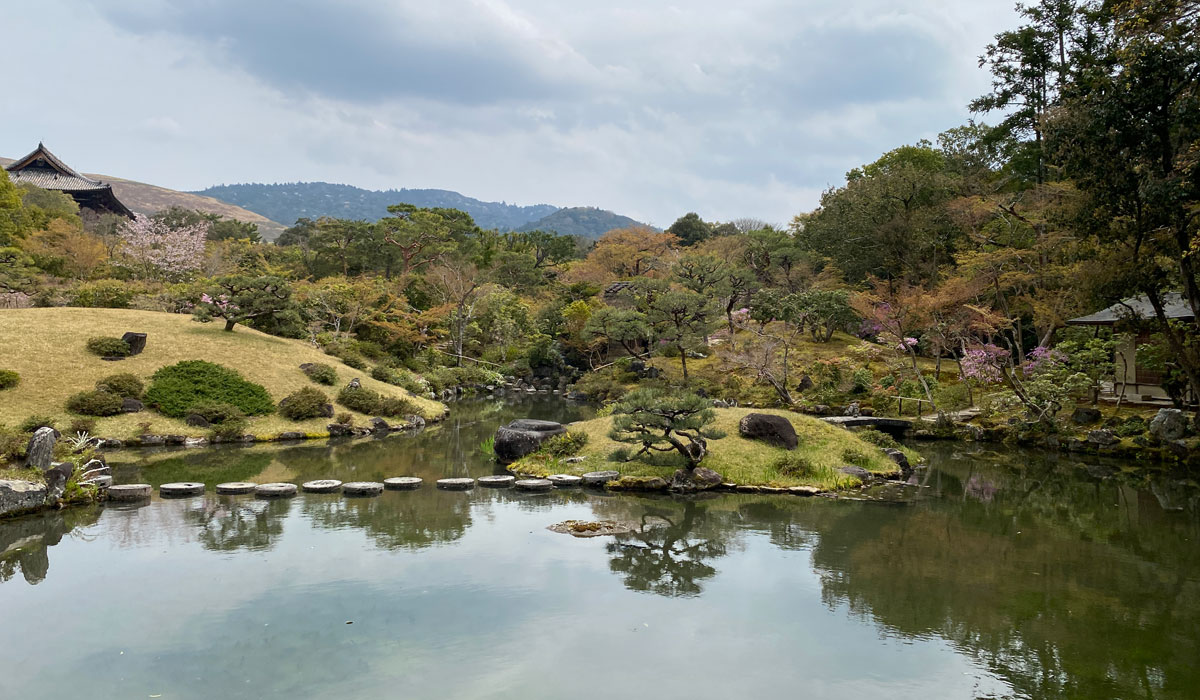
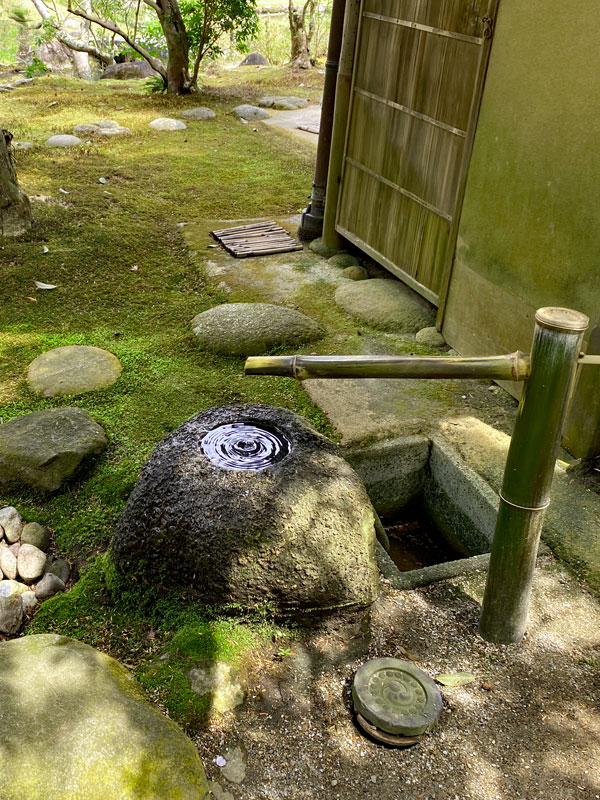
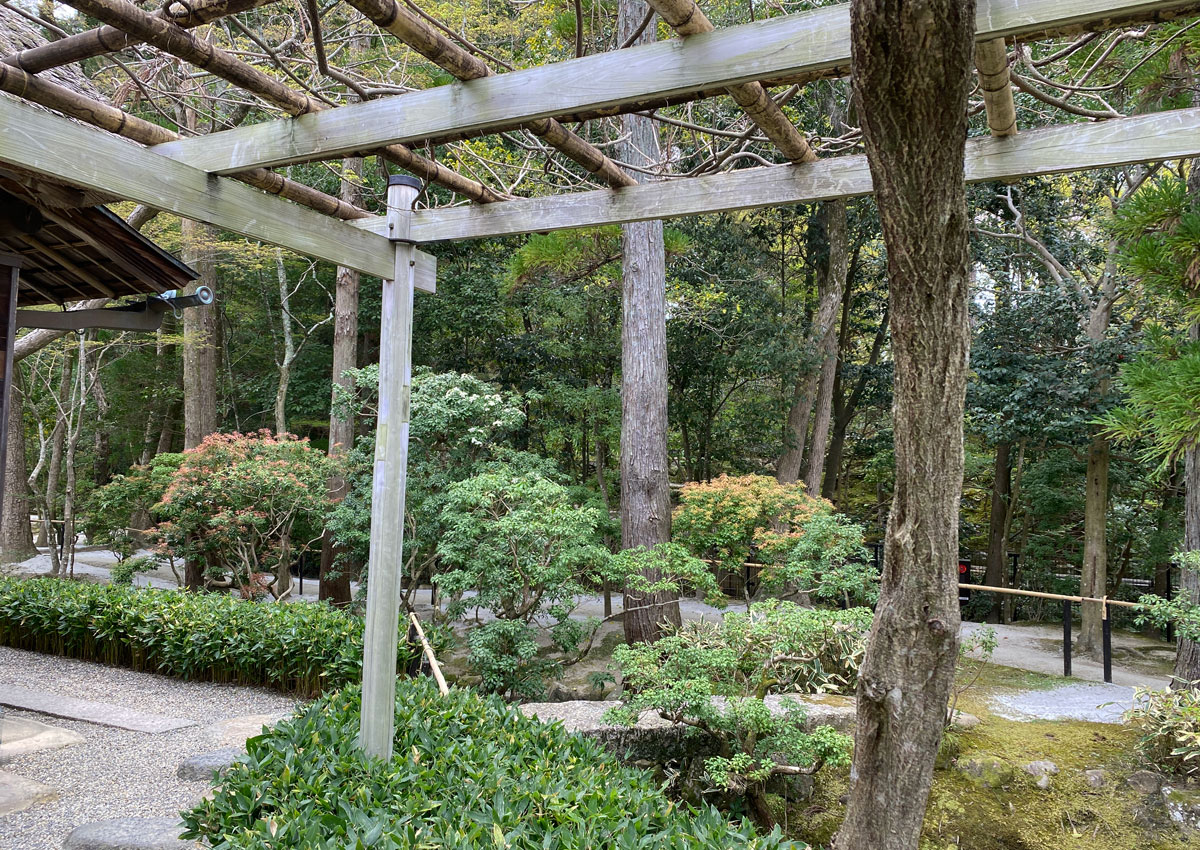
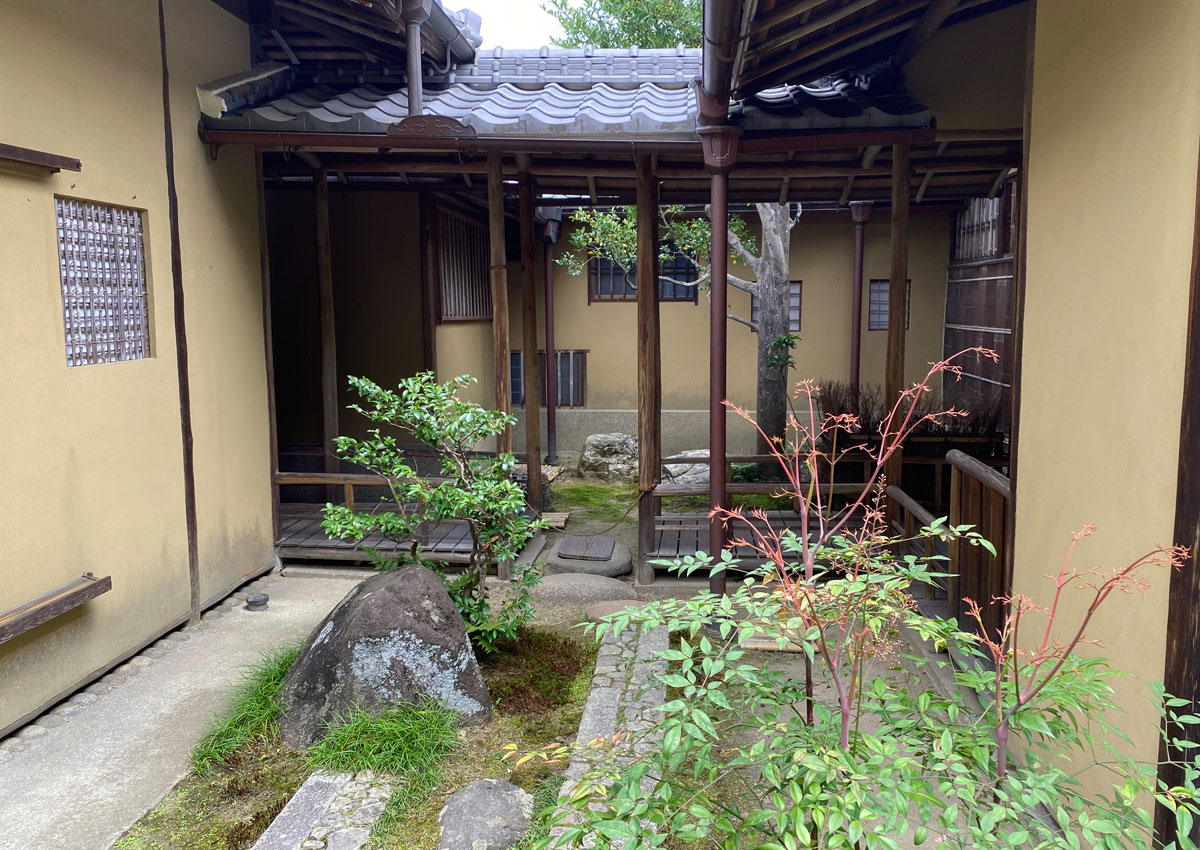
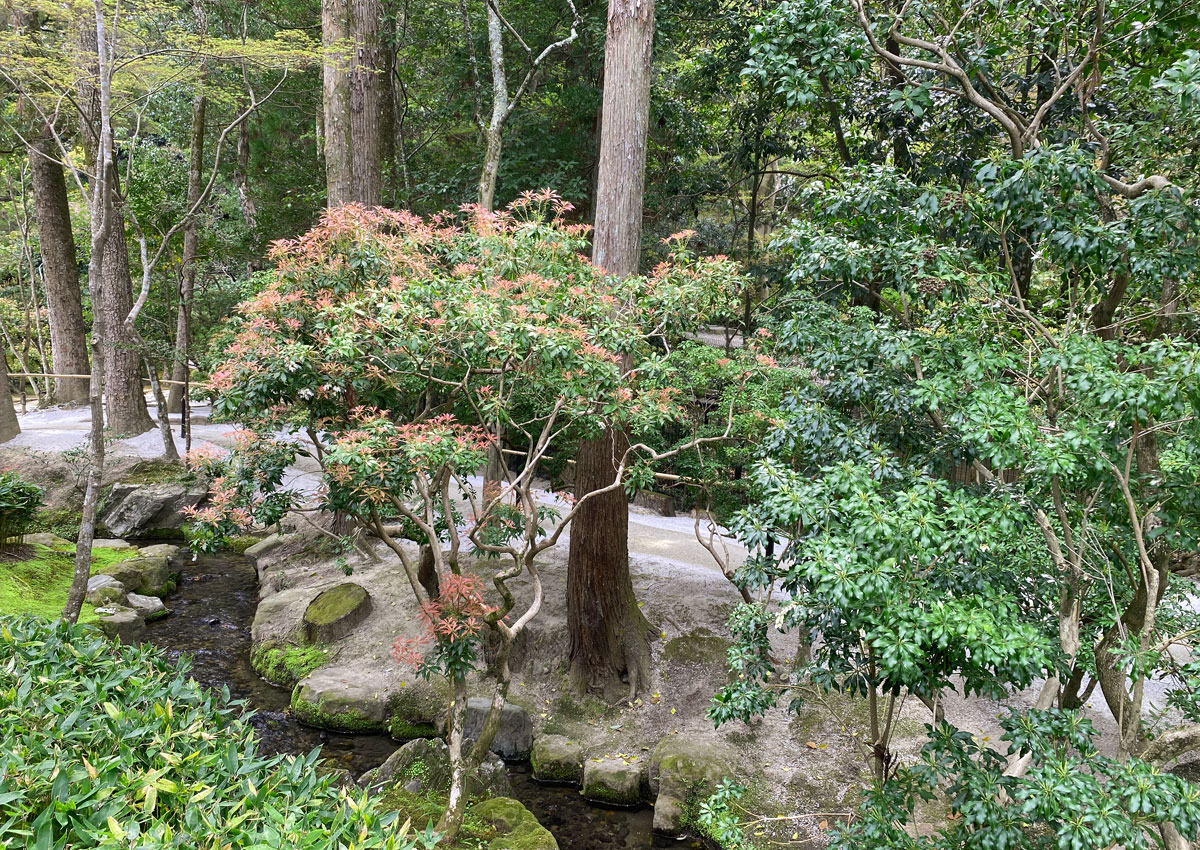
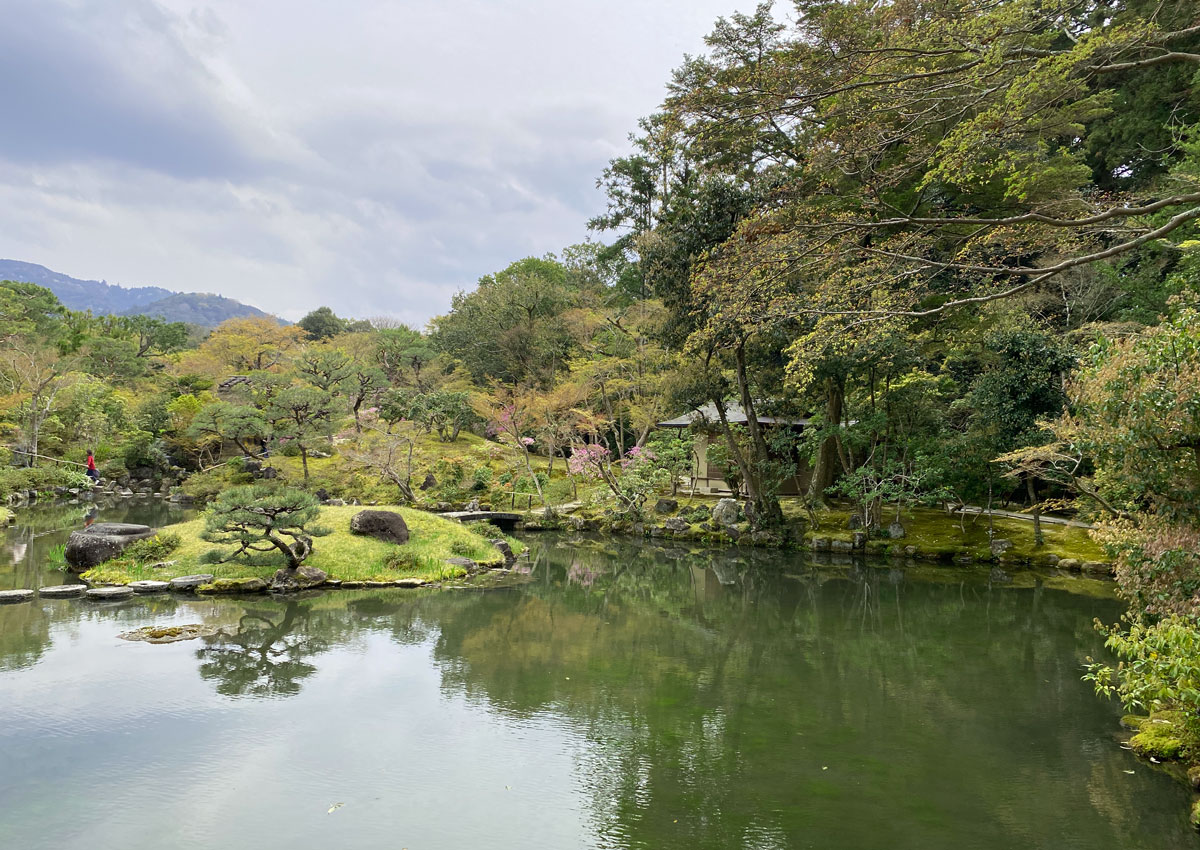
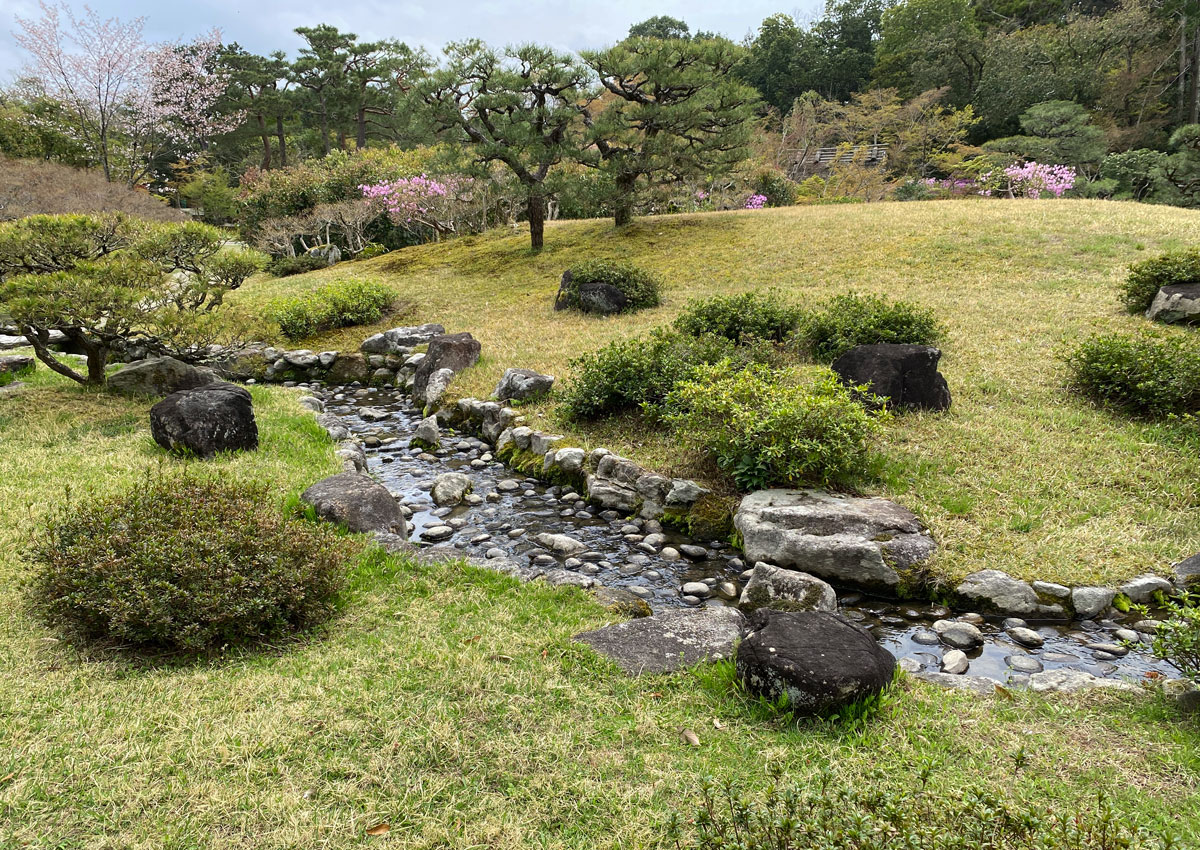
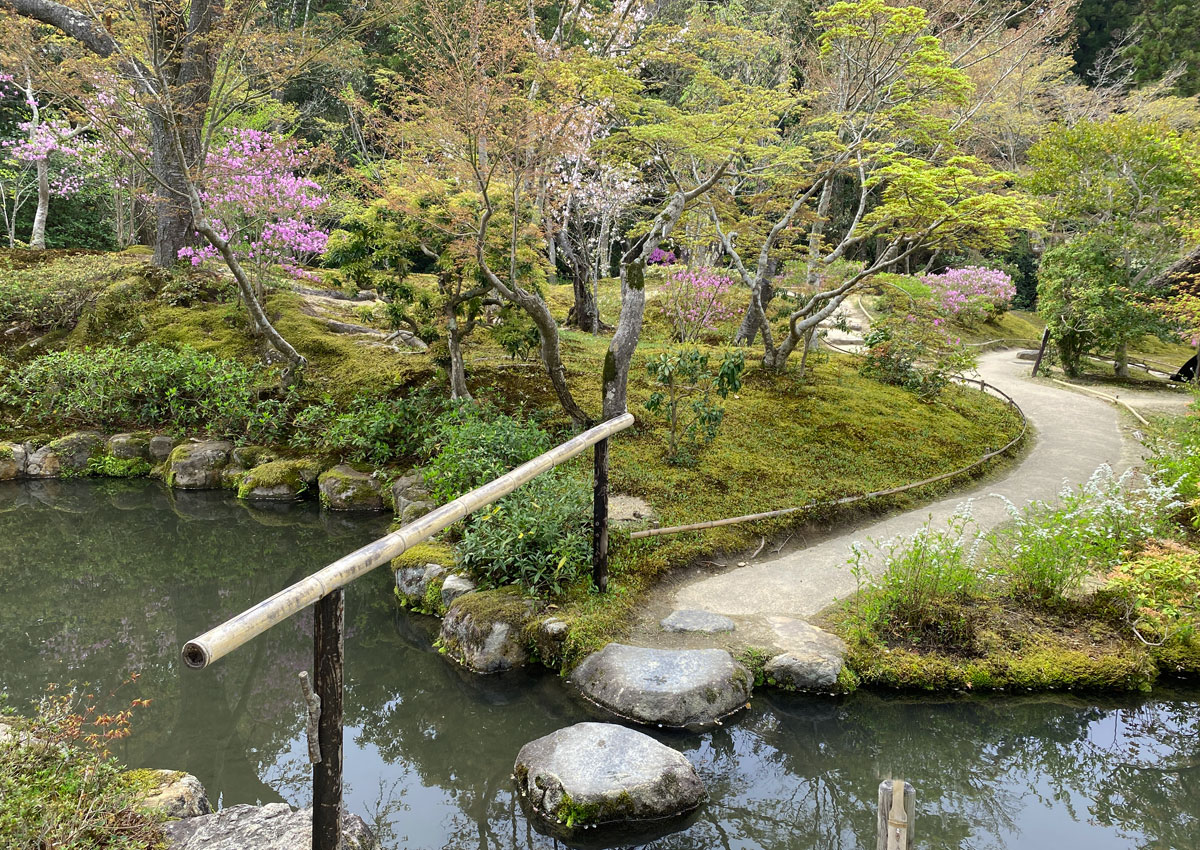
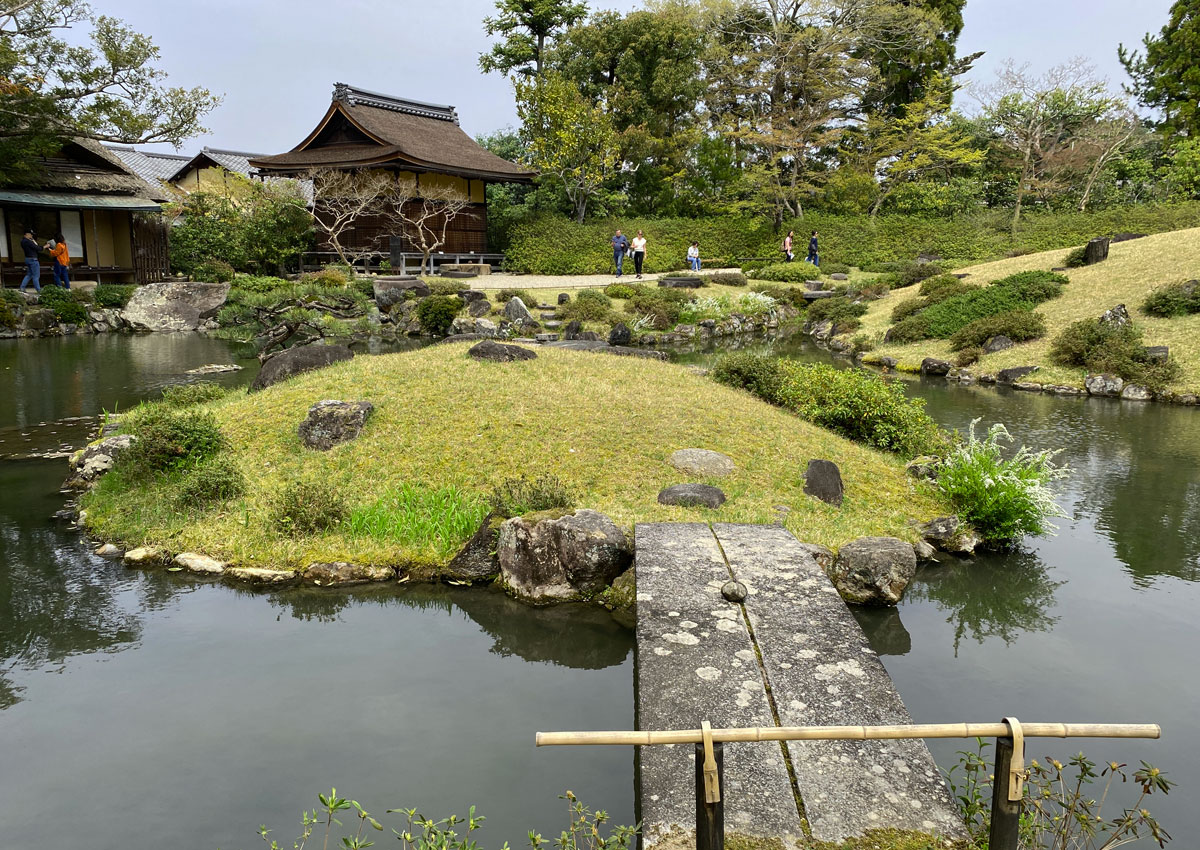
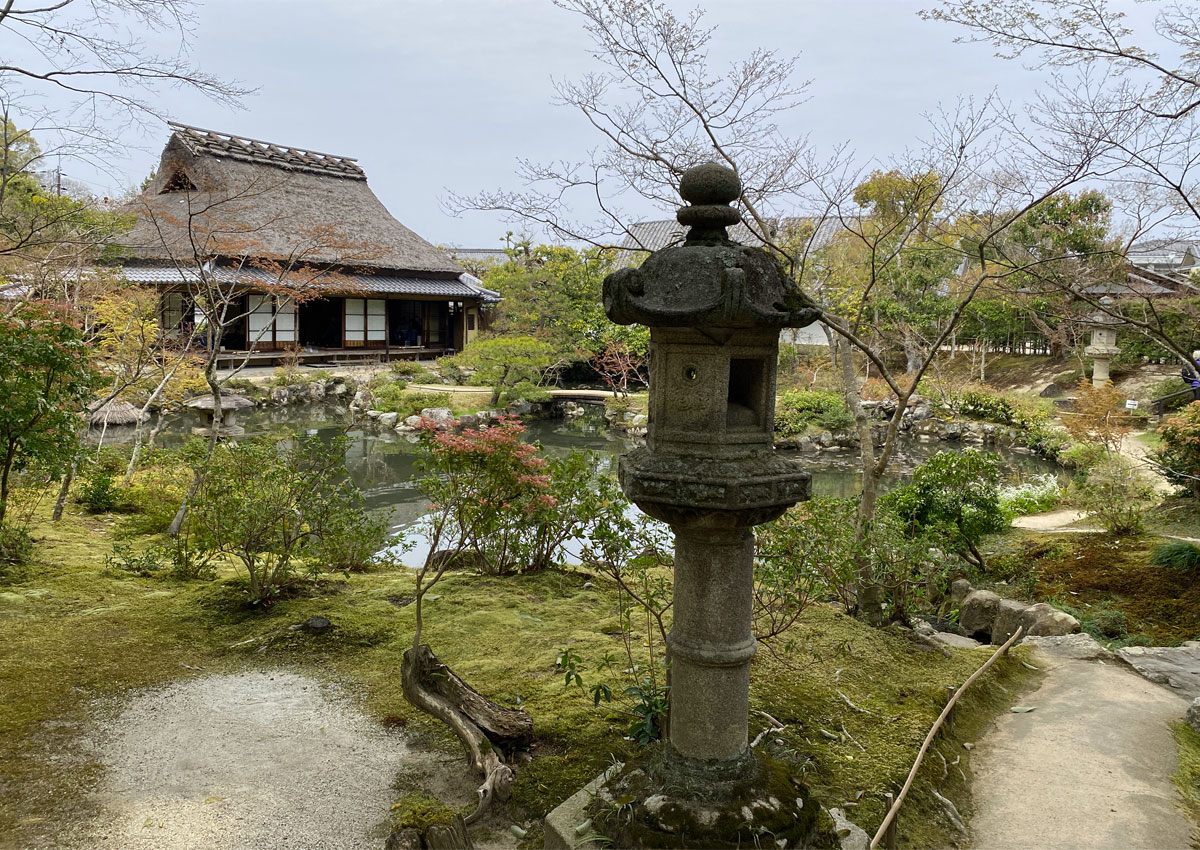
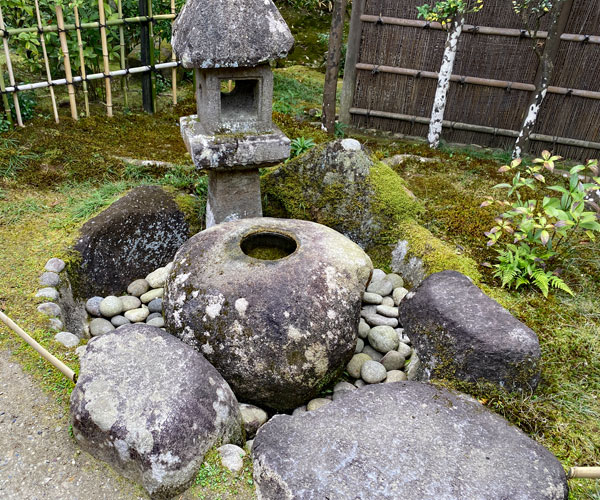
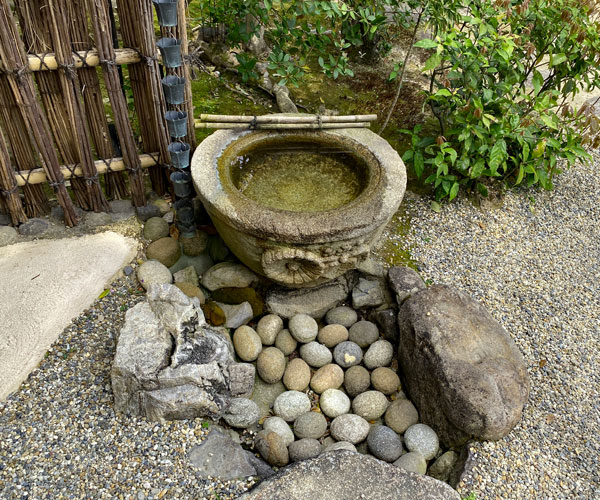
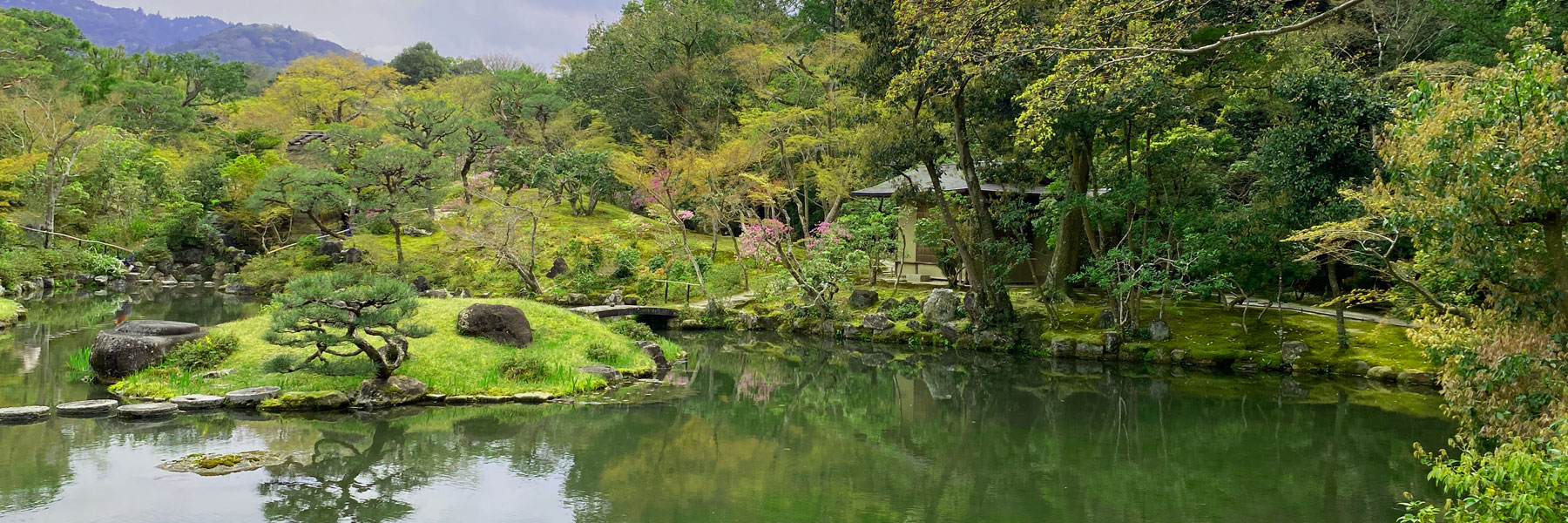
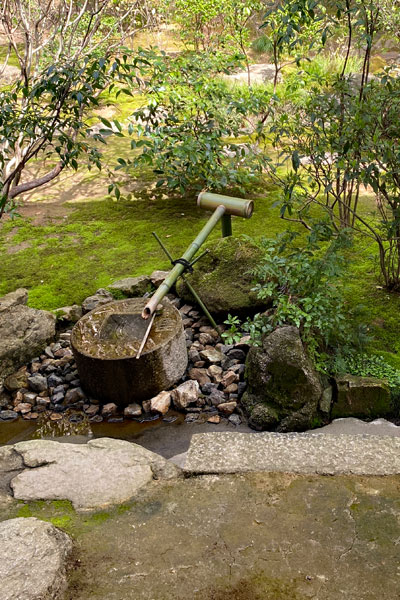
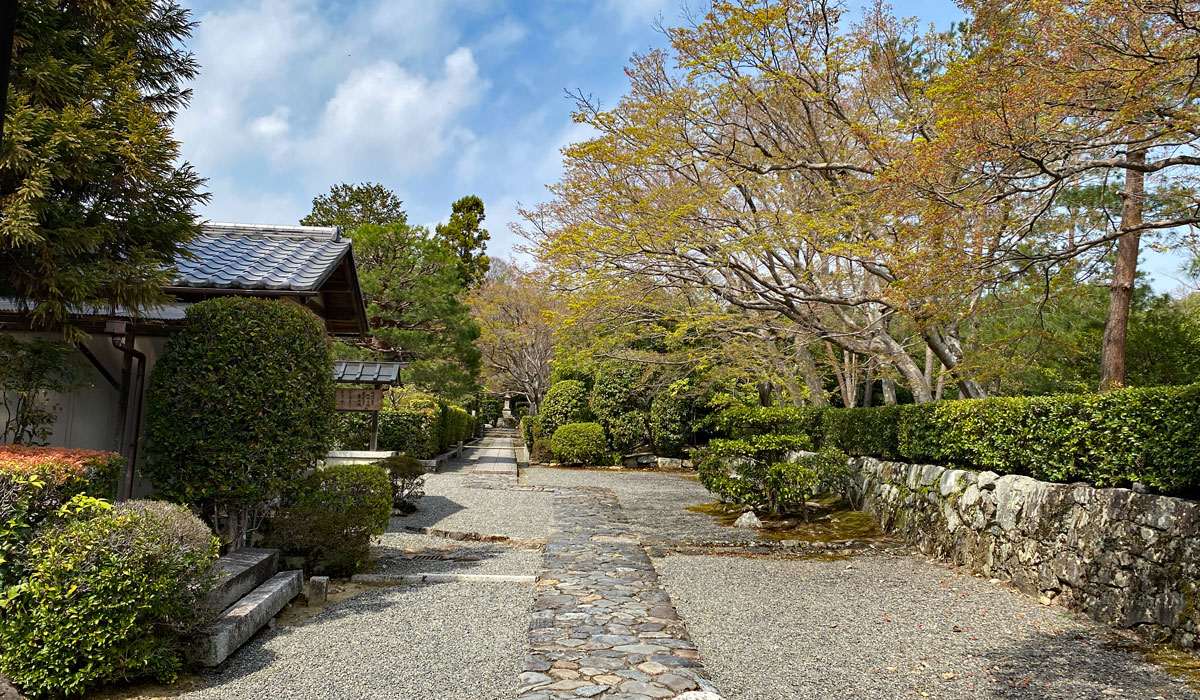
Isuien Garden — translated as garden found on water — is located west of the Todaiji Temple and covers nearly three acres. It is a combination of two strolling around the pond gardens designed in different periods — the Edo period and the Meiji Era. Upon entering the main gate, we passed the first tea house and started our walk around the Front Garden and pond designed in the 1670s during the Edo period. After passing several more tea houses, we entered the Back Garden and pond designed in the early twentieth century during the Meiji Era. Both of the ponds are fed by the adjacent Yoshikigawa River and the garden has a variety of flowering cherry and Japanese maple trees. This was the most beautiful garden that we visited in Japan and se were fortunate that there were almost no tourists during our visit.
One of the most dramatic views of Isuien Garden
Tea house entrance — stone wrapped in twine signifies it is closed
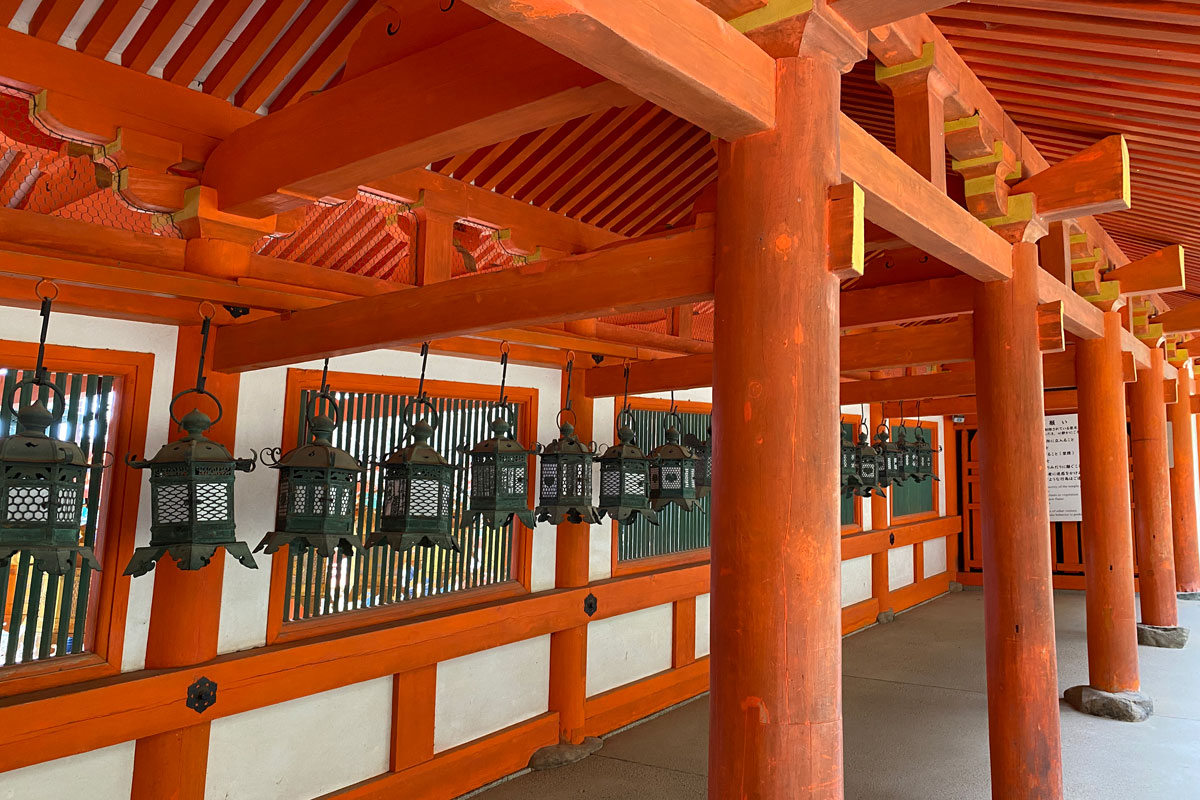
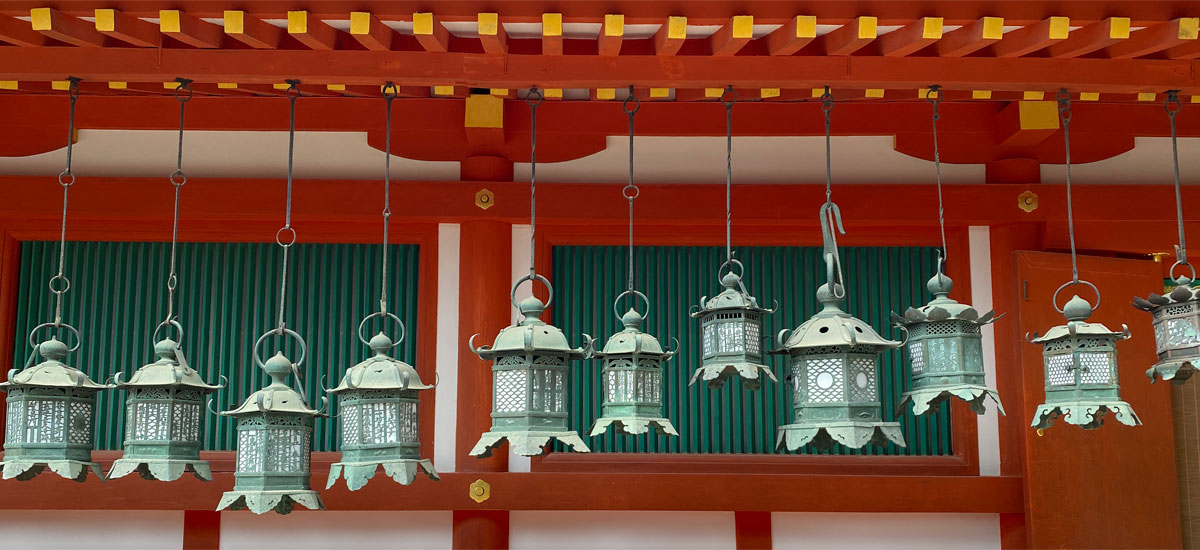
Established in 1168 and listed as a UNESCO World Heritage Site, the Kasuga Taisha Shrine is Nara”s most celebrated shrine. The vermillion-red buildings form a striking contrast to the surrounding vegetation. There are nearly two thousand bronze and stone lanterns along the sanctuary and a thousand metal lanterns hand along the corridors.
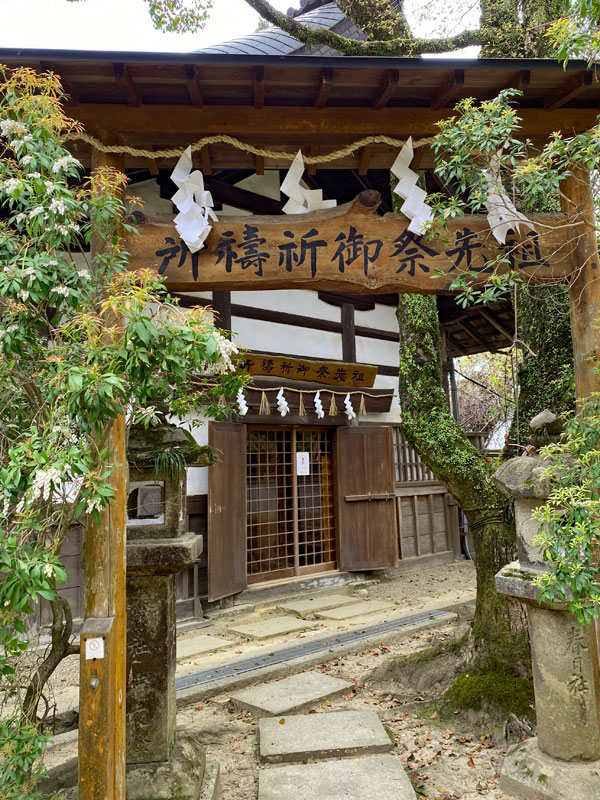
Entering the Kasuga Taisha Shrine
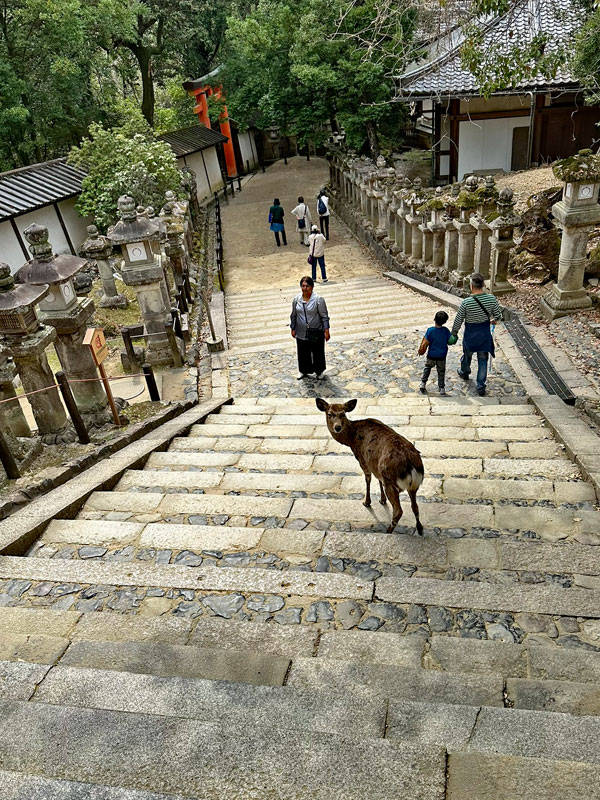
Stone lanterns at the entrance
One of the Nara deer leaving the temple
View along a walkway with many lanterns
Another view of vermilion-red trim and bronze lanterns
Port of Osaka
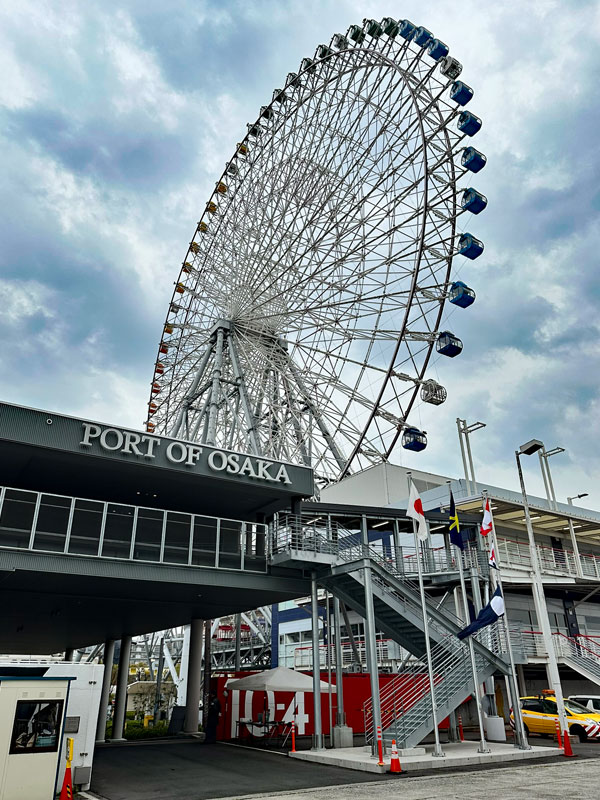
After spending the day in Nara, we traveled to the Port of Osaka where we boarded the Le Jacques Cartier ship to start our cruise through the Seto Inland Sea.
Arriving at the Port of Osaka
Lots of activity in the port
Tomonoura
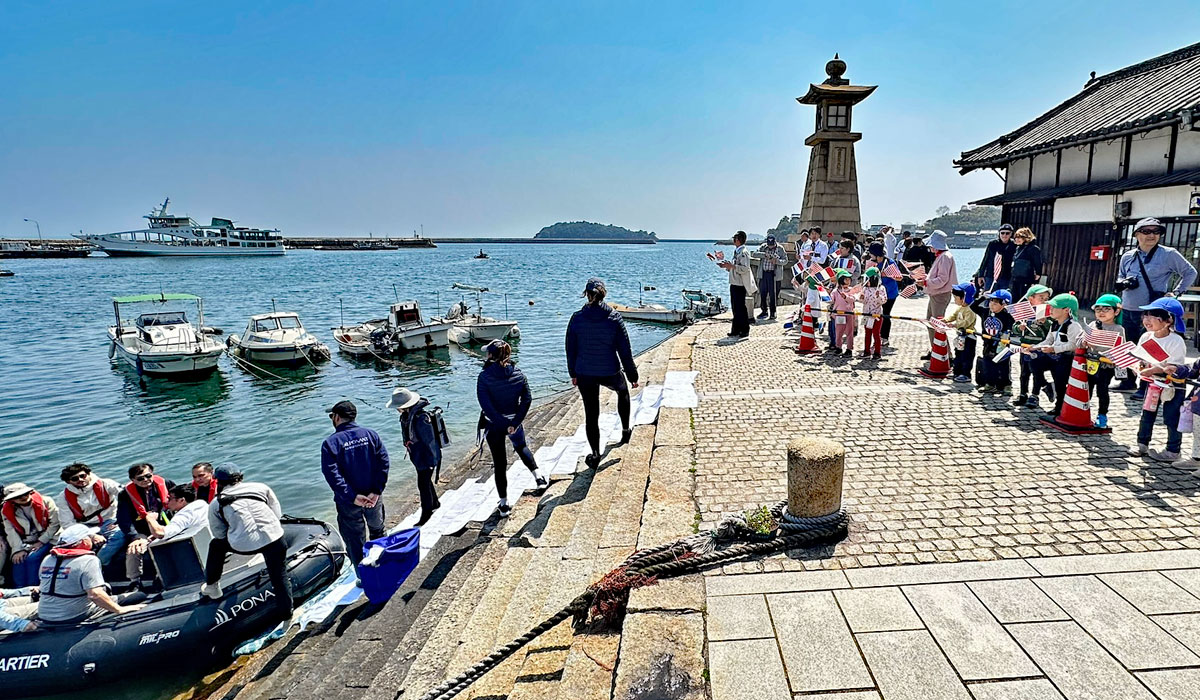
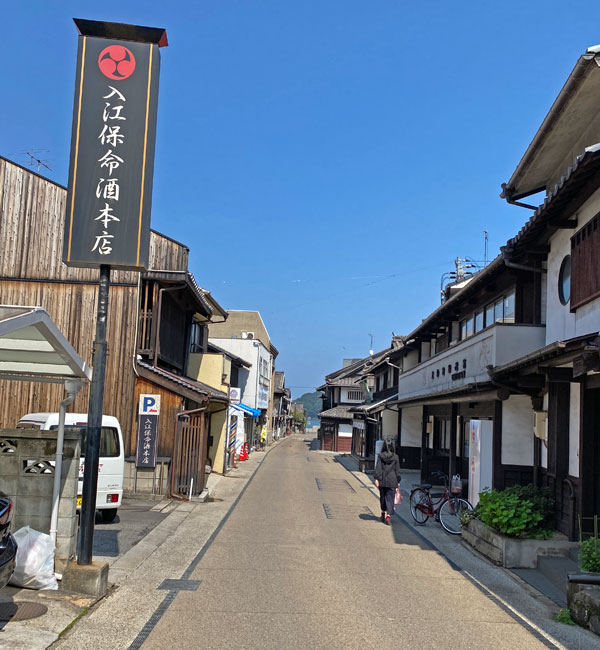
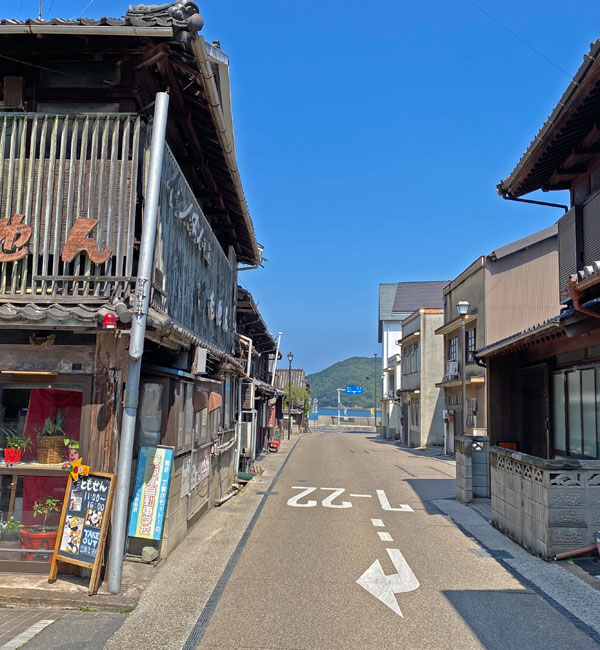
Our first Zodiac stop was Tomonoura which is part of the Setonaikai National Park. This quaint fishing village is located at the southeastern tip of the Nunakama Peninsula in a bay facing the Seta Inland Sea. It was once used as a port with a thriving industry producing homeishu, a medicinal liquor of shochu and may types of herbs believed to promote longevity. Today its population has declined significantly but it is still known for its craggy landscapes and well-preserved Edo period architecture (1600-1868) which inspires artists and filmmakers.
Local children greeting us as we arrive in Tomonoura via Zodiac rafts
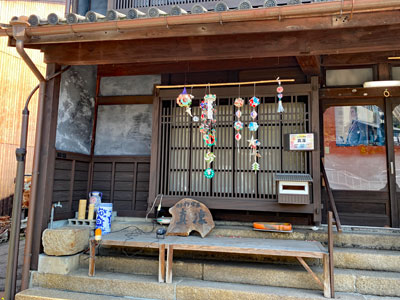
Side street in Tomonoura
Another view looking toward the sea
A shop in Tomonoura
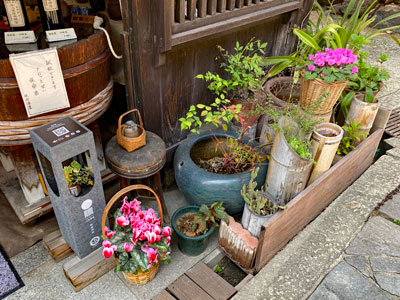
Pots and greenery decorating a shop
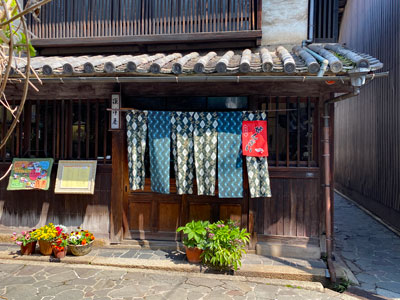
Another shop with decorative fabric
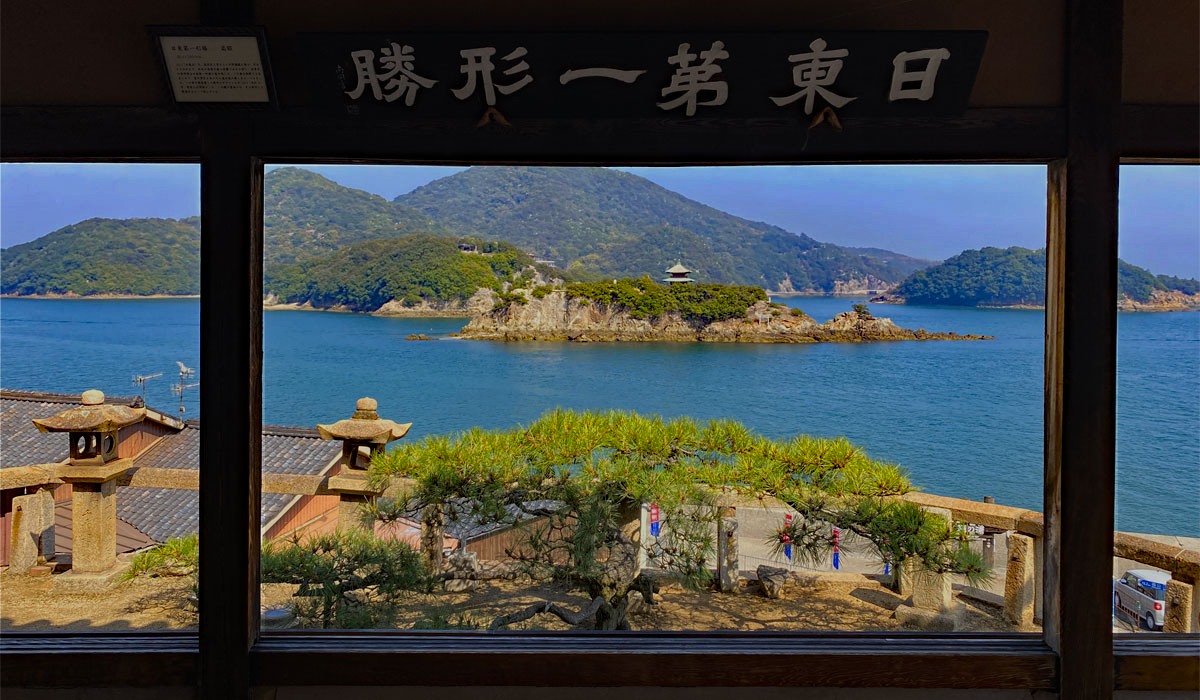
View from the Fukuzenji Temple — considered one of the most beautiful views of the Seto Island Sea
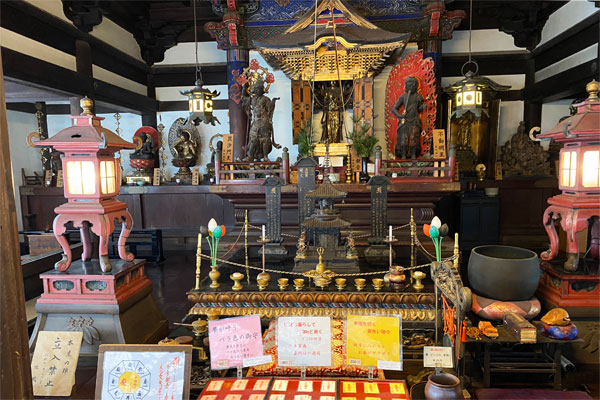
The altar at the Fukuzenji Temple
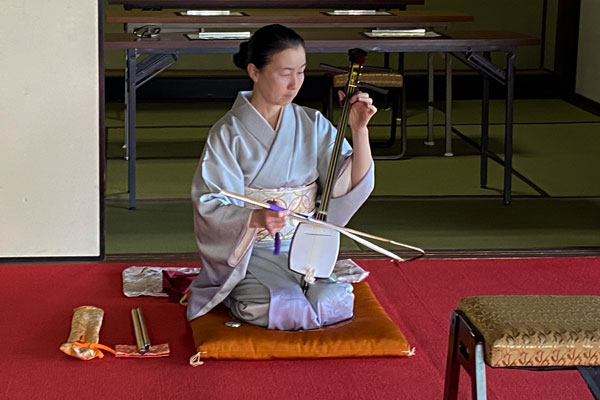
A musician playing the lute at the temple
Mitarai
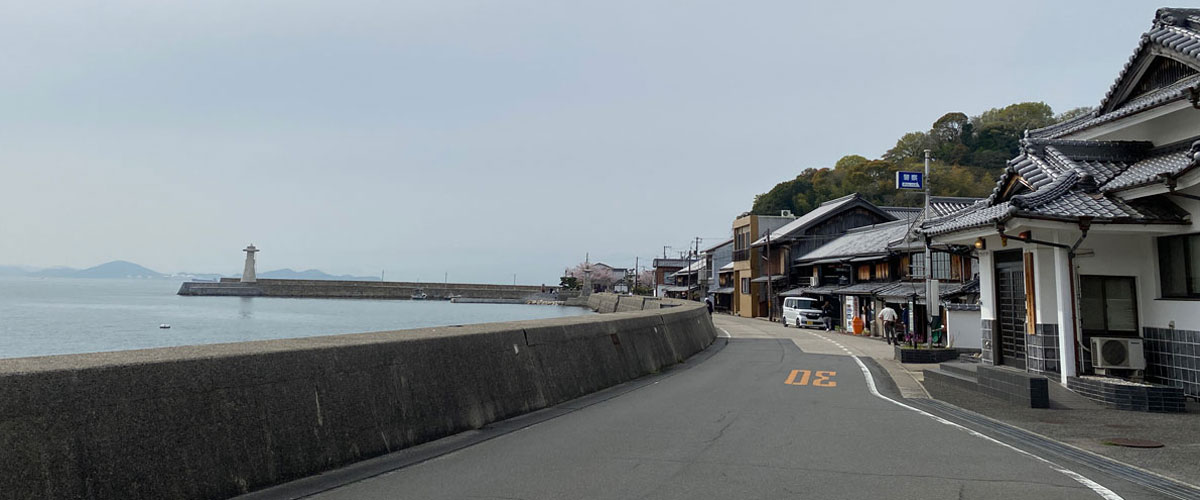
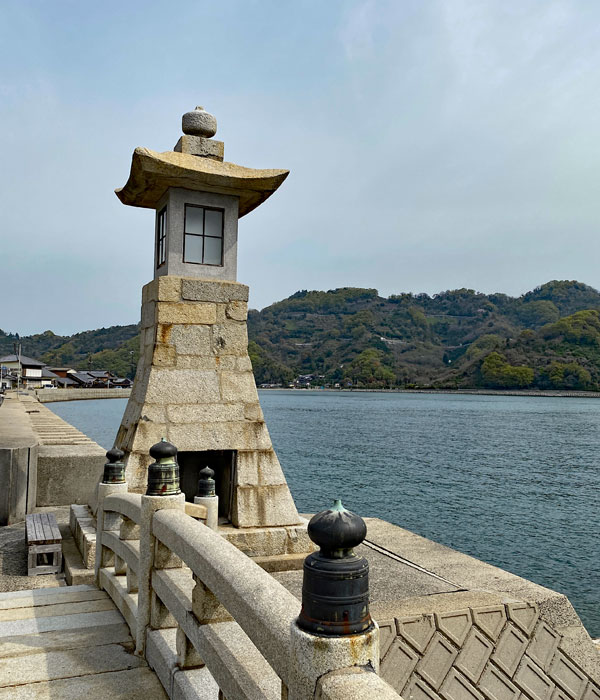
The next day we visited Mitarai — tucked away on the eastern shore of Osaki Shimojima Island — and another fishing village with the timeless charm of old Japan. It was once a flourishing port town where travelers could stay while they were waiting for more favorable tides. It has a mixture of merchant houses, teahouses, Shinto shrines, and Buddhist temples. We could still see the infrastructure for merchant ships, including docks, a lighthouse, and the remains of stone piers.
View along the shore of Mitarai — no problem with tourists
Stone lantern on the pier
A musician playing ancient Gagaku music with a bamboo flute
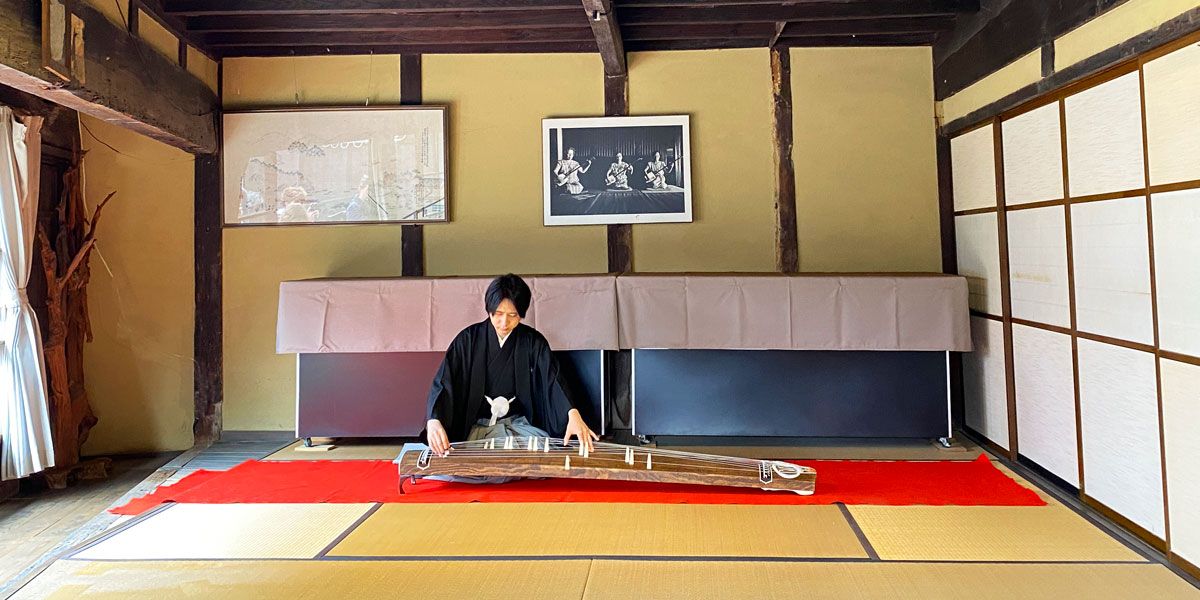
A musician playing the koto — a Japanese zither instrument
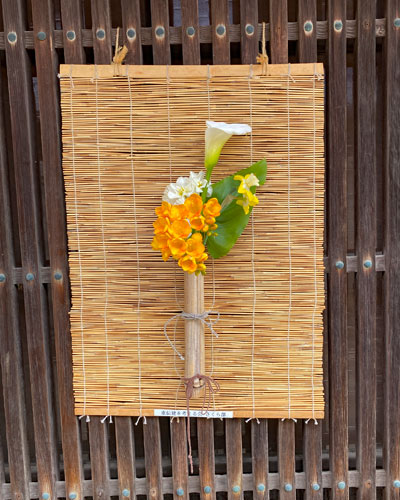
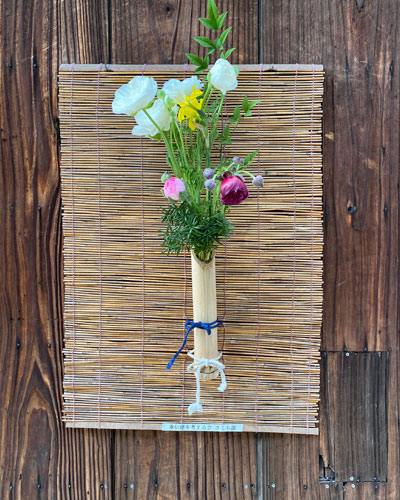
Many of the local people place flowers and short poems on the walls and doors of their houses to welcome the guests from outside the island. During our visit we also experienced performances by local artists.
Flowers on local houses to welcome visitors
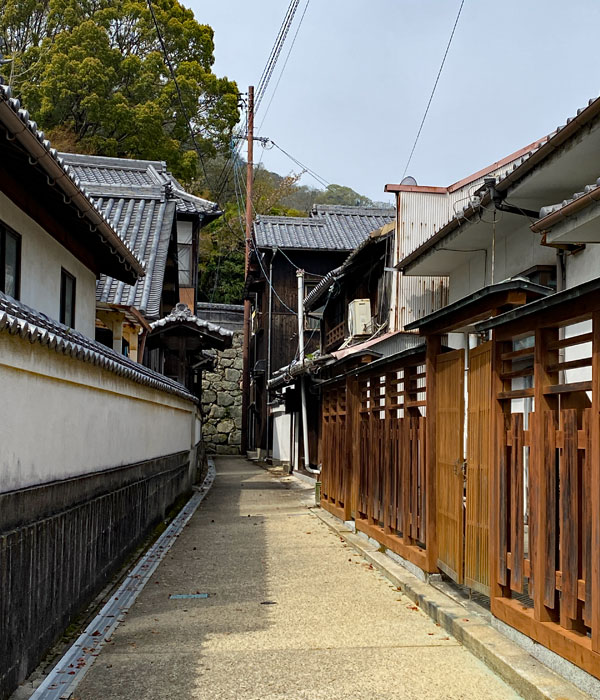
Side street in Mitarai
Another view down a side street
A lovely garden at the entrance to a small temple
Our guide getting ready for us to depart Mitarai
The trip back to our ship
Approaching our ship
A serene view from our ship later in the day
Shimokamagari Island and Moji
Later in the day, we visited Shimokamagari Island to see another small coastal village with stunning views of the sea. Shimokamagari was important historically. The rulers of western Japan used it as a military outpost to watch over ocean traffic and as a secure location to conduct diplomacy with visiting dignitaries from Korea and beyond in the Edo Era. Emissaries from Korea, often with a large entourage, visited Japan many times during that period.
Walking along the shore road in Shimokamagari
The entry to the Rantakaku Art Museum
Landscaping around the museum
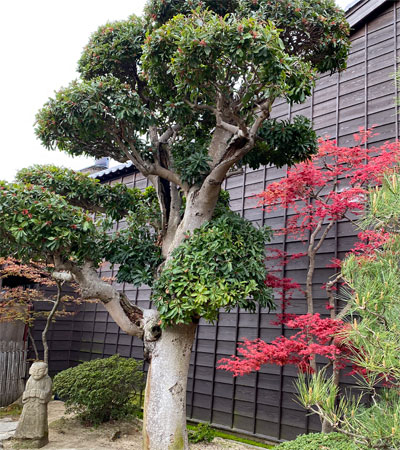
Nicely sculptured pine tree
We first visited the Rantakaku Art Museum and then the Shotoen Garden and Houses which was far more interesting. It consists of four traditional buildings of different types connected by a raked sand and evergreen garden overlooking the sea. Each building houses a different museum and the gifts left by the Dutch and Koreans seem to have become the impetus for several of them. Another museum displays examples of Imari Ware — Japan's first domestically produced porcelain.
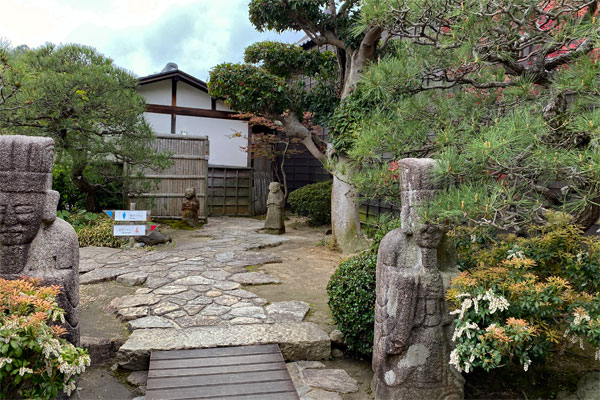
The entrance to Shotoen Garden and Houses
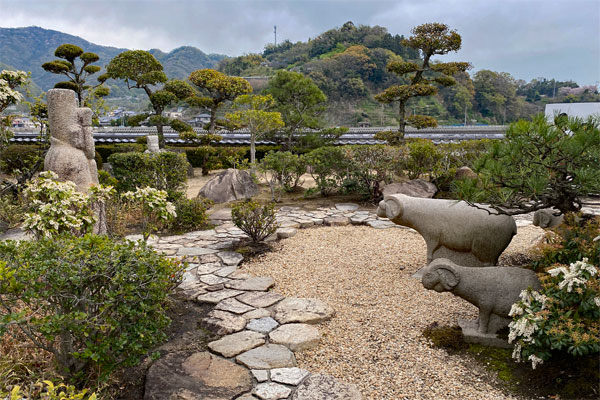
Fanciful sculptures in the Shotoen Garden
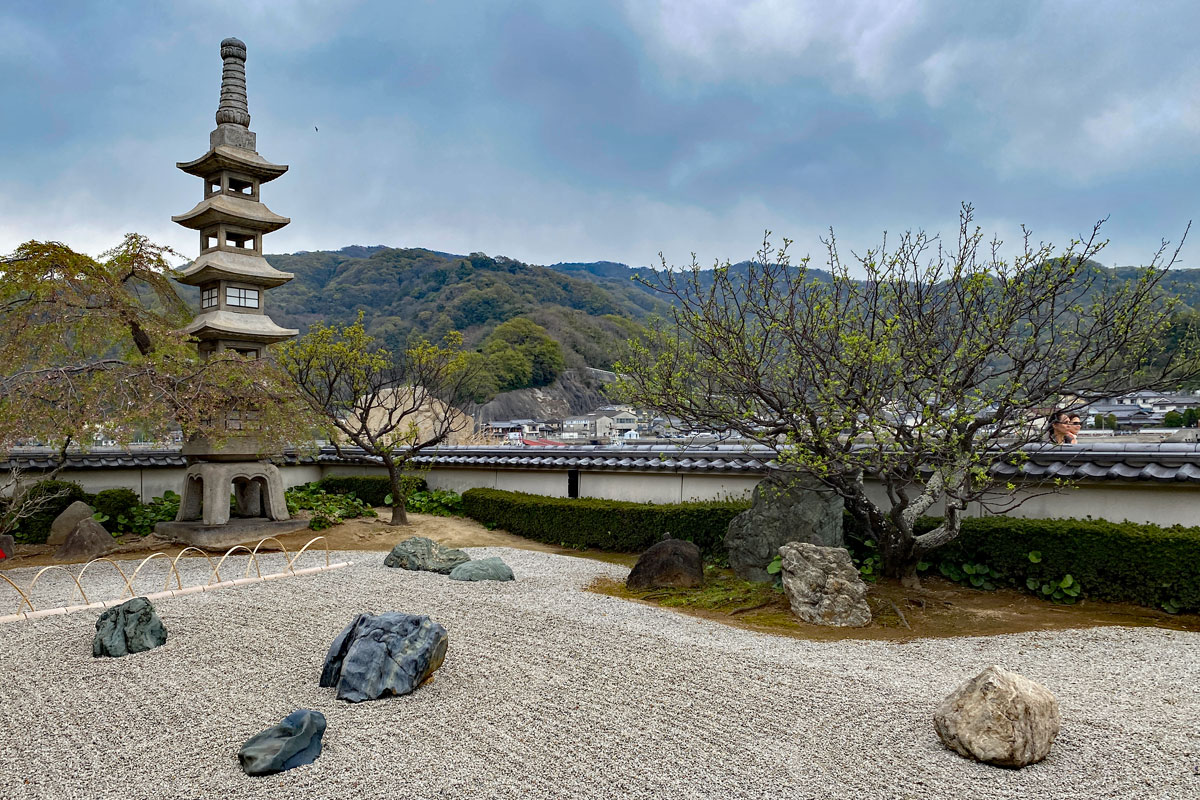
A rock garden and pagoda in Shimokamagari
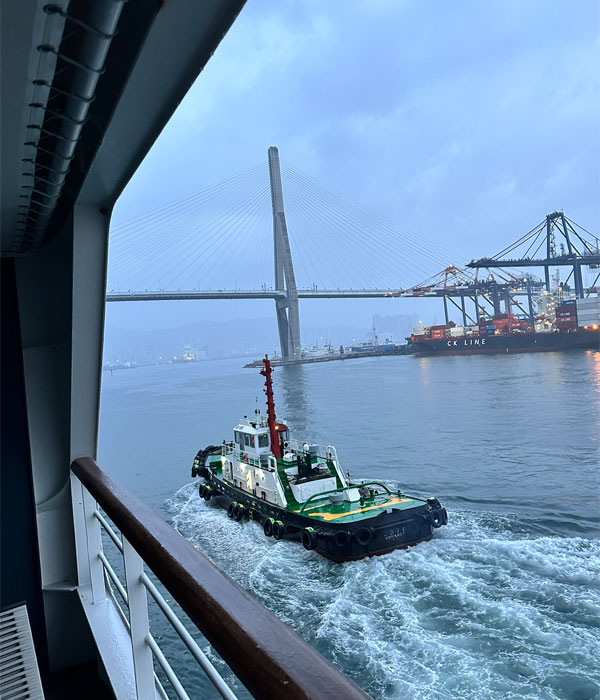
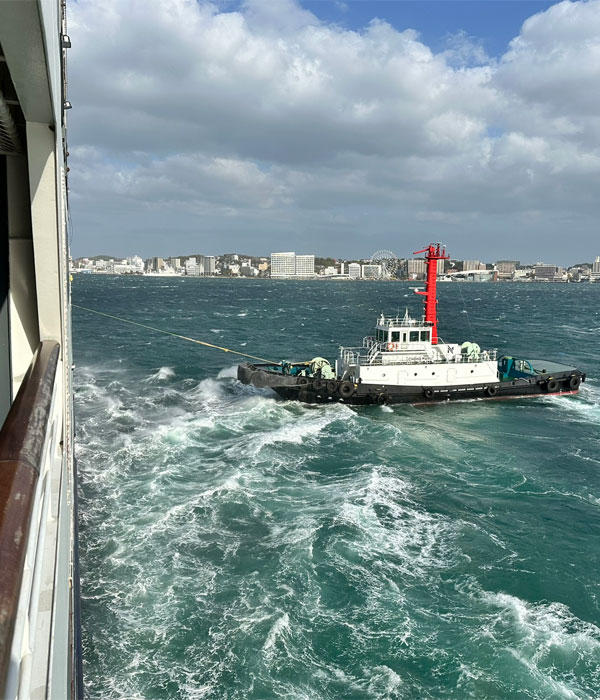
The next day we were supposed to visit Moji – the northernmost port of Kyushu, one of Japan’s four main islands. Unfortunately, because it was so windy, two tugboats could not control our ship to dock safely at the port on time.
View from our balcony of a tugboat trying to take us to shore in Moji
Another view of the tugboat — unfortunately, not successful
Busan, South Korea
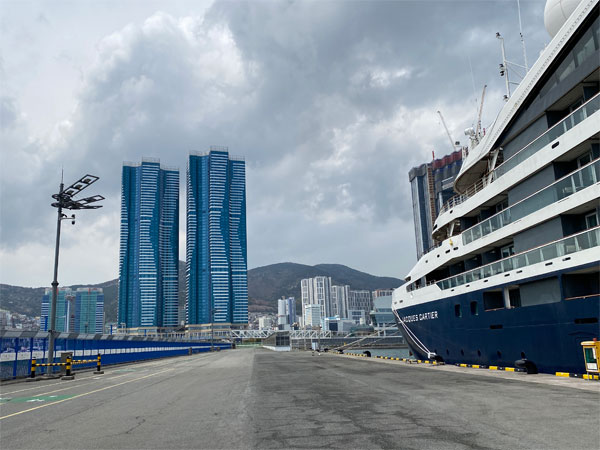
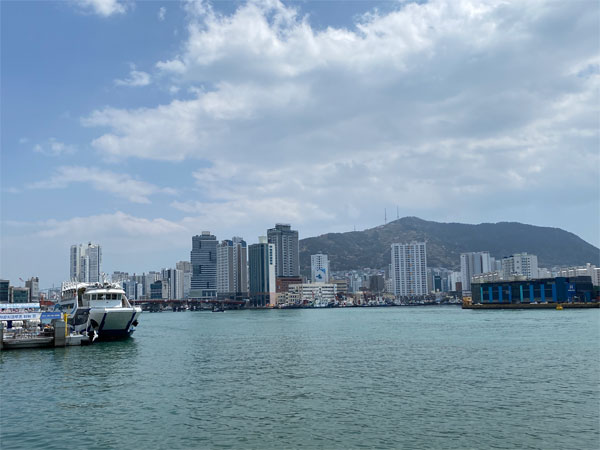
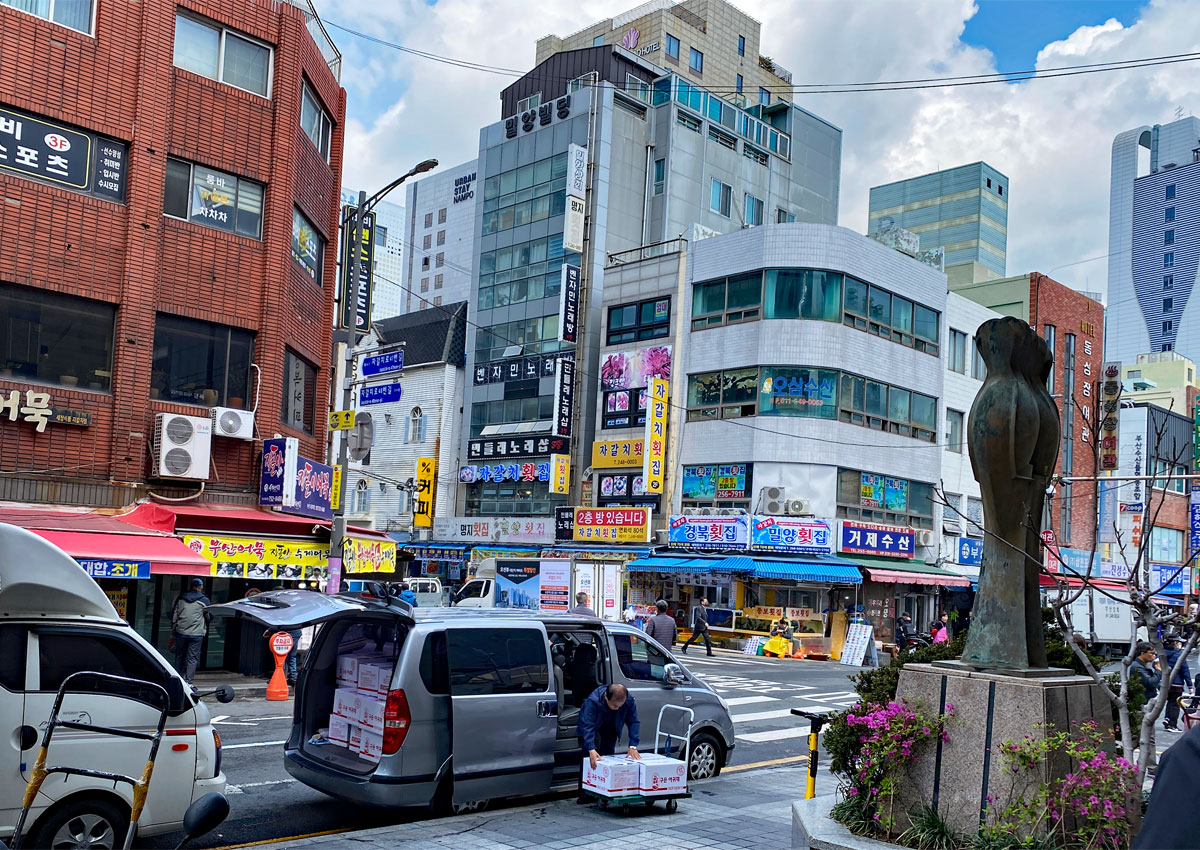
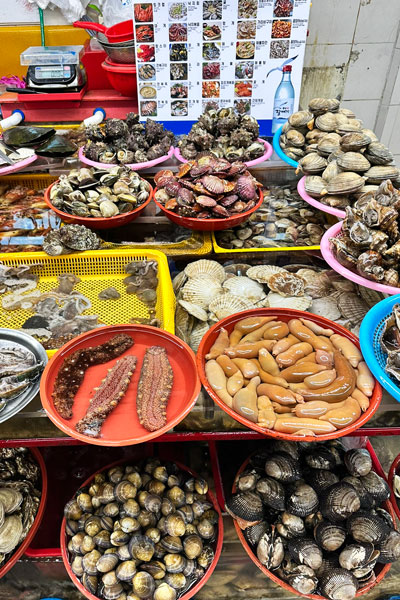
We docked for the day in Busan which is the second most populous city in South Korea after Seoul. Its port is the busiest in the country and the sixth-busiest port in the world. We spent the morning visiting Haedong Yonggungsa Temple. In the afternoon we walked around the city and were particularly enthralled with the local fish market.
View of our ship docked in Busan
View of the Busan coastline
Street scene in Busan
Haedong Yonggungsa Temple
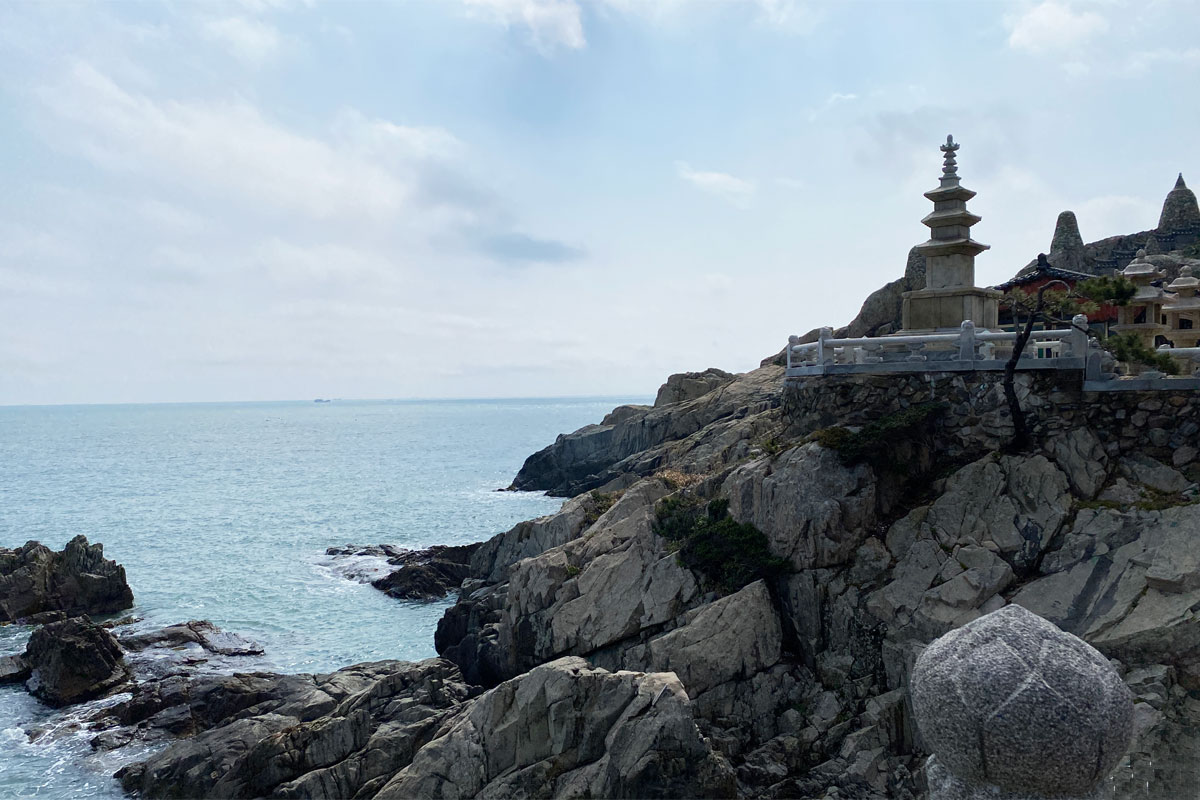
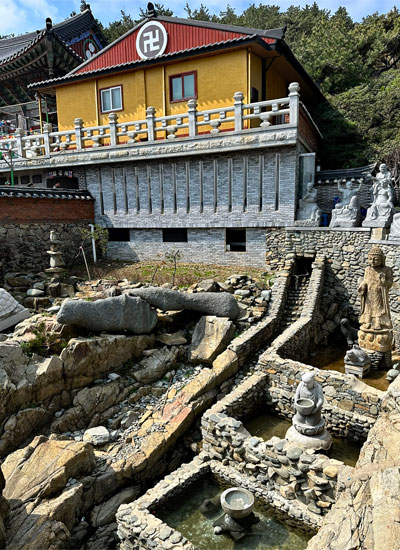
Haedong’s Yonggungsa Temple — which means Korean Dragon Palace — was established in 678 on the eastern side of Mount Geumjeongsan near the present-day city of Busan. The temple has a long history going back to 1376, during the Goryeo Dynasty, when it was built by the great Buddhist teacher Naong Hyegeun. The temple was partially destroyed in a fire during the Japanese invasion of Korea from 1592 to 1598, and then abandoned. Some of what exists today dates to the 1930s when the temple was reestablished by monks from Tongdosa although much has been added in the last 20 years.
View of the Haedong Yonggungsa Temple on the cliff
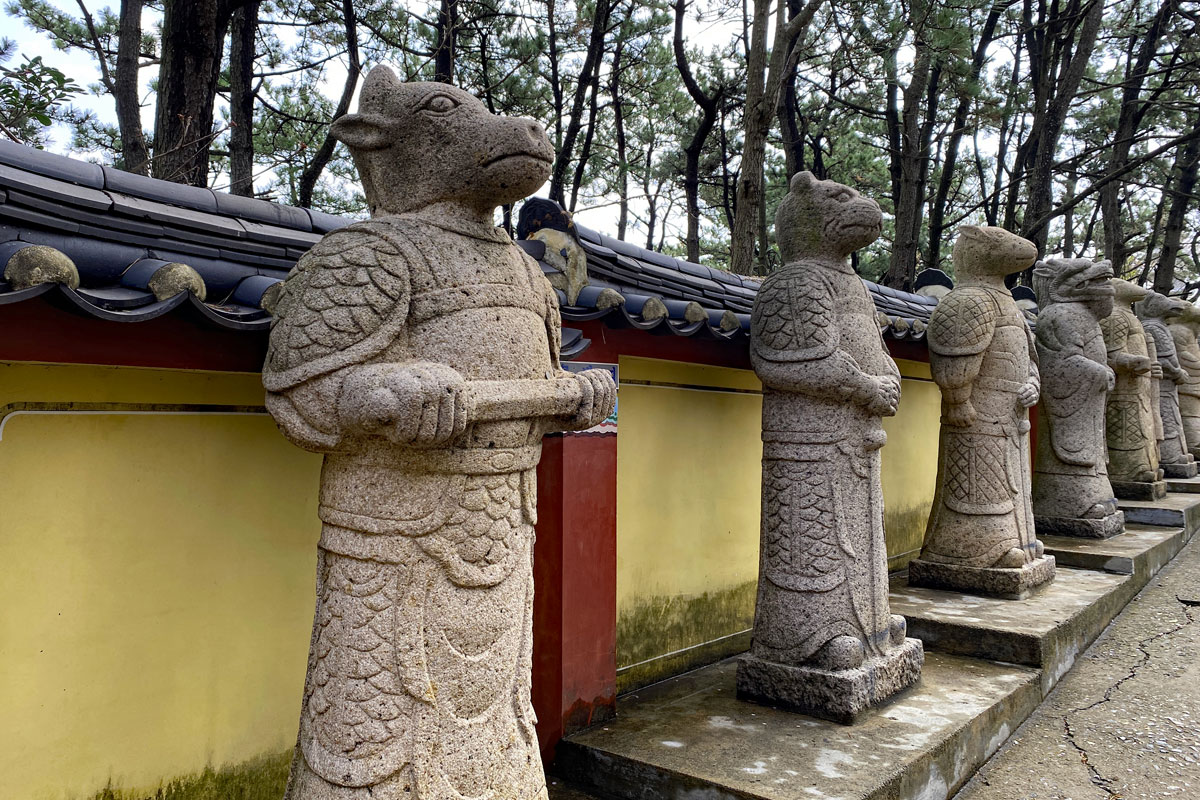
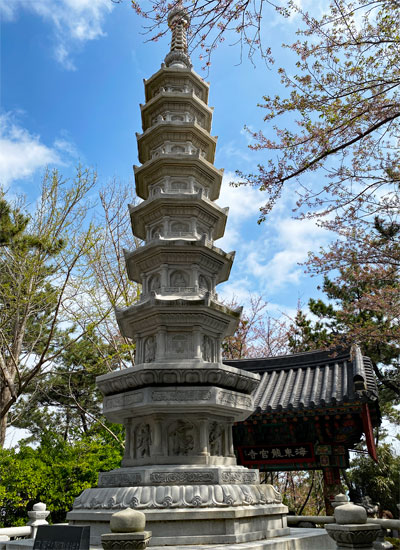
After arriving at the parking lot, we followed a narrow road downhill past multiple food and souvenir stalls to reach the temple entrance. The first signs of a temple are a row of 12 larger-than-human-sized Zodiac animals, and various other statues and carved stones, ending with a towering seven-story pagoda. From there visitors take 108 steps down a hill lined with stone lanterns along the rocky landscape to the main temple.
Giant Zodiac animals at the temple entrance
Descending down the hillside steps to the temple
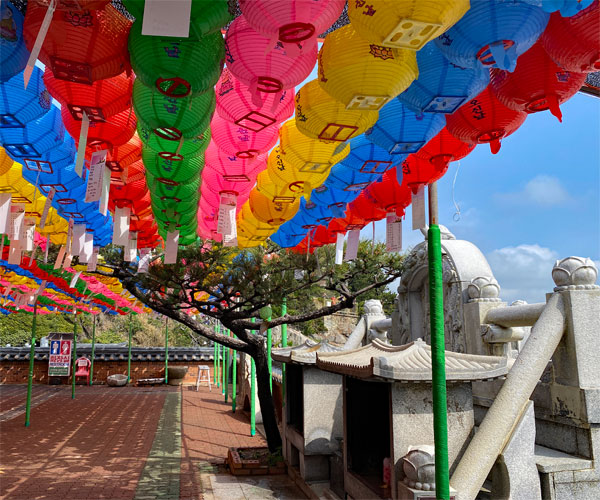
The plaza outside the Main Hall with colorful lanterns
Looking at the hillside towards the Main Hall
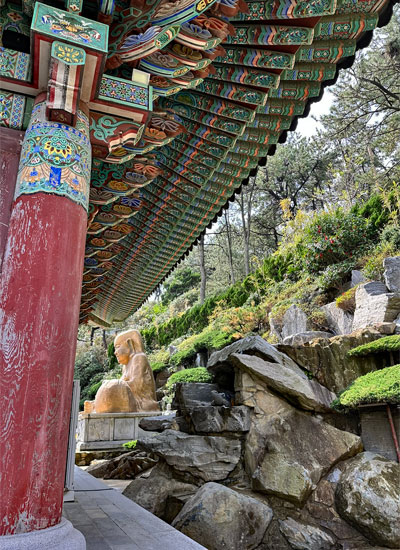
View behind the Main Hall with a Golden Buddha in the background
The seven-story pagoda near the entrance
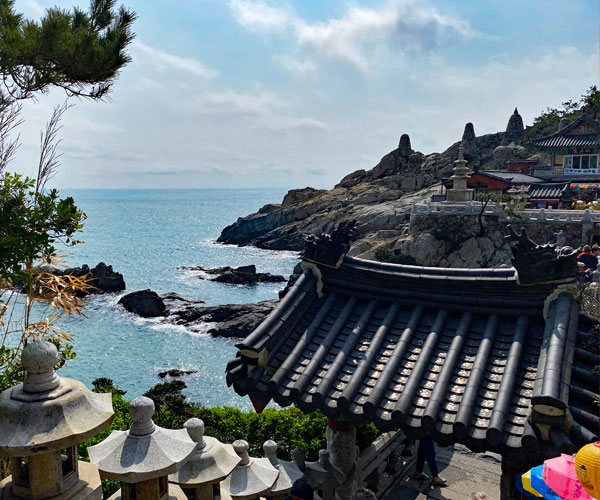
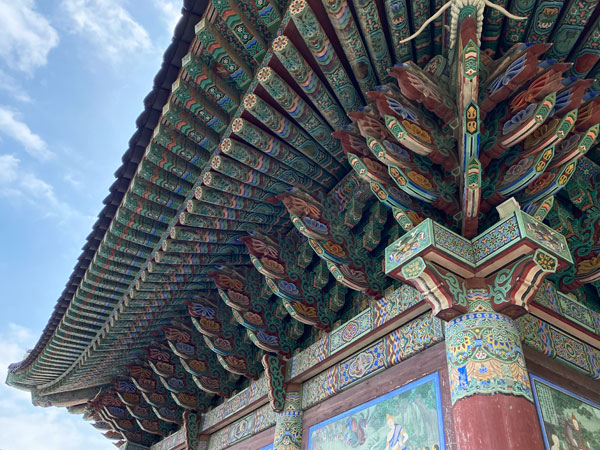
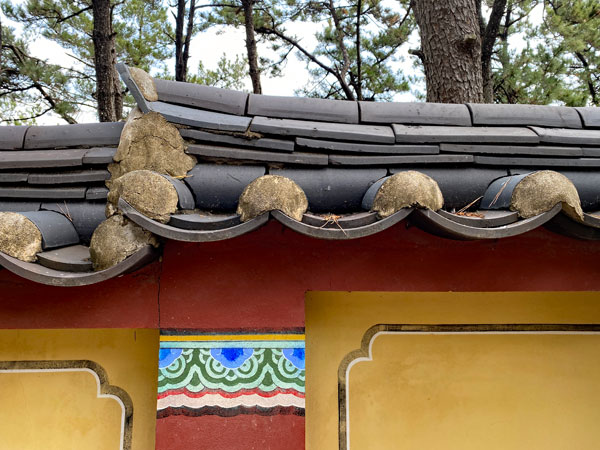
Roof details at the Haedong Yonggungsa Temple
Jagalchi Fish Market
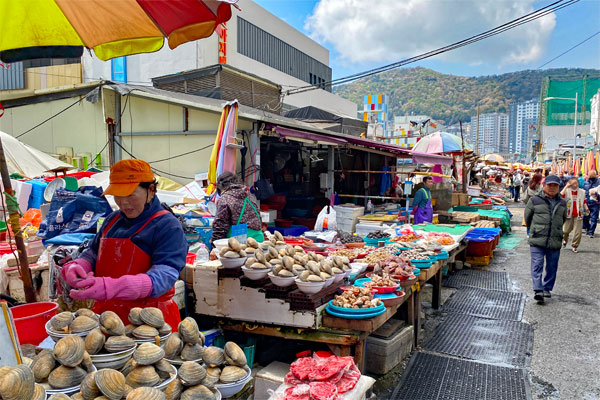
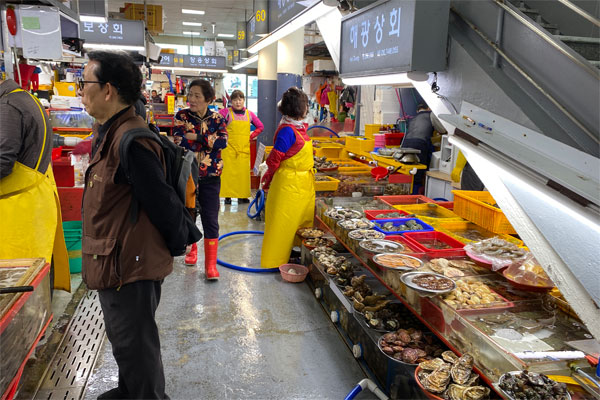
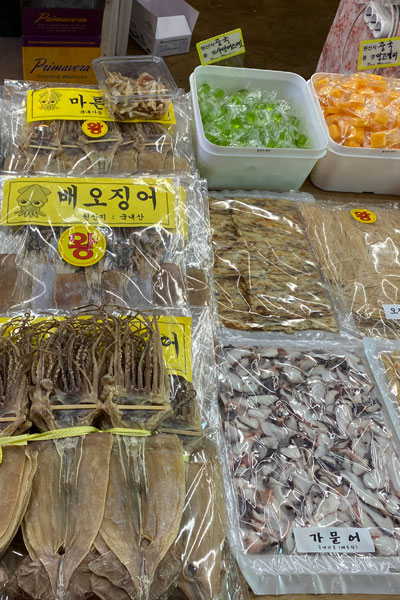
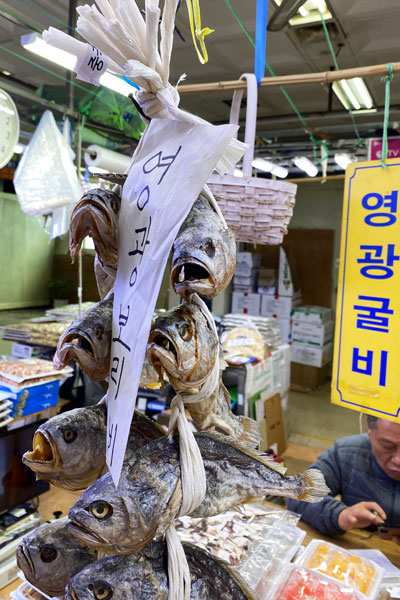
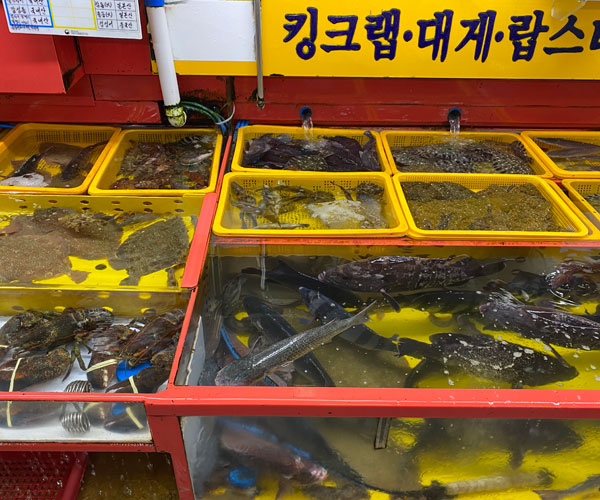
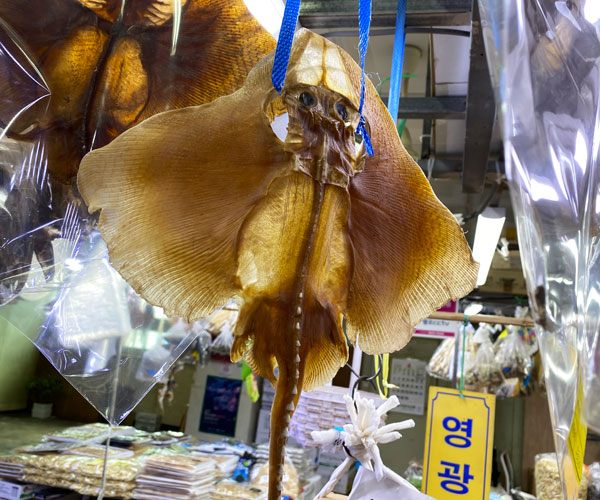
Jagalchi Fish Market, located at the edge of Nampo Port and the shopping district, is the largest seafood market in South Korea. It was fun walking around the vendor stalls and experiencing the market’s daily commerce with plenty of exotic-looking live and dried seafood.
Outside stalls at the fish market
Inside activity at the fish market
Plenty of variety for everyone
Do they also provide recipes?
Nagasaki
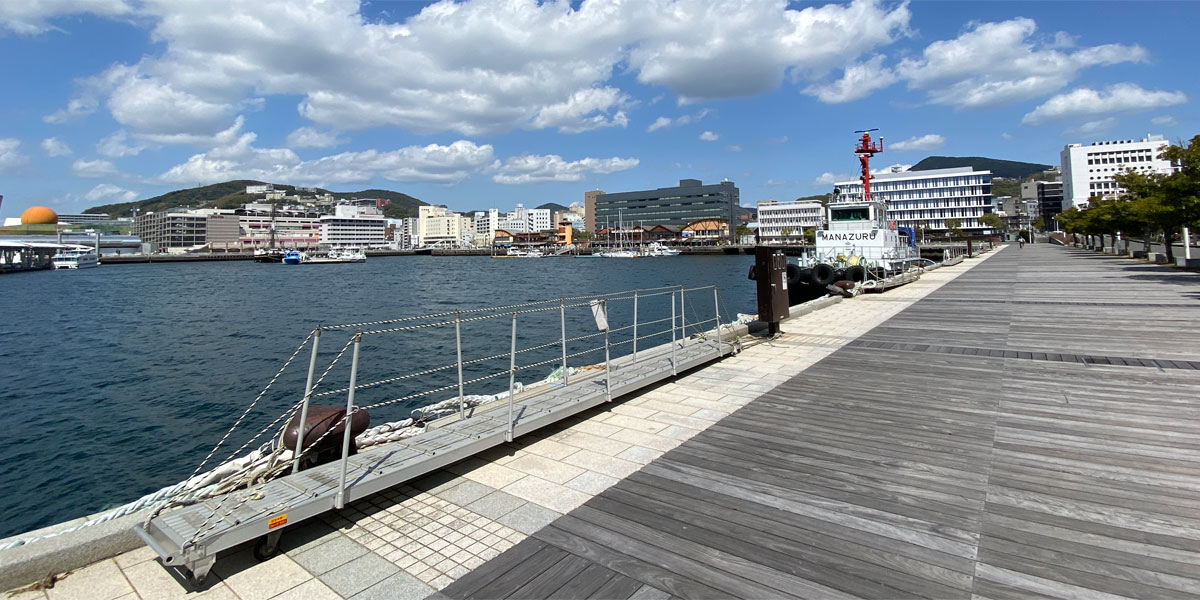
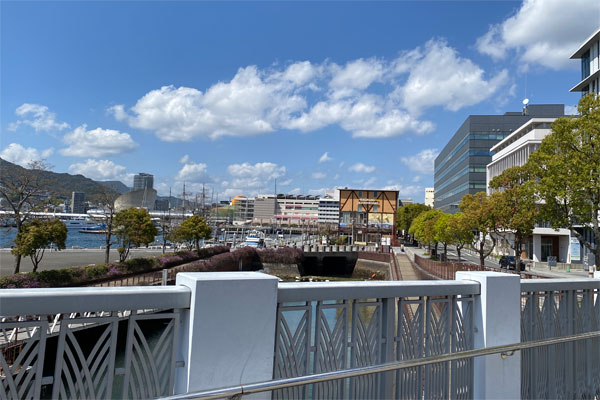
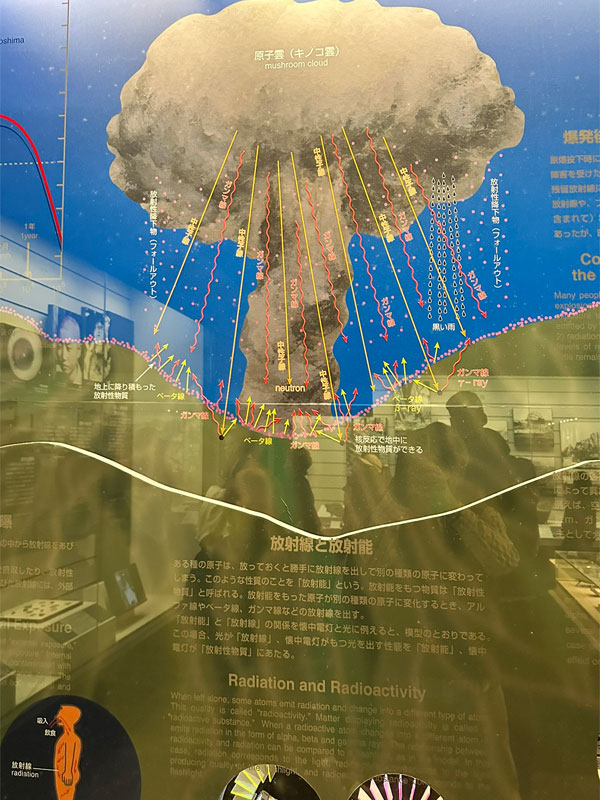
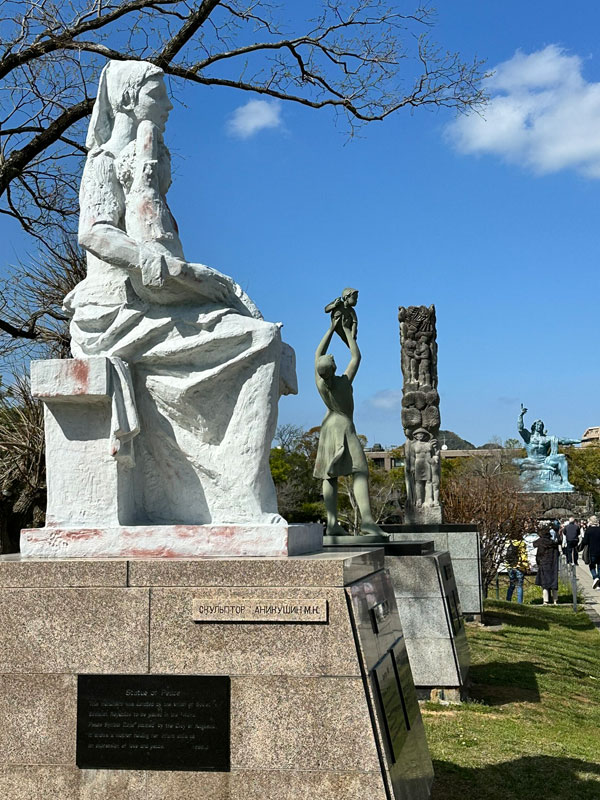
The Port of Nagasaki is located on the western coast of Kyushu Island in a large natural harbor with buildings on the terraces of surrounding hills. The city is forever marked by the tragic events of World War II when it suffered an Allied nuclear attack in August 1945. Peter chose to visit the Atomic Bomb Museum and nearby Peace Park. Instead, I spent the time walking around the city and along its harbour.
View of the Port of Nagasaki
The modern harbor area
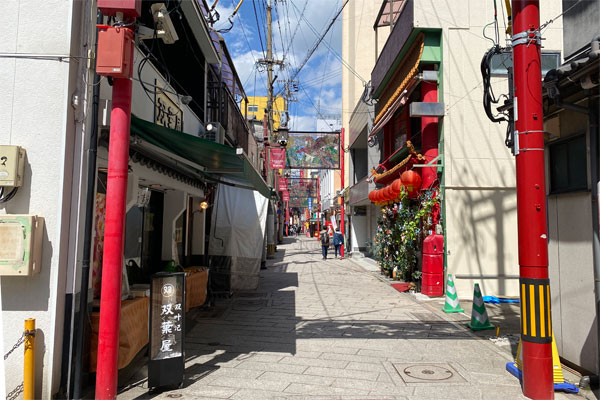
Typical side street
Exhibit at the Atom Bomb Museum
Statue at Peace Park
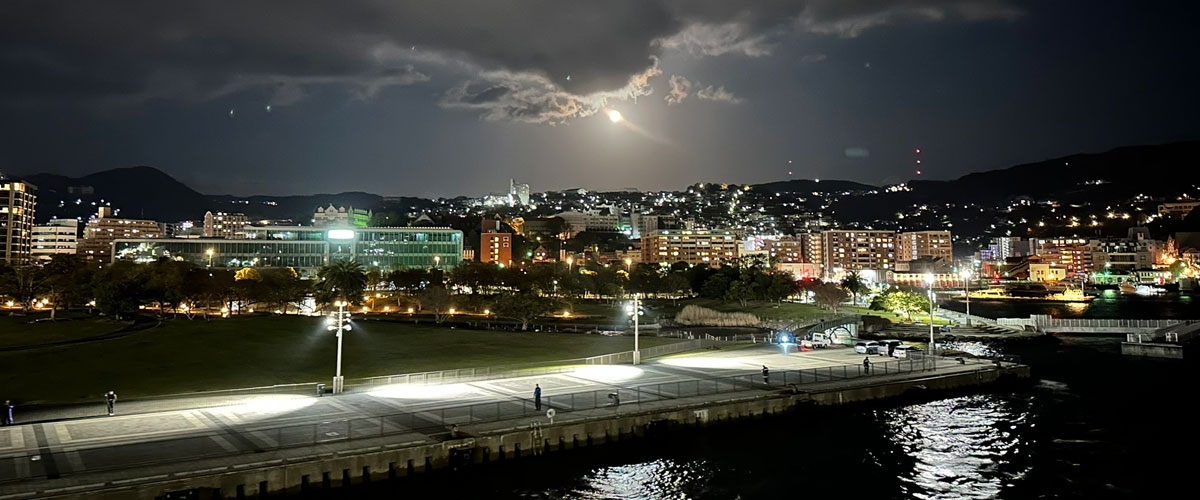
Dramatic view of the Nagasaki coastline at night
Amakusa Region
The Amakusa region is a group of islands located off the west coast of the mythical island of Kyushu. It is known for its natural beauty, including lush greenery, geological formations, and scenic coastlines. The region is also known for its history as a refuge for many Christians fleeing the 17th century Edo Era ban on the practice of the Catholic faith.
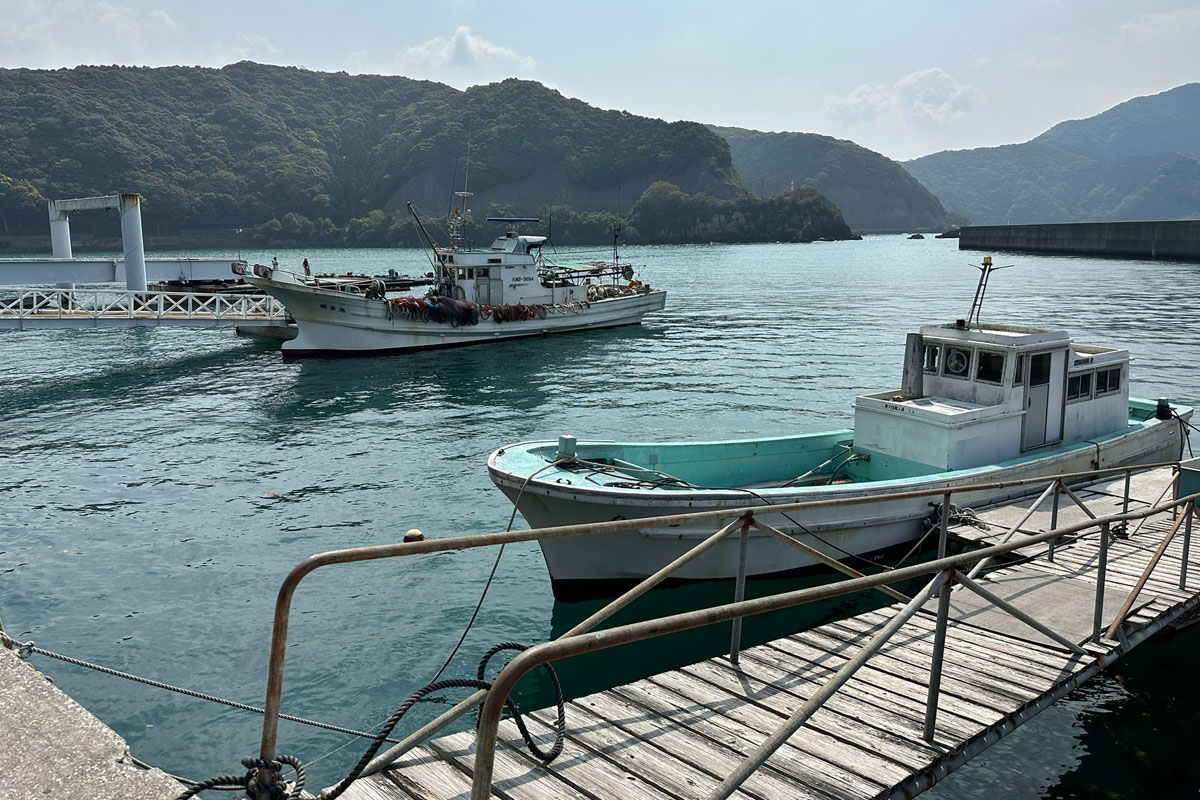
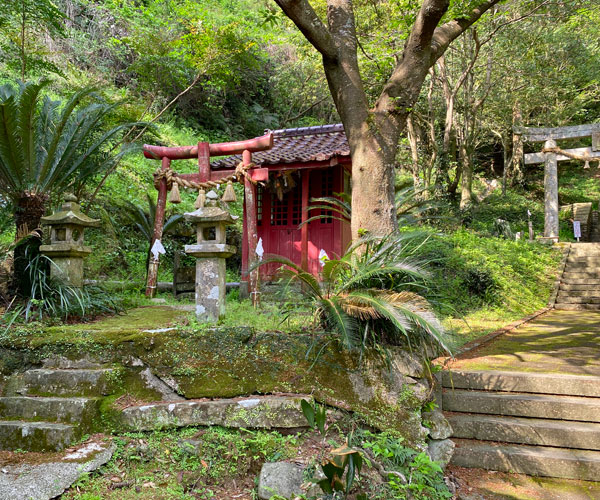
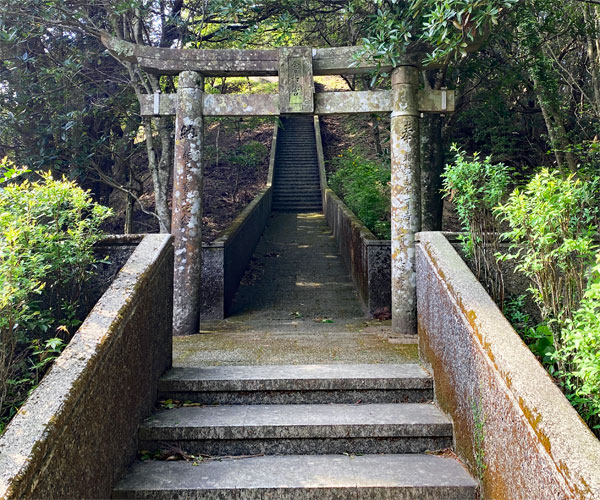
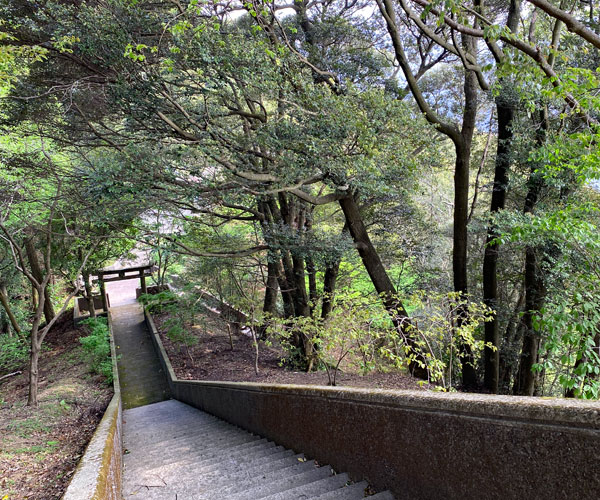
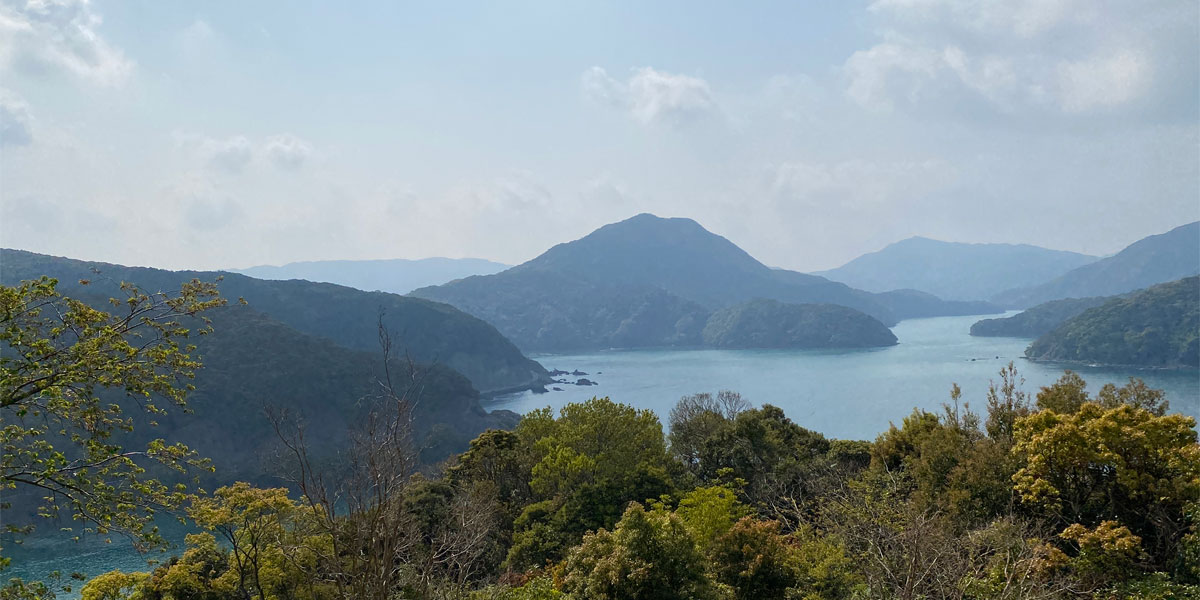
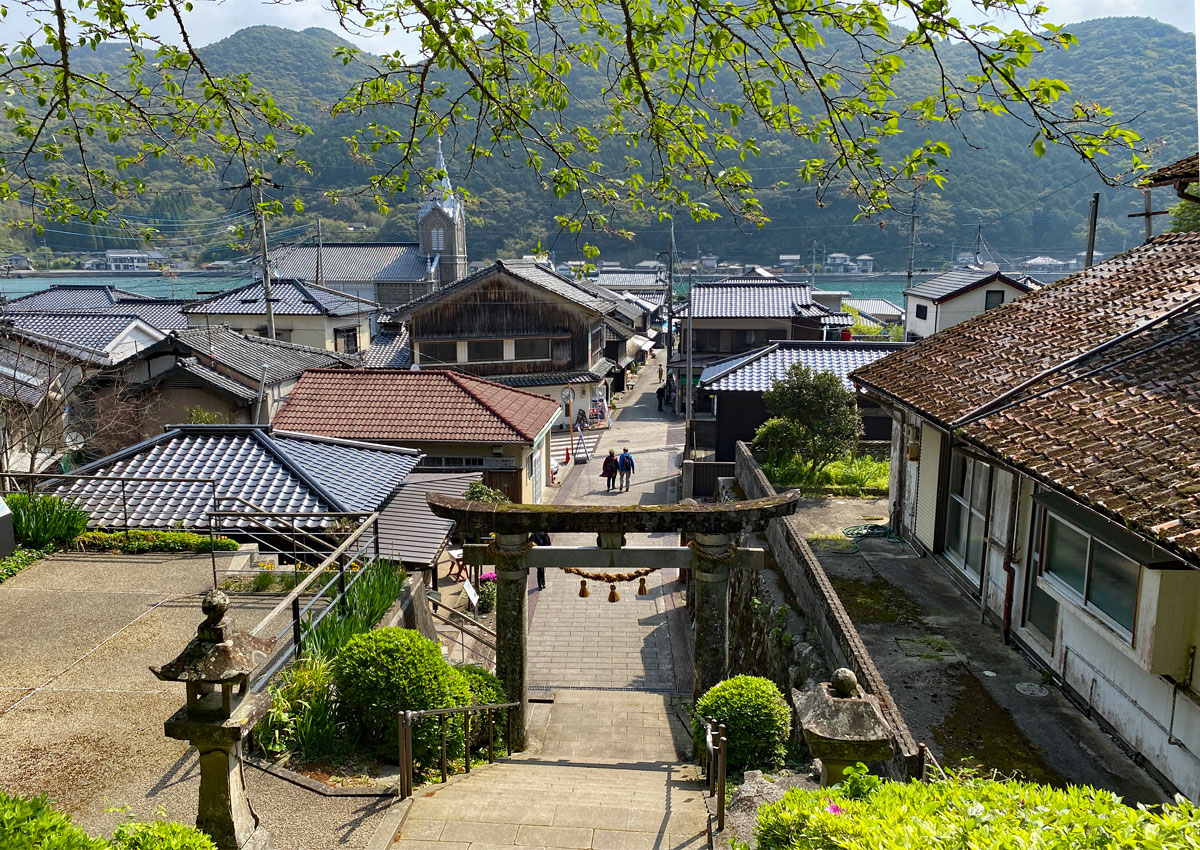
We spent most of our time at the fishing village of Sakitsu which is known for its unique blend of Christian and traditional Japanese culture and is recognized as one of the UNESCO World Heritage Hidden Christian Sites in the Amakusa Region. One of the highlights of our visit was climbing the 150 steps up to the Sakitsu Suwa Shrine for a dramatic panoramic view of the sea.
View of the fishing port at Sakitsu
Walking up the 150 steps to the Sakitsu Suwa Shrine
Beautiful panoramic view from the Sakitsu Suwa Shrine
View over the village of Sakitsu
Looking up at a Torii Gate from the main street
Passing a group of children
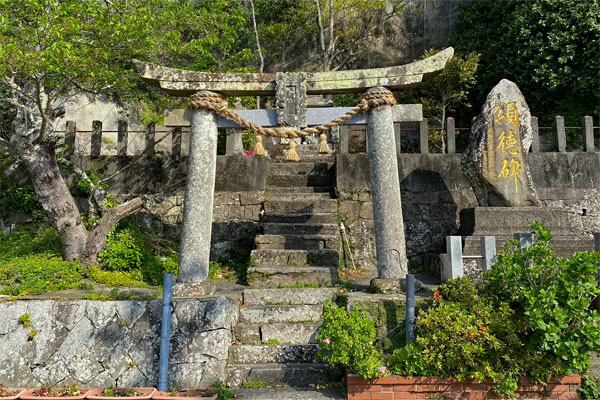
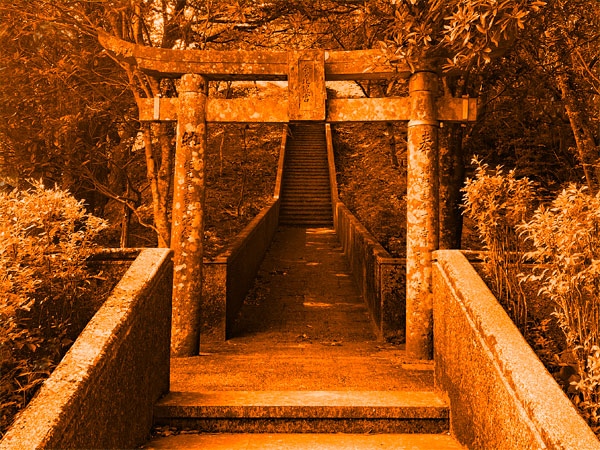
Torii gates are iconic, traditional Japanese gateways, most commonly found at the entrance of Shinto shrines, marking the boundary between the secular world and the sacred space within. They are a symbol of purification and warding off evil spirits. These structures typically feature two upright posts topped by two horizontal beams, often painted vermilion red
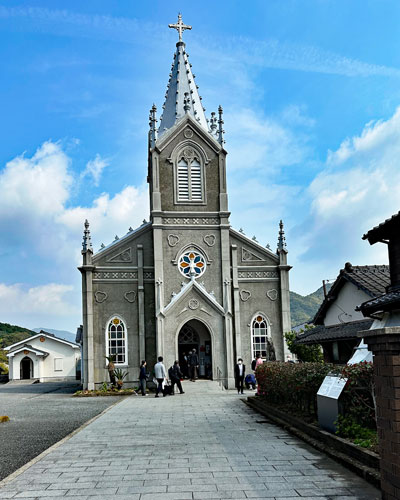
The Sakitsu Church constructed in 1934
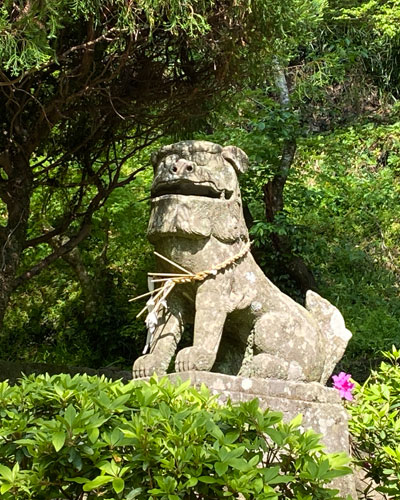
A friendly stone lion statue
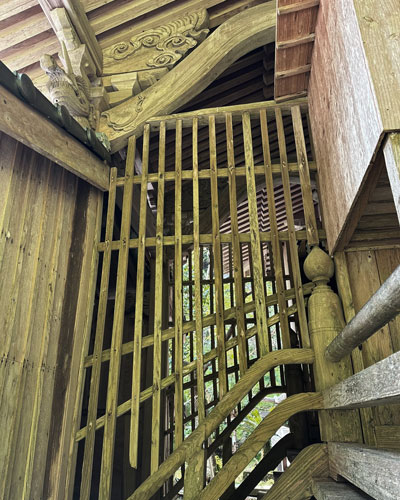
Intricate joinery
Koshikishima Islands
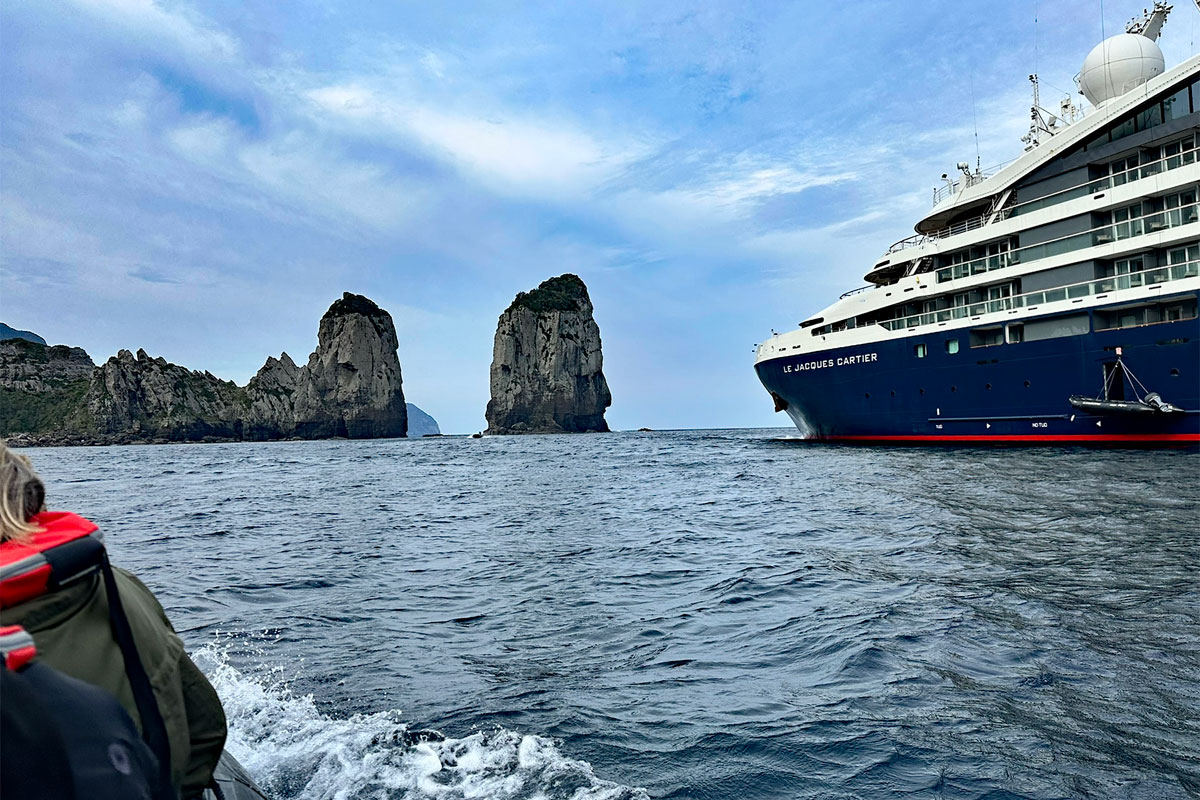
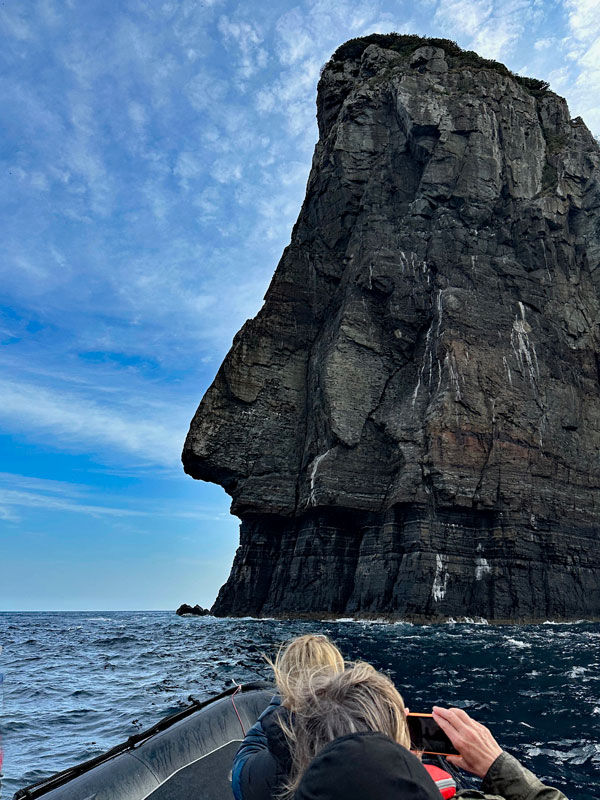
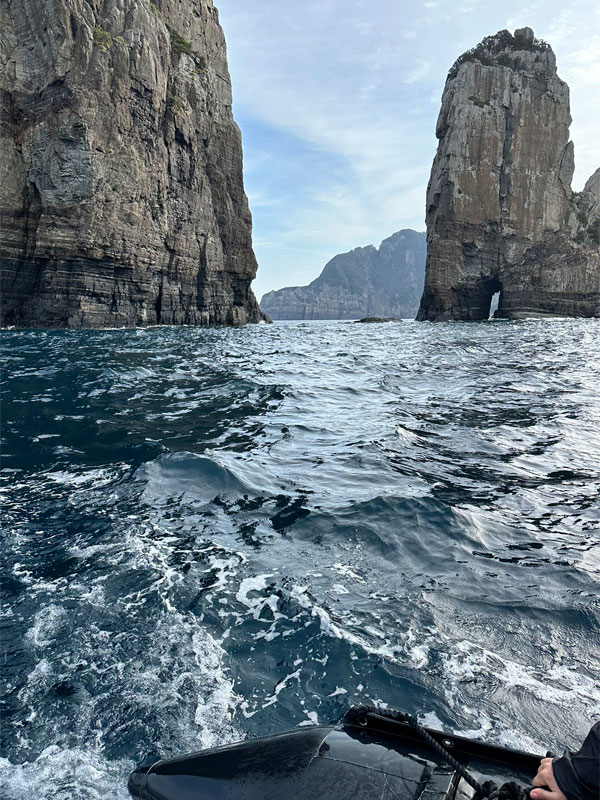
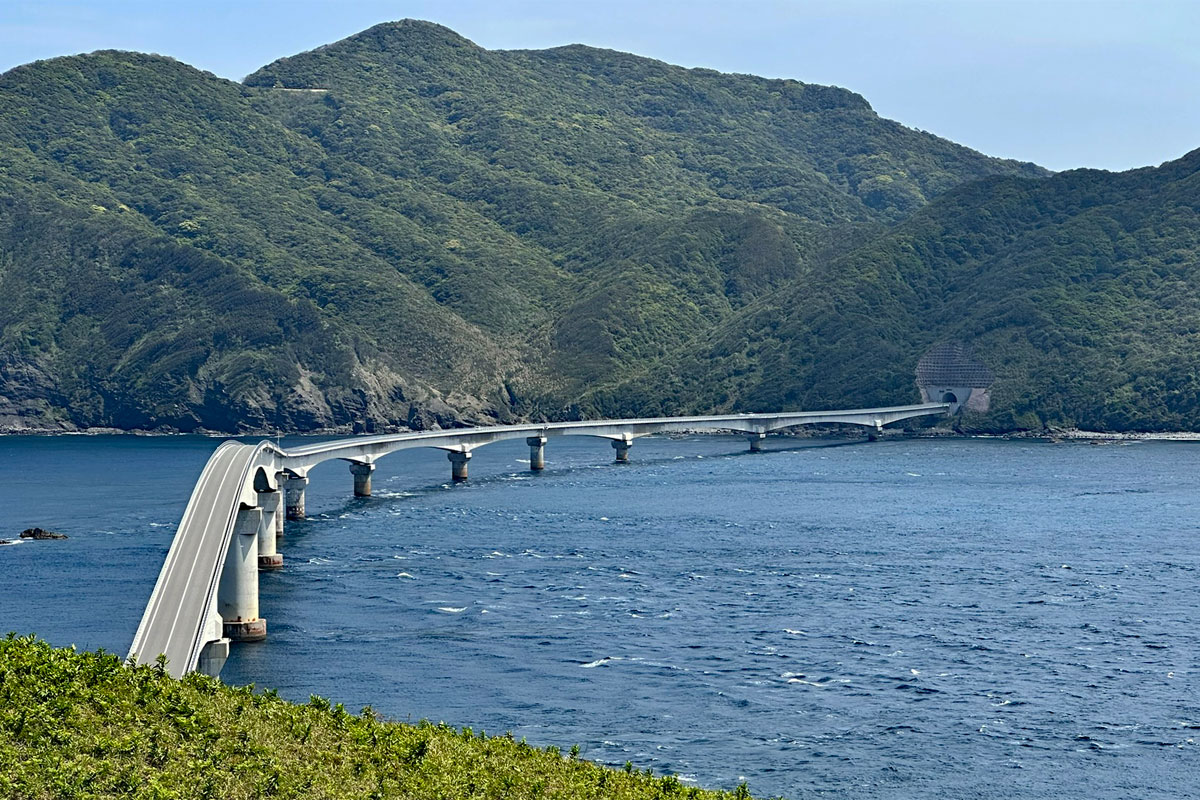
The Koshikishima Islands are located in the East China Sea to the northwest of Kagoshima with a population of about 6,000 people. We visited the three main islands of the archipelago with our Zodiac — Kamikoshiki, Nakakoshiki, and Shimokoshiki — which are part of the Koshikishima Quasi-National Park. The first two islands are connected by a bridge. These remote islands had towering cliffs and colossal rock formations originating in the Cretaceous Period nearly 80 million years ago.
The Zodiac ride to Koshiki was very exciting with rough water and large waves — but we spent the rest of the morning soaking wet!
Leaving our ship and heading for Koshiki
The locals think this rock shows a profile of Napoleon Bonaparte
Rough water ahead
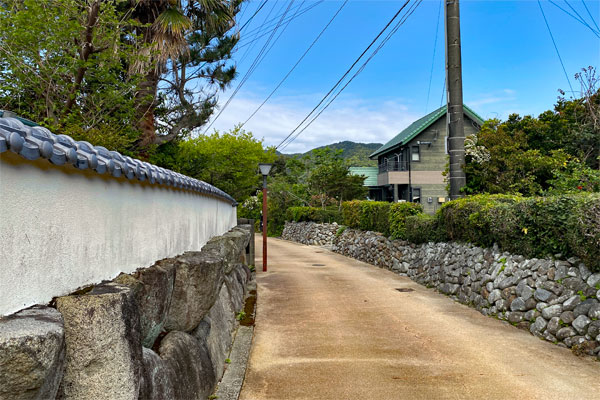
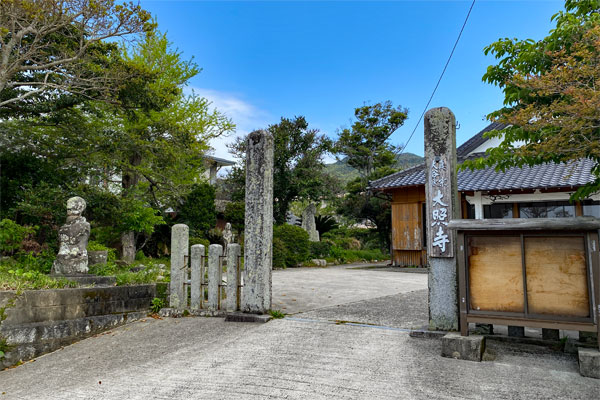
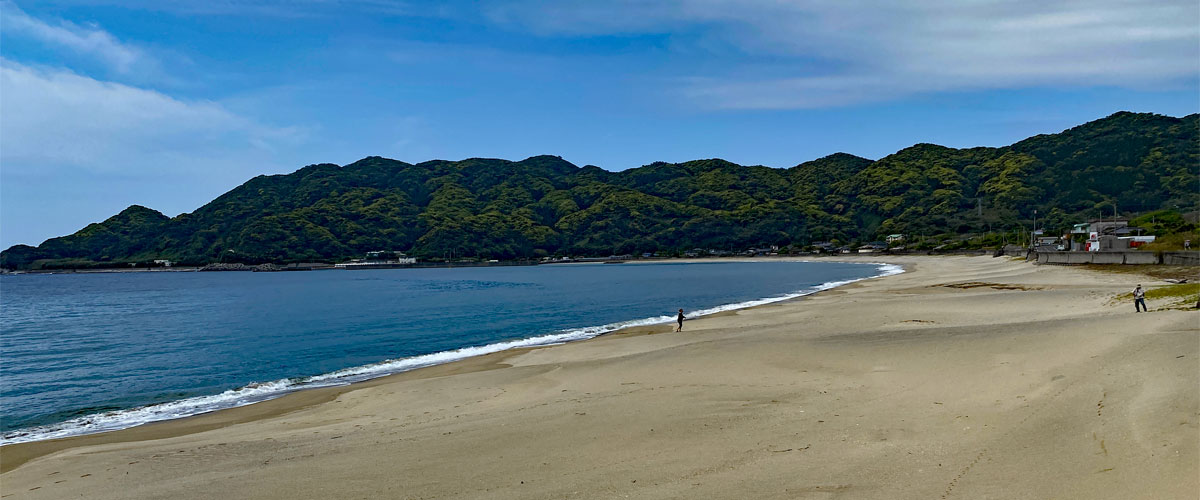
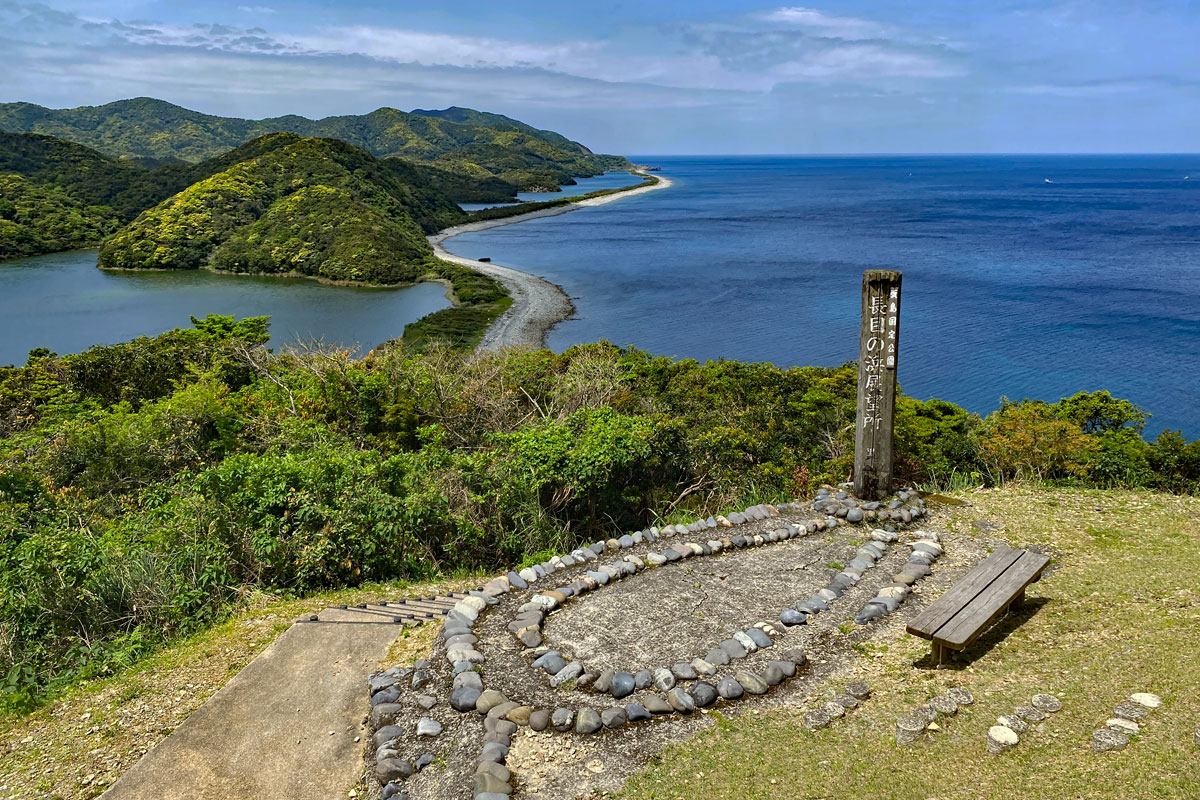
We started out on Shimokoshiki Island which has a beautiful sandy beach and we also walked through some back roads through a residential area. Later we went to Kakakoshiki Island which has stunning views looking out to Nakakoshiki Island.
Walking down a road on Shimokoshiki Island
Entrance to a Daishoji Temple
A view of Teuchi Beach on Shimokoshiki Island
<
Looking at the Koshiki Ohashi Bridge as it enters a tunnel on Nakakoshiki Island
View from Satocho on Kamikoshiki island
Kagoshima
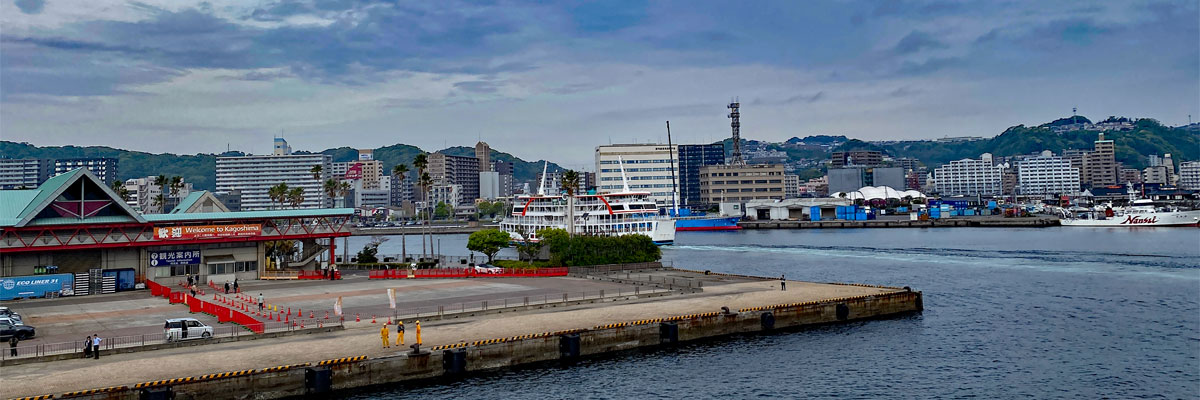
We disembarked the Le Jacques Cartier ship in Kagoshima where we spent the day before flying to Tokyo. Kagoshima, a seaside city on Kyushu Island, is best known for Sakurajima — one of Japan’s most active volcanoes.
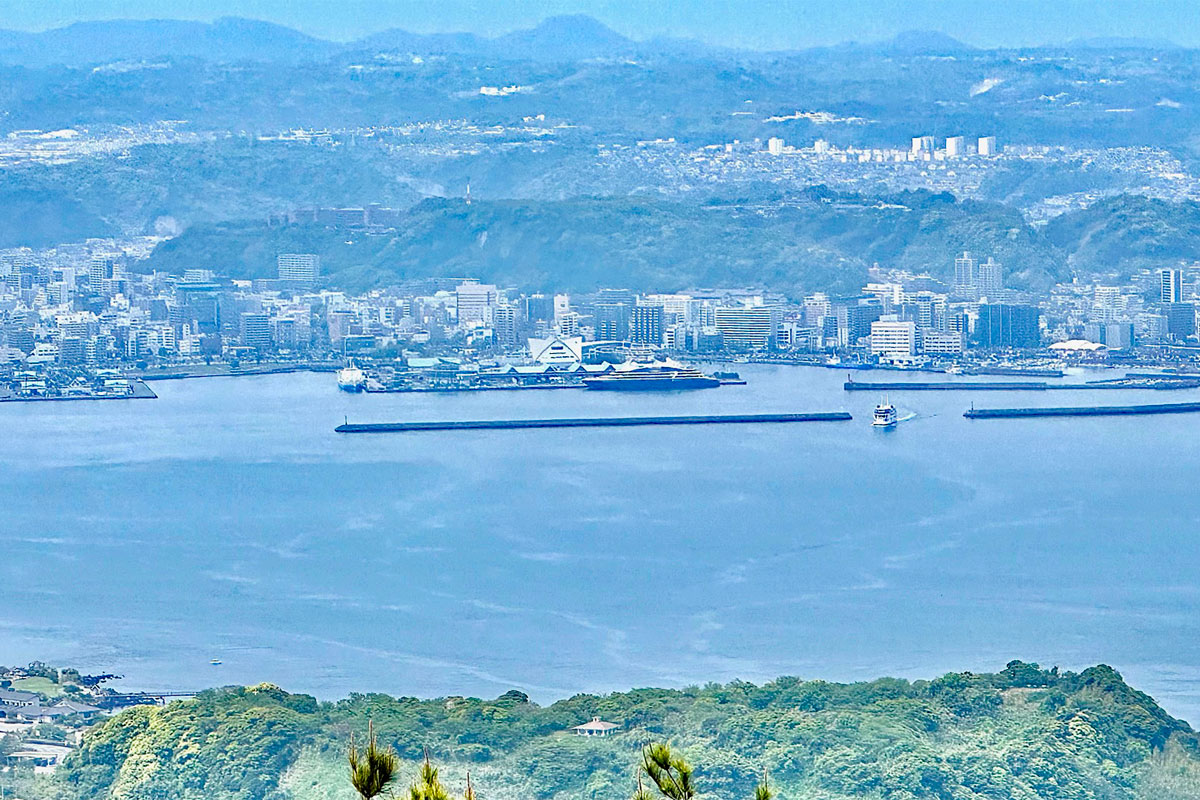
View of the Port of Kagoshima as our ship is docking
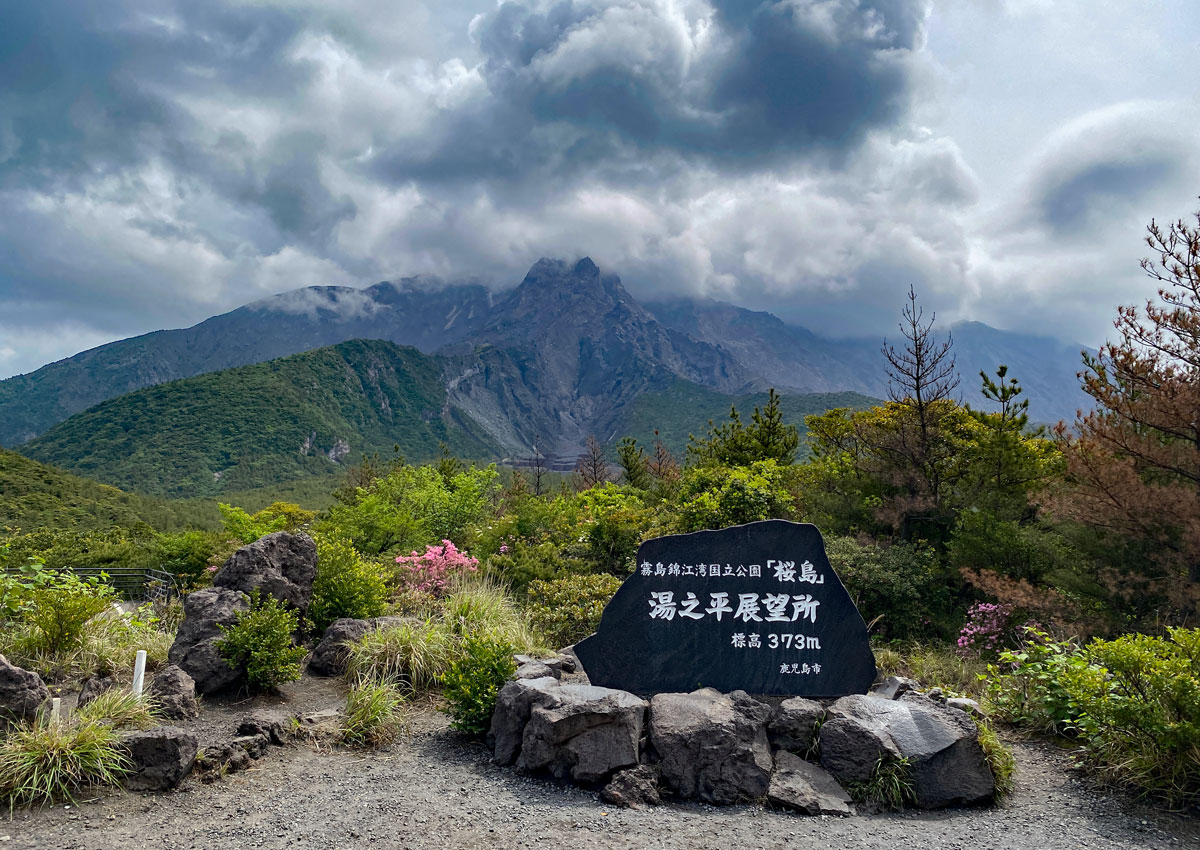
Upon arrival at the Port of Kagoshima, we took a ferry to Sakurajima. Its first known eruption was in the year 708 and since 1955 its activity has been ongoing and closely monitored at a state-of-art government observatory set up in 1978. Lava flows from fissures in the volcano gave rise to a peninsula which is now linked to the island of Kyushu. The Sakurajima Visitor Center had a very nice museum with exhibits explaining the volcano’s history; it also has a direct feed from the Showa Crater with real-time seismic data from the volcano. Afterwards, we visited the observatory located on a hill on the lava field created by the volcano’s eruption in 1946 which had a beautiful view of the volcano and Kinko Bay.
Looking at the Sakurajima volcano from the observatory
View of Kinko Bay looking at our ship docked at the port in Kagoshima
After visiting the volcano, we took the ferry back to the peninsula. We had lunch at a local restaurant in Kagoshima and walked around the center of town before heading to Tokyo.
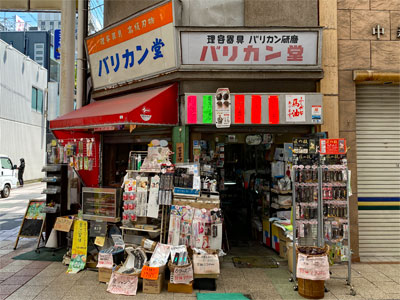
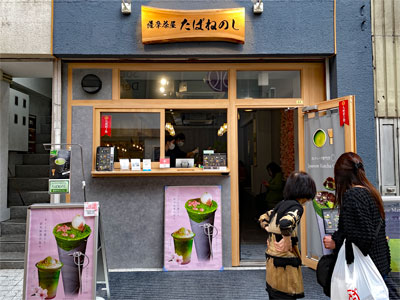
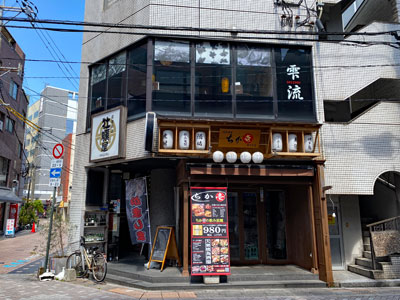
Some typical storefronts in Kagoshima
Tokyo
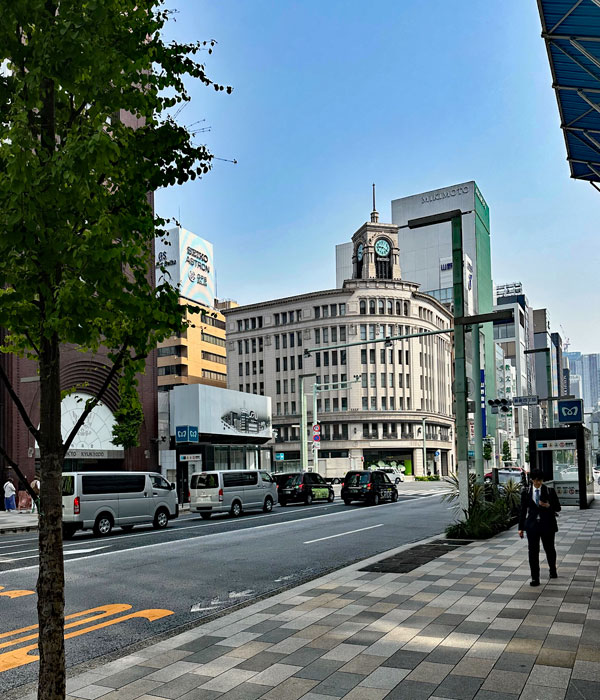
We arrived in Tokyo later in the day and checked into our hotel in the ritzy Ginza district where we had dinner at a local restaurant. The AC Hotel was pleasant with an extremely compact room and interesting breakfast buffet. We spent the next morning walking around Japan's most expensive real estate — one square meter of land in the Ginza district is worth over ten million yen!
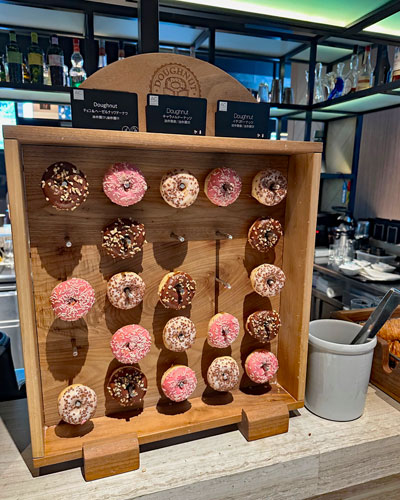
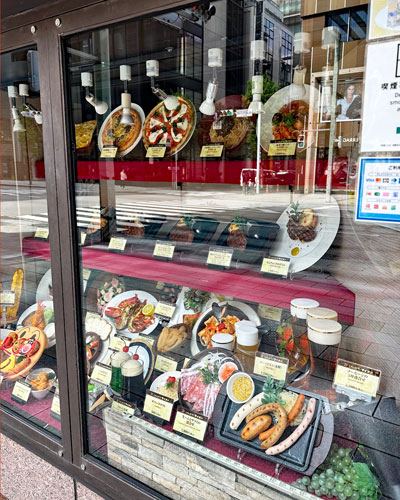
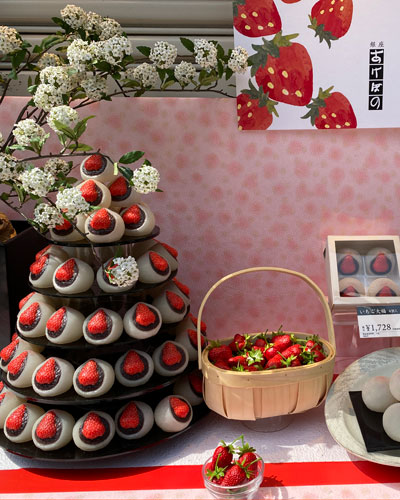
Some food displays in Tokyo
Looking down the main shopping street in Ginza
Typical street scene
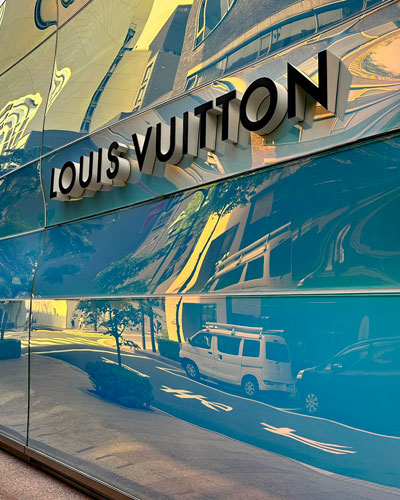
The facade of the Louis Vuitton store
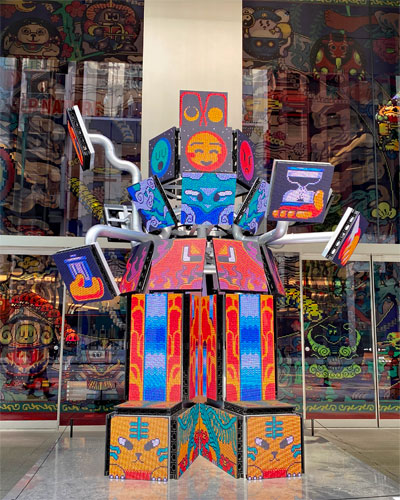
Robot display outside a store
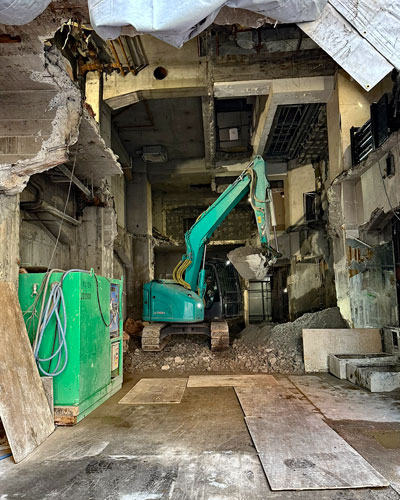
Big equipment replacing a store — not much staging space
Departing for the U.S.
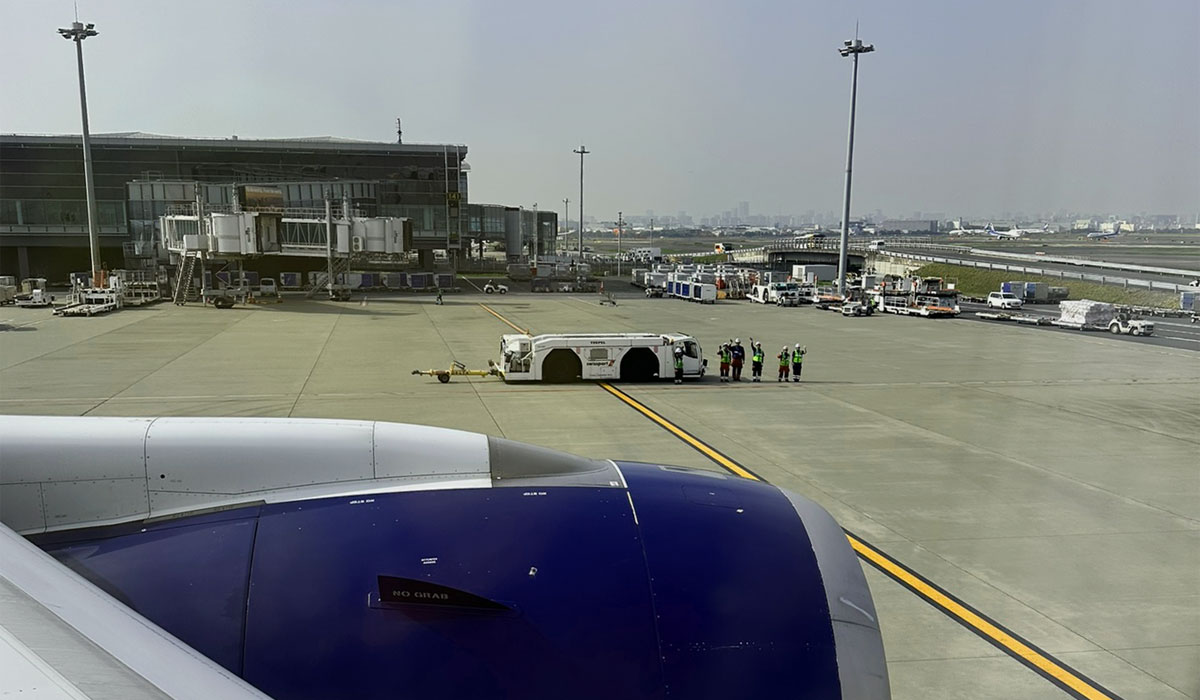
As we boarded our Delta flight from Haneda Airport, ready for our 12-hour flight back to Detroit, we saw the ground crew waving farewell to us on the tarmac.
The ground crew at Haneda Airport waving to us as we depart for the U.S.
 We had planned to spend some time in Japan but other trips always took precedence. Peter visited Tokyo on business several decades ago and we had both connected through Narita Airport many times on other trips to Asia. Finally, we decided that 2025 was time since the long flight and 11-hour time difference would never change.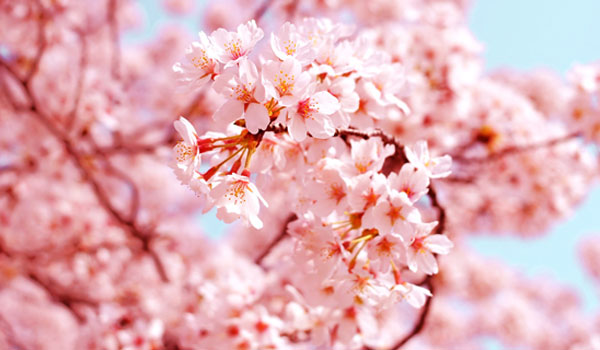

 Kiyo mizu means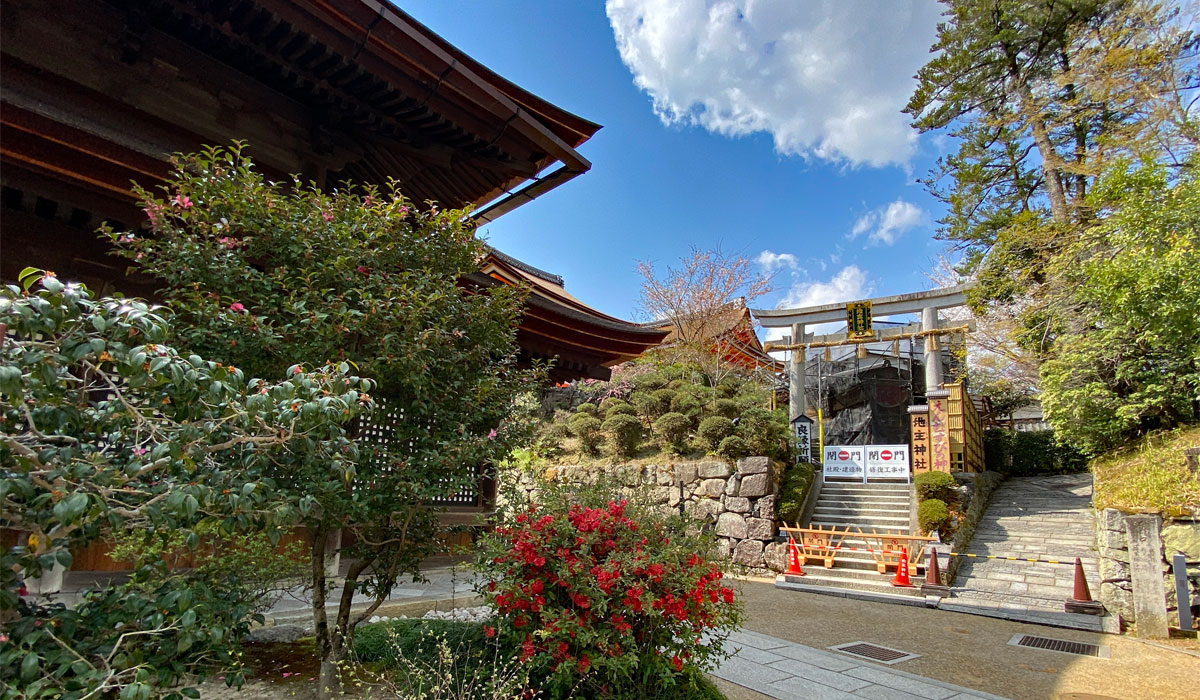

 Isuien Garden — translated as