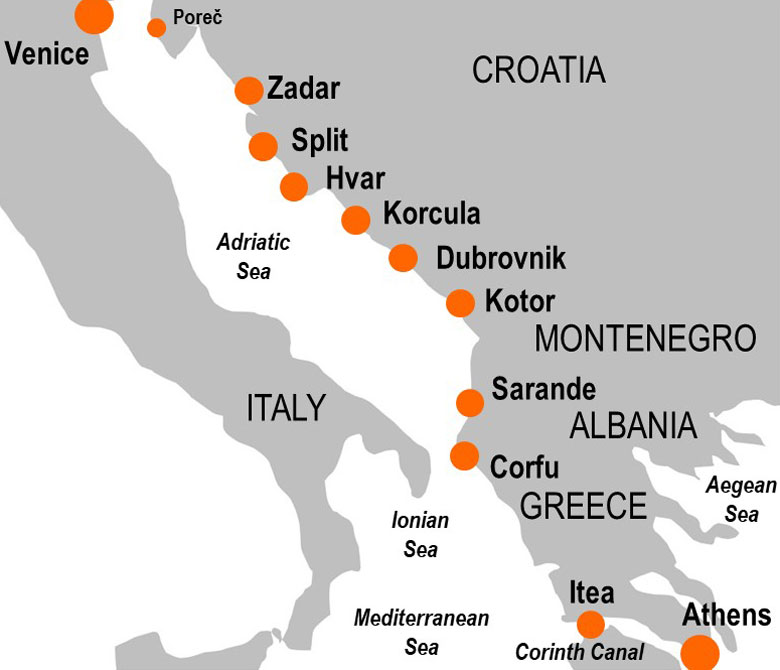
In 2023, Peter and I celebrated our wedding anniversary visiting the Dalmatian Coast. Fifty years ago, we spent part of our honeymoon camping in Yugoslavia near the town of Poreč on the coast of the Istrian Peninsula. This area is now Croatia since it declared its independence from Yugoslavia in 1991. Geographically, the Dalmatian Coast extends from the city of Zadar in the north to the border with Montenegro in the south, and includes the scattering of islands and islets spread out over the eastern Adriatic Sea. The Dalmatian Coast has a rich history of art and architecture as military powers — Romans, Illyrians, Venetians and others — battled for control over the Adriatic Sea.
After spending a few days in Venice, we boarded a small ship which took us to the Croatian ports of Split, Hvar, Korcula, and Dubrovnik, as well as Kotor, Montenegro and the island of Corfu. We ended our trip cruising through the Corinth Canal bound for Athens.
Starting Out in Venice
We last visited Venice in November 2015 after spending two weeks traveling through Italy. Hoping for better weather, we wanted to revisit sites that we had missed on our previous visit. This trip, we stayed several days at the Hotel Monaco on the Grand Canal near the Doge's Palace and the Basilica di San Marco. The Peggy Guggenheim Collection was a highlight of our visit along with a tour of private rooms in the Doge's Palace originally inaccessible to the public.
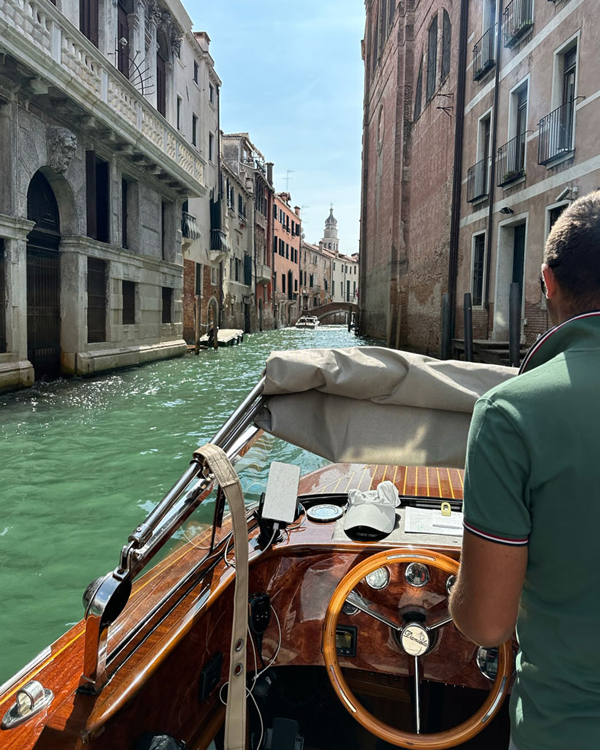
Arriving from the airport in a water taxi
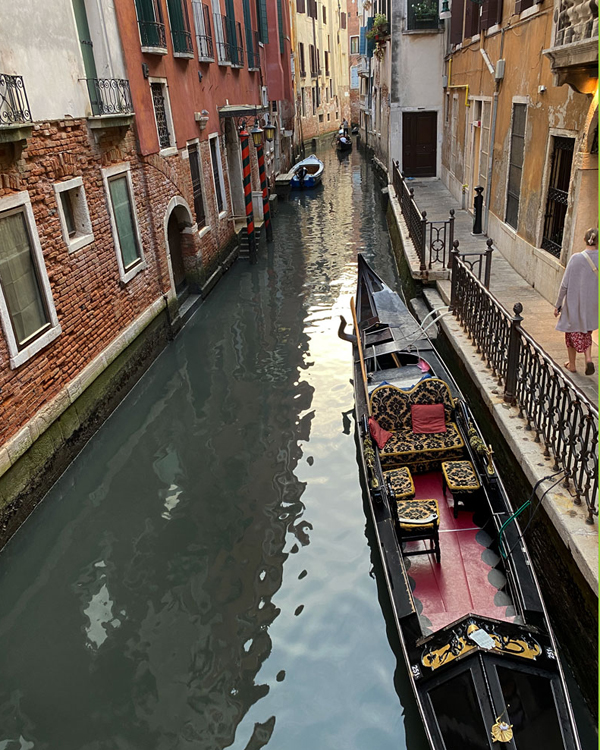
Looking down a picturesque canal
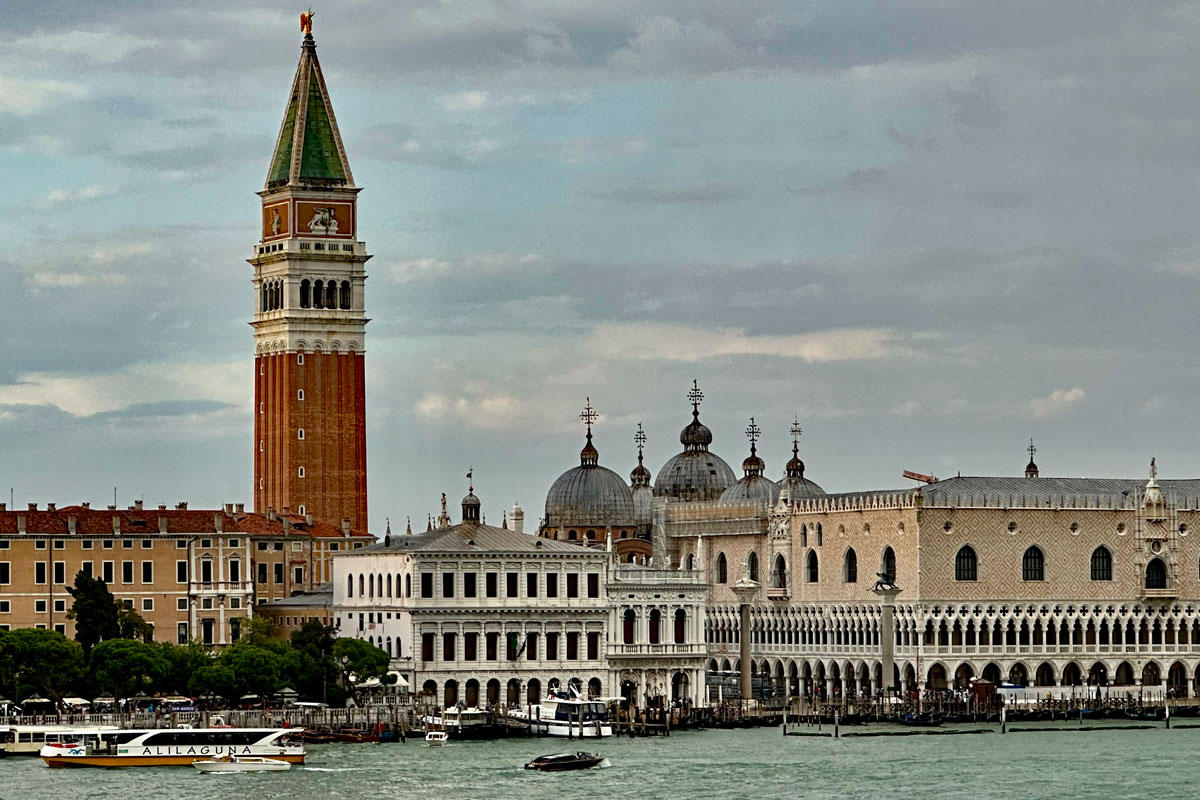
Our first view of St. Mark's Square
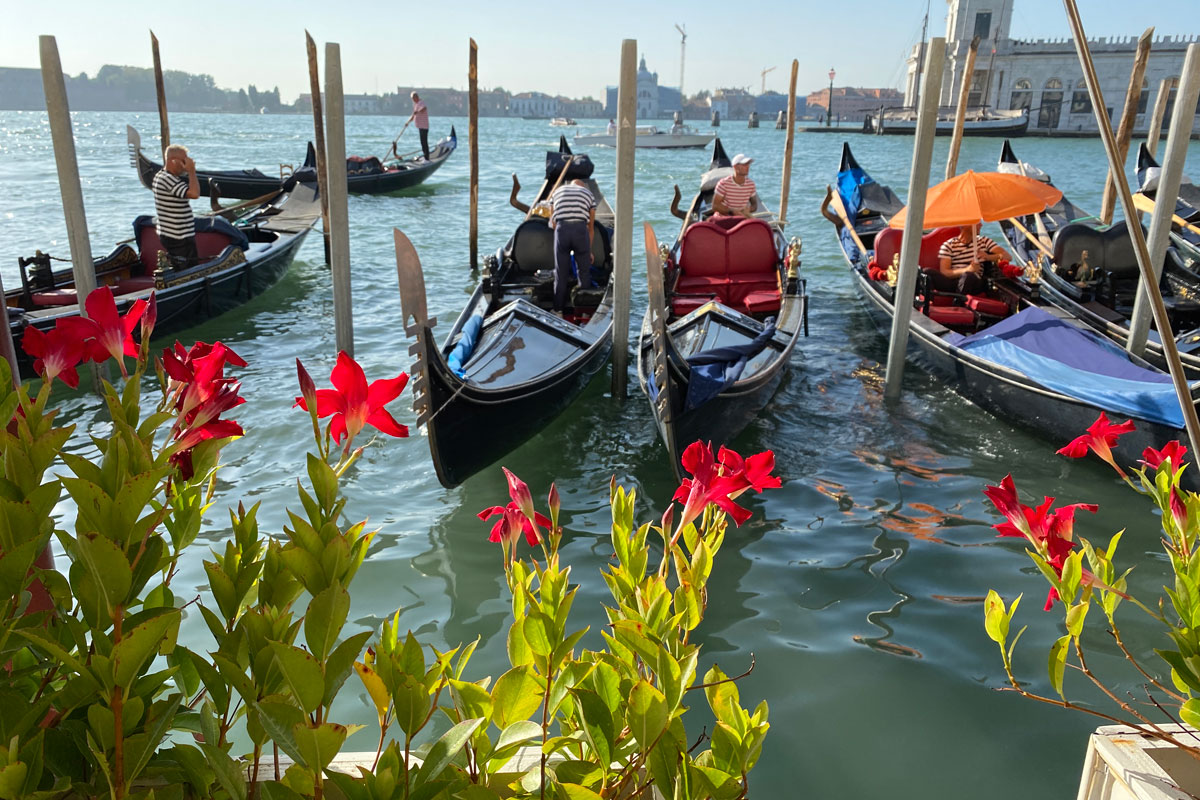
View of gondoliers getting ready for the day from the breakfast terrace of the Hotel Monaco
Peggy Guggenheim Collection
Peggy Guggenheim was an American art collector, bohemian, and socialite. Born to the wealthy New York Guggenheim family, she was the daughter of Benjamin Guggenheim, who went down with the Titanic in 1912, and the niece of the mining magnate, Solomon R. Guggenheim. She became one of the great collectors of the 20th century acquiring a vast array of Cubism, Surrealism, futurist, and abstract expressionist art, with works by up to 200 artists, including her ex-husband Max Ernst.
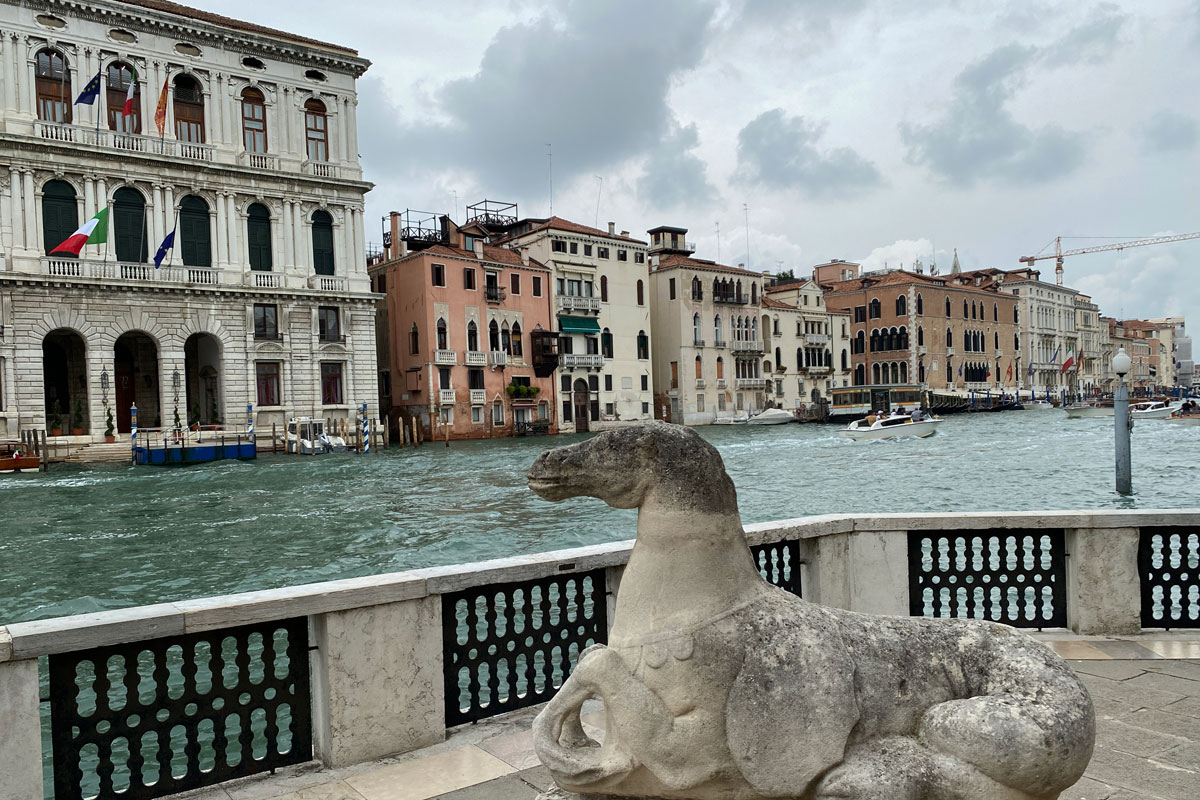
View of the Grand Canal from Peggy Guggenheim's Palazzo Venier dei Leoni
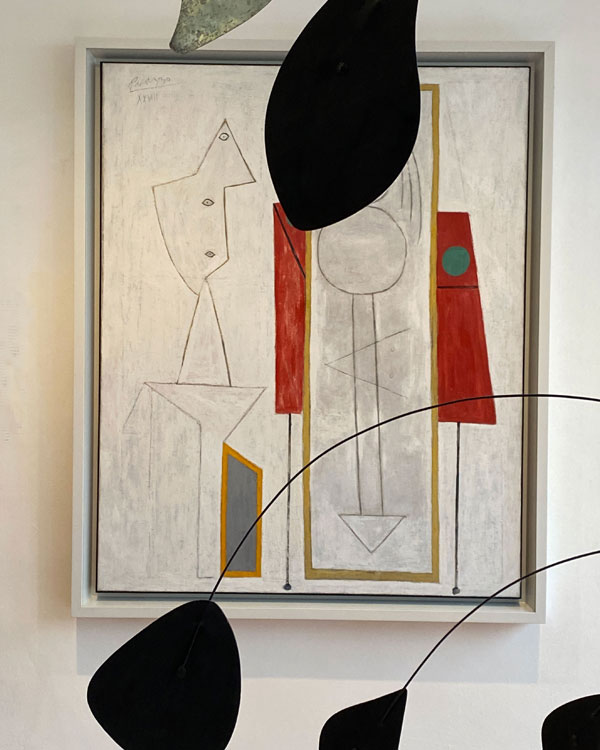
Most of the work on display at her palatial canal-side home was collected by Peggy Guggenheim during her lifetime, and includes some of the best art of the 20th century. In the entryway, two Picassos hang next to a Alexander Calder mobile. There are rooms filled with artwork by Vassily Kandinsky, Salvador Dalí, Mark Rothko, Jackson Pollock, Paul Klee, Georges Braque, Marcel Duchamp, Fernand Léger, and René Magritte. Her collection includes inspired folk art and lesser-known artists alongside works by Joan Miro, Alberto Giacometti, and Marc Chagall.
A Calder mobile in front of a Picasso painting in the entrance hall
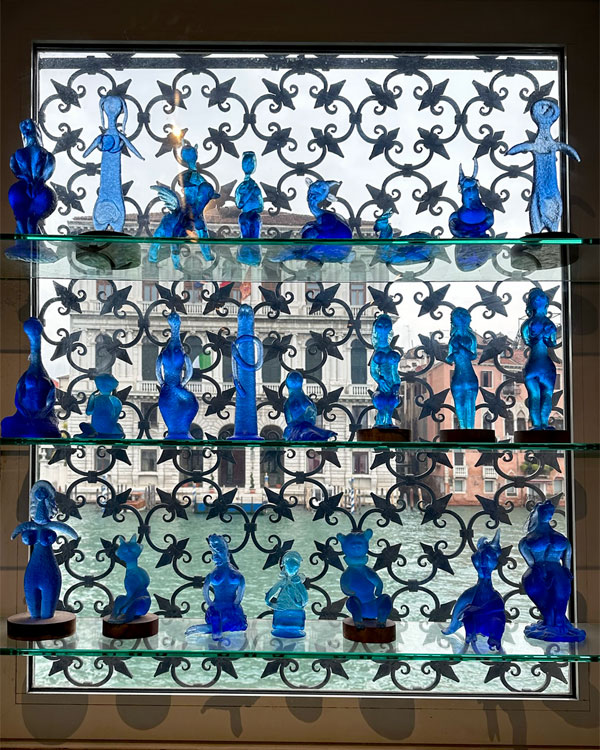
Display of glass sculptures in a window overlooking the Grand Canal
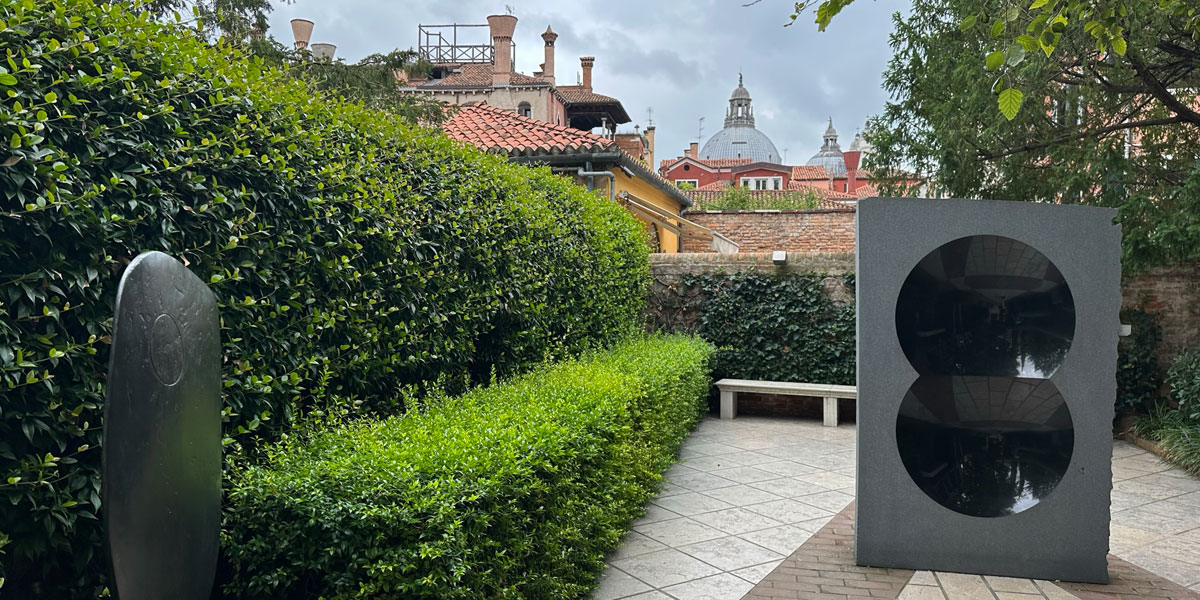
Walking through the sculpture garden at the Peggy Guggenheim Collection
We particularly enjoyed the way the museum still maintains the feeling of a private house — rooms are cozy and intimate with windows overlooking outdoor garden sculptures, and Peggy Guggenheim's own story is woven throughout the exhibition spaces with photos of the rooms as they appeared when Peggy lived there, in fabulously eccentric style.
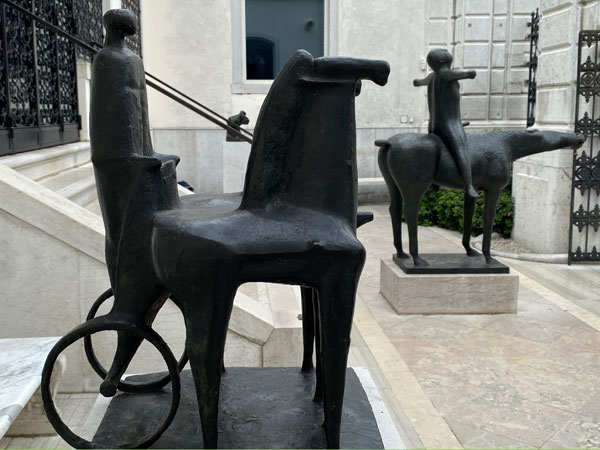
Sculptures on the terrace of the Palazzo Venier dei Leoni
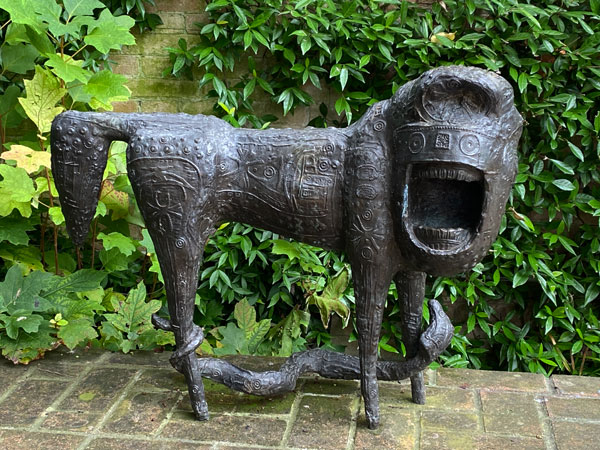
One of the many sculptures in the garden
The Peggy Guggenheim Collection is located in the Palazzo Venier dei Leoni, an 18th-century palace on the Grand Canal in Venice that was Peggy Guggenheim's home for three decades. She began displaying her private collection of modern artworks to the public seasonally in 1951. After her death in 1979, it passed to the Solomon R. Guggenheim Foundation, which opened the collection year-round in 1980. It is among the most important museums for European and North American art of the first half of the 20th century in Italy.
Doge's Palace
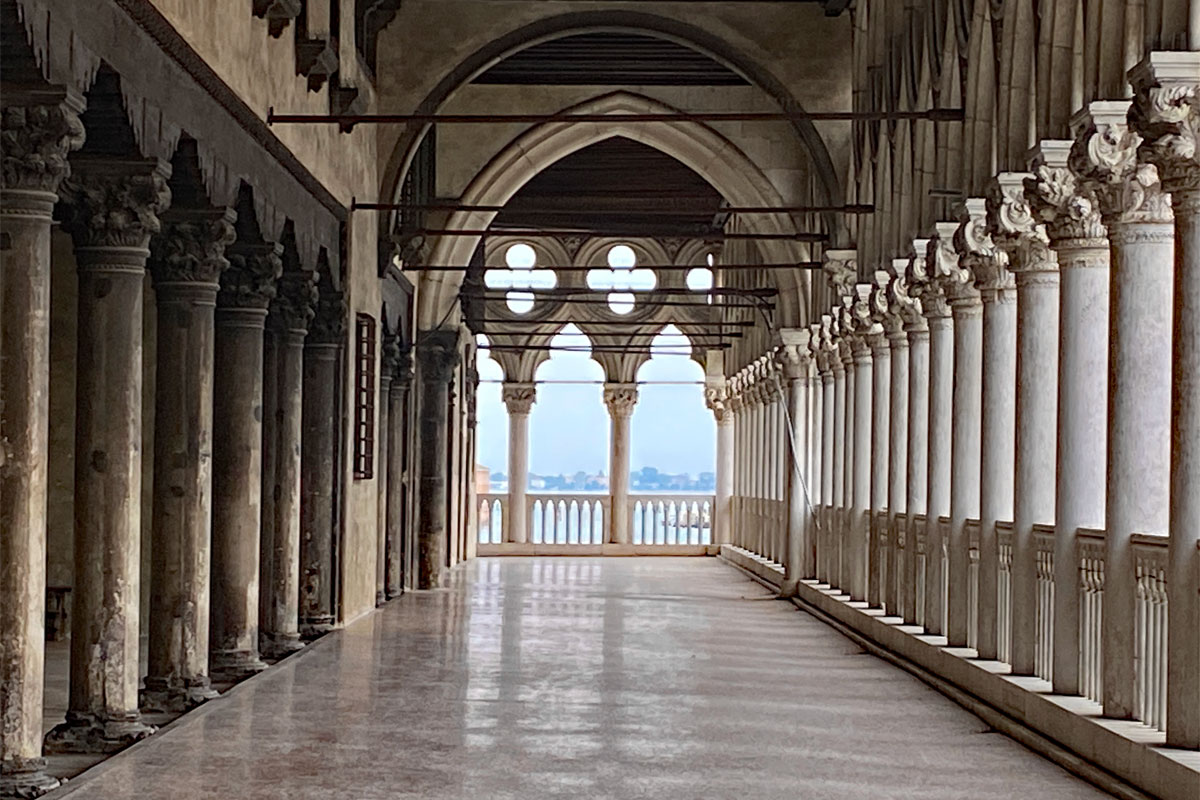
We signed up for a guided tour that began at Porta della Carta, the monumental 15th-century entrance way leading to the Terrazza Foscara with nostalgic 19th-century sculptures that recall the ancient, mythical glories of Venice. The tour continued to the Loggia Foscara, a Renaissance addition to the Gothic layout of the Palazzo Ducale. Inside, we entered the heavily armored Sala dei Forzieri, the ancient Treasure Chamber, where a selection of precious artefacts from the depositories of Venice's civic museums have been returned to public display.
The tour then led to the Doge's Terrace, a panoramic vantage point for viewing the east, west and south wings of the Doge's Palace. From there, we passed briefly through the Doge's Apartment and climbed a steep staircase to see Titian's monumental fresco from 1523, depicting a robust St. Christopher carrying the Child Jesus across the lagoon waters. We were then escorted to the Chiesetta del Doge (Doge's Church), redesigned by the architect Vincenzo Scamozzi.
Finally, we entered the Doge's Antichiesetta, also frescoed by Guarana, where three canvases depict the Traslazione del corpo di San Marco, painted in 1727 by Sebastiano Ricci as models for the mosaics for the second external portal of St. Mark's Basilica.
View over the Grand Canal from the Doge's Terrace
Walking Around Venice
This trip we had time to wander through the back canals of Venice, crossing many obscure footbridges as well revisiting the famous Academy Bridge, Rialto Bridge, and Bridge of Sighs. We also had terrific weather.
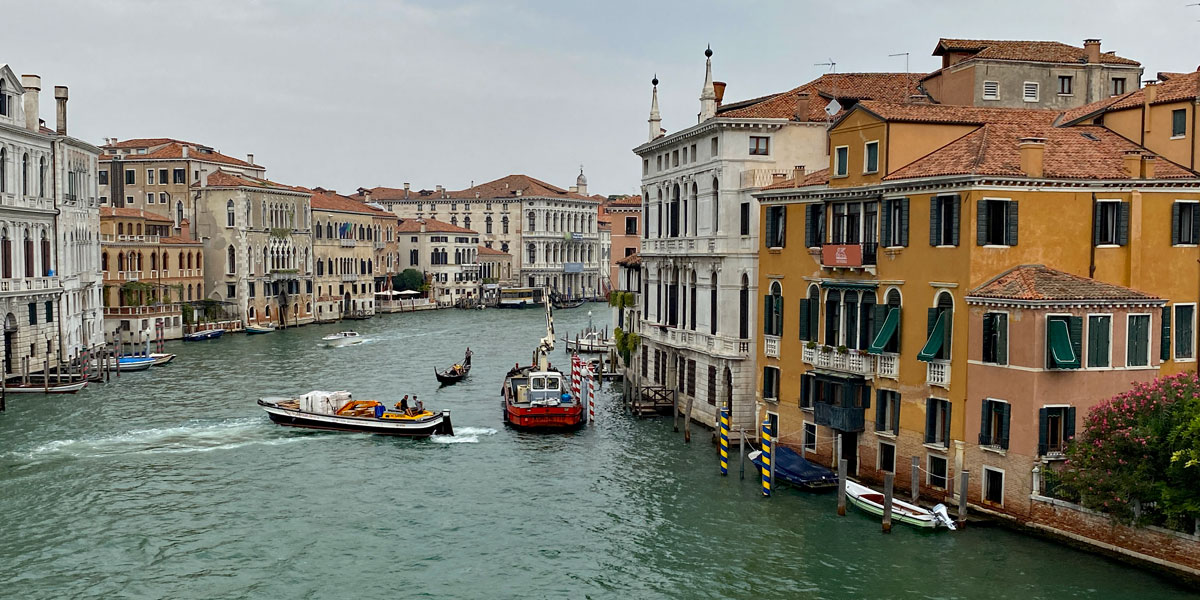
Looking up the Grand Canal from the Academy Bridge
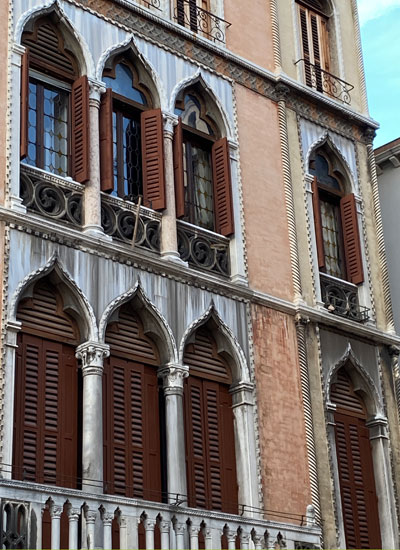
Typical Venetian building facade
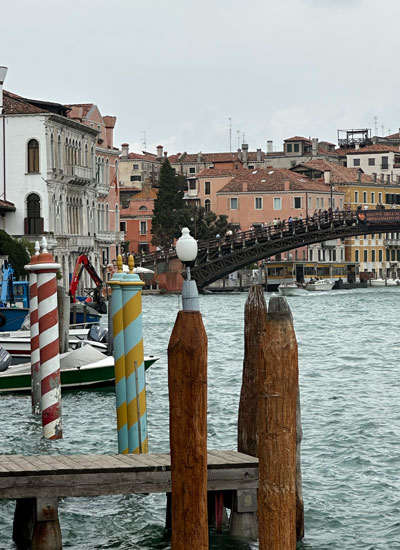
View from a boat dock
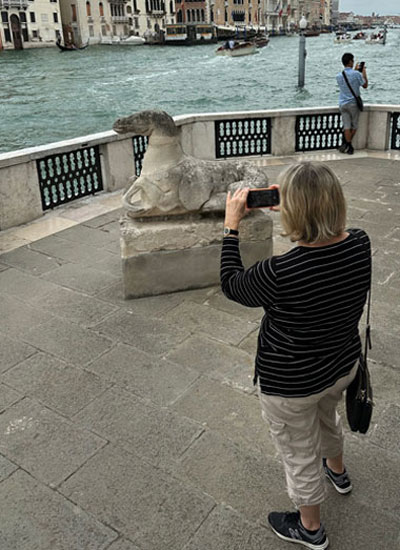
On the terrace of the Palazzo Venier dei Leoni
Boarding Our Ship
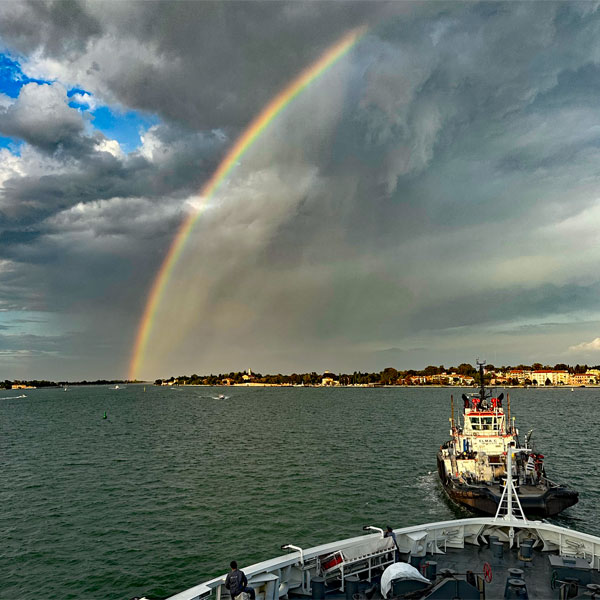
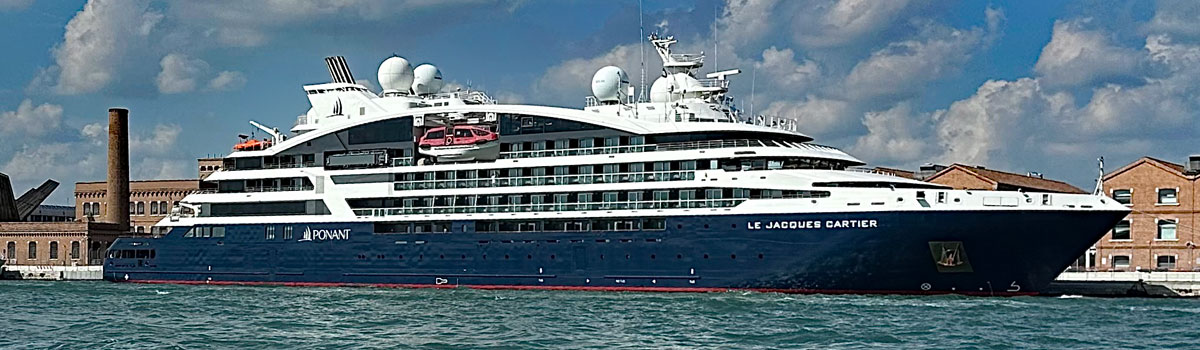
In the late afternoon, we boarded the Le Jacques Cartier to start our cruise along the Dalmatian Coast. As the tugboat led our ship out to sea, we experienced a beautiful rainbow — perhaps a good sign for our trip to come.
Split, Croatia
Our first stop was the ancient imperial city of Split which is also the second largest city in Croatia. Founded as the Greek colony of Aspálathos in the 2nd century B.C., Split was the site of a grand fortified palace for the Roman emperor Diocletian in the 4th century. Today, it is a bustling city where pre-Romanesque churches, Gothic chapels, historic museums, art galleries, and cafes commingle along picturesque cobblestone streets.
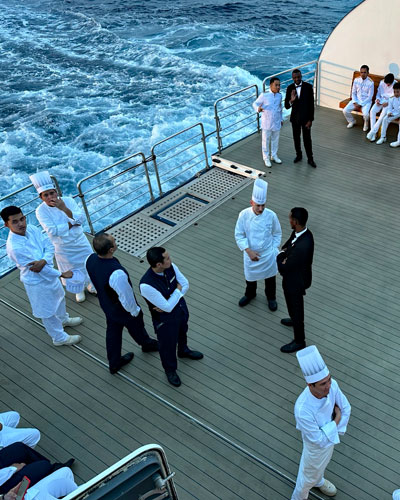
Some of the ship's crew awaiting introductions by the captain on our first evening on board
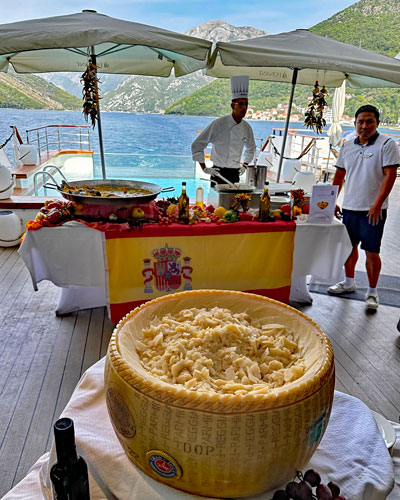
Remarkably delicious cheese from a large wheel of Parmesan at lunch
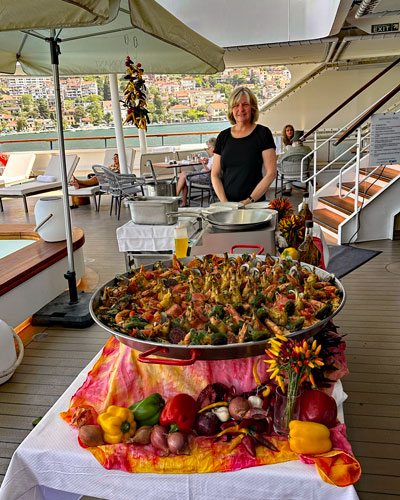
Admiring a beautiful presentation of paella
Our ship, named after Jacques Cartier, the French-Breton maritime explorer who is credited with discovering Canada
Many generations of stonework in Split's Old Town
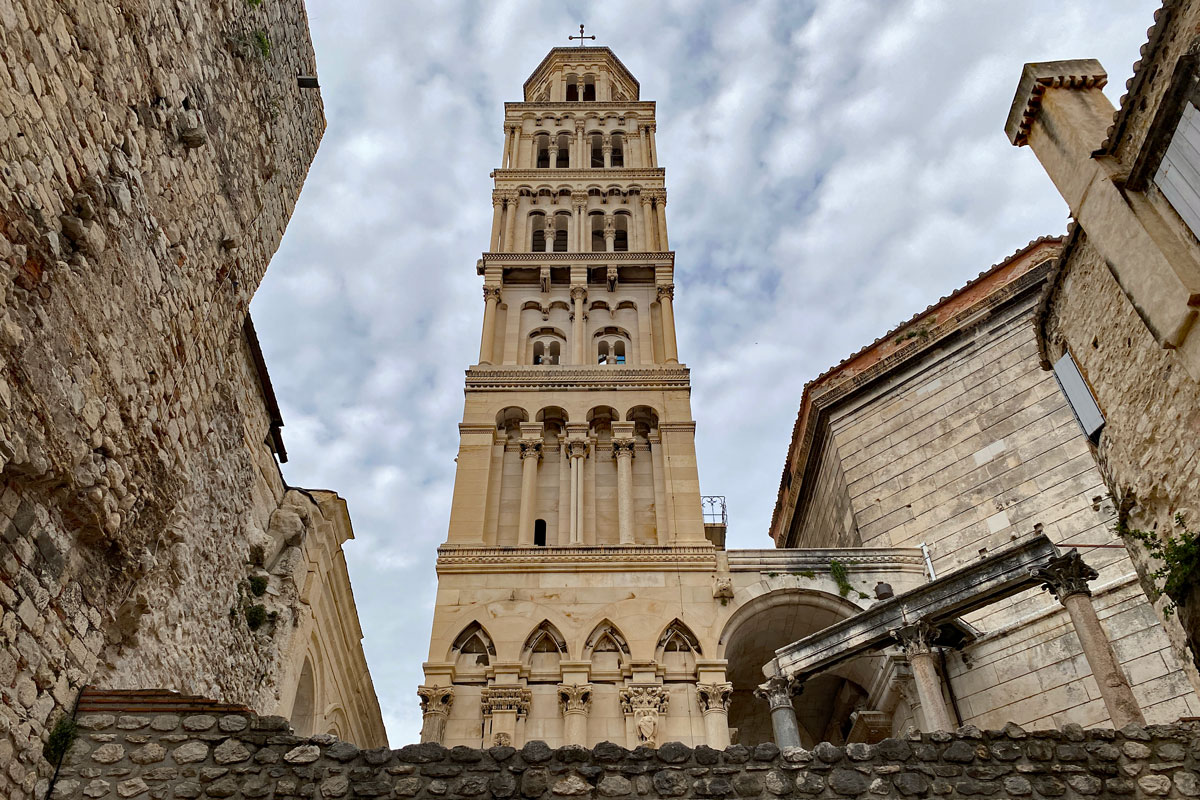
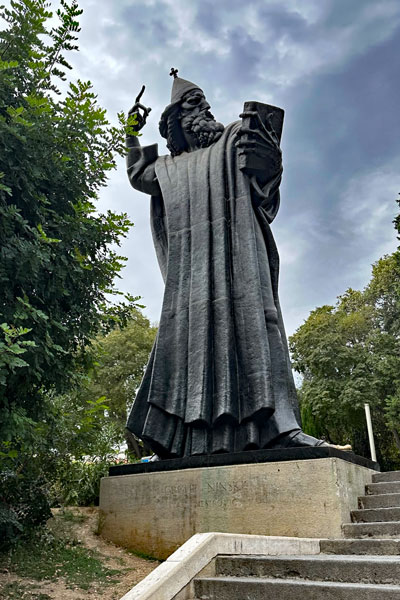
We started at the entrance to Split's Old Town, which is built around the spectacular Diocletian’s Palace, a UNESCO World Heritage Site. Our tour of the palace included a visit to its well-preserved cellars. We then walked to the Cathedral of St. Domnius, the patron saint of Split, the Temple of Jupiter, Peristyle Square, and the Silver Gate. We ended the morning visiting the northern Golden Gate — another ancient Roman entry point to the Old Town that was originally a part of Diocletian's Palace — where the 28 foot tall sculpture of Gregory of Nin by Ivan Mestrovic is located. Later in the day, we visited the Mestrovic Gallery where the artwork of Croatia's most famous sculptor, Ivan Mestrovic, is displayed in his former 1930s-era mansion.
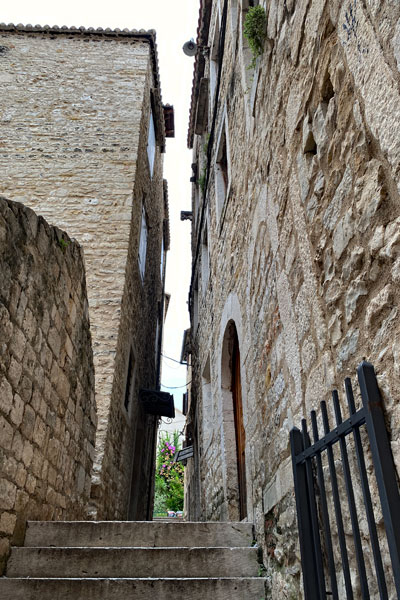
Navigating the narrow walkways of Split
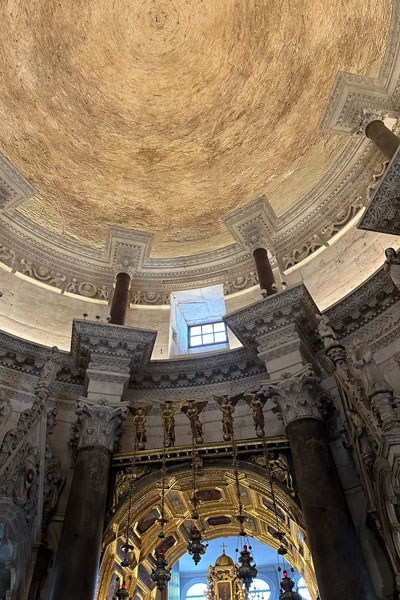
Ceiling of the Cathedral of St. Domnius
Ivan Mestrovic's sculpture of Gregory of Nin
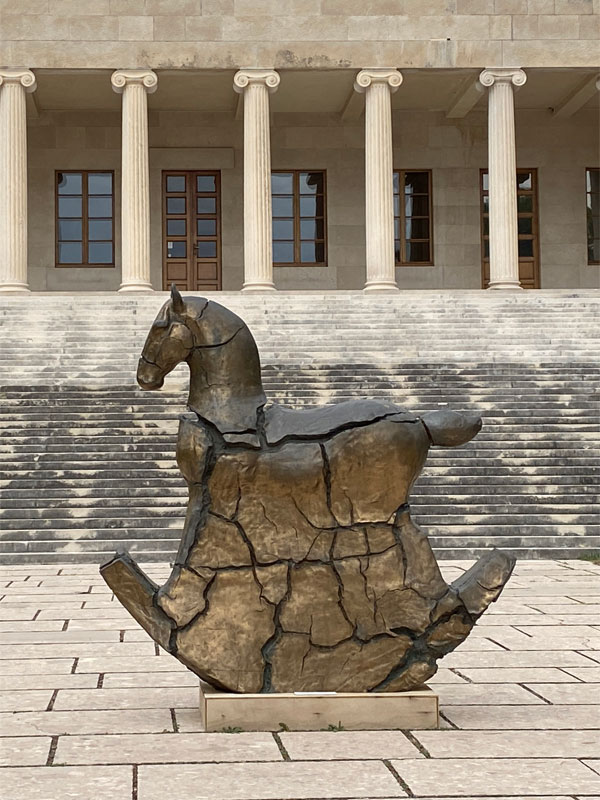
A sculpture by Hrvoje Dumancic at the entrance of the Mestrovic Gallery
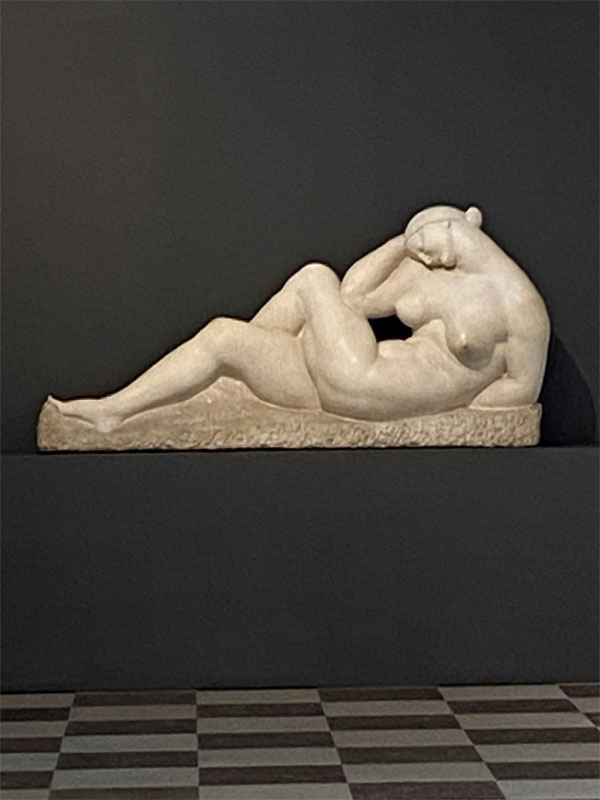
One of Ivan Mestrovic's many sculptures on display
Islands of Hvar and Korcula
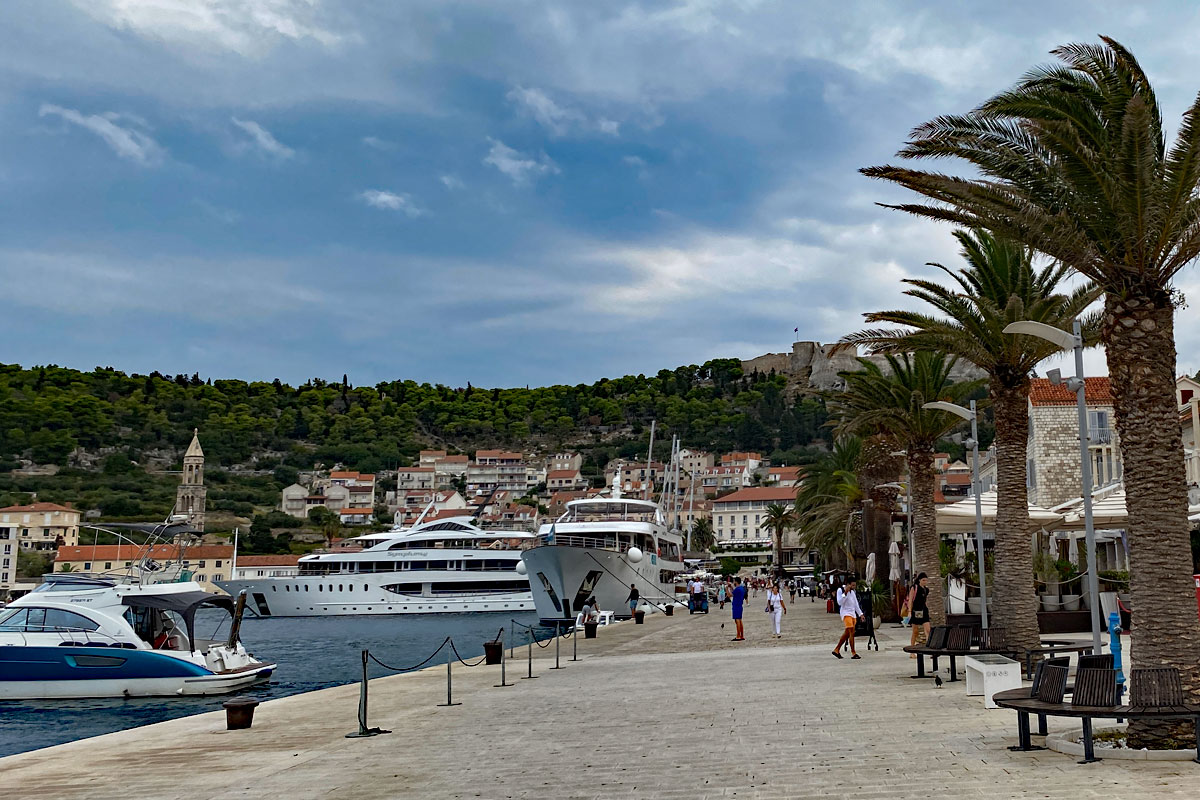
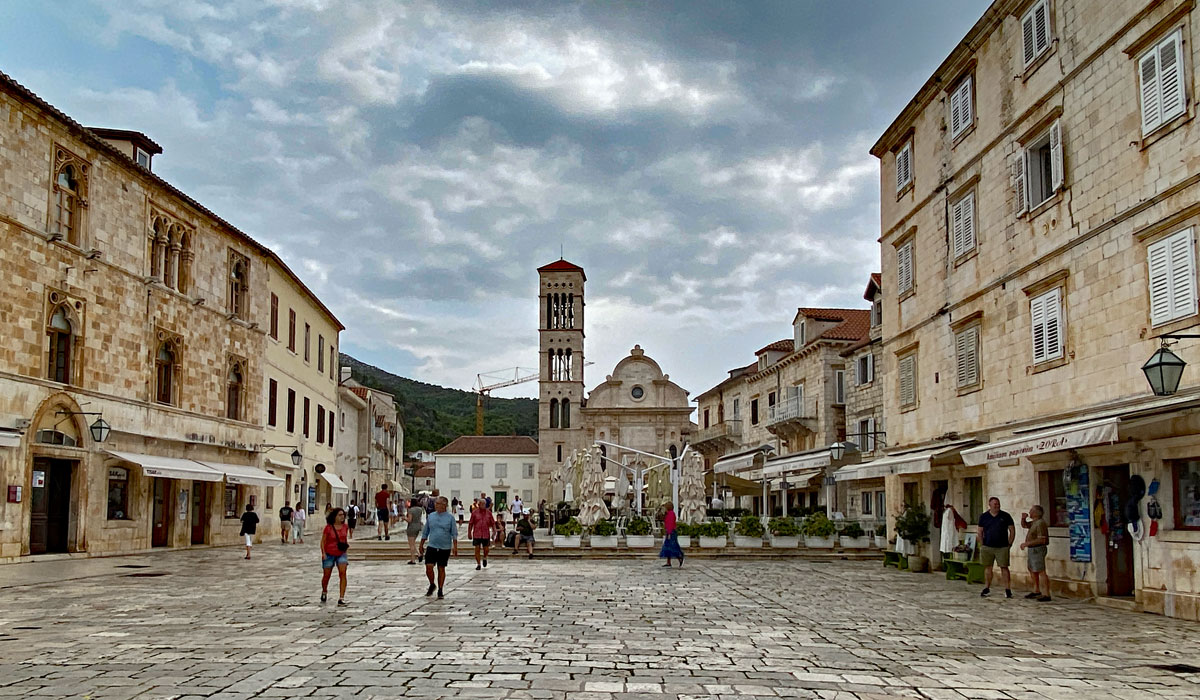
The next day we arrived at the island of Hvar on the Adriatic Sea. In the morning, we walked through the narrow streets of Hvar’s Old Town center to visit the main square and St. Stephen's Cathedral, built in the early 17th century on the site of an earlier 9th century church. After visiting its treasury and bell tower, both of which bear the mark of Venetian rule, we visited a Benedictine Monastery famous for its nuns who handcraft lace from agave and aloe thread.
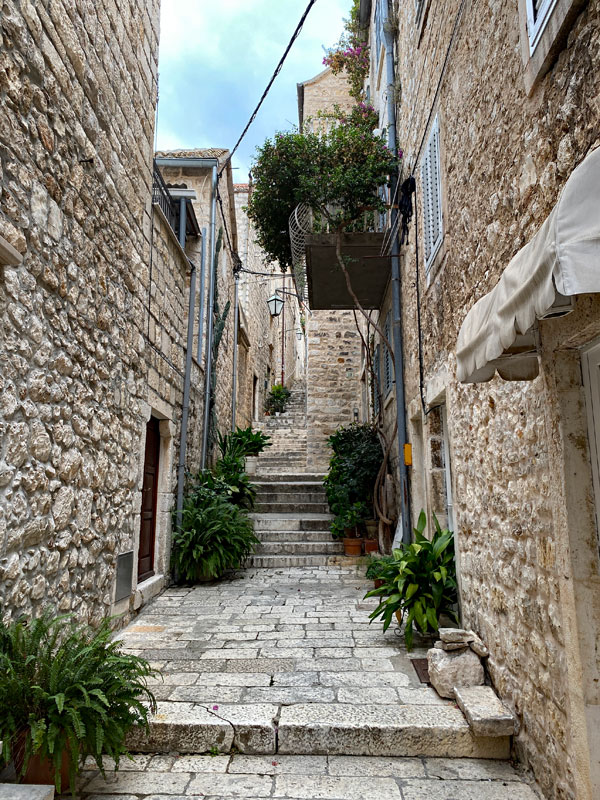
A narrow walkway in Hvar's Old Town
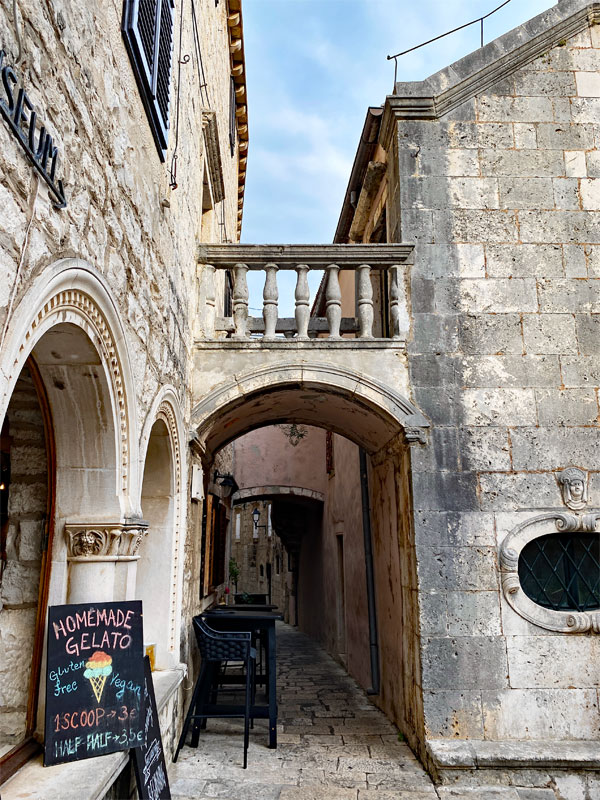
Winding street in Korcula
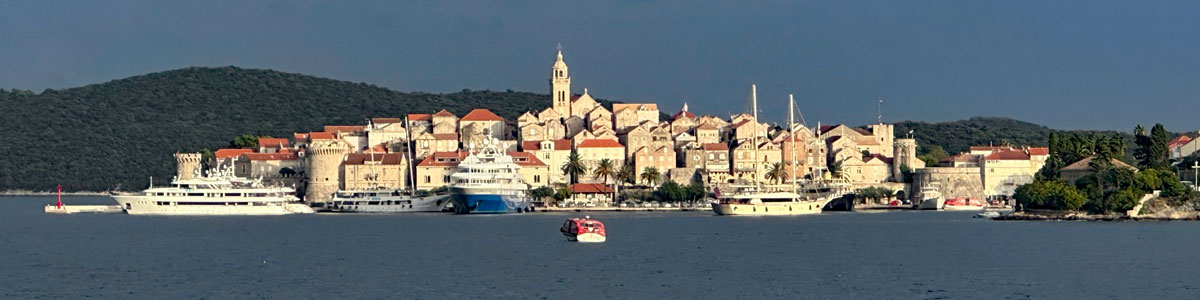
View of the island of Korcula from the sea
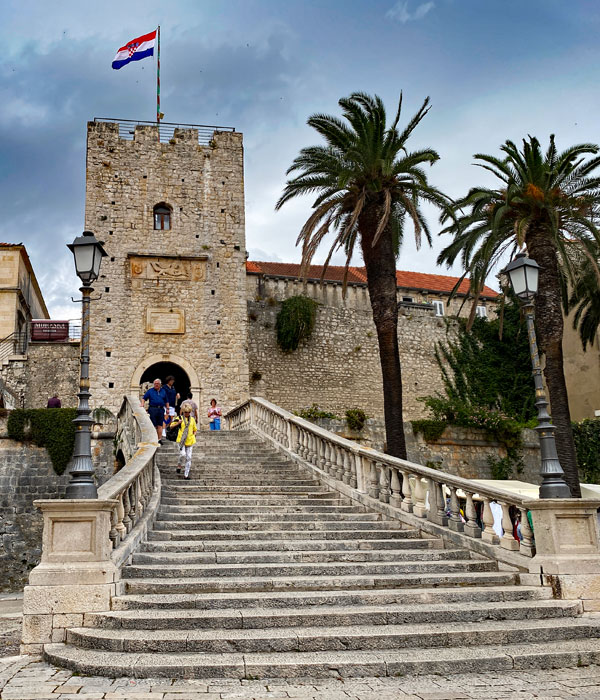
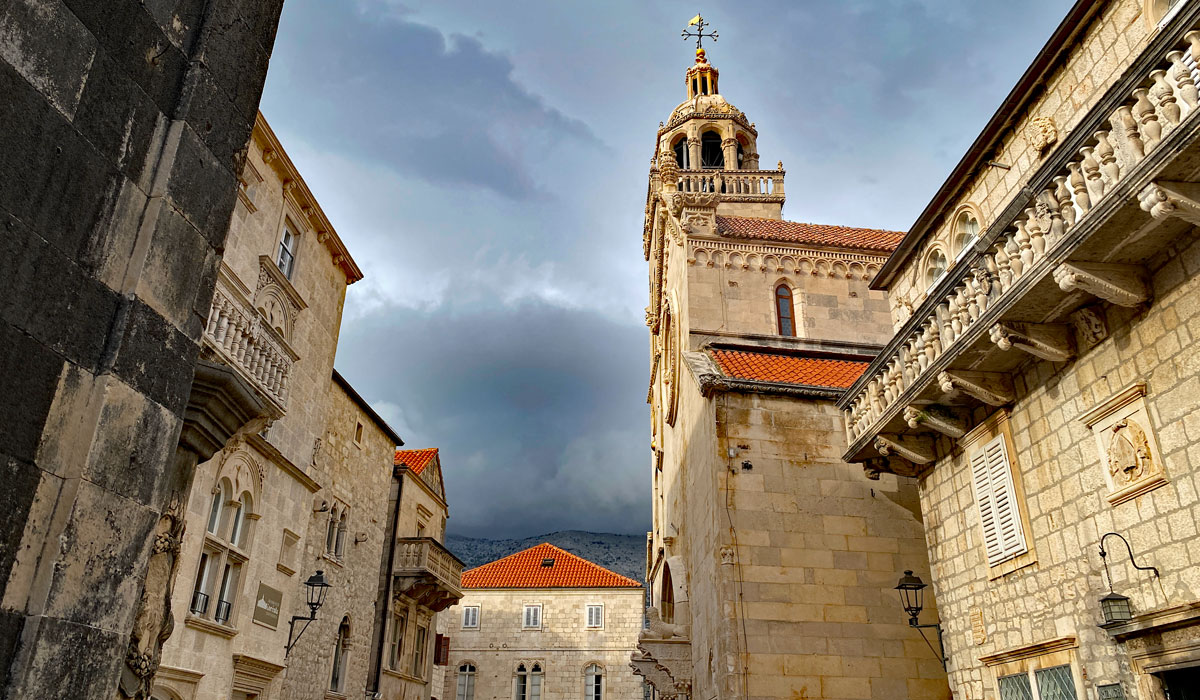
We then cruised to the island of Korcula. Its ancient, fortified town by the same name, rises from the water's edge on the protected east coast. The town is known for its narrow streets arranged in a herringbone pattern, allowing free circulation of air while protecting it against strong winds. There is a bas-relief with the winged lion of St. Mark at the entrance of the Land Gate, symbolizing the reign of the Venetian Republic. We also visited the 15th century Gothic-Renaissance-style St. Mark's Cathedral which contains a wealth of beautiful artifacts, including two paintings by Tintoretto, and the 14th century Abbey Treasury of St. Mark.
The seaside town of Hvar
Entrance to the fortified town on Korcula Island
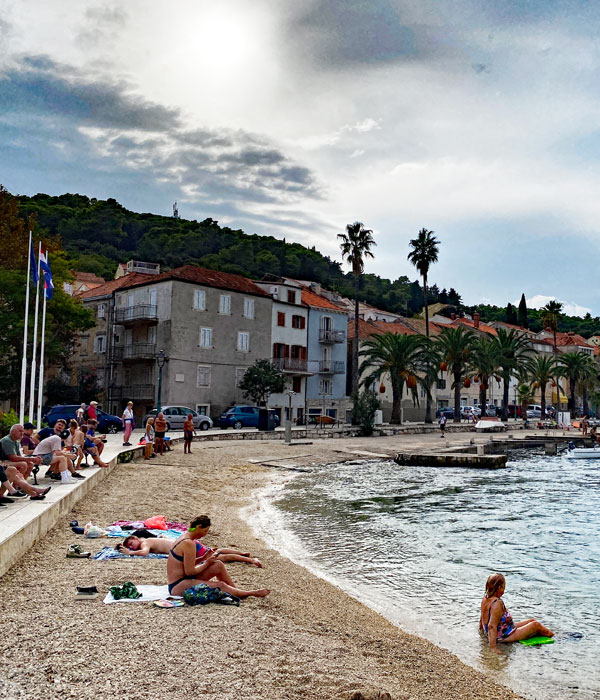
Bathers on the beach at Korcula Island
1 / 10
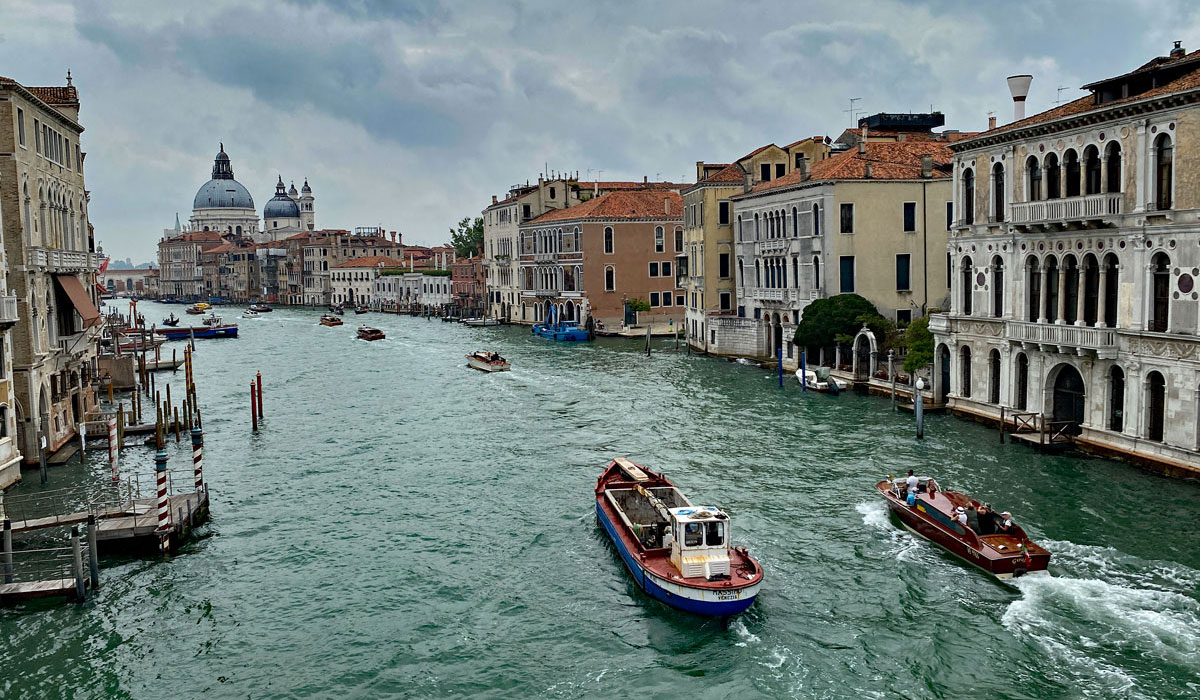
Looking down the Grand Canal from the Academy Bridge in Venice
2 / 10
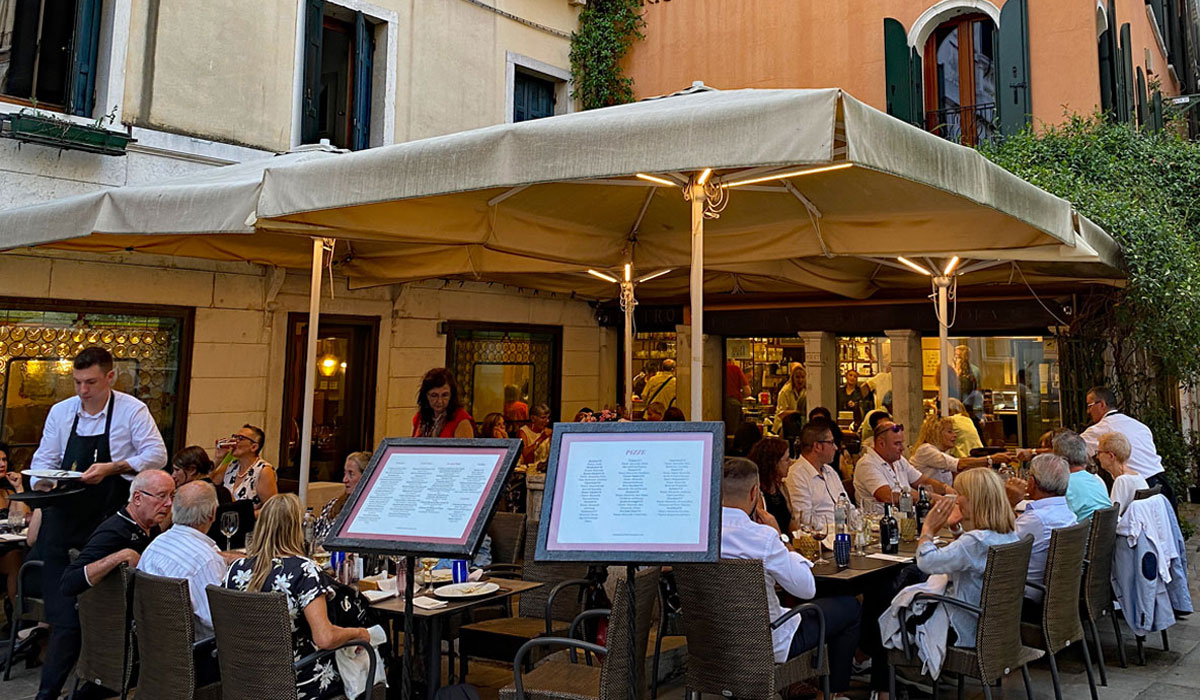
View of a cafe next to the Teatro La Fenice in Venice
3 / 10
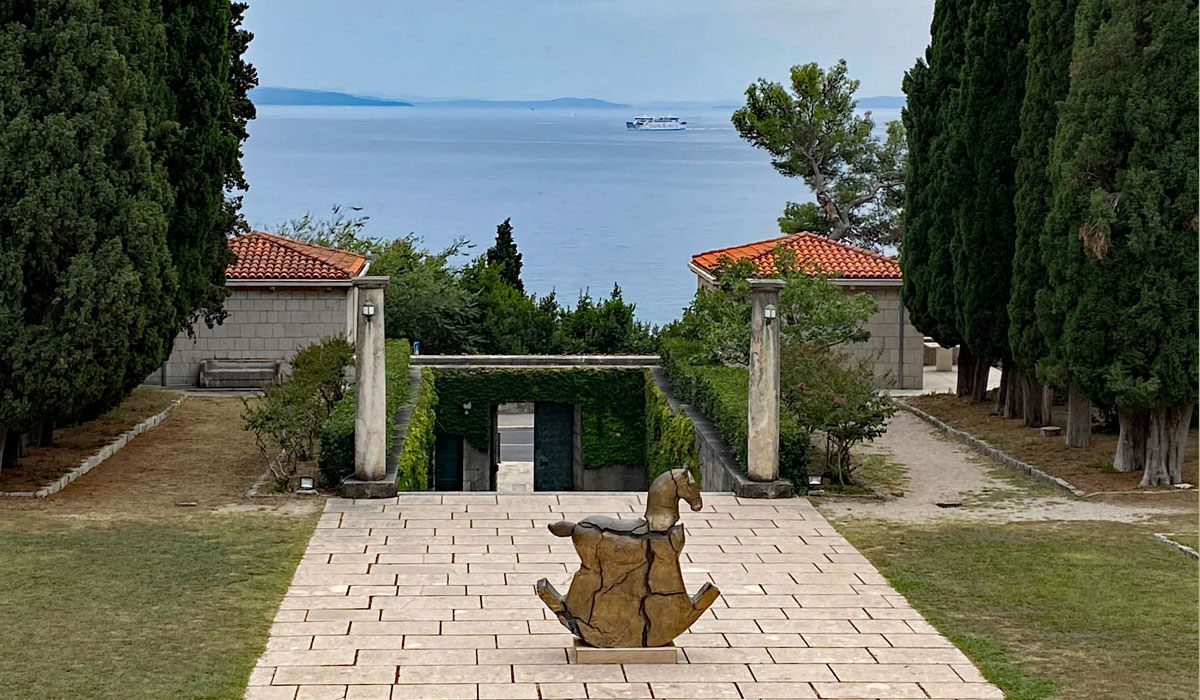
View of a sculpture by Hrvoje Dumancic from the entrance of the Mestrovic Gallery in Split
4 / 10
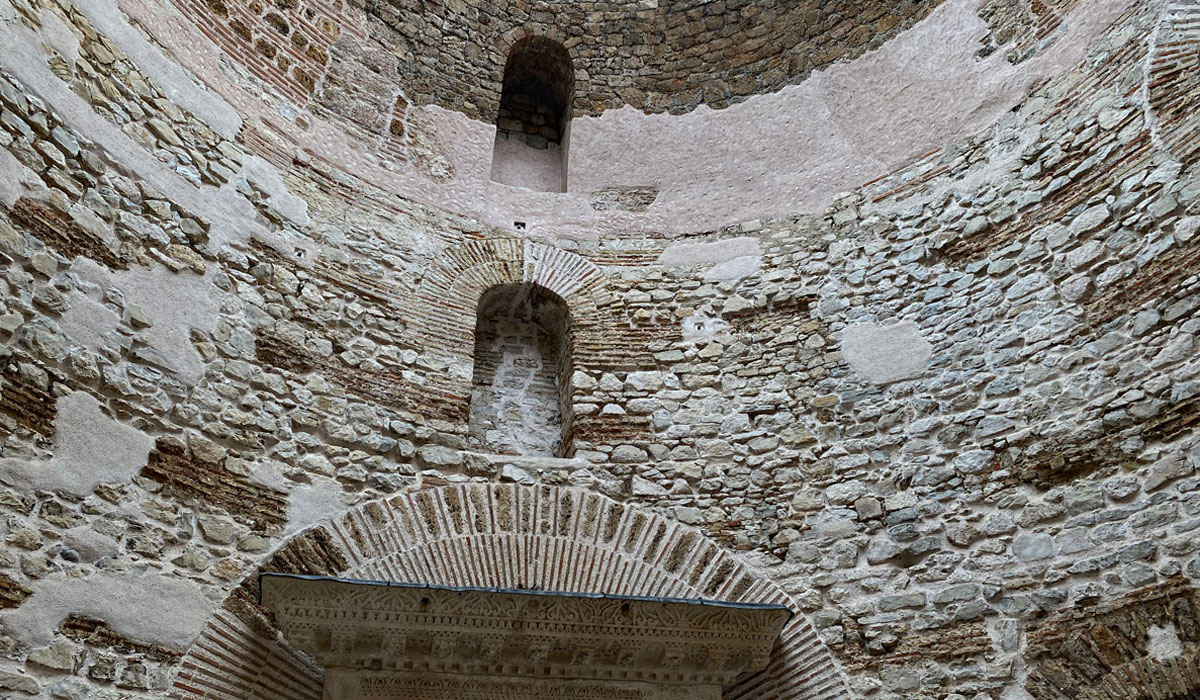
Stonework in Diocletian's Palace in Split
5 / 10
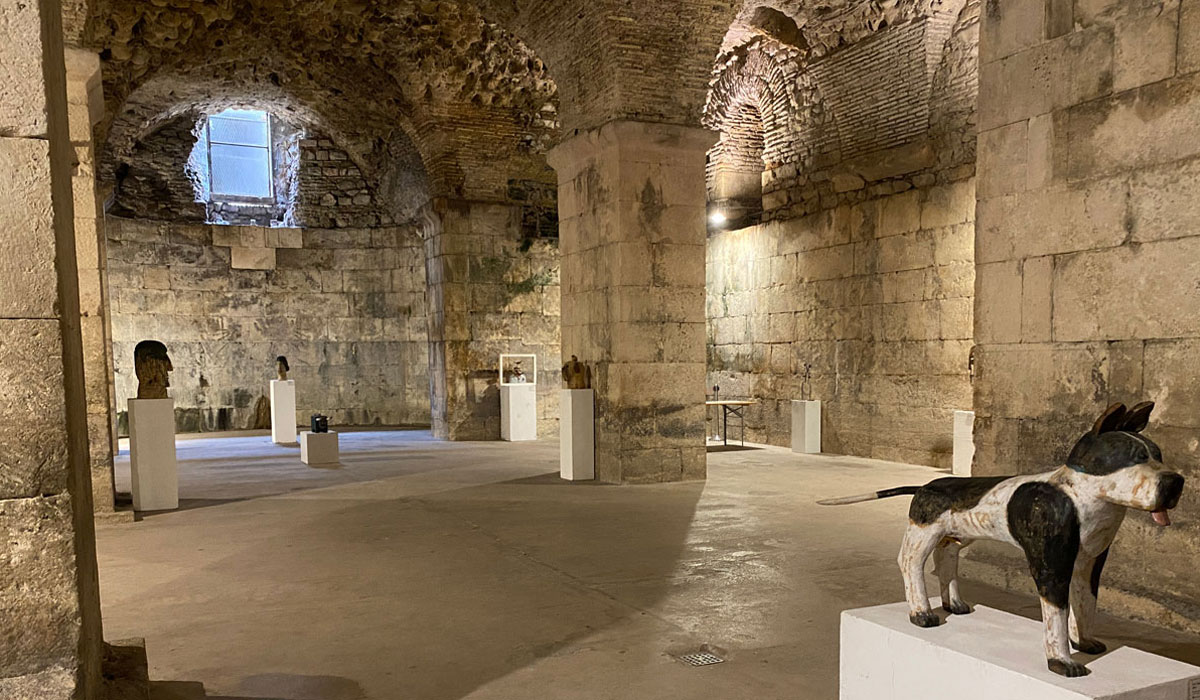
Art exhibit in one of the cellars of Diocletian's Palace
6 / 10
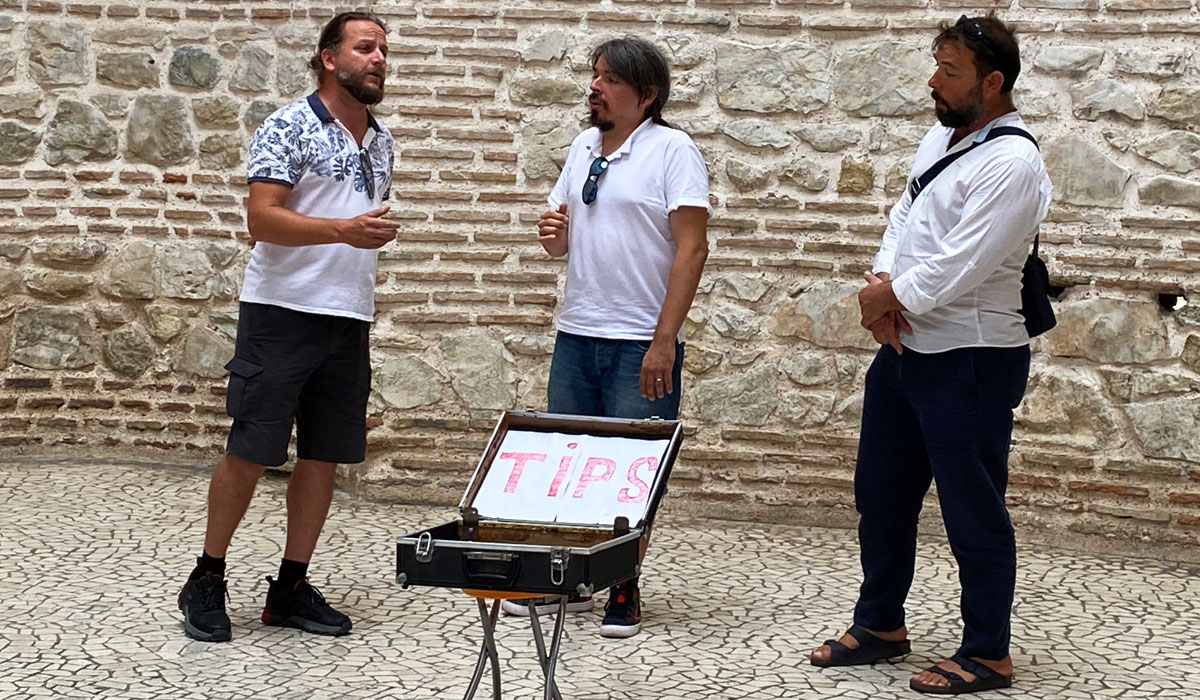
Musicians singing in Split
7 / 10
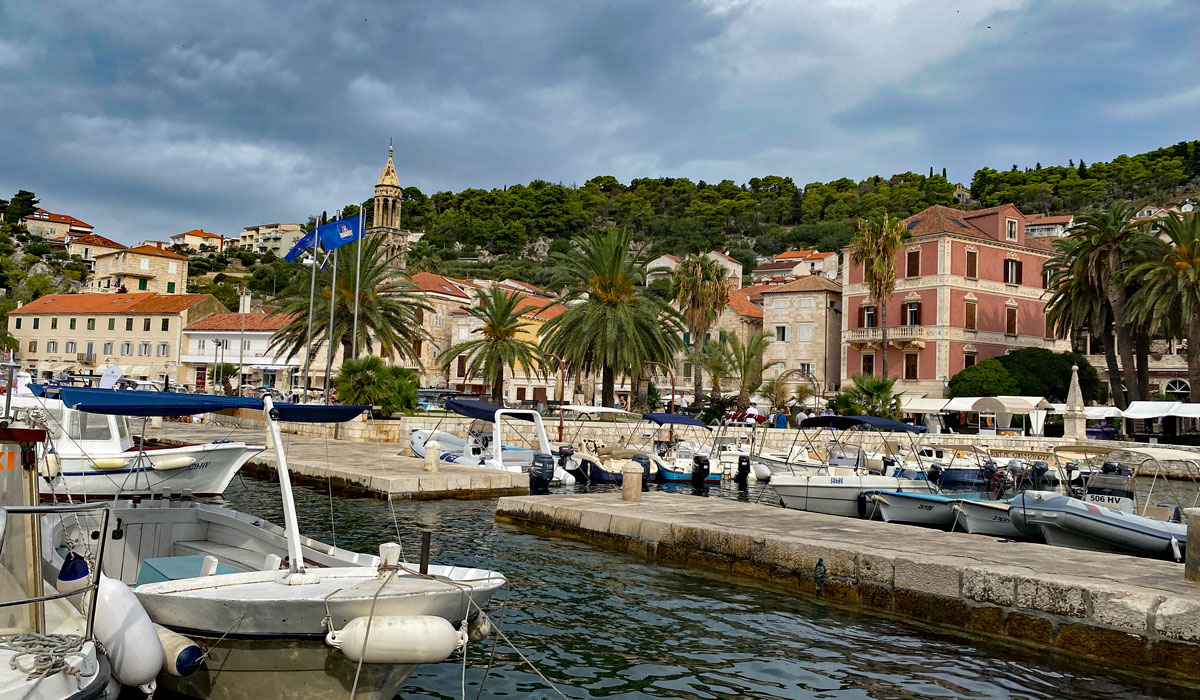
Arriving seaside in Hvar
8 / 10
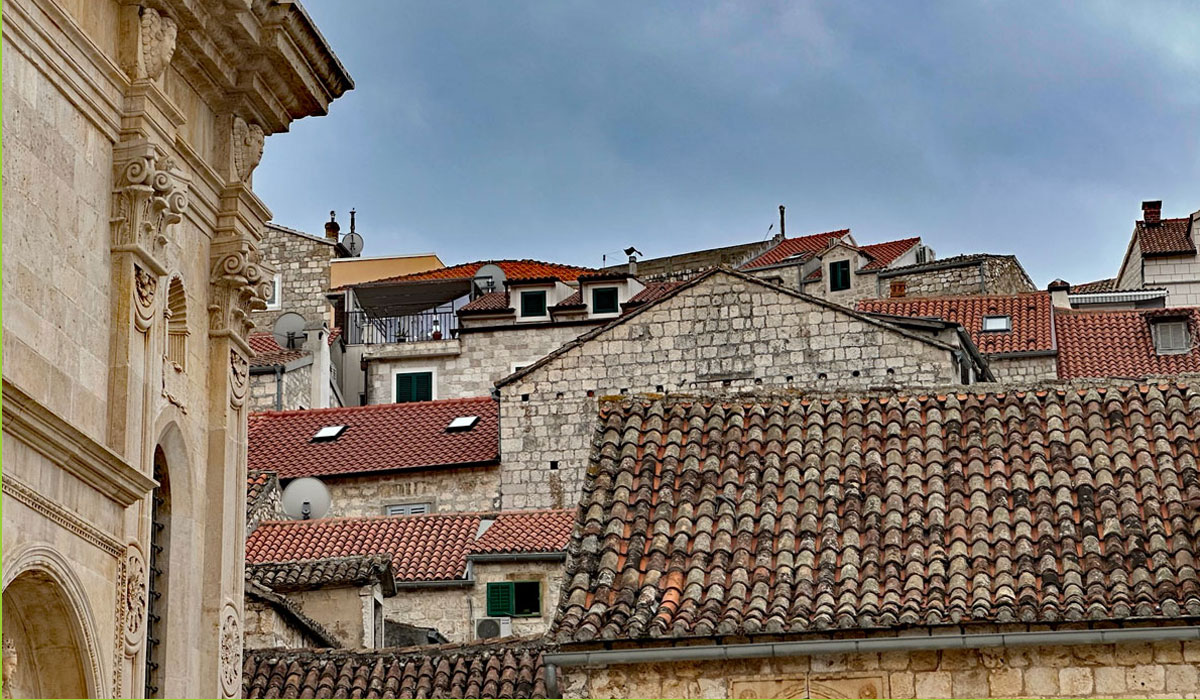
Tile rooftops in Hvar
9 / 10
Hvar's St. Stephan's Square, built in the 13th century
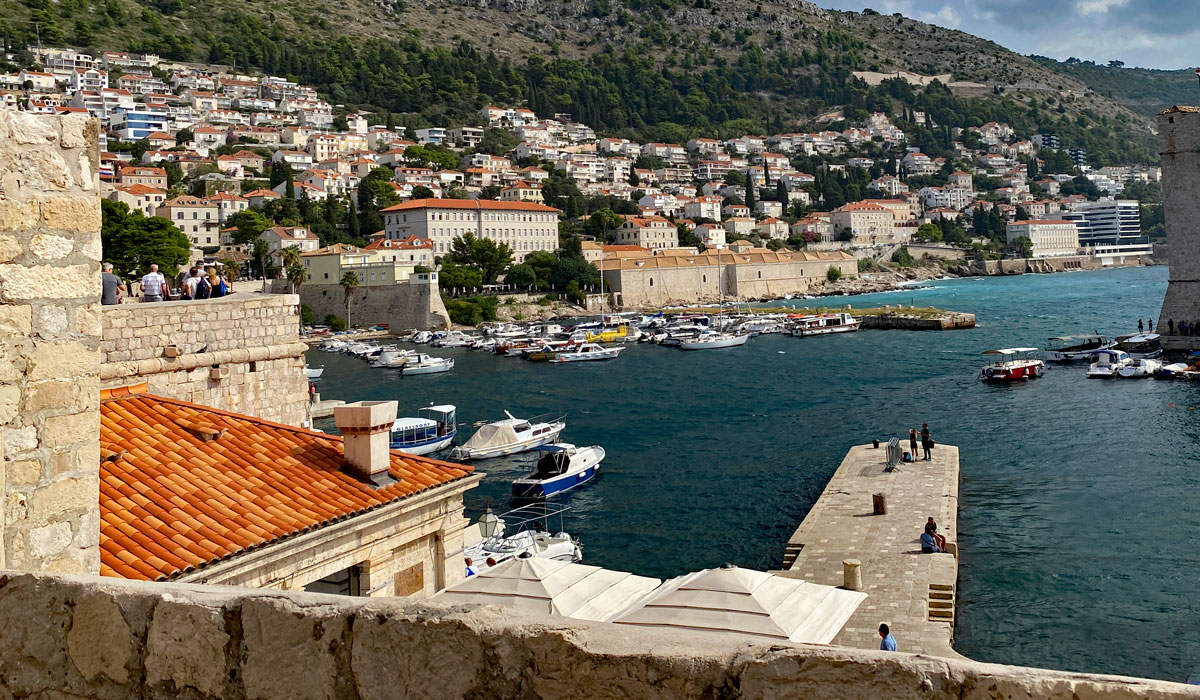
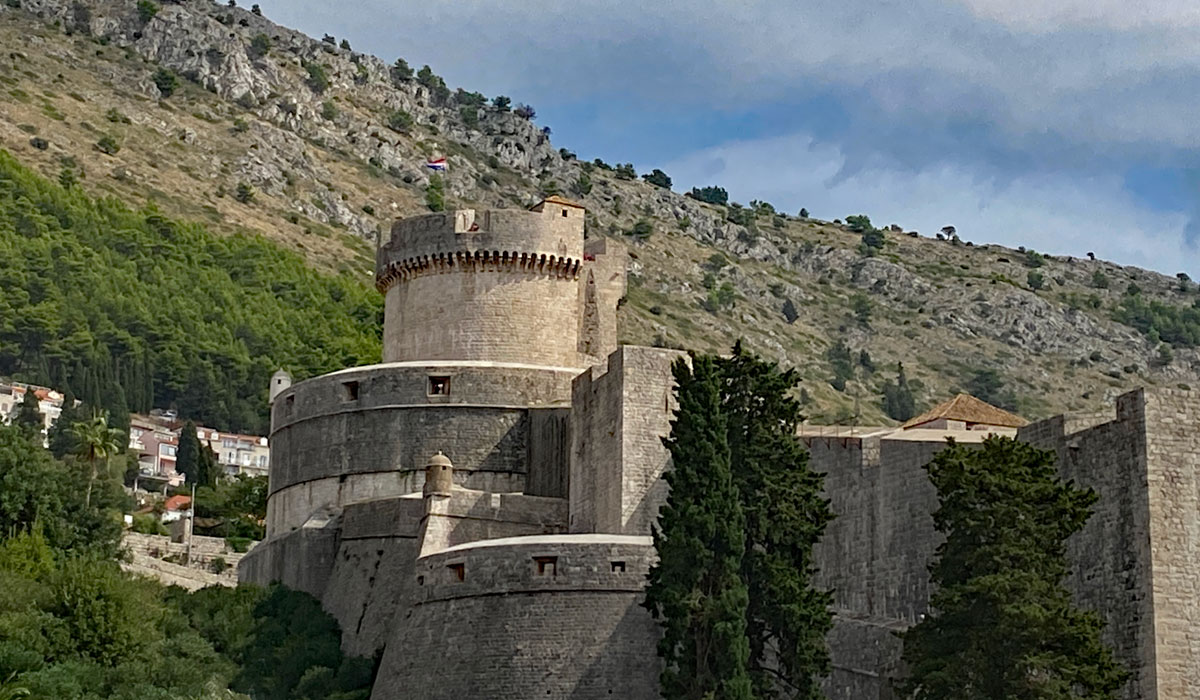
he next morning our ship arrived at the city of Dubrovnik, the “Pearl of the Adriatic,” and also a UNESCO World Heritage Site. This walled city became an important Mediterranean Sea power from the 13th century onwards. Although severely damaged by an earthquake in 1667, the city managed to preserve its spectacular Gothic, Renaissance, and Baroque churches, monasteries, palaces, and fountains. Today, four gates to the city, three forts, five bastions, and 14 square towers remain.
On daybreak of December 6, 1991, the Yugoslav army launched an all-out attack on Dubrovnik with heavy artillery, air strikes, and naval support. The walled city of Dubrovnik was surrounded for eight months and more than 60 percent of the buildings in the Old Town were badly damaged. Although it is difficult to believe today when you walk through the narrow streets of the Old Town, we could see the shrapnel holes left intact on the walls of the old palace, historical buildings, and the ramparts.
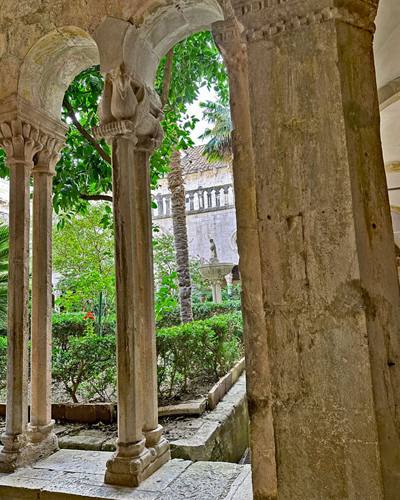
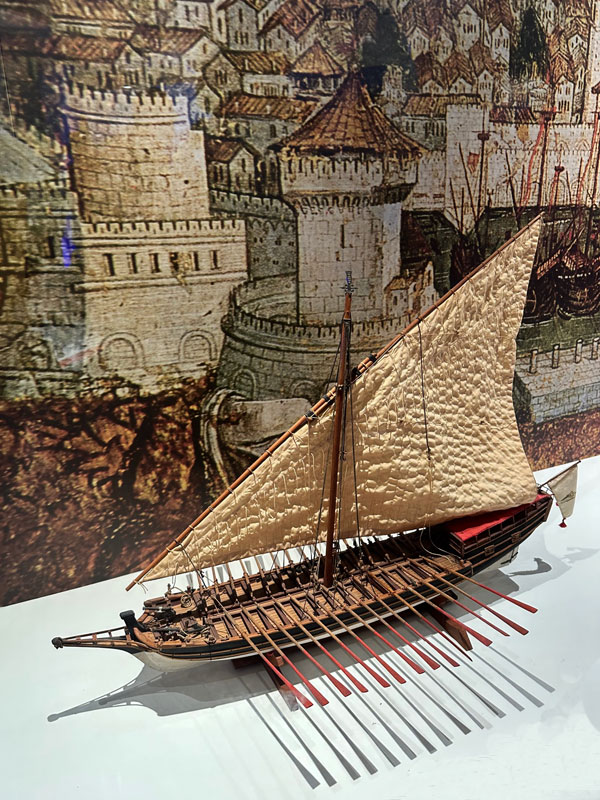
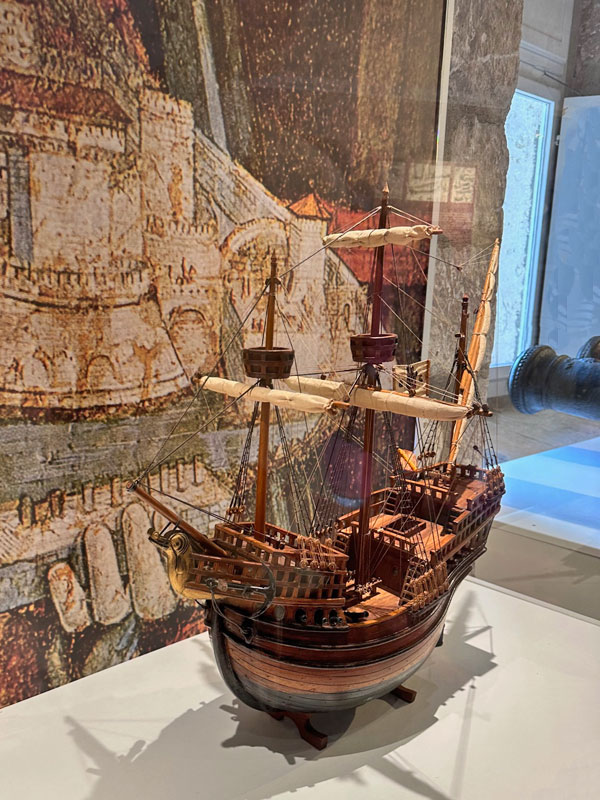
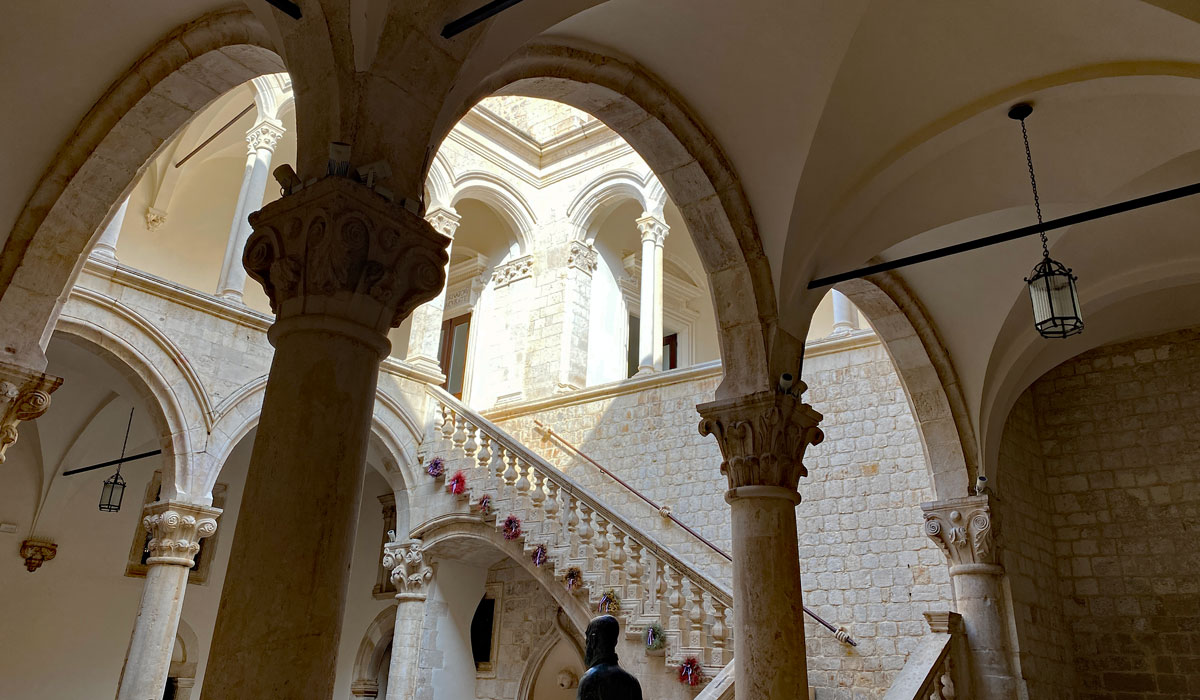
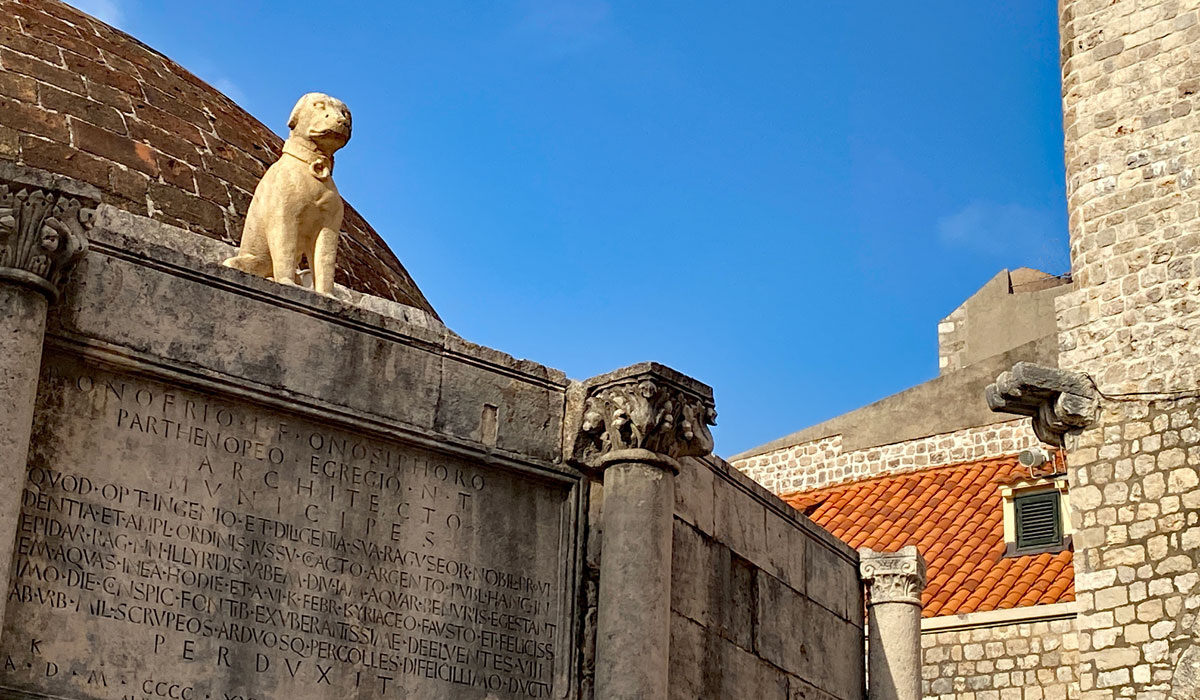
We entered through the Pile Gate to see the 15th-century Onoforio Fountain and visit the Franciscan Church and Monastery — an architectural masterpiece built in Romanesque style. It houses the oldest, working pharmacy in Europe, dating from the 14th century. Next, we visited the ornate 15th century Rector’s Palace. Originally built for the rector who governed Dubrovnik, the palace is now a museum with artfully restored rooms, figures in ceremonial dress, and coins that evoke the history of the city. From there, we walked over part of the old city walls for a visit to the Maritime Museum, illustrating the naval history of Dubrovnik and the surrounding region. Among its displays are Phoenician, Greek, and Venetian ship models, as well as flags, cannons, and other weapons, figureheads, nautical instruments, and log books.
Mid-14th century cloister in the Franciscan Monastery in Dubrovnik
The oldest pharmacy in Europe in the Franciscan Monastery
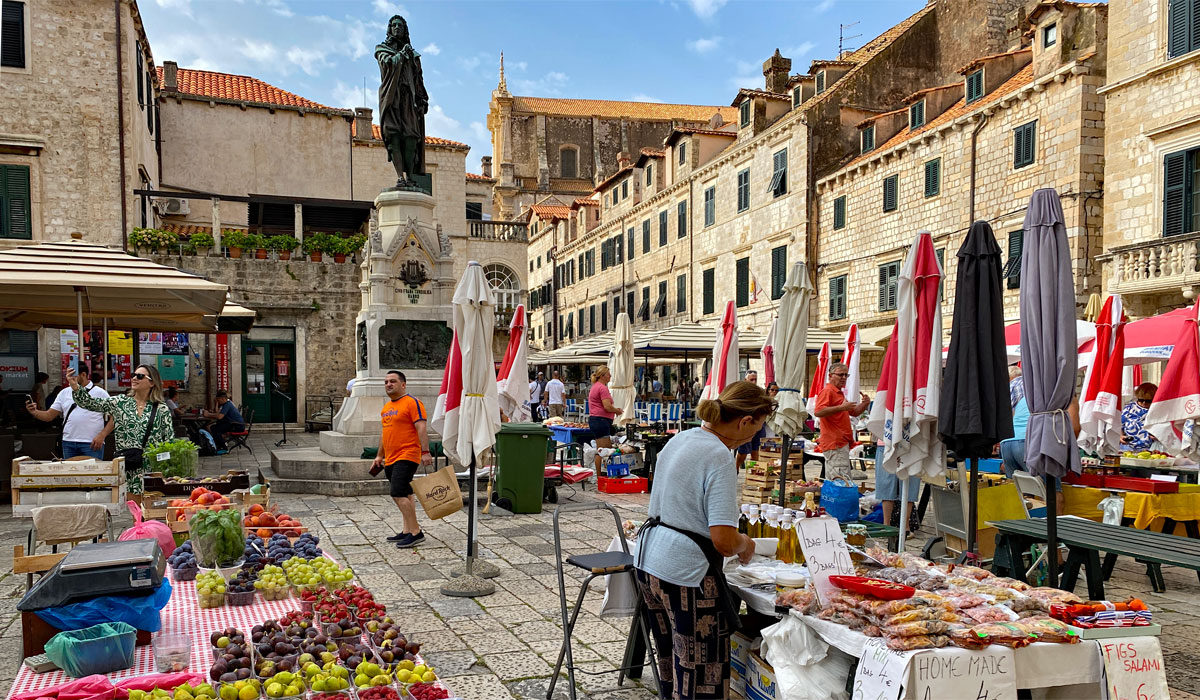
Market in Dubrovnik's Old Town
A Venetian ship model in the Maritime Museum
A 16th century ship in the Maritime Museum
1 / 7
View of Dubrovnik's harbour from the top of the Old City Wall
2 / 7
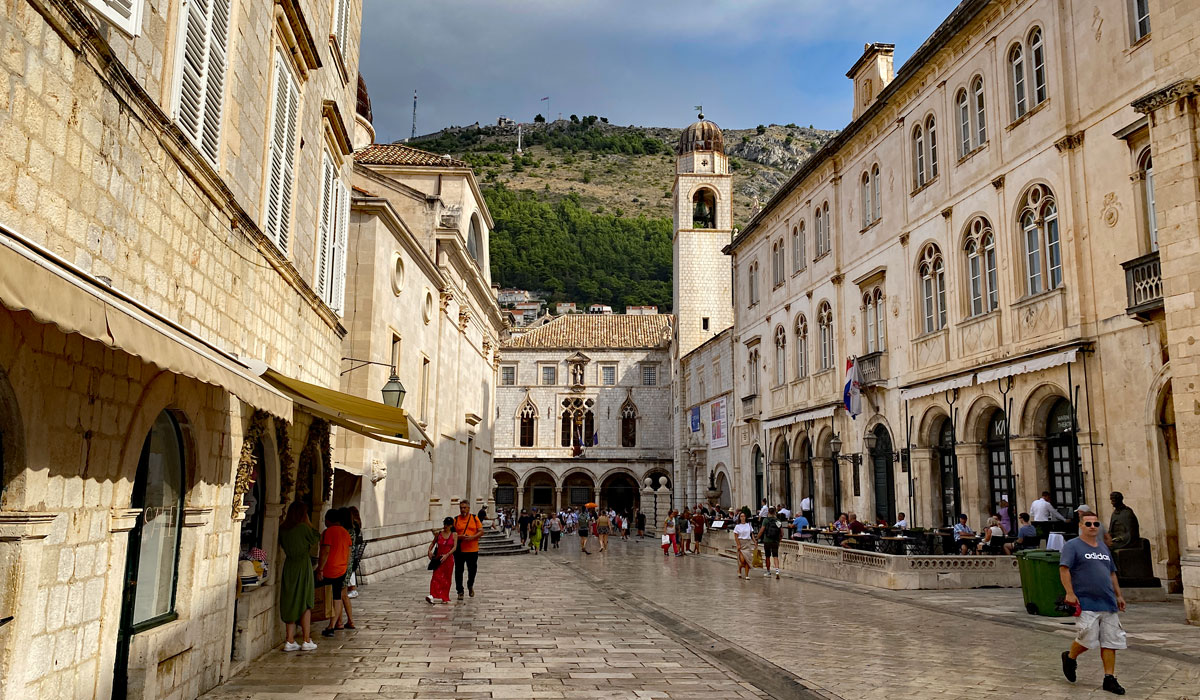
Main pedestrian street in Dubrovnik's Old Town
3 / 7
A market in Dubrovnik
4 / 7
The entrance to the Rector's Palace, built in 1244 and now a museum
5 / 7
Dubrovnik's water dog, a guardian and protector of the values of Republic, adorns the Great Onofrio Fountain
6 / 7
View of the fortified Old Town in Dubrovnik
7 / 7
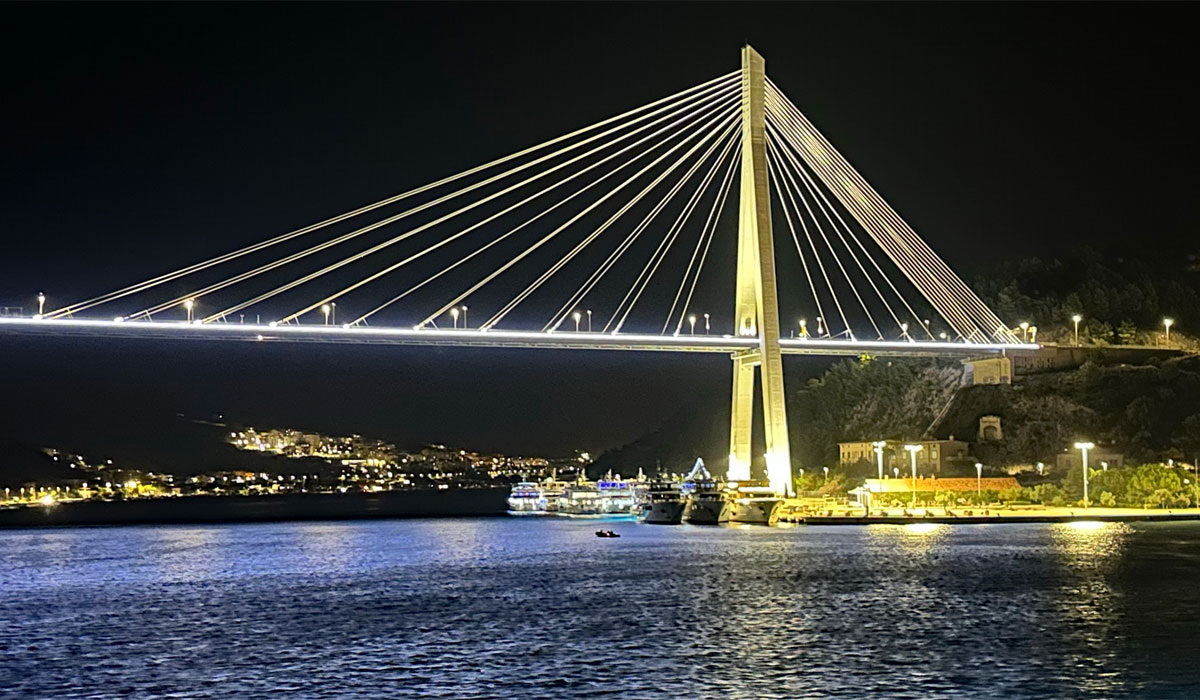
The 1,700 foot long Franjo Tudjmann cable-stayed bridge near Dubrovnik
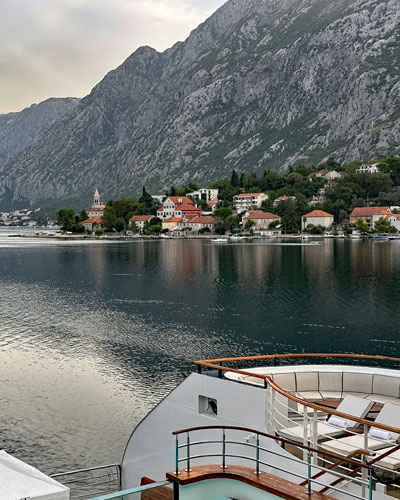
We then cruised the Adriatic to the Balkan country of Montenegro, stopping at the historical walled town of Kotor, another UNESCO World Heritage Site. An important artistic and commercial center in the Middle Ages with its own famous schools of masonry and iconography, the town fell under the rule of the Republic of Venice between 1420 and 1797 — leaving a permanent imprint on its architecture. While a large part of Kotor was damaged during the 1979 earthquake, it is fully restored today and stands as one of the best preserved fortified medieval towns in the Mediterranean. A highlight was a visit to the St. Tryphon Cathedral, a monument of Roman culture and one of the most recognizable icons of the town. Named after Kotor's patron saint, the cathedral was built in 1166 and contains many frescoes and a treasury of jewels.
Approaching Kotor, Montenegro
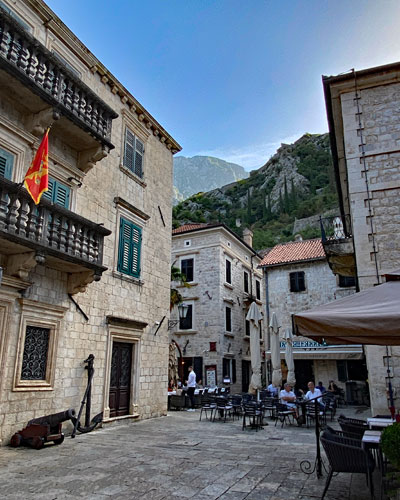
The main square in Kotor's Old Town
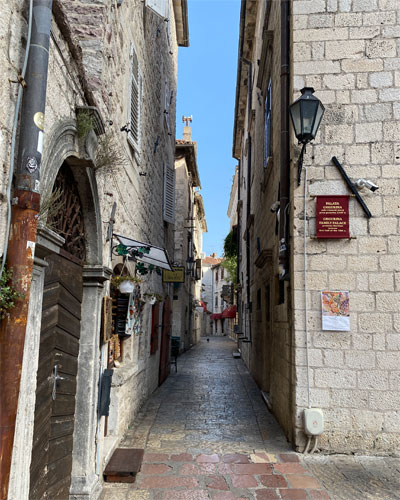
Typical narrow street in Kotor's Old Town
Corfu, Greece
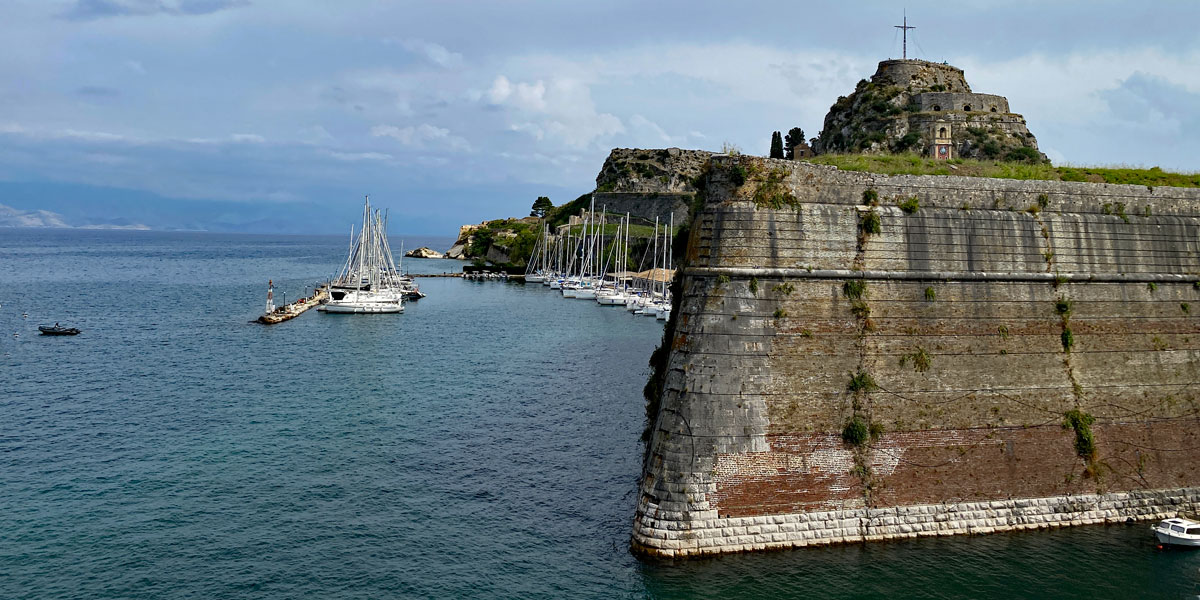
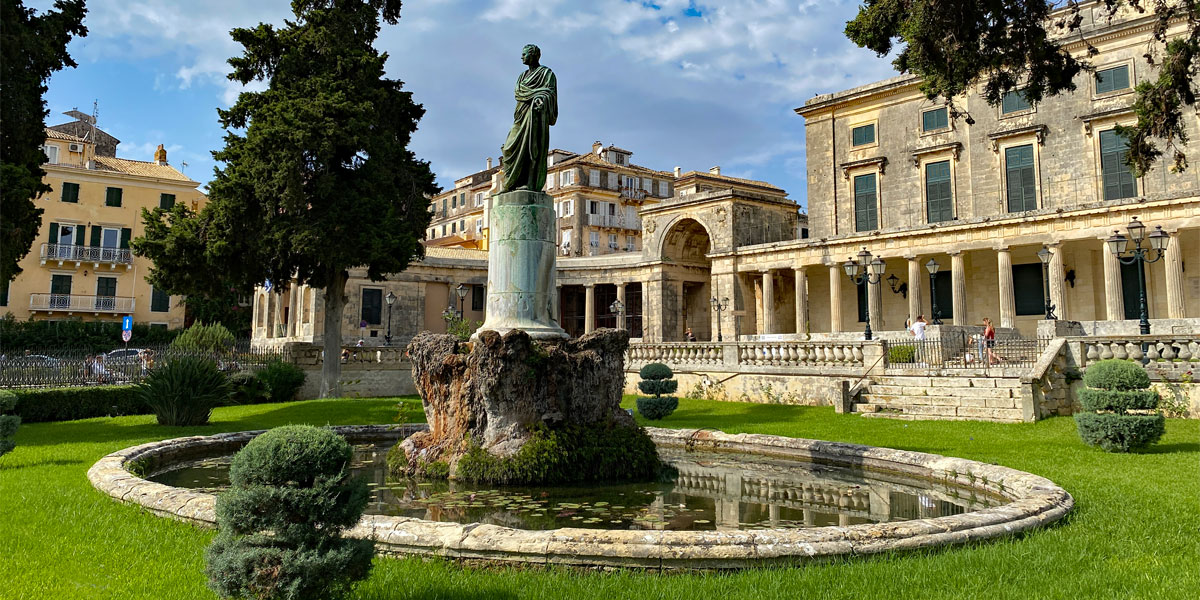
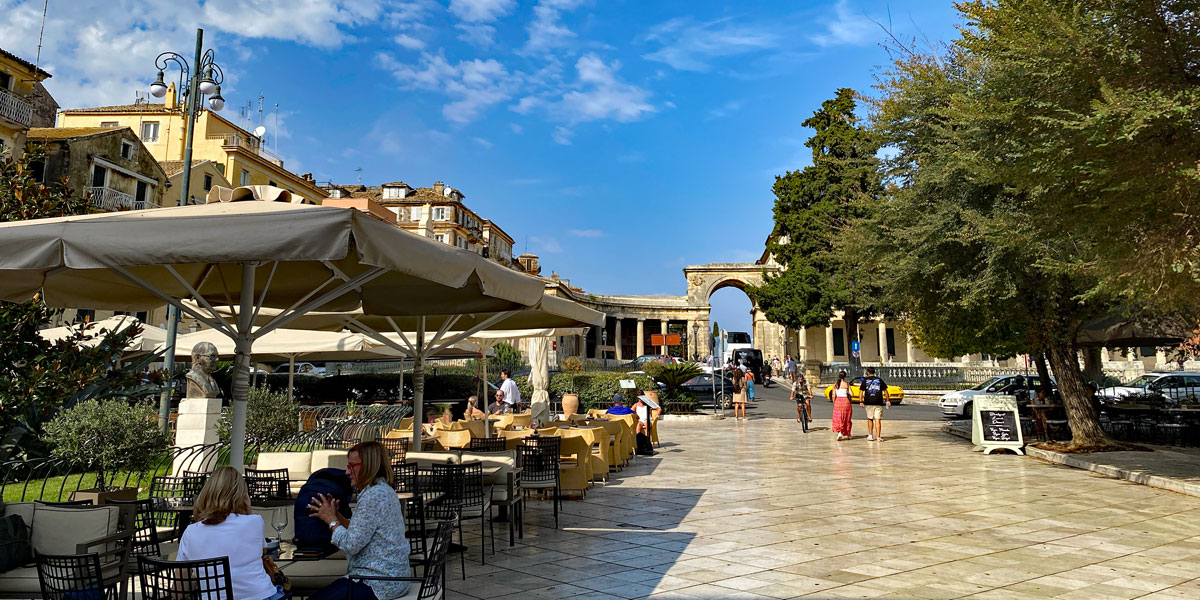
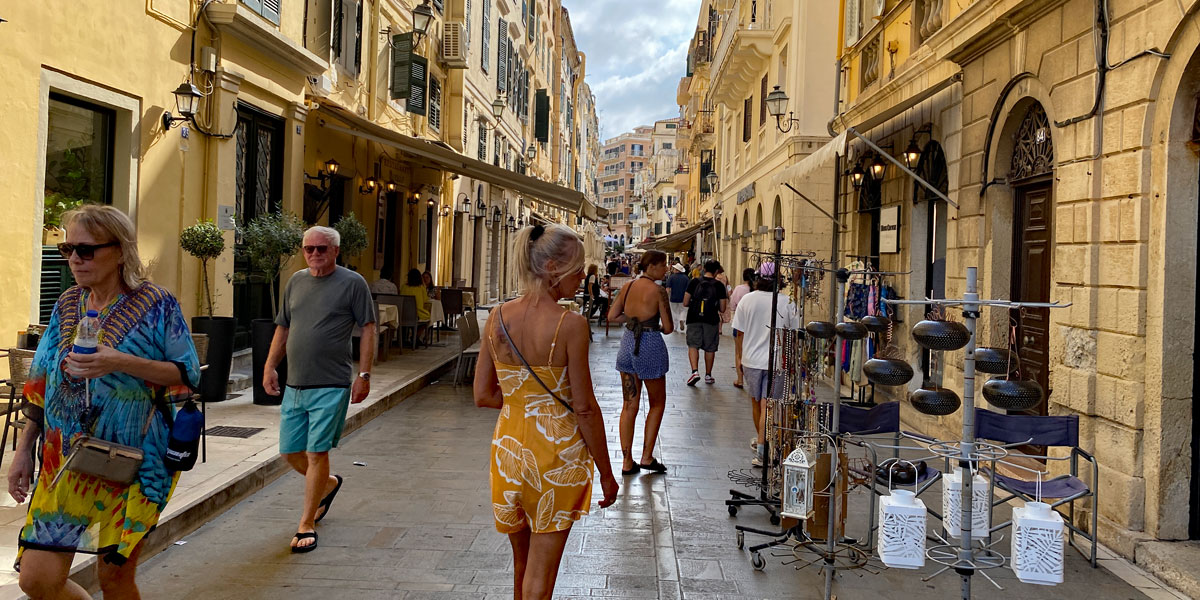
Our next stop was to the Greek island of Corfu, located off the western coasts of Albania and Greece. We walked through the Old Town and its fortifications and visited the Palace of St. Michael and St. George, one of Greece's first neoclassical buildings. Corfu's historical center includes the Venetian quarters of the labyrinthine Campiello medieval district; an impressive Town Hall, once a 17th century Venetian theater; and the 16th century St. Spyridon Church.
Itea, Greece and the Corinth Canal
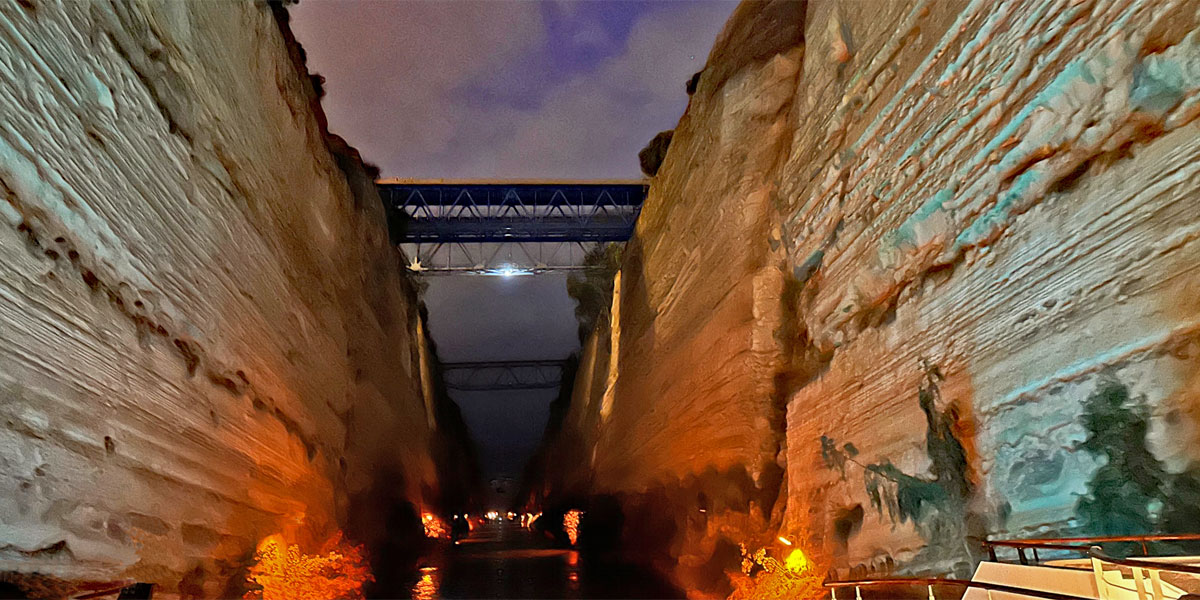
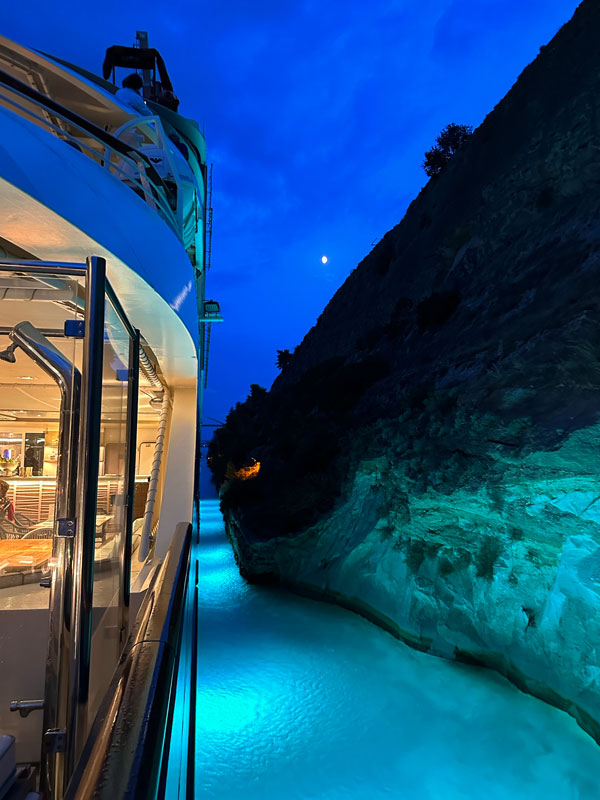
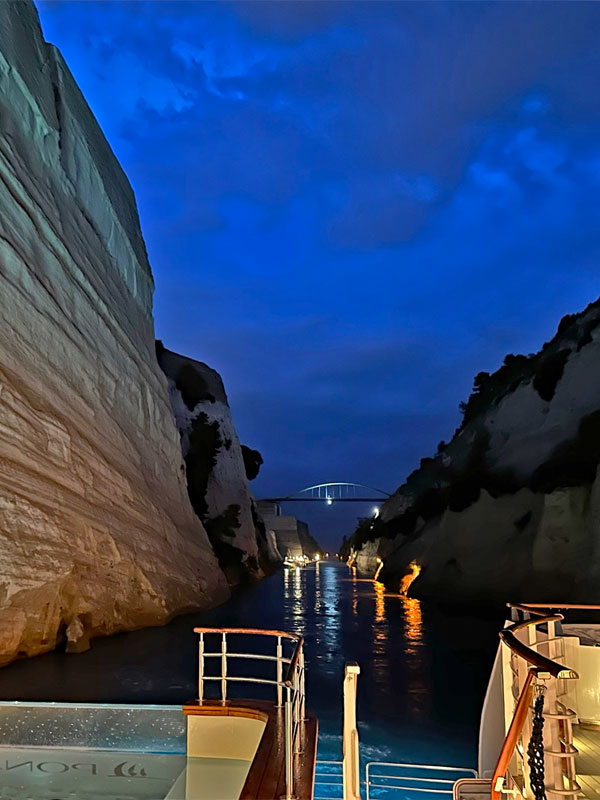
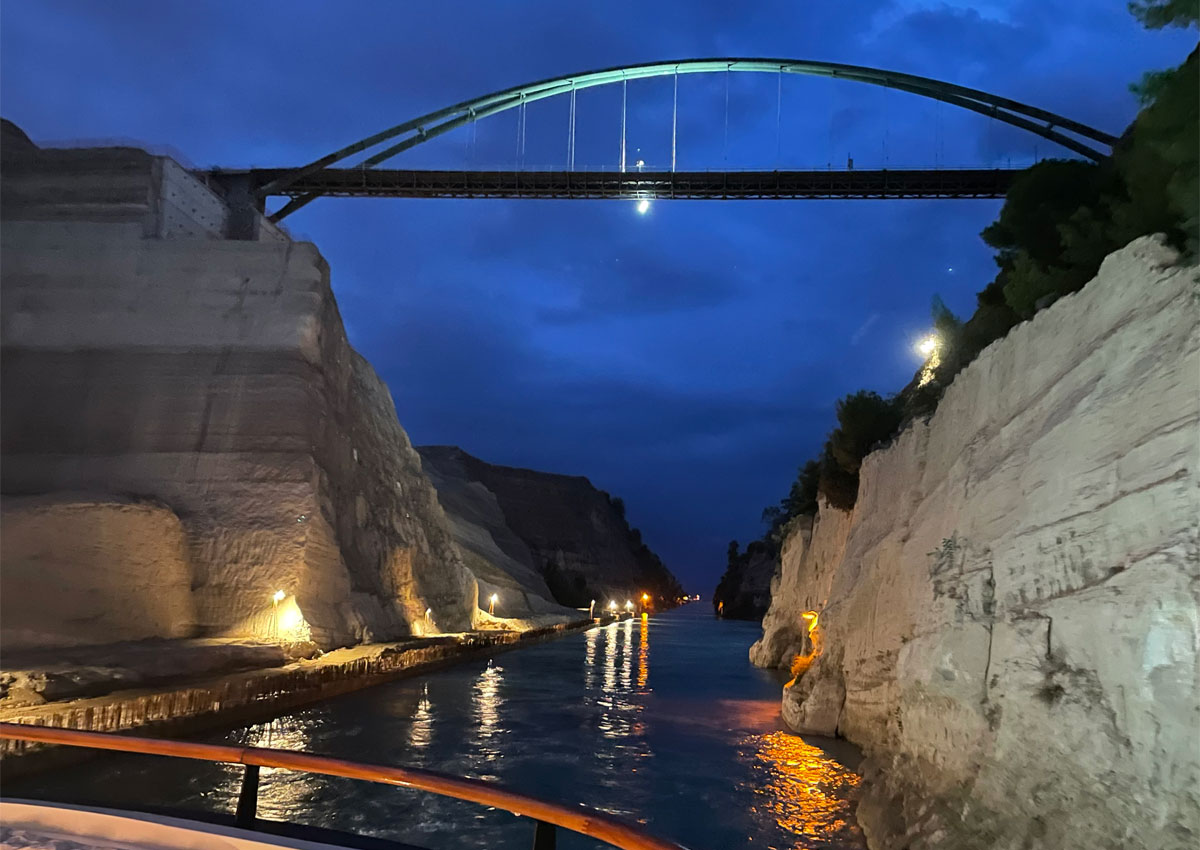
The next day the ship arrived in the small port town of Itea, situated on the north coast of the Gulf of Corinth, in preparation for entering the Corinth Canal. A tidal waterway that cuts through the Isthmus of Corinth in Greece, the Corinth Canal is an infrastructure achievement that has been at least 2,500 years in the making. It was first crossed by boats in 600 B.C. when Periander built a ship railway, with small boats being carried on wheeled cradles. Work on the canal as we know it today began in the late 19th century, creating a maritime hub that has since transformed navigation in the region. Due to high winds, we were not able to navigate the narrow walls of the Corinth Canal until the evening.
1 / 10
The Old Fortress on a rocky peninsula in Corfu, constructed by the Venetians in the 15th century
2 / 10
The Palace of St. Michael and St. George built in 1820
3 / 10
Entering Corfu's Old Town
4 / 10
Shoppers in Corfu's Old Town
5 / 10
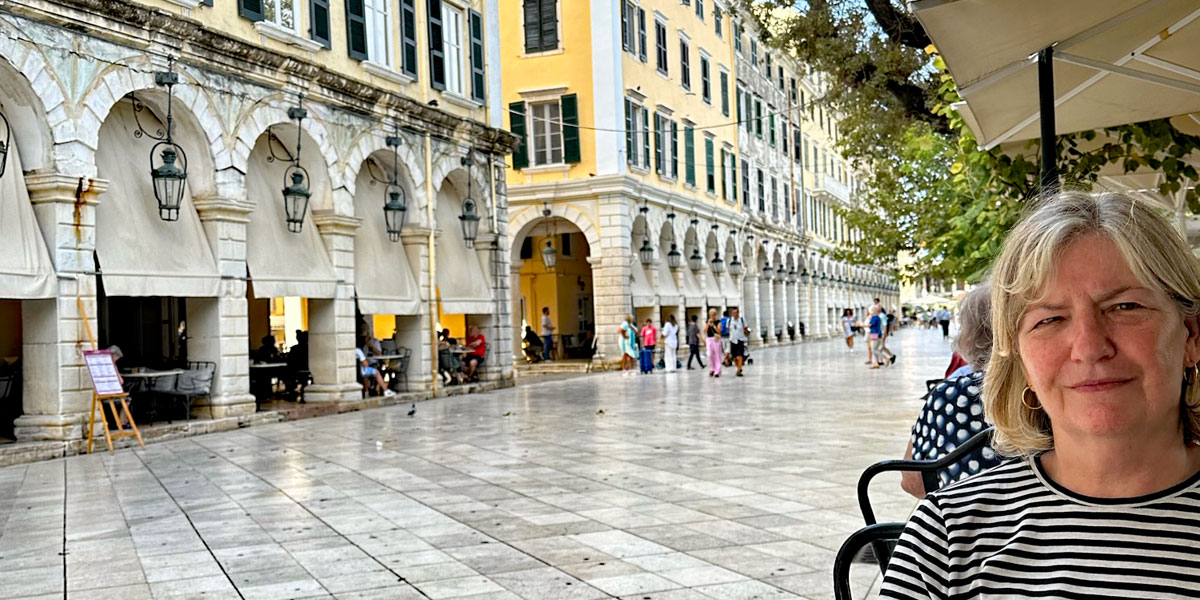
Sitting at a cafe in Corfu's Spianada Square
6 / 10
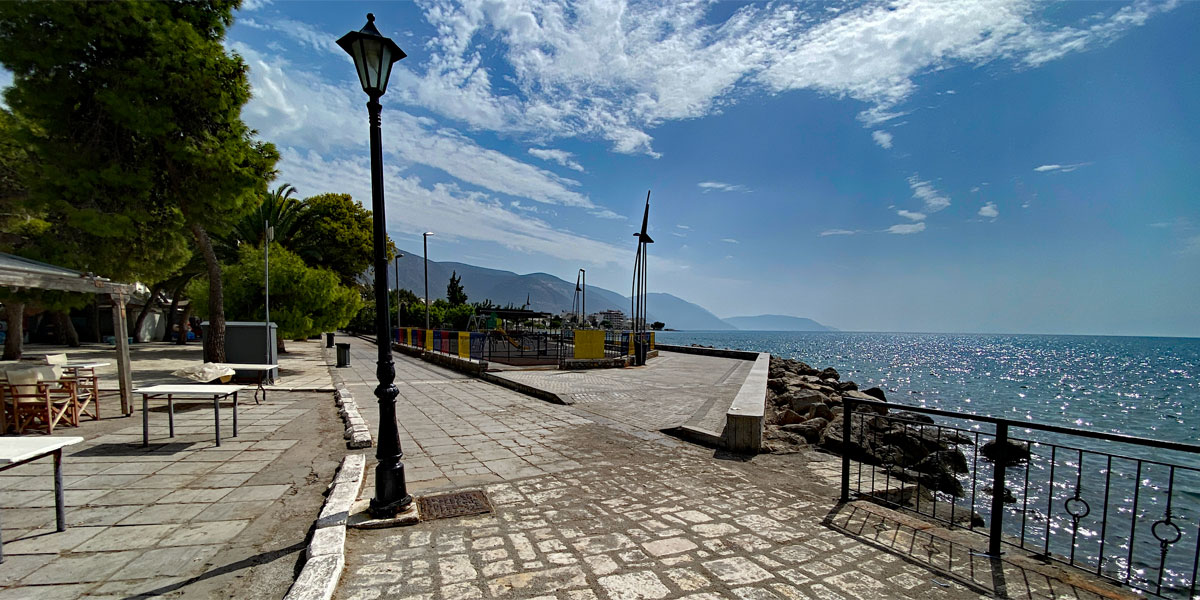
The seaside promenade in Itea, Greece
7 / 10
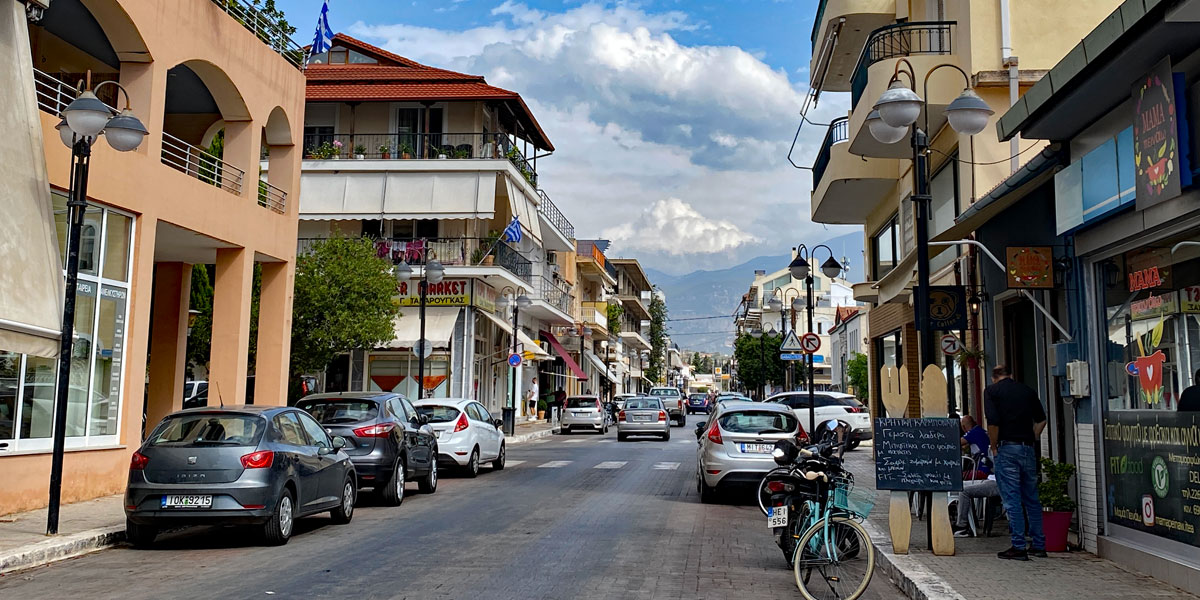
Walking through the quiet streets of Itea, Greece
8 / 10
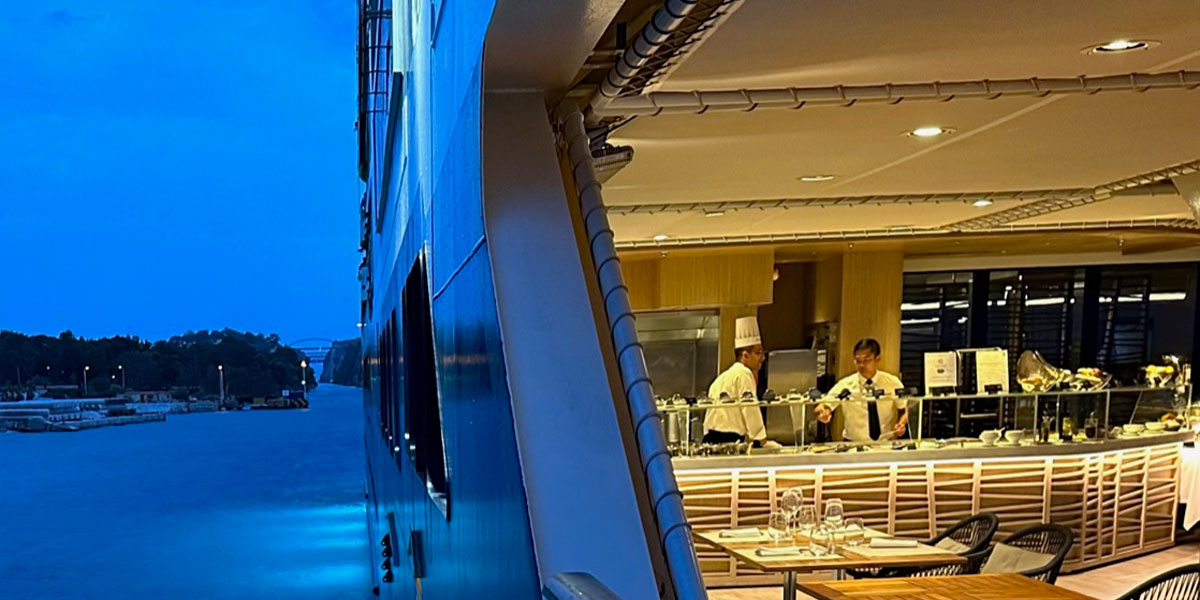
Our ship entering the Corinth Canal
9 / 10
Looking back between the dramatic walls of the Corinth Canal
Looking back through the Corinth Canal from the stern of our ship (Photo credit: Jean Mah)
Arriving in Athens
On our final day, we arrived at the Port of Piraeus, the chief sea port of Athens. Located on the Saronic Gulf on the western coast of the Aegean Sea, it is the largest port in Greece and one of the largest in Europe. From there, we disembarked our ship and proceeded to the airport.

 In 2023, Peter and I celebrated our wedding anniversary visiting the Dalmatian Coast. Fifty years ago, we spent part of our honeymoon camping in Yugoslavia near the town of Poreč on the coast of the Istrian Peninsula. This area is now Croatia since it declared its independence from Yugoslavia in 1991. Geographically, the Dalmatian Coast extends from the city of Zadar in the north to the border with Montenegro in the south, and includes the scattering of islands and islets spread out over the eastern Adriatic Sea. The Dalmatian Coast has a rich history of art and architecture as military powers — Romans, Illyrians, Venetians and others — battled for control over the Adriatic Sea.
 After spending a few days in Venice, we boarded a small ship which took us to the Croatian ports of Split, Hvar, Korcula, and Dubrovnik, as well as Kotor, Montenegro and the island of Corfu. We ended our trip cruising through the Corinth Canal bound for Athens.