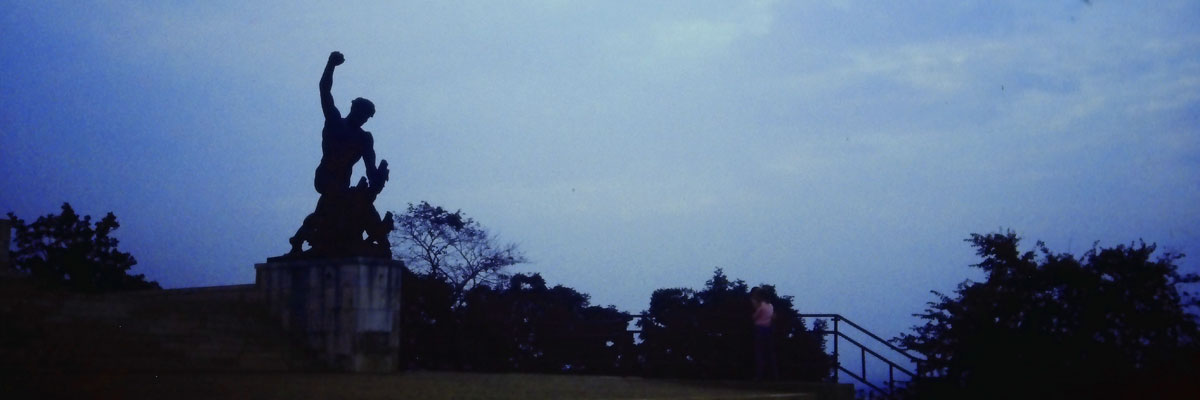
Note that these photos were taken with a film camera so all images were scanned from slides or printed photos.
In the fall of 1984, I was invited to present a paper at a meeting of the International Union of Architects Public Health Group which was held in Budapest, Hungary. Since Peter had a business trip to France at the same time, I joined him in Paris before flying to Budapest via Malev Airlines — the national airline of Hungary and one of the few flights available. Today is hard to imagine that, at that time, the smoking section was on the right side of the plane and non-smoking just across the aisle on the left side of the plane.
Arriving late at night, I took a taxi to my hotel. The next day, I spent some time walking around the city. Because I like to take photos of historic building details and street scenes, rather than the buildings and sculptures at designated tourist sites, I was soon stopped by the police and questioned until it was obvious that I was a tourist. They directed me to only take photos of the key monuments.
I had a large map of the city to guide me. I was surprised that whenever I pulled out the map and unfolded it, I was surrounded by a group of locals offering to help me. Since the younger people generally spoke English and the older people spoke German, I had little problem communicating with them. The Hungarian people that I encountered were extremely welcoming.
1 / 10
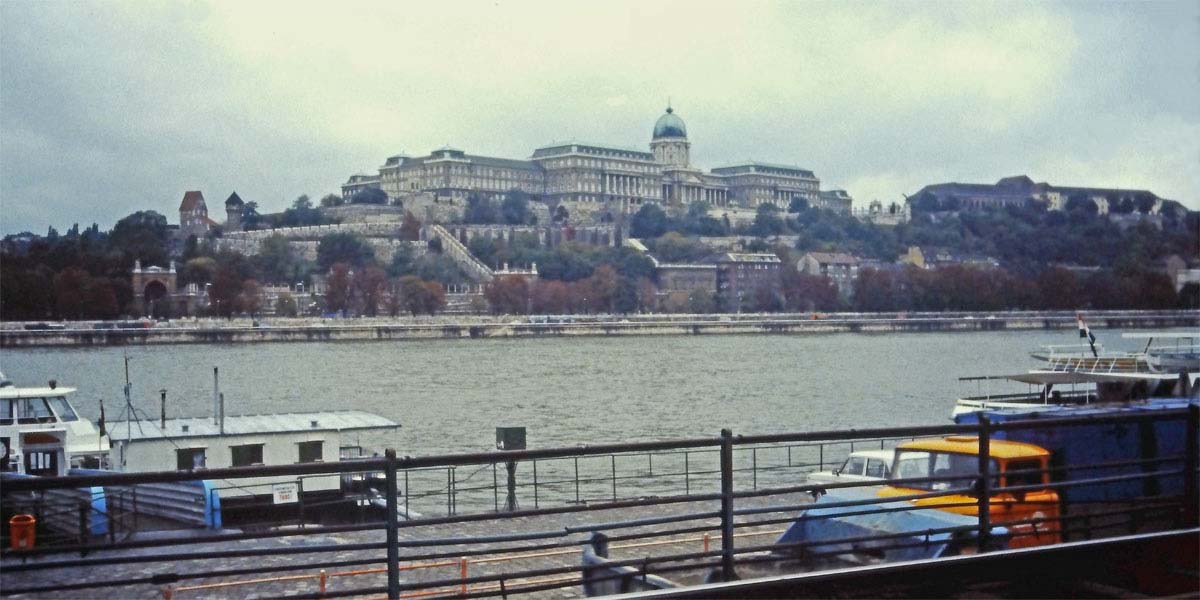
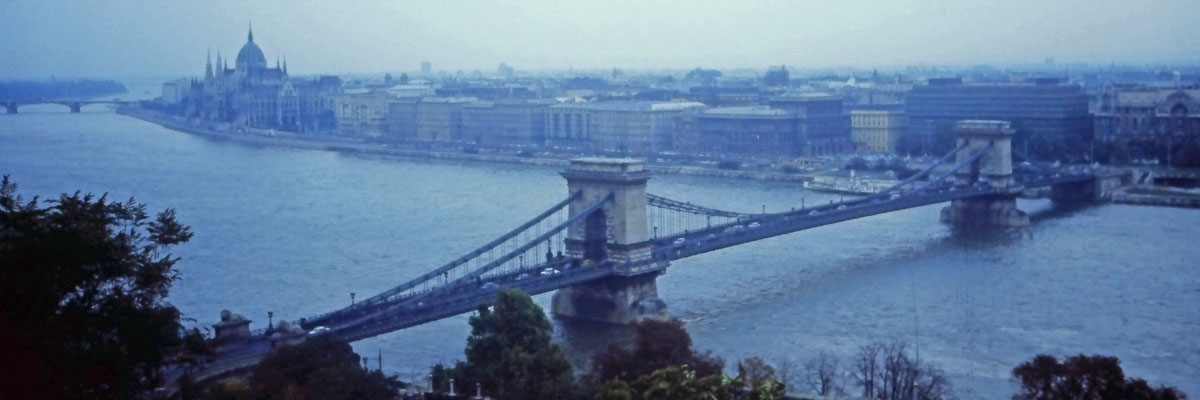
Looking across the Danube at Budapest’s iconic neo-Gothic Hungarian National Parliament building
2 / 10
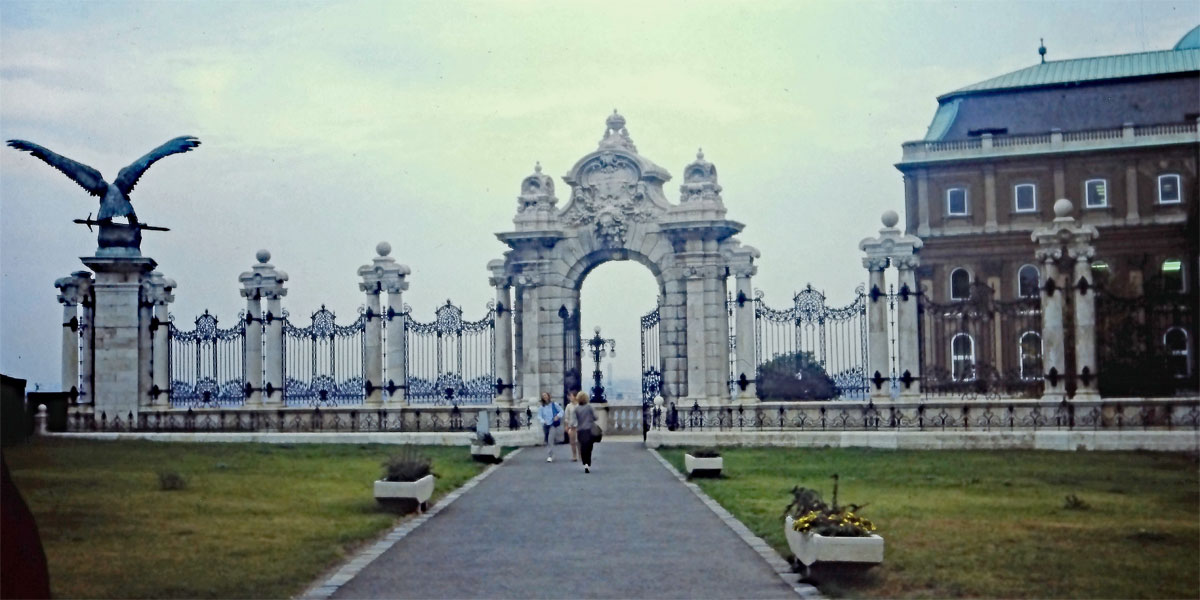
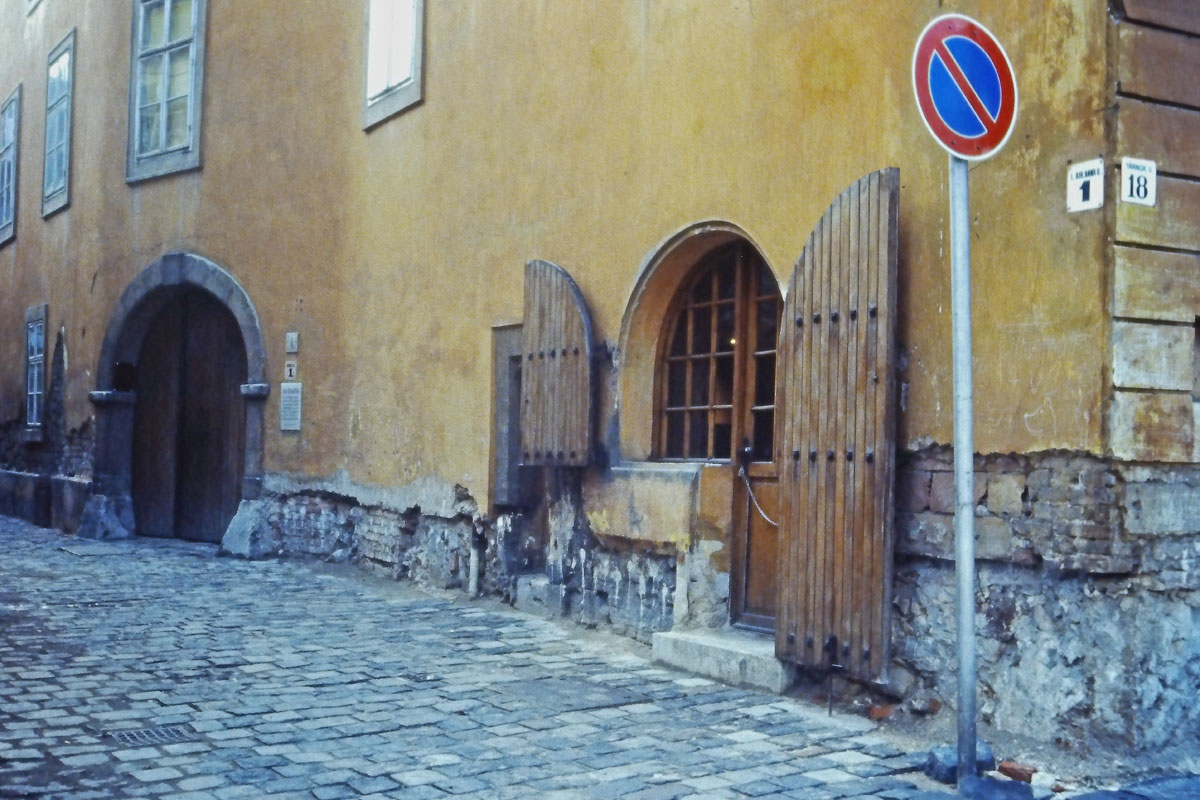
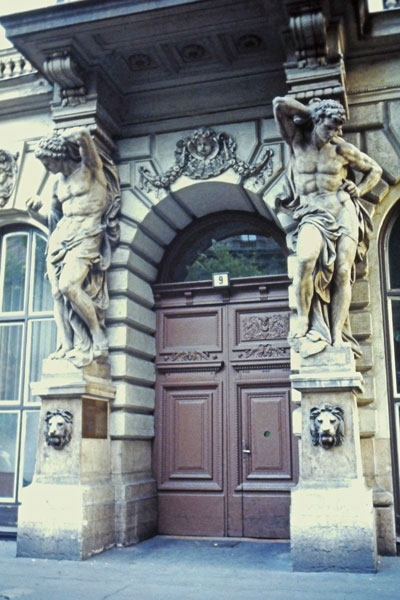
An impressive gate
3 / 10
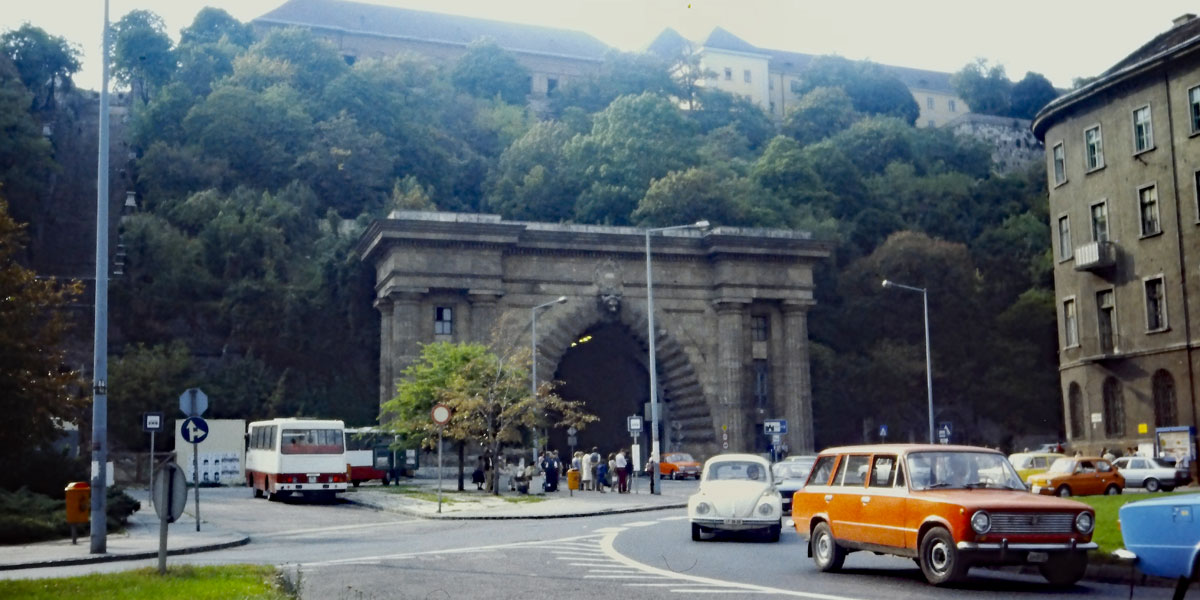
The entrance tunnel leading to the Buda Castle at the end of the Chain Bridge
4 / 10
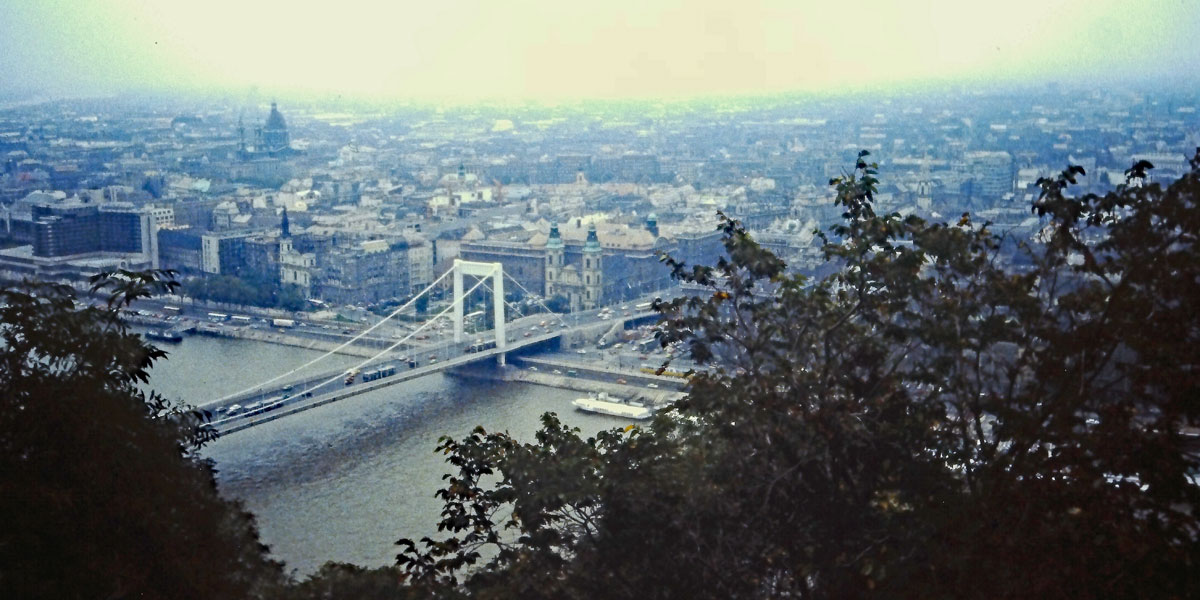
Overlooking the Danube River and the Elisabeth Bridge from the Castle District
5 / 10
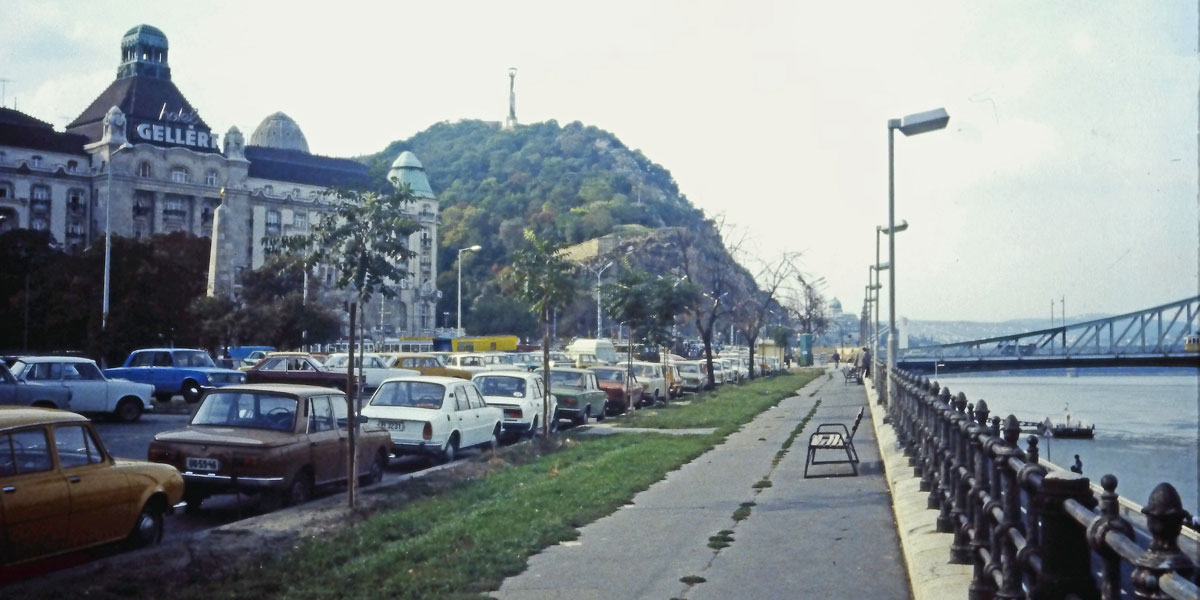
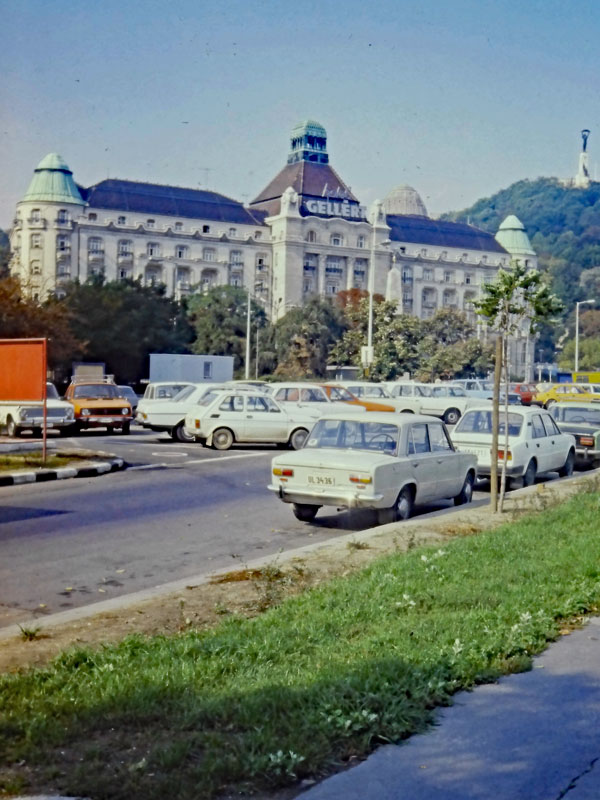
The waterfront in front of the Hotel Gellert with its famous thermal baths
6 / 10
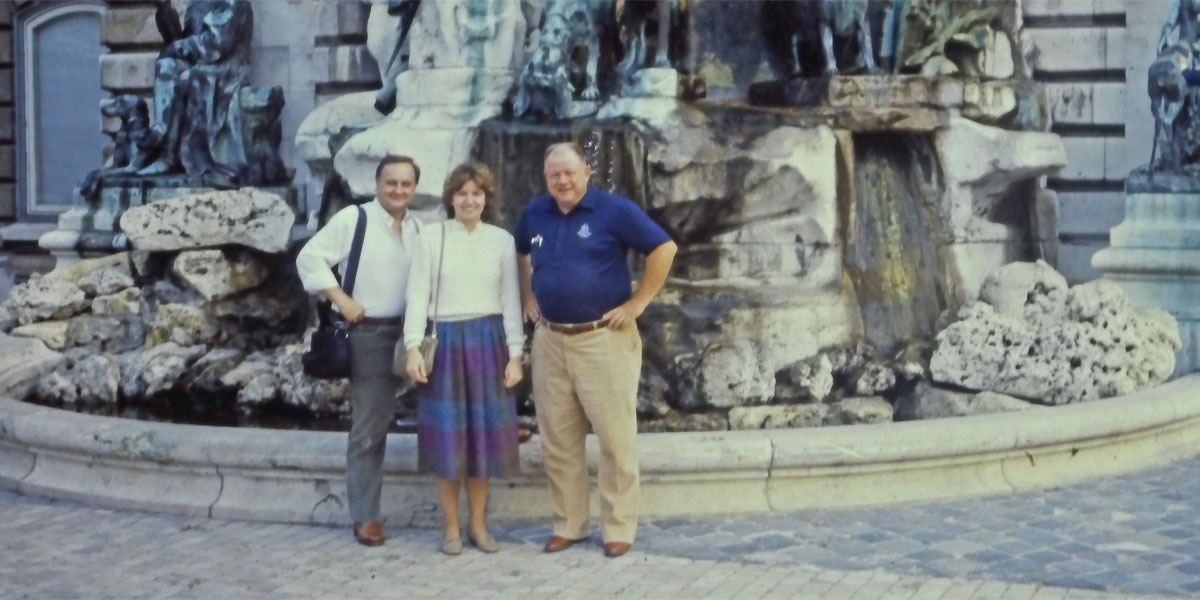
Posing with the two other American architects at the conference
7 / 10
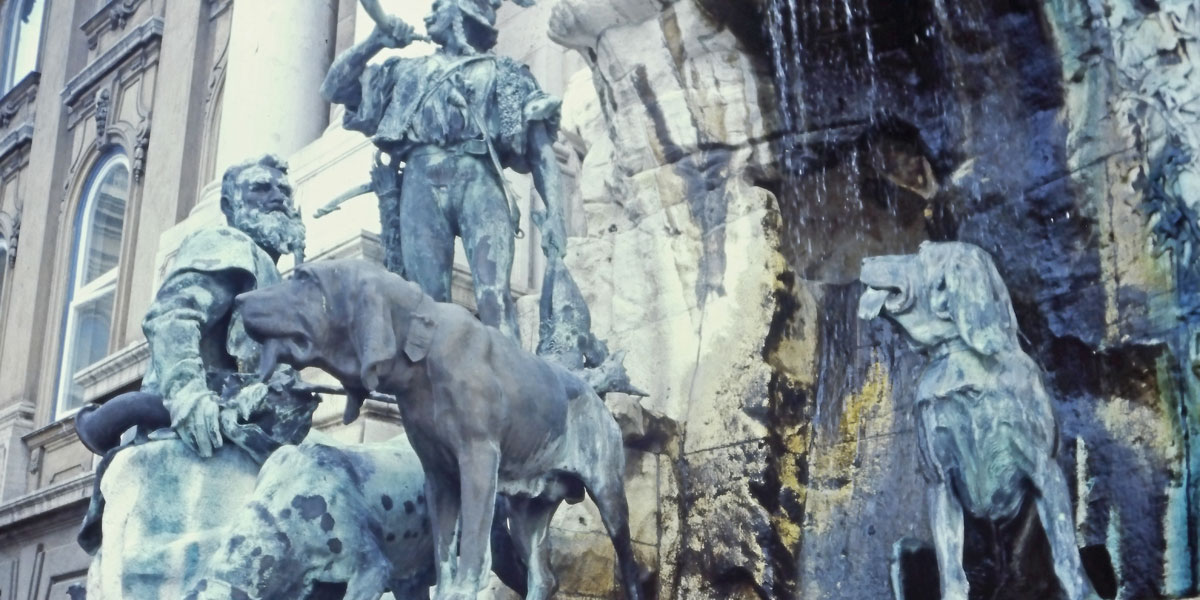
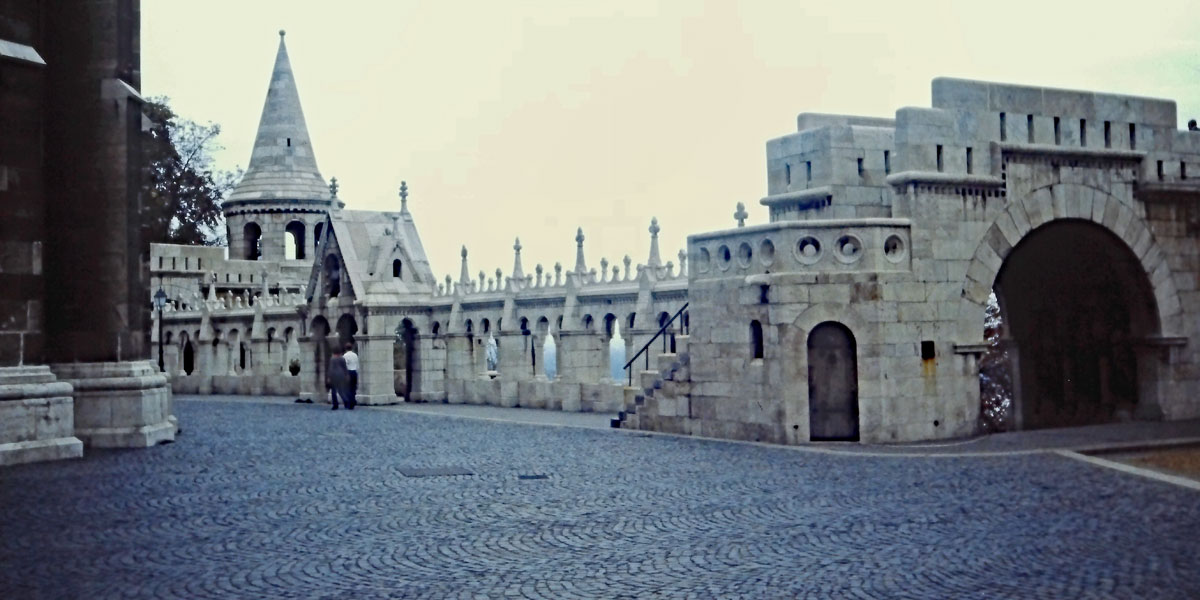
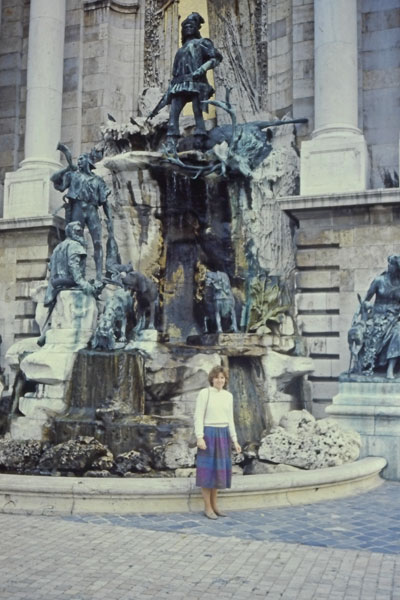
The Matthias Fountain at the Buda Castle.
8 / 10
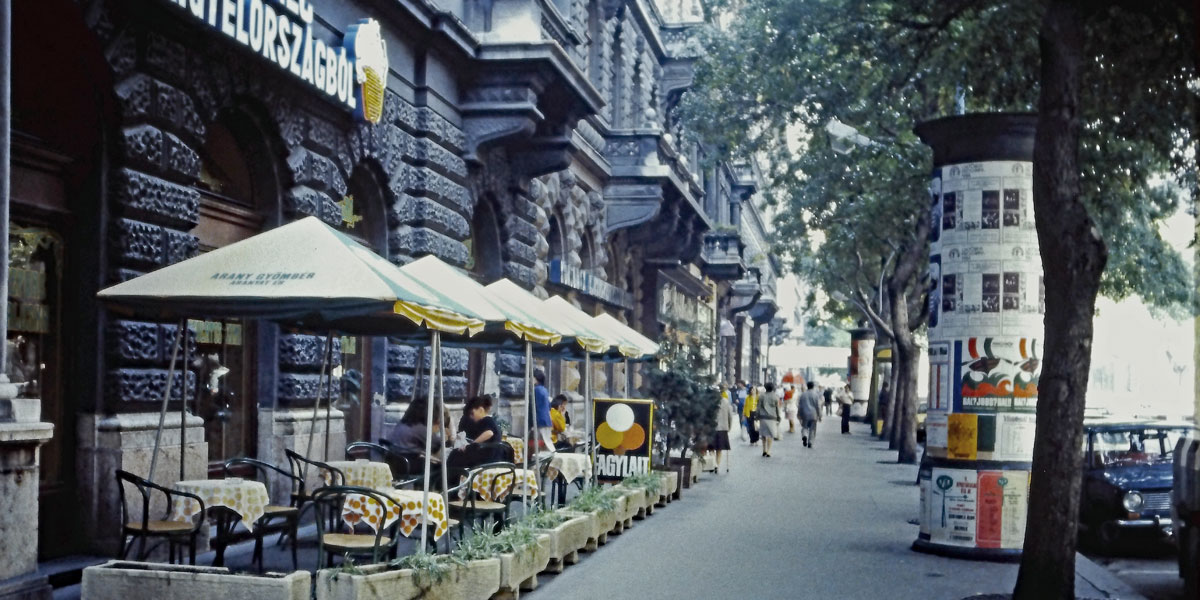
A scene on the major shopping street
9 / 10
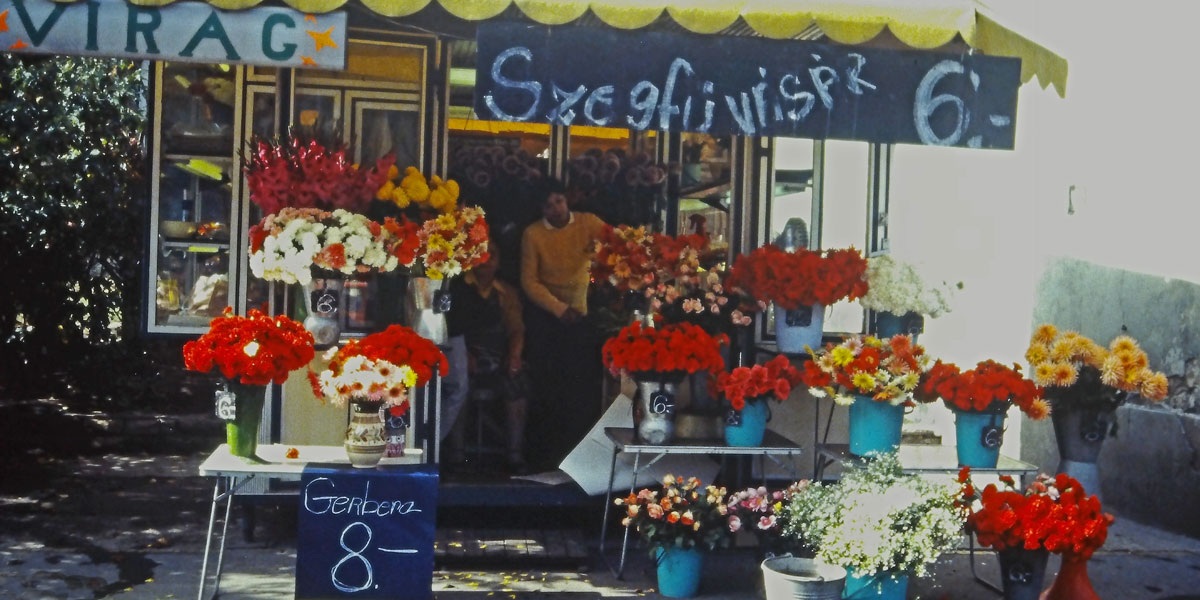
A colorful flower shop
10 / 10
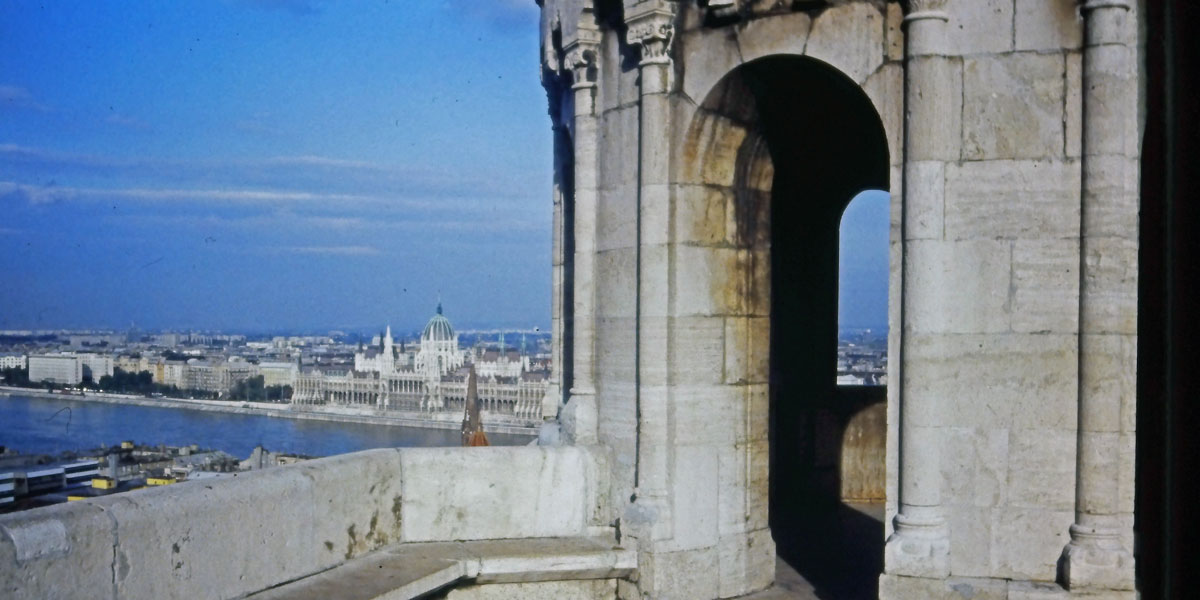
Another view of the Danube from the Castle District
❮
❯
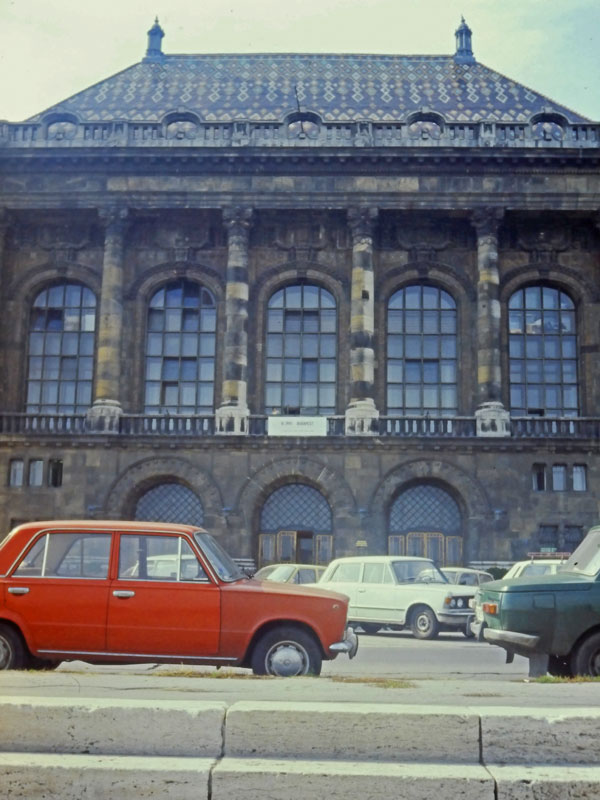
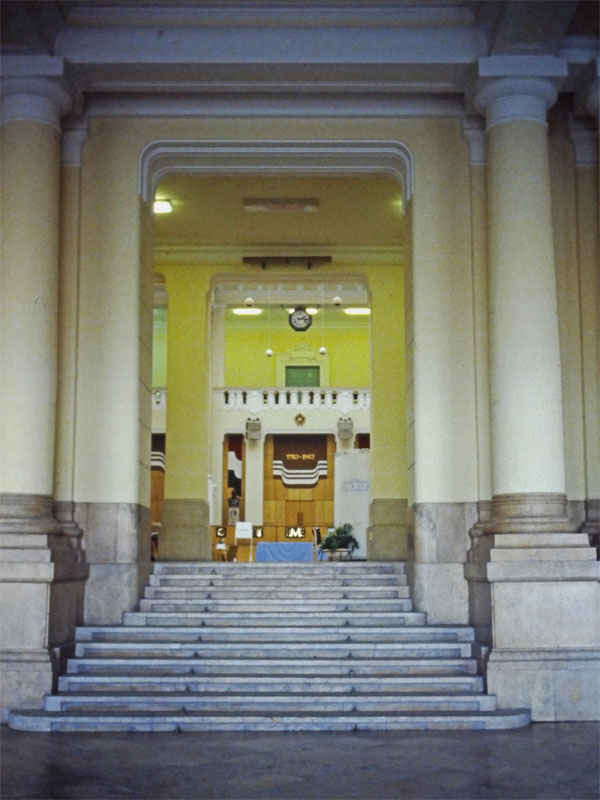
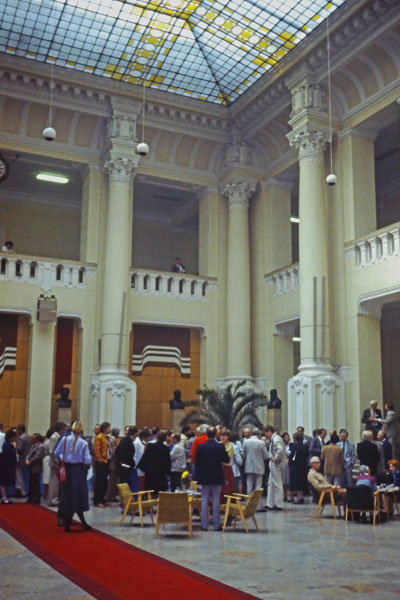
The next day I took a taxi to the university, the site of the conference. Arriving at the vast parking lot, there appeared to be only a single car marque in the parking lot — the Russian-made Lada — and the color choices were limited to white, red, and blue. The conference was held at an elegant university building and the interior of the building was quite stunning. I met up with the only other American architects attending the conference and we later had dinner and did some site seeing together. As part of the conference, tours were arranged for us to visit several hospitals in the area.
 Postscript. Hungary has gone through significant change since I visited in 1984 — starting in 1991 when the Soviet forces withdrew from Hungary, to its first democratic election in 1994, NATO membership in 1997, and EU membership in 2003. It is unfortunate that Hungary has now experienced the rise of an autocratic leader, Viktor Orban, and his assault on democracy.
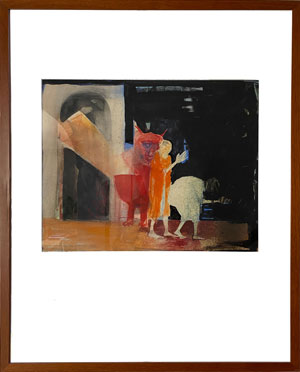
After I had exchanged about $200 French Francs into the local Hungarian currency (Forint), I was told that I when I left, I could only exchange my remaining Forint if I had receipts to show an equivalent amount of purchases (excluding hotel and meal charges). I ended up visiting the gallery of the Hungarian Art Foundation on the main shopping avenue and purchased a painting by Jozsef Szentgyorgi which was displayed in the window. I have displayed the painting in my home for over 30 years and it still reminds me of my visit — particularly because of its political message with the "red giant" behind two elderly people. I still have found memories of the Hungarian people that I encountered and their warmth and generosity.